 Seattle
 Redmond's Roofing Climate: Shade, Moisture, and Moss, Not Salt Spray
Redmond sits inland on the Eastside, away from direct salt air, but it still gets the full Puget Sound region weather pattern: long stretches of low-intensity rain from fall through spring, heavy tree canopy over most residential streets, and humidity that lingers under shade far longer than it does in open, sunny neighborhoods. That combination is exactly what asphalt shingles struggle with most. It's not one big storm that wears out a Redmond roof — it's months of a roof staying damp because the sun never fully dries it out between rain events.
Homes tucked under mature conifers or surrounded by fencing and taller neighboring structures see the worst of it. North-facing slopes and roof sections shaded most of the day hold moisture longest, and that's where moss, algae streaking, and premature granule loss show up first. A roofing approach built for a dry, sunny climate simply doesn't hold up the same way here — the materials, ventilation, and detailing all need to account for shade and standing moisture as the primary stress, with wind-driven rain as the secondary concern.
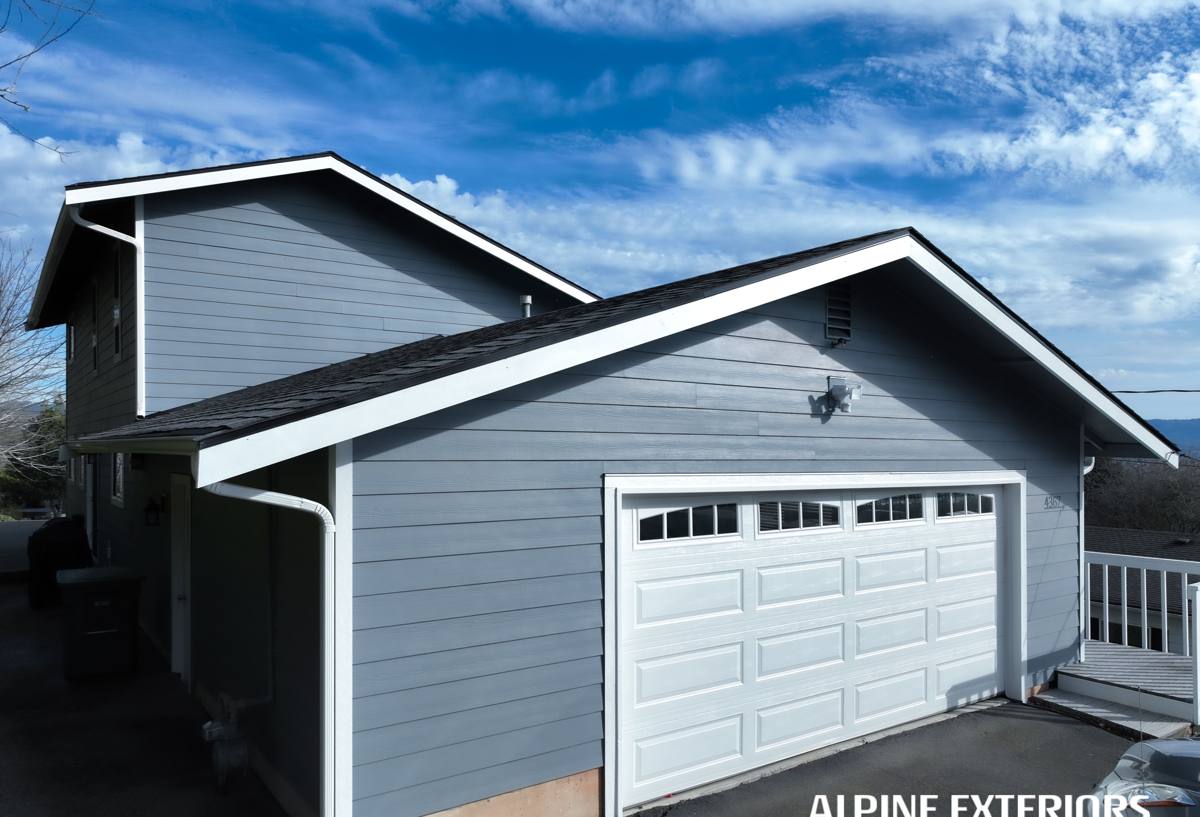
What Constant Moisture and Shade Actually Do to an Asphalt Roof
Moss doesn't just sit on top of shingles — it roots into the granule surface and lifts shingle edges as it grows, which opens a path for water to get underneath. Once moss and algae are established, they hold water against the shingle mat far longer than open rain exposure would, which accelerates granule loss and shortens the roof's usable life. Algae staining (the dark streaking many homeowners notice on north-facing slopes) doesn't structurally damage a roof the way moss does, but it's a visible sign that a roof surface is staying wet longer than it should.
Underneath the shingles, the bigger risk is what moisture does at the deck level over time: soft spots, delaminating sheathing, and rot around fasteners in roofs that don't ventilate well. Attic moisture from poor ventilation compounds the problem from the inside, condensing against the underside of the roof deck and softening it long before the shingles themselves show visible wear. A correctly built roof addresses both sides of that equation at once.
What a Correct Asphalt Shingle Installation Involves
Tear-Off and Deck Inspection
We don't install new shingles over an existing layer, and we don't estimate a job without planning to inspect the deck once it's exposed. Soft, delaminated, or rotted sheathing has to be found and replaced before anything else goes down — covering it up just hides a problem that gets worse under new shingles.
Underlayment and Water Barriers
Synthetic underlayment goes down across the full deck, with self-adhered ice-and-water barrier at eaves, valleys, and any low-slope transitions where water is most likely to back up or sit. In a climate with this much sustained rainfall, this layer is the actual waterproofing — the shingles are the wear surface and the first line of defense, but the underlayment is what keeps a small shingle failure from becoming a deck failure.
Ventilation That Matches the Attic
Balanced intake at the soffits and exhaust at the ridge keeps air moving through the attic space, which controls moisture from the inside and helps the roof deck dry between rain events instead of staying damp. We size and place ventilation to the specific attic, not a generic rule of thumb — undersized or unbalanced ventilation is one of the most common reasons a roof underperforms its expected lifespan in wet, shaded climates like ours.
Flashing and Transition Details
Chimneys, skylights, sidewalls, and valleys fail more often at the flashing than in the open field of shingles. We use step flashing at walls, proper valley metal or woven detailing depending on the roof design, and counterflashing that's integrated with the water barrier underneath — not just caulked over the top, which is a maintenance item waiting to fail.
Choosing the Right Shingle for This Climate
Not every asphalt shingle product is built the same way, and the right choice depends on the roof's shade exposure, slope, and how long the homeowner plans to stay in the home. Here's how the common tiers compare for a Redmond roof specifically:
| Shingle Type | Best For | Moss/Algae Resistance | Typical Lifespan Here |
|---|---|---|---|
| Standard 3-tab | Budget-focused projects, low-slope accessory structures | Lower — no built-in algae resistance | Shorter, especially on shaded slopes |
| Architectural / laminate | Most Redmond homes — good balance of cost and durability | Better mat structure resists lifting; algae-resistant granule options available | Longer, particularly with algae-resistant granules on shaded sections |
| Impact-resistant (Class 4) | Homes wanting maximum durability and possible insurance credit | Comparable to architectural, plus better resistance to debris impact from tree cover | Longest of the three, with the added durability trade-off in cost |
For most shaded Redmond lots, we lean toward architectural shingles with algae-resistant granules on the north-facing and heavily shaded slopes, since that's where staining and moss establish first. It's a modest upgrade in material cost that pays for itself in fewer years lost to early granule wear.
Our Process, Start to Finish
- On-site assessment — we walk the roof (not just look at it from the ground), check the attic for ventilation and moisture signs, and note shaded or moss-prone slopes specifically.
- Written estimate — a clear scope covering tear-off, deck repair allowances, underlayment, ventilation, and flashing, so there's no ambiguity about what's included.
- Material selection — we walk through shingle options and where algae-resistant or impact-resistant products make sense for the specific roof.
- Installation — full tear-off, deck inspection and repair, underlayment and water barrier, ventilation work, shingles, and flashing detail, in that order.
- Cleanup and final walk-through — magnetic sweep for debris, gutter check, and a walk-through so the homeowner sees the finished work before we consider the job done.
Maintenance That Actually Matters in This Climate
A new roof still needs some upkeep in a climate this wet and shaded — the goal is catching small issues before they turn into deck damage. A simple annual routine covers most of it:
- Clear moss and debris from valleys and shaded slopes before it has a chance to root into the granules
- Keep gutters clear so water isn't backing up under the eave edge during heavy rain
- Trim back overhanging branches to reduce shade, debris buildup, and physical wear on the roof surface
- Check attic ventilation isn't blocked by insulation or storage that's crept over the soffit vents
- Have a professional look at flashing around chimneys, skylights, and sidewalls every few years, since these are the most common failure points
Where Small Problems Turn Into Bigger Repairs
In our experience, the roofs that end up needing early, expensive repairs in this climate are almost always the ones where a small issue sat unaddressed through a wet season. A few patterns worth knowing:
| Early Issue | Left Alone |
|---|---|
| Moss on a shaded slope | Lifted shingle edges, water intrusion, deck rot underneath |
| Clogged gutter or downspout | Water backing up under the eave edge, fascia and soffit damage |
| Minor flashing gap at a chimney or wall | Ongoing leak that's hard to trace once it's soaked into the deck |
| Blocked or unbalanced attic ventilation | Condensation damage to the underside of the deck, shortened shingle life |
None of these are dramatic on their own, which is exactly why they get missed. Catching them during a routine inspection is far less costly than the deck and structural repair that follows a full season of neglect.
Why a Crew That Already Works Redmond Matters
A roofing crew that works across King County and the Eastside regularly sees how Redmond's mix of tree cover, shade, and sustained moisture actually plays out on real roofs, season after season — not just in a training manual. That shows up in small but important decisions: knowing which slopes on a shaded lot need algae-resistant granules and which don't, sizing ventilation correctly for the way local attics actually perform, and using flashing and underlayment details that hold up to this specific rain pattern rather than a generic installation standard. It also means we're a known, local business when it comes to warranty follow-up or a question a year or two after the job — not a name from out of the area that's hard to reach.
Signs Your Redmond Roof May Be Due for Replacement
Some signs are visible from the ground; others take an attic or roof-level inspection to catch. Worth having a professional take a look if you notice:
- Granules collecting in gutters or at the base of downspouts
- Moss establishing on shaded or north-facing slopes, especially if it's returned after cleaning
- Shingles that look curled, cupped, or are missing tabs
- Daylight visible through the roof deck from inside the attic
- Water stains on interior ceilings or attic framing, even faint ones
- A roof approaching or past 20-25 years old, which is a common range for asphalt shingles in this climate
If you're seeing any of these on a Redmond home, or you'd just like an honest look at where your roof currently stands, we're happy to come out for a free, no-pressure estimate — no obligation, just a clear picture of what your roof needs. You can request one using the form below.