 Seattle
 Siding Built for What Columbia City Weather Actually Does
Columbia City homes sit in one of Seattle's older, tree-canopied Rainier Valley neighborhoods, and that setting comes with a specific set of siding problems. Mature trees mean more shade, more standing moisture, and a longer moss season than you'll find on a wide-open lot. Add in the driving, wind-pushed rain that comes through King County in the fall and winter, plus the low-grade salt air that reaches inland from Puget Sound, and you have a climate that is genuinely hard on exterior materials. Siding here isn't just cosmetic — it's the first line of defense against wood rot, mold, and structural water damage that can take years to show up and cost far more to fix than it would have cost to prevent.
We install siding across Seattle, but Columbia City's mix of older housing stock, mature landscaping, and damp microclimates means the job isn't identical to a siding replacement in a newer, sunnier subdivision. This page covers what actually matters for a siding replacement done right in this neighborhood: what the climate does to siding over time, what a correct installation involves, how our process works, and why it matters to hire a crew that already understands Columbia City's conditions.
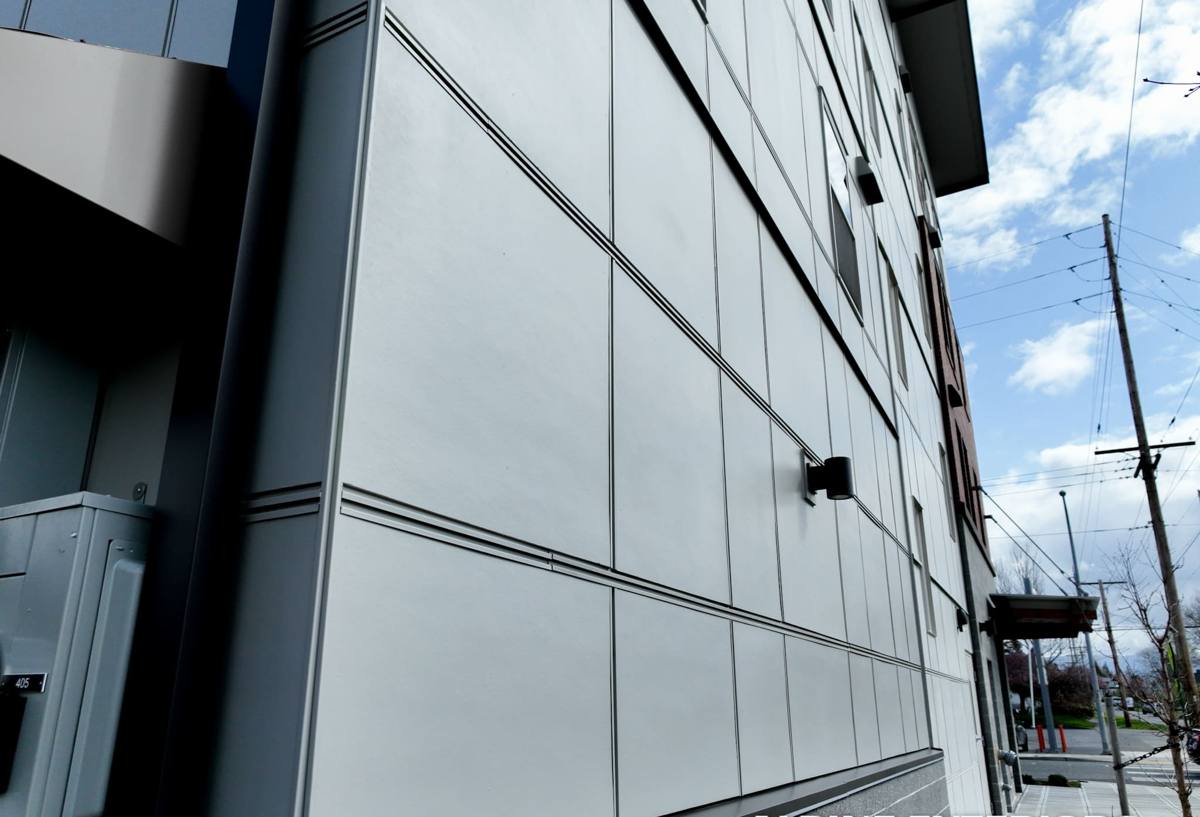
What Moss, Rain, and Salt Air Do to Siding Over Time
Every siding material fails differently, but in this part of King County the failure pattern is almost always moisture-related. Understanding the mechanism helps explain why some products hold up here and others don't.
Moss and Organic Growth
Shaded, north-facing walls and areas under tree cover stay damp far longer after a storm than sun-exposed walls. That extended dampness is exactly what moss, algae, and mildew need to take hold. On porous or improperly sealed siding, organic growth doesn't just look bad — it holds moisture against the wall assembly, which accelerates rot underneath.
Driving Rain
Seattle rain is rarely a straight-down drizzle. Wind-driven rain gets pushed sideways into seams, laps, butt joints, and anywhere flashing or caulking is even slightly off. Siding systems that rely heavily on caulk and paint film to stay watertight are the most vulnerable, because that seal degrades years before the siding material itself does.
Salt Air
Homes closer to Puget Sound deal with airborne salt that accelerates corrosion on fasteners, trim, and any exposed metal, and it also speeds up the breakdown of certain paints and coatings. It's a slower process than the rain damage, but it compounds with everything else over a 15-20 year span.
None of these forces are dramatic on their own. The problem is that they're constant, year-round, for decades. Siding that isn't engineered for this climate tends to look fine for the first several years and then degrade quickly once moisture finds a way in.
Signs a Columbia City Home Needs Siding Replacement
Because moisture damage builds slowly, many homeowners don't realize how much trouble they have until they're looking at rot repair instead of a straightforward siding swap. Here's what we look for during an inspection, and what you can check yourself:
- Soft, spongy, or crumbling spots when you press on the siding, especially near the bottom courses and around windows
- Persistent moss or dark streaking that comes back within weeks of cleaning
- Visible warping, cupping, or separation at seams and butt joints
- Paint that's peeling, bubbling, or needs repainting more often than every 5-7 years
- Cracked or missing caulking around trim, windows, and doors
- A musty smell in adjacent interior rooms, which can indicate moisture behind the wall
- Visible daylight or gaps at siding seams from the exterior
- Rising energy bills that aren't explained by anything else, which can point to a compromised weather barrier
If you're seeing more than one of these at once, it's worth getting an inspection before you commit to a repaint or a small patch repair. Painting over failing siding buys a season or two of curb appeal but doesn't stop the underlying moisture problem.
Why We Only Install James Hardie Fiber Cement Siding
We get asked regularly why we don't offer vinyl, LP SmartSide, or other engineered wood products, especially since some of them cost less upfront. The honest answer is that we've weighed the trade-offs for this specific climate and standardized on one product because it holds up here.
Vinyl siding is affordable and low-maintenance in dry climates, but it expands and contracts with temperature swings, can warp or crack in impact, and its seams and J-channels give driving rain more opportunities to work behind the panel over time. Engineered wood products like LP SmartSide perform reasonably well when installed and maintained precisely to spec, but they're wood-based, which means they're more sensitive to sustained moisture exposure than fiber cement — and sustained moisture exposure is exactly what Columbia City's shaded, rain-heavy conditions deliver.
James Hardie fiber cement is a mix of cement, sand, and cellulose fiber. It doesn't rot, it isn't attractive to pests, it's non-combustible, and it holds its shape and paint finish through the wet-dry cycling that's constant in this region. Hardie's ColorPlus factory finish is baked on and warranted separately from the substrate, so it resists the fading and peeling that eventually hits field-painted siding. Hardie also engineers specific product lines — HZ5 and HZ10 — for different climate zones, which matters more than most homeowners realize when a product is marketed as one-size-fits-all.
We're not going to tell you competitor products are junk — plenty of them are reasonable choices in the right setting. But we've seen enough moisture-related siding failures in this region to know what we're willing to put our name behind, and for us that's Hardie, installed correctly, every time.
What a Correct Siding Replacement Actually Involves
Siding replacement is often sold as a cosmetic upgrade, but the material you see is only part of the system. The parts you don't see are what determine whether the job lasts 5 years or 30.
Full Tear-Off, Not Overlay
We remove the existing siding down to the sheathing rather than installing new siding over old. Overlaying traps whatever moisture problems already exist behind two layers instead of one, and it hides rot that needs to be dealt with, not covered up.
Sheathing Inspection and Repair
Once the old siding is off, we inspect the sheathing and framing underneath for rot, soft spots, or prior water damage. This is the step that gets skipped by crews trying to move fast, and it's the step that determines whether the new siding has a sound surface to attach to.
Weather-Resistive Barrier
A correctly installed water-resistive barrier (house wrap) goes over the sheathing before any siding goes up. It's taped and lapped so water sheds downward and outward instead of finding a path inward — critical given how much driving rain this area sees.
Flashing at Every Penetration
Windows, doors, vents, hose bibs, and any other wall penetration need proper flashing integrated with the weather barrier. This is where the majority of moisture intrusion happens on poorly installed siding jobs, and it's largely invisible once the siding is on — which is exactly why it has to be done right the first time.
Correct Fastening and Clearances
Hardie siding has specific fastener spacing, nailing patterns, and ground-clearance requirements published by the manufacturer. Installing outside those specs can void the warranty and create the exact moisture pathways the product is designed to prevent.
Our Siding Replacement Process for Columbia City Homes
- On-site inspection: We walk the exterior, check for soft spots and moisture damage, and look specifically at shaded and tree-covered walls where problems tend to concentrate first.
- Written estimate: You get a clear scope of work and price — no vague allowances, no pressure to decide on the spot.
- Tear-off and sheathing check: Old siding comes off, sheathing gets inspected, and any rot or damage gets repaired before anything new goes up.
- Weather barrier and flashing: House wrap and flashing go in per manufacturer spec at every window, door, and penetration.
- Hardie installation: Siding, trim, and accessories go on to Hardie's published fastening and clearance requirements.
- Final walkthrough: We go over the finished job with you, including care and maintenance guidance specific to your home's exposure.
Cost Factors for Columbia City Siding Replacement
There's no single number that applies to every home, but the variables that move the price are consistent. Understanding them helps you evaluate estimates you receive, from us or anyone else.
| Factor | Why It Matters Here |
|---|---|
| Extent of existing rot/damage | Older Columbia City homes with a history of moisture exposure sometimes need sheathing or framing repair before new siding goes on |
| Home size and wall complexity | Dormers, bump-outs, and multiple gables add labor and cutting time |
| Siding profile chosen | Lap width, shingle-style panels, and trim details affect material and install time |
| Access and tree cover | Mature landscaping common in this neighborhood can require extra protection, staging, or trimming coordination |
| Trim and accessory scope | Full trim, fascia, and soffit replacement adds cost but keeps the whole system consistent |
| Number of stories | Multi-story homes require more scaffolding and safety setup |
We'll walk through these factors specifically for your house during the estimate rather than quoting off a generic square-footage number, because the condition of what's underneath the current siding matters as much as the size of the house.
Why It Matters to Hire a Crew That Already Works in Columbia City
Siding installation isn't uniform across Seattle. A crew that mostly works drier, more open parts of King County can still do competent work, but a crew that regularly works Columbia City's mix of older homes, mature tree cover, and shaded, damp wall sections has already seen the specific failure patterns this neighborhood produces. That shows up in small but important decisions: where to pay extra attention to flashing, which walls are most likely to hide existing rot, how to sequence work around wet weather without compromising the barrier system, and how to set expectations for maintenance given how much shade a particular lot gets.
It also matters for permitting and code familiarity. Seattle and King County have specific requirements around exterior work, and a crew that pulls permits in this area regularly moves through that process without it becoming a delay on your project.
Caring for Your New Hardie Siding in Columbia City's Climate
Correctly installed Hardie siding is low-maintenance, but "low-maintenance" doesn't mean "no maintenance," especially given the moss and moisture load in this neighborhood. A little routine attention keeps the system performing the way it's designed to for decades.
- Rinse siding annually with a garden hose to clear pollen, debris, and early moss growth — avoid pressure washing directly at seams
- Keep gutters clean and downspouts directed away from the foundation to reduce splash-back onto lower siding courses
- Trim back branches and shrubs that keep siding shaded and damp longer than necessary
- Re-caulk trim joints if you notice cracking or gaps, rather than waiting for water intrusion to show up inside
- Watch shaded, north-facing walls more closely than sun-exposed walls, since they'll show moss and mildew first
- Touch up any chips or scratches in the ColorPlus finish promptly to keep the factory warranty coverage intact
If you're weighing whether it's time to repair, repaint, or fully replace your siding, we're happy to take a look and give you a straight answer — including telling you if replacement isn't actually necessary yet. Reach out for a free, no-pressure estimate, and we'll walk your home's exterior with you before recommending anything.