 Seattle
 Board & Batten in Columbia City: A Style That Has to Earn Its Keep
Columbia City's housing stock is a mix — century-old craftsman bungalows on tree-lined streets, mid-century additions, and newer infill homes built to fit narrower Seattle lots. Board and batten siding shows up across all of it, whether as a full-facade treatment on a modern build or as an accent on a gable end, dormer, or porch detail on an older home. The vertical lines read as clean and intentional, and it's one of the more distinctive siding profiles a homeowner can choose in this part of Seattle.
It's also one of the least forgiving profiles when it's installed wrong. Board and batten creates more seams, more fastening points, and more places for water to find its way behind the cladding than a standard lap siding job. In a King County climate that stays wet for a large part of the year, those details matter more than the look does. This page is about what a correct board and batten job actually requires on a Columbia City home, and why we only install it in one material.
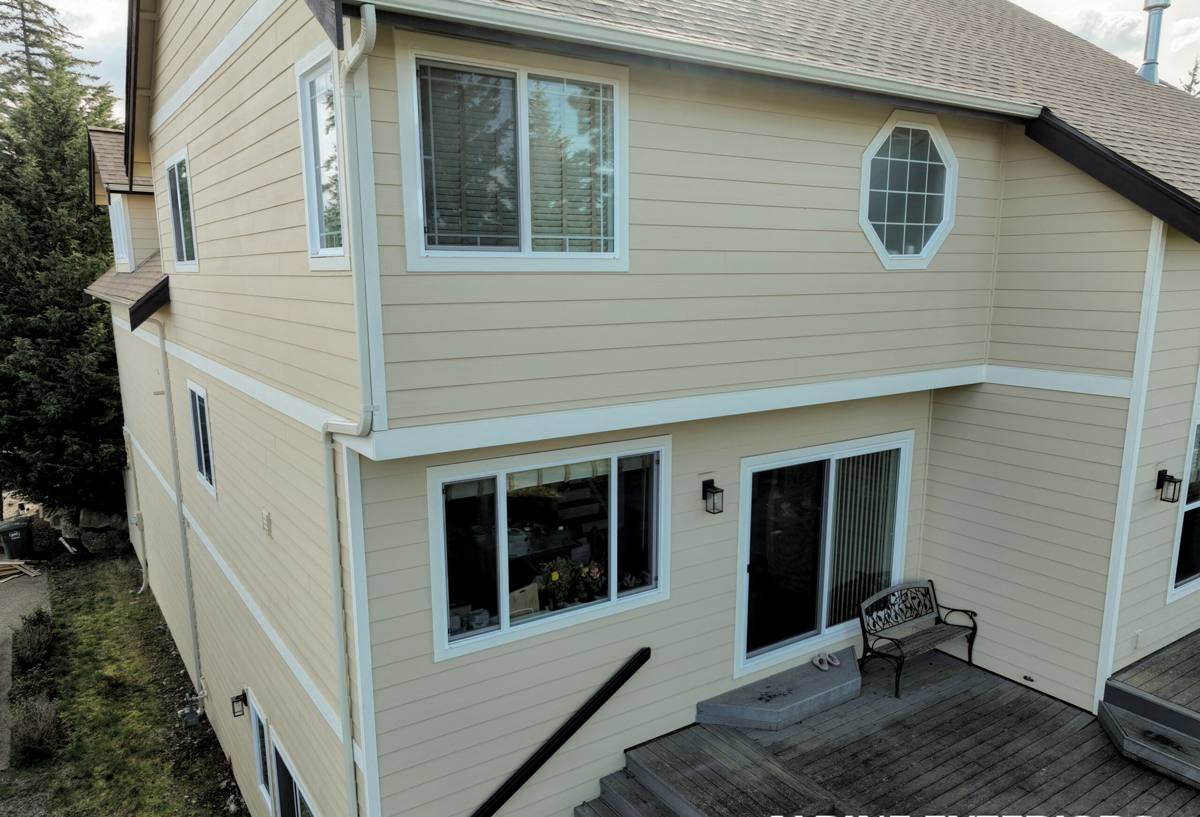
What Seattle's Marine Climate Does to Vertical Siding
Seattle sits close enough to Puget Sound that salt-laden air moves through the region on prevailing winds, and Columbia City isn't exempt from it. Combine that with the long stretch of driving rain typical of a Pacific Northwest fall and winter, and you've got conditions that are hard on any exterior material — but especially hard on siding with vertical battens, because those narrow strips and the seams alongside them are where moisture tends to collect first.
Salt Air and Fasteners
Airborne salt accelerates corrosion on exposed or low-grade fasteners. Board and batten uses more nails and screws per square foot than lap siding because the battens themselves need to be secured in addition to the field panel. Corner-cutting on fastener quality shows up here first — streaking, rust bleed, and eventually loosened battens.
Driving Rain and Batten Seams
Wind-driven rain doesn't just fall straight down — it gets pushed sideways into vertical seams and up under batten edges. Every batten joint is a potential entry point if it isn't flashed, sealed, and backed by a proper drainage plane.
A Long Moss Season Under a Mature Tree Canopy
Columbia City is known for its mature street trees, and shaded, tree-lined lots stay damp longer after a storm than a home in full sun. That extended dampness is exactly what moss and algae need to establish themselves on siding, trim, and battens — and once moss takes hold on a porous or poorly sealed material, it holds moisture against the wall and speeds up decay underneath.
Why Board and Batten Fails More Often Than Lap Siding
The style itself isn't the problem — the installation margin for error is smaller. A lap siding wall has fewer vertical joints and relies on overlap for weather resistance. Board and batten relies on the installer getting the drainage gap, flashing, and fastening pattern right at every single seam, because there's no overlap doing that work for you. When a crew treats board and batten like a cosmetic upgrade rather than a system, the results tend to show up within a few wet seasons: swollen or cupped battens, paint failure at the seams, and moisture staining at the base of the wall.
This is also where the underlying material matters as much as the workmanship. Wood and engineered-wood battens absorb moisture at cut ends and fastener penetrations even when the installation is sound, because the material itself isn't dimensionally stable in a wet environment. That's a maintenance burden that never really goes away — it just gets managed with more frequent painting and caulking.
Why We Only Install James Hardie for Board and Batten
We install James Hardie fiber cement exclusively — not vinyl, not LP SmartSide, not cedar or primed spruce, and not Cemplank or Allura. For a profile as seam-dependent as board and batten, that standard matters more than it does on a simpler siding job.
James Hardie's HZ5 product line is engineered specifically for climates like ours — wet, marine-influenced, and prone to long stretches of moisture exposure. Fiber cement doesn't absorb water and swell the way wood-based battens do, and it won't support rot at cut ends the way engineered wood can. The ColorPlus factory finish is baked on and warranted against fading and peeling, which matters enormously on a board and batten wall — repainting a field of vertical battens and their seams by hand is one of the more tedious and expensive maintenance jobs a homeowner can face, and Hardie's finish is built to put that off far longer than field-painted alternatives. Fiber cement is also non-combustible, which is a real consideration anywhere homes sit close together or near vegetation, as they often do on Columbia City's mature, tree-shaded lots.
We're not going to tell you cedar looks bad or that vinyl is junk — they're both legitimate products with real fans. But we've made a professional call that in this climate, on this profile, the moisture behavior and long-term maintenance math favor fiber cement enough that it's the only thing we put our name behind.
What a Correct Board and Batten Installation Actually Involves
A Real Drainage Gap
Board and batten should be installed over a rainscreen or furring strip system that creates a gap between the siding and the weather-resistive barrier. That gap lets any moisture that does get past the cladding drain and dry out instead of sitting against the sheathing.
Flashing at Every Transition
Windows, doors, roof lines, and horizontal trim bands all need proper flashing integrated with the weather barrier before a single panel goes up. Board and batten's vertical seams make this step non-negotiable — there's no overlap to bail out a missed flashing detail.
Fastening Schedule and Batten Layout
Battens need consistent spacing, correct fastener type and placement, and enough clearance at the base and top to allow for expansion and drainage. This is manufacturer-specified, not a matter of eyeballing it.
Sealant Where It's Actually Needed — and Not Where It Isn't
Caulking has a role at specific transitions, but it isn't a substitute for correct flashing and drainage. A wall that depends on caulk to stay dry is a wall that will eventually leak once that caulk ages, which it will.
Comparing Board and Batten Material Options
| Material | Moisture Performance | Ongoing Maintenance | Fire Resistance | Typical Service Life |
|---|---|---|---|---|
| James Hardie fiber cement | Does not absorb water or swell; engineered for wet marine climates (HZ5) | Low — factory ColorPlus finish, no routine repainting | Non-combustible | Multi-decade, backed by a transferable warranty |
| Cedar / wood | Absorbs moisture; prone to cupping and rot at cut ends and fasteners | High — regular refinishing and sealant upkeep | Combustible | Shorter, heavily dependent on maintenance |
| Vinyl | Sheds water well but seams and battens can trap moisture behind panels | Low, but limited repair options if damaged | Combustible, can deform under heat | Variable; color and finish degrade with UV exposure |
| LP SmartSide (engineered wood) | Treated to resist moisture but still wood-based; edge sealing is critical | Medium — field painting and edge maintenance required | Combustible | Depends heavily on installation quality and upkeep |
Our Process for a Columbia City Board and Batten Project
Every job starts with a walk-through of the home, not a quote pulled from a photo. We look at sun and shade exposure on each side of the house — a shaded, tree-covered north wall in Columbia City behaves very differently over time than a wall that gets full afternoon sun — and we check the condition of the sheathing and existing weather barrier before anything goes back up.
- On-site assessment of existing siding, trim, and moisture barrier condition
- Removal of failed material and inspection of sheathing for hidden damage
- Installation or repair of the weather-resistive barrier and flashing at every penetration
- Rainscreen or furring strip installation to create a drainage gap
- James Hardie panel and batten installation to manufacturer fastening specifications
- Trim, caulking, and final detail work at transitions
- Site cleanup and a walk-through with the homeowner before we consider the job done
Maintaining Board and Batten Siding in a Wet Climate
Fiber cement cuts down on maintenance dramatically compared to wood, but no siding is entirely maintenance-free in a climate like this. A few habits go a long way toward protecting the investment:
- Rinse siding and battens once or twice a year, especially on shaded sides of the home where moss and algae tend to establish first
- Keep gutters clear so overflow doesn't run down the wall and saturate the same seams repeatedly
- Trim back tree branches and shrubs that keep a wall section damp and shaded longer than necessary
- Check caulking at trim and window transitions every year or two and have any cracked sealant redone before it fails
- Watch for staining or discoloration at the base of the wall, which can signal a drainage or flashing issue worth having looked at
Why Hiring a Crew That Already Works in Columbia City Matters
A siding crew that mostly works in drier parts of the country will install board and batten the same way regardless of climate — and it may hold up fine there. Seattle and King County don't offer that margin. A crew that already works in Columbia City knows which sides of a home take the worst of the driving rain, which lots stay shaded and damp long after a storm passes because of the neighborhood's tree canopy, and how permitting and inspection work with the City of Seattle. That local pattern recognition is the difference between a board and batten wall that looks good in photos and one that still looks good after ten wet winters.
If you're considering board and batten siding for a home in Columbia City, we're happy to walk the property, look at your specific exposure and existing siding condition, and give you a straight answer about what the job actually needs. Reach out for a free, no-pressure estimate using the form below.