 Seattle
 James Hardie Siding in Columbia City: Built for Seattle's Wet Side
Columbia City is one of Seattle's older, established neighborhoods, and that shows in the housing stock — a mix of early-1900s bungalows and craftsman-style homes alongside newer infill construction, all sitting inside the same King County marine climate. That climate is not gentle on exterior siding. Salt-tinged air moving in off the Sound, long stretches of driving rain through fall and winter, and a moss season that can run most of the year on shaded walls all put steady, cumulative stress on whatever material is covering a home. Some siding products shrug that off for decades. Others start showing real problems within the first five to ten years, especially if the installation wasn't done exactly to spec.
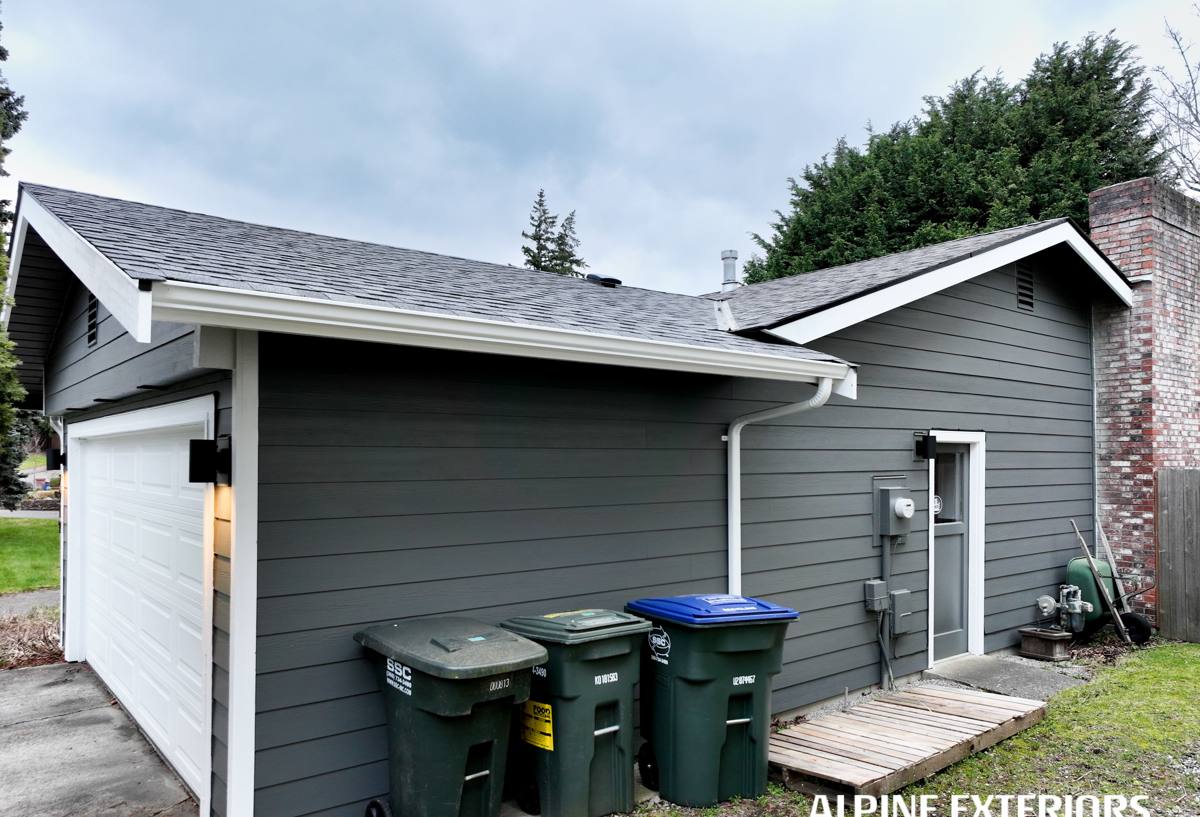
We install James Hardie fiber cement siding exclusively — no vinyl, no LP SmartSide, no primed spruce or cedar — because after years of siding and repair work across Seattle and King County, it's the product we trust to actually hold up to this climate when it's installed correctly. This page is about what that means specifically for a Columbia City home: what the local weather does to siding over time, what a correct Hardie installation actually involves, and why hiring a crew that already knows this neighborhood's housing stock and exposure matters more than most homeowners expect.
What This Climate Does to Siding Over Time
Salt Air and Fastener Corrosion
Seattle sits close enough to salt water that homes throughout King County get some degree of salt-influenced air, and that air is hard on lower-grade fasteners, trim, and finishes. It's rarely the siding board itself that fails first — it's the staples, nails, or corner flashing that were spec'd for a drier inland climate and start corroding, staining, or losing their grip years before they should.
Wind-Driven Rain
Rain in Seattle doesn't always fall straight down. Wind pushes it sideways into wall assemblies, which means the seams, joints, and butt ends of siding boards take on water pressure that a calmer climate wouldn't produce. A siding system that isn't properly lapped, flashed, and sealed at those seams will eventually let that water behind the cladding, and once water gets behind siding it tends to do its damage out of sight, in the sheathing and framing, before anyone notices a problem from the street.
A Long Moss and Mildew Season
Mild temperatures combined with near-constant fall-through-spring moisture give moss and mildew a growing season that runs most of the year across the Puget Sound region. Shaded north-facing walls, siding tucked under eaves with poor airflow, and any spot where water sits instead of draining are where it shows up first. Moss holds moisture against a surface far longer than open air would, which accelerates whatever breakdown process is already underway underneath it.
Temperature and Moisture Cycling
Seattle doesn't get brutal freeze-thaw swings the way colder inland climates do, but it does get repeated cycles of saturation and drying, expansion and contraction, especially on siding that takes direct weather exposure. Materials that aren't dimensionally stable under that kind of cycling — swelling, warping, or delaminating over repeated wet-dry cycles — show it as cupping, buckling, or finish failure well before their expected lifespan is up.
Why We Install Only James Hardie in This Climate
James Hardie fiber cement is engineered specifically to resist the conditions that cause the most damage here. It's non-combustible, which matters for wildfire-conscious insurance and building standards even in a wet climate like ours. It doesn't rot the way untreated or primed wood products can when moisture gets past the surface. And for the Pacific Northwest specifically, Hardie makes a climate-engineered HZ5 product line formulated for colder, wetter climate zones — the board itself is built for the moisture cycling this region produces, not adapted from a product designed for a drier part of the country.
The factory-applied ColorPlus finish is another piece of why we standardize on Hardie. Instead of paint rolled on at the jobsite — dependent on weather conditions at the time of application, and never fully even at every cut edge and joint — ColorPlus is baked onto the board in a controlled factory environment, in multiple coats, before it ever reaches a truck. That finish holds color and resists chipping and fading noticeably longer than typical field-applied paint, which matters in a climate that gives paint film a hard time most of the year. Hardie also backs its products with a strong transferable warranty, which carries real weight if a Columbia City home changes hands down the road.
None of that guarantees a good result on its own. A great product installed poorly will still fail — usually at the seams, the flashing, and the fastening, not the board itself. That's why installation detail gets as much attention on our end as the product choice does.
What a Correct Installation Actually Involves
Most of the siding failures we get called out to inspect in Seattle trace back to installation shortcuts, not a bad product. Hardie publishes specific installation requirements for exactly this reason, and skipping them is what turns a fifty-year product into one that leaks in eight.
| Detail | Correct Practice | Common Shortcut We See |
|---|---|---|
| Clearance above grade, decks, and roofing | Minimum clearance maintained per Hardie's published specs so water can't wick into the board | Siding installed tight to grade, patios, or roof lines with no gap |
| Fastening | Correct fastener type, spacing, and depth so boards can move slightly without cracking | Fasteners overdriven or spaced incorrectly, cracking the board over time |
| Butt joints and seams | Properly flashed or gapped and sealed with a sealant rated for sustained moisture exposure | Joints butted tight with caulk alone as the only barrier |
| Flashing at windows, doors, and penetrations | Flashing lapped correctly with the weather-resistive barrier beneath the siding | Trim installed and caulked without real flashing integration underneath |
| Starter strip and weep path | Starter course set correctly with a drainage path so incidental moisture can escape | No starter strip, or a drainage path that's blocked or never provided |
Every one of those details is invisible once the siding is up and painted. That's exactly why they matter — nobody catches a bad flashing job by looking at a finished wall, they catch it a few winters later when water shows up somewhere it shouldn't.
Columbia City's Housing Stock: What to Expect on a Re-Side
A lot of Columbia City's older homes were built with wood siding decades before fiber cement was an option, and many have already been through at least one round of re-siding, patchwork repair, or paint-over-paint maintenance. That history matters going into a Hardie project, because what's underneath the existing siding — the condition of the sheathing, the state of any prior flashing work, whether there's hidden moisture damage from years of small leaks — often has more bearing on the scope of the job than the square footage does. Newer infill construction in the neighborhood tends to have more straightforward substrate conditions, but even there, correct clearance and flashing details still have to be built in from scratch rather than assumed.
We don't guess at what's underneath. Part of a proper Hardie installation on an older Columbia City home is opening things up enough to see the actual condition of the wall assembly before new siding goes on top of it, so problems get fixed instead of sealed in behind a new, good-looking exterior.
Cost Factors on a Columbia City Hardie Project
Every home is different, so we won't quote a number without seeing the property, but the factors that move a Hardie siding estimate up or down are consistent across most Columbia City jobs.
- Existing substrate condition: hidden rot or water damage found once old siding comes off adds repair scope before new siding can go up correctly
- Home size and wall complexity: more corners, dormers, and trim details mean more labor and material cuts
- Product line and profile: lap siding, panel siding, and shingle profiles carry different material and labor costs
- Story height and access: two-story and taller sections require more scaffolding or lift time
- Full tear-off vs. sections: a full re-side is more involved than replacing damaged sections, but partial matches to existing Hardie material can be limited depending on age and color availability
- Trim and accent work: window casings, corner boards, and any accent panel details add labor beyond the flat wall area
Our Process
We start with an on-site walk of the property — looking at the current siding condition, checking for soft spots or signs of past water intrusion, and getting a real look at what's underneath where it makes sense to open a section up. From there we give a straightforward scope and written estimate, not a ballpark guess. Once work starts, tear-off and any needed sheathing or framing repair happen before a single new board goes up, because covering a wet or damaged wall with new siding just hides the problem for a few more years instead of solving it. Clearance, fastening, flashing, and sealed joints are handled to Hardie's published specifications as standard practice on every job — not something a homeowner has to ask for or pay extra to get done right.
Why a Local Crew Matters
A crew that already works Columbia City and the rest of Seattle regularly has already seen how this specific mix of salt air, wind-driven rain, and long moss seasons plays out on this neighborhood's housing stock — older wood-frame homes, common lot orientations, the way certain walls stay shaded and damp longer than others. That familiarity shows up in the decisions that actually determine how long a siding job lasts: how much clearance gets left above a deck ledger, whether a butt joint gets properly flashed or just caulked, which walls get flagged for extra attention because of shade and drainage. It also means fewer surprises with City of Seattle permitting and realistic scheduling around the wetter months, when tear-off work has to be managed carefully to avoid leaving a wall assembly exposed longer than necessary.
A Practical Checklist Before You Hire
- Confirm the contractor is a certified James Hardie installer, not just someone who occasionally installs it
- Ask specifically how they handle clearance, flashing, and joint sealing — not just which product line they're quoting
- Confirm current Washington contractor licensing and active liability insurance
- Ask whether they'll open up sections of the existing wall to check substrate condition before finalizing scope
- Get a written scope that separates the manufacturer's product warranty from the contractor's installation warranty
- Ask how they plan to sequence tear-off and installation around Seattle's wetter months
If you're considering a Hardie siding project for a Columbia City home — or you're just not sure whether what's on your walls now needs repair, patching, or a full re-side — we're happy to take a look and give you a straightforward, no-pressure read. Reach out below for a free estimate.