 Seattle
 Siding in Columbia City Has to Work Against a Specific Climate
Columbia City sits in southeast Seattle, in King County, inside the same marine climate that defines the whole Puget Sound region. That means long stretches of driving rain from fall through spring, salt-laden air drifting in off the Sound, and shaded, moisture-heavy stretches of the year that turn north-facing walls and tree-covered lots into prime real estate for moss and algae. None of that is unusual for this part of Washington, but it does mean siding material and installation quality matter more here than they would in a drier climate. A wall assembly that isn't detailed correctly won't fail dramatically — it'll fail slowly, behind the surface, over several wet seasons.
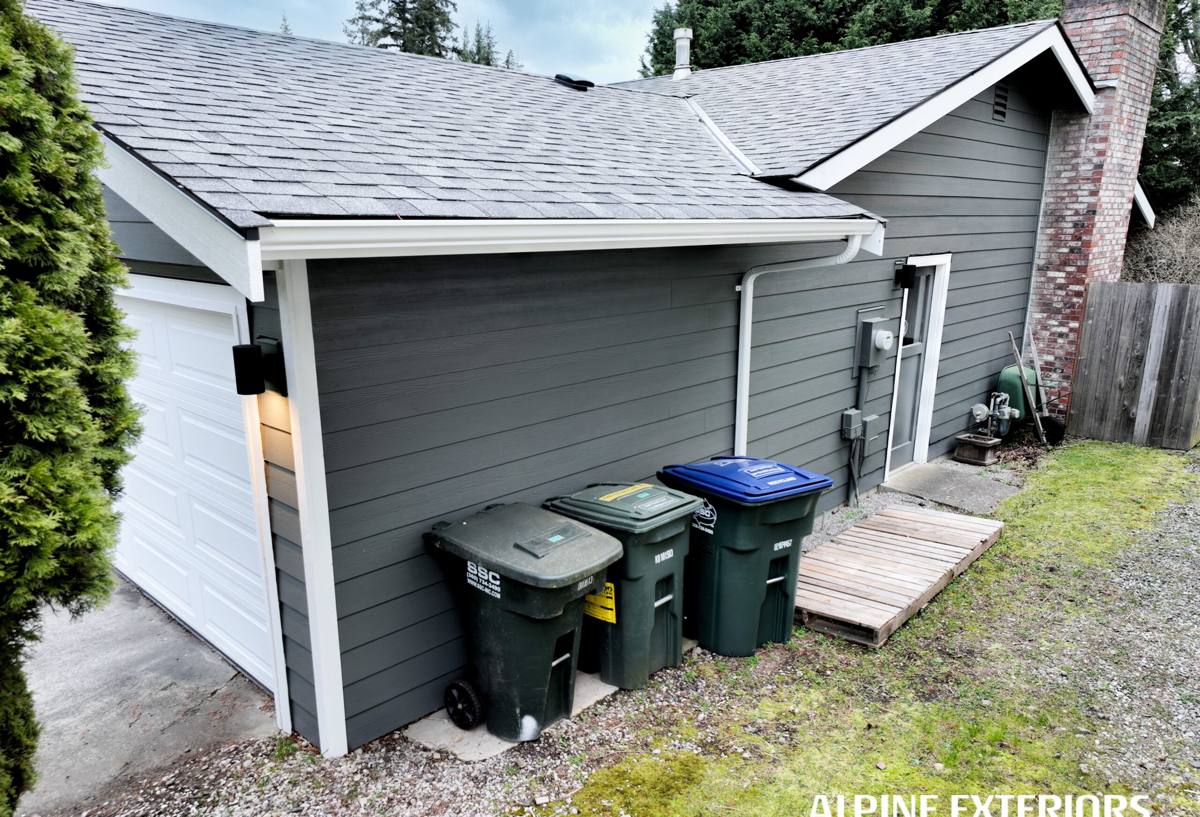
We install fiber cement siding as a full system: material, flashing, house wrap, fastening pattern, and finish all working together. On a Columbia City job, that system has to account for extended rain exposure, shaded moss-prone elevations, and — because many homes in this part of Seattle date from the early 1900s through the 1920s — original wall framing and sheathing that wasn't built with today's drainage-plane standards in mind.
Why We Only Install James Hardie Fiber Cement
We don't install vinyl, LP SmartSide, Cemplank, Allura, or bare cedar and primed spruce siding. That's a standard we hold company-wide, not just for Columbia City. James Hardie fiber cement is non-combustible, holds up to sustained moisture exposure better than wood-based products, and comes factory-finished with ColorPlus technology — a baked-on finish that resists fading and doesn't need repainting on the same schedule as field-painted siding. Hardie also engineers specific product lines (their HZ5 and HZ10 systems) for different climate zones, which matters in a region where wind-driven rain and prolonged damp seasons are the norm rather than the exception.
That's not a knock on every other product on the market — vinyl is cheap and low-maintenance in mild climates, engineered wood has a lower upfront cost, and cedar has real curb appeal. But we've made a professional call to install one product system we can stand behind fully, warranty and all, rather than juggle multiple materials with different failure modes and maintenance demands. For a homeowner in a wet, moss-prone Seattle neighborhood, that consistency is worth more than the incremental savings of a cheaper product.
What a Correct Fiber Cement Installation Actually Involves
Fiber cement siding is only as good as the wall assembly behind it. A rushed or generic installation can leave a Columbia City home just as vulnerable to moisture problems as poor siding would. Correct installation includes:
- A continuous weather-resistive barrier (house wrap) installed shingle-style so water sheds outward, not into the wall cavity
- Proper flashing at every window, door, and roof-to-wall intersection — the single most common point of failure we find on tear-offs
- Correct fastener type, spacing, and depth per Hardie's published installation instructions, not a generalized "siding nail" approach
- Minimum clearance between the bottom of the siding and grade, decks, patios, and roof lines to prevent wicking and splashback
- Butt joints and panel seams treated to manufacturer spec rather than just caulked and painted over
- Proper venting and clearance behind the siding so the wall assembly can dry if moisture does get in
Skipping any one of these doesn't usually cause a visible problem in year one. It shows up in year five or six as bubbling paint, soft trim, or rot at the bottom courses — after the labor to fix it has gotten more expensive.
Where This Matters Most in Columbia City
Homes with mature street trees and shaded side yards hold moisture longer after storms, which accelerates moss and algae growth on siding and roof lines. Homes closer to Lake Washington's shoreline zones deal with more consistent humidity. And older homes throughout the neighborhood may have wall assemblies that were never built with a modern drainage plane, meaning the siding installation has to do more of the work to manage moisture than it would on new construction.
Signs Your Siding Needs Attention
| What You See | Likely Cause | Why It Matters |
|---|---|---|
| Green or black streaking, especially on shaded walls | Moss and algae growth from prolonged dampness | Cosmetic at first, but traps moisture against the surface over time |
| Soft or spongy trim boards | Water intrusion at flashing or joints | Often signals the same moisture is reaching the sheathing behind it |
| Paint bubbling or peeling in patches | Moisture pushing through from behind the siding | A visual symptom of a wall assembly problem, not just a paint problem |
| Warped or cupped boards | Wood-based siding absorbing and releasing moisture repeatedly | Fiber cement doesn't do this; it's specific to wood and engineered wood products |
| Visible gaps at butt joints or corners | Original caulking or sealant has failed with age | Creates a direct path for wind-driven rain to enter the wall |
Our Process, Start to Finish
Every job starts with a walk-around assessment, not a sales pitch. We look at the existing siding, the condition of the sheathing underneath where accessible, drainage around the foundation, roofline transitions, and any shaded or moss-prone elevations that need extra attention in the plan.
- Tear-off and inspection — removing existing siding gives us a direct look at the sheathing and framing, which is the only reliable way to catch hidden rot or moisture damage before it's covered up again
- Repair before cover-up — any soft sheathing, damaged framing, or compromised flashing gets addressed before new siding goes on; we don't install new material over a known problem
- Weather barrier and flashing — house wrap and flashing installed to shed water correctly at every penetration and transition
- Hardie panel or plank installation — installed to manufacturer spec for fastening, clearance, and joint treatment
- Trim, caulking, and finish detailing — the details that determine how the job looks and performs for the next several decades
- Final walkthrough — we go over the finished work with the homeowner before calling the job done
Cost Factors on a Columbia City Siding Project
| Factor | How It Affects Cost |
|---|---|
| Home size and number of stories | More square footage and higher walls mean more material, labor, and equipment time |
| Condition of existing sheathing | Hidden rot or moisture damage found during tear-off adds repair scope before new siding can go on |
| Siding profile (lap, shingle, panel) | Detailed profiles and mixed textures take longer to install than a single plank style |
| Trim and accessory work | Corner boards, window trim, fascia, and soffit work add to the overall scope |
| Access and site conditions | Mature trees, tight side yards, or sloped lots common in older Seattle neighborhoods can affect staging and labor time |
| Color and finish choice | Factory-applied ColorPlus finish costs more upfront than field-painted but removes a repainting cycle down the road |
We don't quote a job without seeing the house — anyone who does is guessing. What we can say honestly is that fiber cement costs more upfront than vinyl and often more than engineered wood, and less than premium cedar systems installed to the same standard. The value shows up over the ownership timeline, not on day one.
Maintenance in a Marine Climate
Fiber cement is low-maintenance, not no-maintenance. In a neighborhood like Columbia City, with tree cover and long damp seasons, a few habits go a long way:
- Rinse siding periodically to remove moss and algae buildup, especially on shaded north- and east-facing walls
- Keep gutters and downspouts clear so water isn't running down the face of the siding or pooling near the bottom courses
- Trim back vegetation that keeps siding damp or shaded for extended periods
- Check caulking at trim and joints every year or two and have any gaps addressed before the wet season
- Have flashing and joints inspected after any major windstorm, since driving rain finds weak points fast
Why Hiring a Crew That Already Works This Neighborhood Matters
Seattle's building stock varies block by block — a craftsman from the 1910s and a home built in the last decade don't have the same wall assembly, and they don't need the same repair approach. A crew that regularly works in Columbia City and similar southeast Seattle neighborhoods has already seen the common sheathing conditions, the typical moss patterns tied to tree cover and sun exposure, and the permitting expectations for the City of Seattle and King County. That familiarity shows up in fewer surprises mid-project and a plan that accounts for the realities of the specific house, not a generic template.
It also matters for warranty follow-through. James Hardie's product warranty and our own labor warranty are only as good as the installation behind them — a local crew that stands behind its own work is easier to hold to that standard than an out-of-area outfit that's moved on to the next region by the time an issue shows up.
A Quick Checklist Before You Hire
- Ask whether the contractor is licensed and insured in Washington State
- Ask if they carry manufacturer training or certification for the specific siding product
- Ask how they handle sheathing repair if rot is found during tear-off — get this in writing before work starts
- Ask for a written scope that specifies flashing details, fastening method, and clearance standards, not just "install siding"
- Ask how long they've worked in your specific neighborhood, not just the greater Seattle area
If you're weighing new siding for a home in Columbia City, we're glad to take a look and walk you through what your specific house needs. The estimate is free, there's no pressure, and you'll get a straight answer about scope and condition — just fill out the form below to get started.