 Seattle
 Why Shoreline Siding Wears Out Faster Than People Expect
Shoreline sits right along Puget Sound, and that location cuts both ways. The views are part of why people love living here, but the same marine exposure that makes the setting attractive also puts steady stress on the outside of a house. Salt-laden air moves inland off the Sound, driving rain comes in sideways during fall and winter storms, and the shaded, damp conditions that persist through much of the year create a long moss and algae season that many homeowners in this part of King County know all too well. None of this is unique to any one street or neighborhood in Shoreline — it's a function of being this close to the water in the Pacific Northwest, and it shows up on siding as chalky finishes, soft or delaminating panels, streaking, and moss creeping up from the bottom courses.
Siding that isn't built or installed for this environment tends to fail from the inside out. Moisture gets behind panels at seams, fastener holes, and trim joints, and by the time damage is visible on the surface, the sheathing underneath may already be compromised. That's the core problem a proper siding replacement needs to solve — not just refreshing the look of the house, but rebuilding the water management system behind the cladding so it can actually handle what a Shoreline winter throws at it.
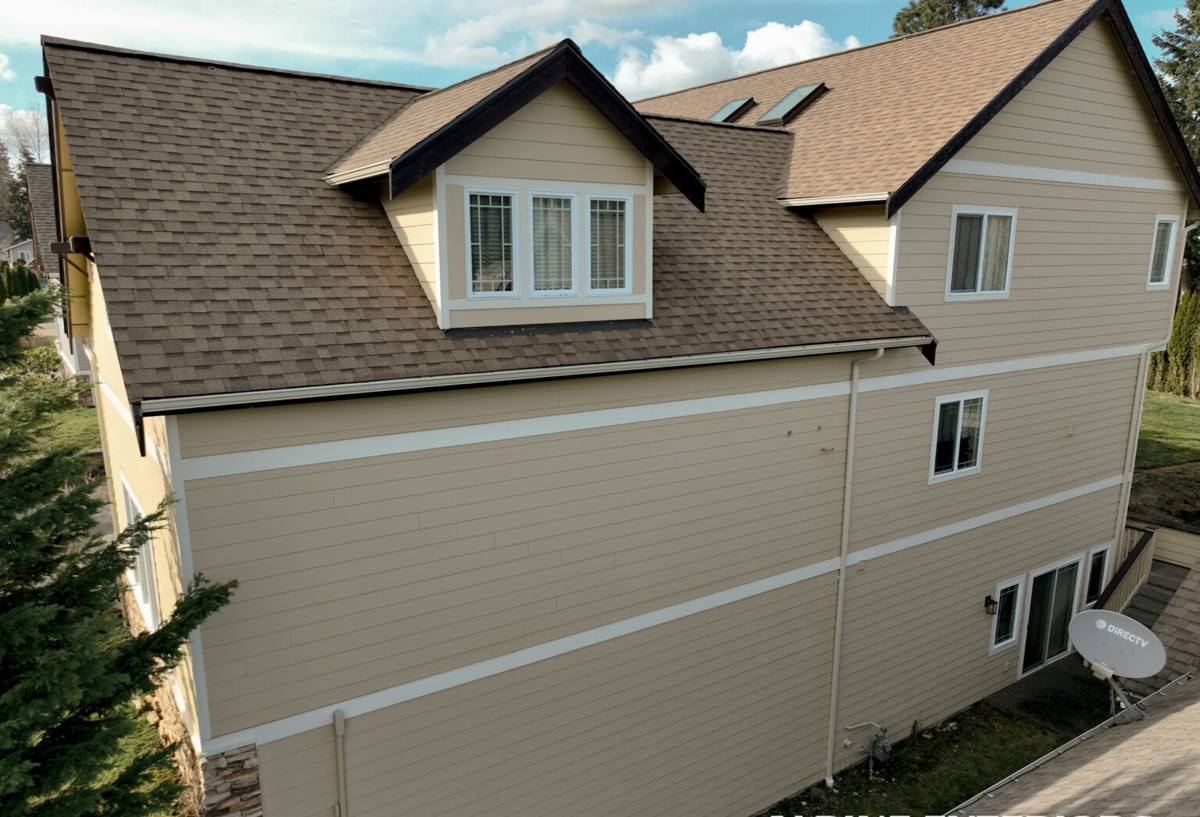
Signs a Shoreline Home Is Due for Siding Replacement
Siding problems in this climate rarely show up all at once. They creep in over a few wet seasons, and by the time they're obvious, there's usually already water intrusion happening somewhere. Here's what we look for during an inspection, and what homeowners can check themselves:
- Soft, spongy, or bubbling spots when you press on the siding, especially near the bottom of walls or under windows
- Persistent moss or algae growth that comes back within weeks of cleaning
- Paint that's chalking, peeling, or needing repainting more often than every 7-10 years
- Visible warping, cupping, or gaps opening up between panels or at seams
- Musty smells or rising energy bills that suggest moisture or air leaks behind the wall
- Cracking at butt joints or around nail heads, which is common on older wood-based or engineered wood products
- Rot or staining at corners, window trim, and anywhere two building materials meet
If more than one or two of these show up together, it's usually a sign of a systemic moisture problem rather than a cosmetic one, and patching individual boards won't fix it.
What a Correct Siding Replacement Actually Involves
Tear-Off and Sheathing Inspection
A siding replacement done right starts with removing the old material completely, not covering it over. That exposes the sheathing and framing so we can actually see what the previous siding was hiding — soft spots, old water stains, or areas where insulation has gotten wet. In a climate as consistently damp as Shoreline's, skipping this step is how new siding ends up sitting over a problem that was never fixed.
Moisture Management Behind the Cladding
This is the part of the job that doesn't show once the project is done, but it's the part that determines whether the siding lasts. That means a properly lapped weather-resistive barrier, correctly flashed windows, doors, and any wall penetrations, and drainage details that let incidental moisture drain and dry out rather than pool behind the panels. Given how much driving rain this area gets off the Sound, getting the flashing and water-shedding details right at every horizontal joint and trim intersection matters more here than it would in a drier region.
Installation to Manufacturer Spec
Fiber cement siding is installed with specific fastener patterns, clearances from grade and roof lines, and gapping at butt joints — and those specs exist because deviating from them is how premature failures happen. Correct fastening also matters for wind performance, which is relevant on exposed sites near the water where gusts off the Sound can be significant.
Why We Install James Hardie and Nothing Else
We standardized on James Hardie fiber cement siding, and we don't install vinyl, LP SmartSide, or other engineered wood or fiber cement alternatives. That's a deliberate call based on what actually holds up in this climate over the long term, not a preference for one brand over another for its own sake.
Hardie's fiber cement is non-combustible, which matters for insurance and fire-code considerations in the region. It's engineered specifically for wet, coastal-adjacent climates through its HZ5 product line, which is formulated to resist moisture damage in the exact conditions Shoreline sees — high humidity, prolonged rain, and salt-influenced air. The ColorPlus factory finish is baked on under controlled conditions rather than field-applied, which gives it more consistent resistance to fading and the chalking we see so often on repainted siding out here. And because the finish and substrate are engineered together, the whole system carries a strong transferable warranty when it's installed by a crew that follows the installation requirements — which is a real consideration if the home is ever sold.
We're not going to tell you every other siding product is worthless — vinyl and engineered wood products have their place and their own trade-offs in maintenance, moisture tolerance, and appearance. But given what we see fail on Shoreline homes year after year, fiber cement engineered for this exact climate is what we're willing to put our name on.
Our Process, Start to Finish
We keep the process straightforward because a siding replacement is disruptive enough without added confusion:
- Inspection and estimate — we look at the existing siding, sheathing condition where accessible, and any trouble spots, and walk through options honestly.
- Planning and permitting — we handle the permitting requirements that apply in Shoreline and King County for full siding replacements.
- Tear-off and sheathing repair — old siding comes off, and any damaged sheathing or framing gets repaired before anything new goes on.
- Weather barrier and flashing — the moisture management layer goes in first, correctly lapped and flashed at every opening and joint.
- Hardie installation — siding, trim, and accessories go on to manufacturer spec, with attention to fastening, clearances, and joint detailing.
- Final walkthrough and cleanup — we review the finished work with the homeowner and clear the site of debris and old material.
What Affects the Cost of a Siding Replacement
Every home is different, so exact numbers only come from an on-site look, but these are the main factors that move the price up or down:
| Factor | Why It Matters |
|---|---|
| Home size and wall complexity | More square footage and more corners, gables, and dormers mean more material and labor |
| Condition of existing sheathing | Rot or moisture damage found during tear-off requires repair before new siding goes on |
| Siding profile and trim style | Lap width, shingle-style panels, and custom trim details affect material and install time |
| Number of stories and access | Second-story and hard-to-access walls require more scaffolding or lift time |
| Color and finish selection | Factory ColorPlus finishes vs. field-painted options can affect material cost |
| Removal and disposal of old siding | Volume and type of material being torn off affects disposal cost |
Why It Matters That the Crew Already Works in Shoreline
Siding installation isn't identical everywhere. A crew that's used to drier inland conditions can install a technically correct job that still underperforms in a Puget Sound-adjacent climate, simply because the margin for error on flashing, drainage, and clearances is smaller here. A crew that already works throughout the Seattle area and King County has a feel for how much rain exposure a given wall orientation actually gets, how moss and algae behave on this siding through a wet winter, and what level of detail at flashing and trim actually holds up over years, not just at final walkthrough.
There's also a practical side: familiarity with Shoreline and King County permitting requirements means fewer delays getting a project started and inspected. That's not a dramatic advantage, but it's a real one when you're trying to get a home closed up before the wet season sets in.
Is Full Replacement Always Necessary?
Not always. If damage is isolated to a small area and the sheathing underneath is sound, targeted repair can make sense. But once moisture problems show up in multiple areas, or the siding is old enough that matching materials is impractical, patch repairs usually just delay a full replacement while masking how much moisture has already gotten into the wall assembly. Part of an honest estimate is telling a homeowner when repair is a reasonable option and when it isn't.
If you're seeing any of the warning signs above, or you just want an honest read on where your siding actually stands, we're happy to take a look. The estimate is free, there's no pressure to move forward, and you'll get a straight answer about what your home needs — use the form below to get started.