 Seattle
 Why Shoreline Homes Put Extra Demands on Siding
Shoreline sits along Puget Sound in King County, and that location cuts both ways for homeowners. The water views and mature tree cover are part of what makes the neighborhood desirable, but that same setting puts real stress on a home's exterior. Salt-laden air drifts in off the Sound, wind-driven rain hits siding at an angle instead of falling straight down, and the long gray stretch from fall through spring keeps exterior surfaces damp for weeks at a time. Add heavy tree canopy in many yards and you get a slow, steady moss season that outlasts almost anywhere else in the country.
None of that is exotic information to anyone who has lived here a while, but it matters enormously when you're choosing a siding material and a crew to install it. Siding that looks fine in a showroom can fail quietly over several winters if it wasn't engineered for this specific combination of moisture, salt exposure, and biological growth. This page covers what a James Hardie fiber cement install for a Shoreline home actually needs to get right, and why we install this product exclusively rather than offering a menu of options.
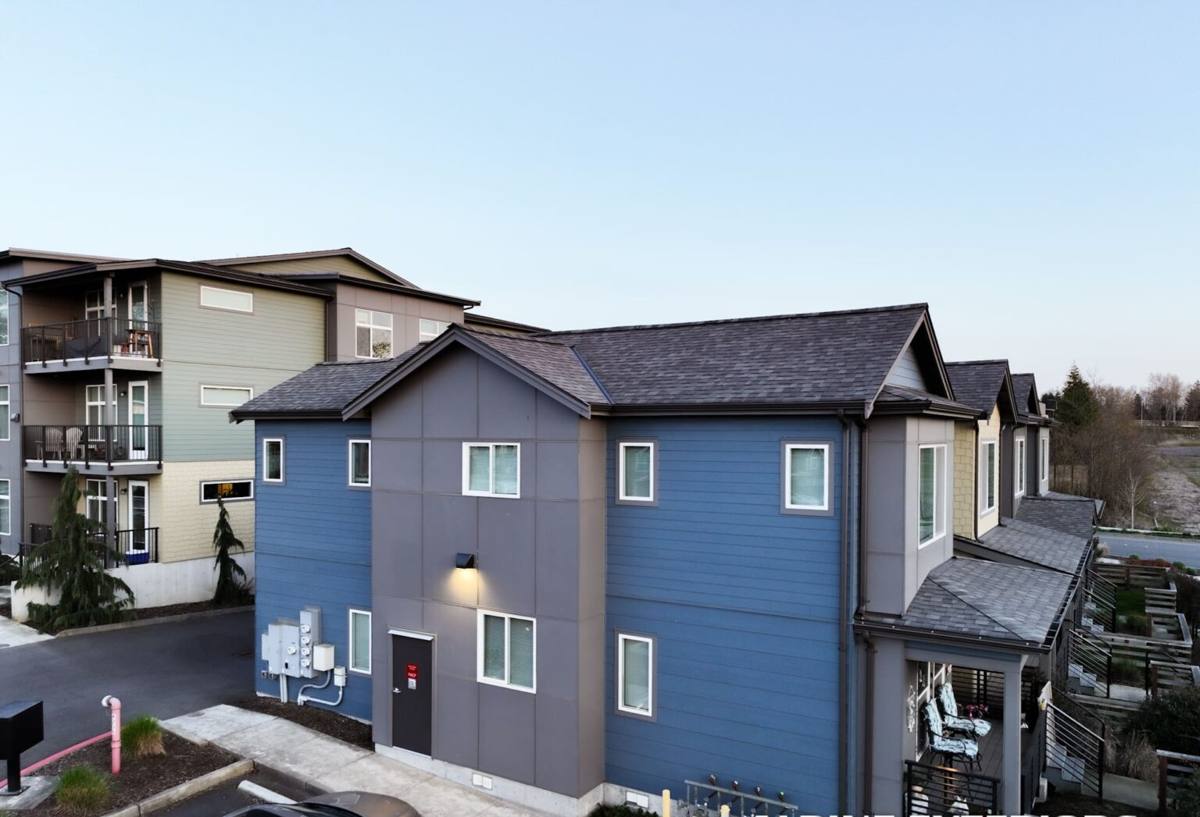
What Fiber Cement Solves That Other Materials Don't
James Hardie siding is fiber cement: a mix of cellulose fiber, sand, and Portland cement pressed and cured into planks, panels, and shingles. It doesn't rot, it isn't a food source for moss or mildew the way wood-based products are, and it's non-combustible. For a house exposed to Puget Sound's marine air, the practical benefit is that fiber cement doesn't corrode, swell, or delaminate the way some engineered wood and composite products can when they take on repeated moisture cycling.
Engineered for the Pacific Northwest specifically
Hardie manufactures regional product formulations, and the versions sold in this part of Washington are engineered for high-moisture, marine-influenced climates rather than a one-size-fits-all national spec. That distinction matters here more than in drier parts of the country, because the material is doing real work against a genuinely wet environment for most of the year, not just handling the occasional storm.
Choosing the Right Product Line and Finish
"James Hardie siding" isn't a single product — it's a system, and the right combination depends on the home's style and exposure.
Lap siding vs. shingle siding
HardiePlank lap siding is the most common choice for full exterior coverage and reads clean on traditional and craftsman-style homes alike. HardieShingle siding gives a shake-like texture that suits homes going for a more textured, Pacific Northwest look, often used as an accent on gables or a full treatment on cottage-style houses. Panel siding is another option for modern or board-and-batten looks. The right call depends on the home's architecture and which elevations take the worst weather.
ColorPlus factory finish
We specify ColorPlus finishes wherever possible. It's a baked-on, factory-applied color coat that resists fading and chipping far better than field-applied paint, and it comes with its own finish warranty separate from the substrate warranty. In a climate where exteriors sit wet for long stretches, a finish that was cured and bonded under controlled conditions holds up more predictably than paint applied on-site in variable weather.
What a Correct Installation Actually Involves
Fiber cement siding is only as good as the install behind it. Most of the failures we see on older homes trace back to installation shortcuts, not the material itself.
Water management comes first
Before a single piece of siding goes up, the wall needs a correctly lapped weather-resistant barrier, properly integrated flashing at every window, door, and penetration, and a drainage plane that lets any incidental moisture escape rather than pool behind the cladding. In a market with as much driving rain as this one, water management detailing is the difference between siding that lasts decades and siding that hides a rot problem behind it.
Gapping, fastening, and clearances
Hardie's install specs call for specific gaps at butt joints and terminations to allow for expansion, correct fastener spacing and embedment so panels don't work loose, and minimum clearance from grade, roofing, and decks so the bottom edge of the siding isn't sitting in standing water or splash-back. Skipping these details doesn't show up on day one — it shows up three or four winters later.
Caulking and joint treatment
Hardie's own guidance actually calls for less caulk than most crews use, not more — over-caulking can trap moisture instead of letting it drain. Knowing which joints need sealant and which need to breathe is a detail that separates crews who install Hardie occasionally from crews who install it every week.
| Product line | Best use on Shoreline homes | Maintenance in this climate |
|---|---|---|
| HardiePlank lap siding | Full exterior coverage, traditional and craftsman styles | Low — periodic rinse to clear salt film and moss spores |
| HardieShingle siding | Gable accents or full cottage-style treatments | Low to moderate — more surface texture can hold moss longer if shaded |
| HardiePanel siding | Modern or board-and-batten exteriors | Low — flat panels shed water and debris cleanly |
Our Process, Start to Finish
We keep the process straightforward because homeowners deserve to know what's happening at each stage:
- Free on-site evaluation of the existing siding, trim, and any moisture or rot found during removal
- Product and color selection, matched to the home's style and sun/shade exposure
- Tear-off and inspection of sheathing, with repairs addressed before any new material goes up
- Weather barrier and flashing installation at every penetration
- Siding installation to manufacturer spec, including correct fastening, gapping, and clearances
- Trim, caulking where appropriate, and final cleanup
- Final walkthrough with the homeowner before we consider the job done
Moss, Mildew, and Long-Term Maintenance
Even a correctly installed fiber cement exterior benefits from basic upkeep in a climate like this one. Moss and mildew are surface issues on Hardie siding rather than structural threats, since the material itself doesn't feed biological growth. But shaded, north-facing walls under tree canopy will still collect grime and moss spores over a wet winter.
- Rinse siding with a garden hose or low-pressure wash once or twice a year, focusing on shaded and north-facing walls
- Keep gutters clear so overflow doesn't run down the face of the siding
- Trim back tree branches and shrubs that keep siding shaded and damp
- Check caulking at trim and penetrations annually, especially after a hard winter
- Watch for streaking or dark staining at the bottom courses, which usually points to a splash-back or grade issue rather than a siding defect
Why We Only Install James Hardie
We don't offer vinyl, LP SmartSide, Cemplank, Allura, or primed wood siding, and that's a deliberate standard, not a limitation of what we can do. Vinyl siding can become brittle in cold snaps and flexes noticeably in wind-driven rain, and it's not a look that suits every home. Engineered wood products depend heavily on maintaining an intact factory coating; once that coating is compromised, moisture exposure becomes a real risk in a climate this wet. Primed wood requires ongoing paint maintenance that most homeowners underestimate until they're several years in.
James Hardie gives us a non-combustible, dimensionally stable product with a strong transferable warranty and a factory finish that holds color without repainting for a long time. When a product is engineered for climates like ours and backed by a manufacturer warranty that means something, that's what we put on homes — not because it's the only option that exists, but because it's the one we're willing to stand behind.
Why It Matters That We Already Work in Shoreline
A crew that only occasionally works this far north of Seattle is guessing at things a local crew already knows: how a given block's exposure to wind off the Sound affects flashing detail, how much moss pressure to expect on a shaded lot, and what King County's permitting and inspection process looks like for exterior work. That local familiarity shows up in small decisions throughout a job — where to add extra flashing attention, which elevations need closer joint inspection, how to sequence work around the wetter months.
What to ask before hiring a siding contractor here
- Are they a certified James Hardie installer, and can they explain their flashing and water-management approach in plain terms?
- Do they pull permits and schedule inspections, or ask you to skip that step?
- Will they inspect and repair sheathing before installing new siding, not just cover over what's there?
- Can they explain why they gap and fasten siding the way they do, rather than just saying "that's how we always do it"?
- Do they have experience specifically with homes exposed to marine air and heavy tree canopy, not just general siding work?
Cost Factors for a Shoreline Siding Project
Every home is different, but the same handful of variables drive most of the cost on a James Hardie install in this area.
| Factor | Why it affects cost |
|---|---|
| Home size and number of stories | More surface area and taller walls mean more material and labor, plus added equipment for upper stories |
| Tear-off vs. overlay | Full removal lets us inspect and repair sheathing, which is the right call on most older homes but adds labor |
| Existing moisture or rot damage | Hidden rot found during tear-off needs to be addressed before new siding goes up |
| Product line and texture | Lap, shingle, and panel siding carry different material and labor costs |
| Trim and detail work | Homes with more windows, dormers, and architectural detail take more time to flash and finish correctly |
| Color selection | ColorPlus factory finishes vs. site-applied paint affect both cost and long-term maintenance |
Getting Started
If your Shoreline home's siding is showing its age — chalky paint, visible moss buildup, soft spots near grade, or gaps that have opened up over the years — it's worth getting a straight answer on what's actually going on underneath before deciding what to do next. We'd be glad to take a look, walk you through what we find, and put together a clear, no-pressure estimate for a James Hardie install built for this climate. Use the form below to request a free estimate.