 Seattle
 Why Decks Wear Out Faster in Shoreline
Shoreline sits close enough to Puget Sound that salt-laden air reaches most yards in the city, and that changes how a deck ages. Salt air accelerates corrosion on fasteners, joist hangers, and any exposed metal hardware long before the wood itself looks bad. Add in the region's driving rain — often blown sideways by wind off the water — and water finds its way into joints, end grain, and ledger connections that a calmer climate wouldn't stress nearly as hard.
Then there's moss. King County's wet season runs long, and a deck that doesn't get much direct sun (common under mature trees or on the north side of a house) can stay damp for weeks at a stretch. Moss and algae aren't just cosmetic — they hold moisture against the deck surface and framing, which is exactly the condition that leads to rot, soft spots, and slippery footing.
None of this means a deck in Shoreline can't last. It means the framing, fasteners, and decking material all need to be chosen and installed with this specific combination of salt exposure, sustained rain, and shade-driven moss in mind — not just picked off a shelf because they're standard.
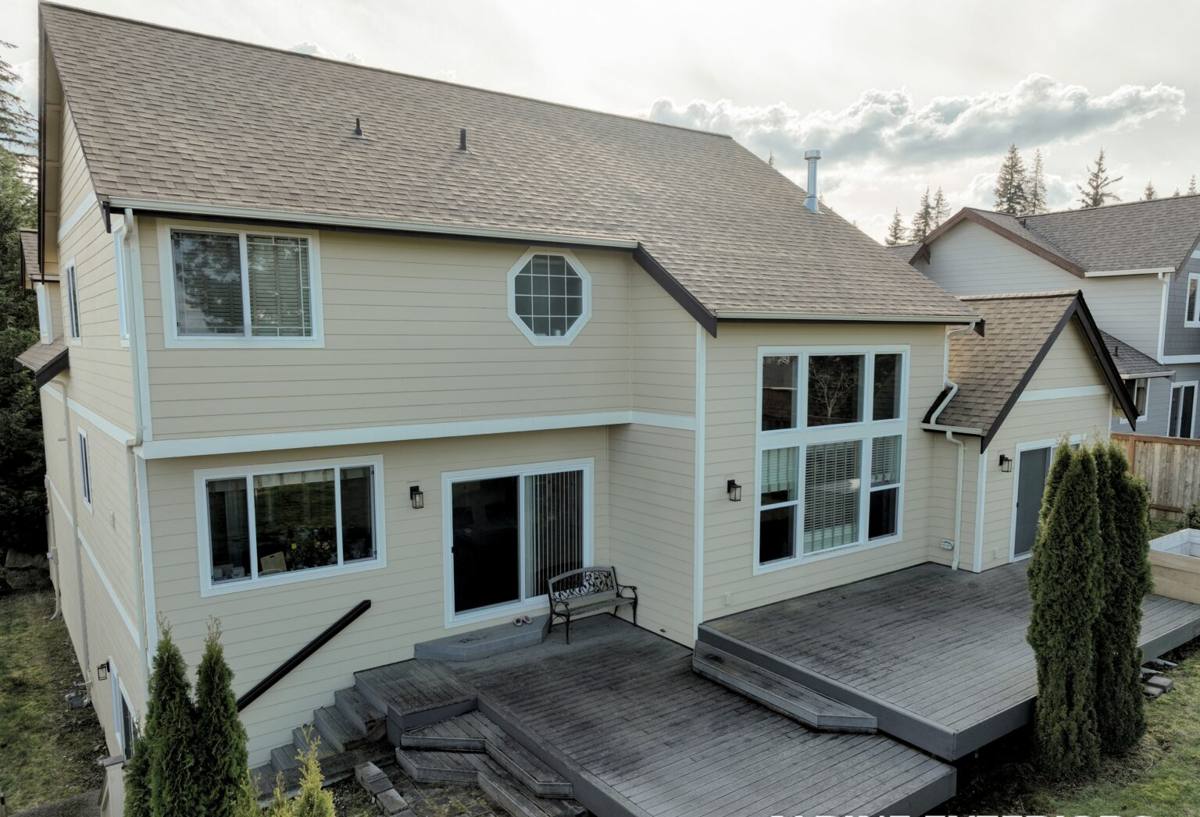
Repair, Resurface, or Full Replacement?
Not every tired deck needs to come out. But there's a point where patching stops making sense, and it's worth knowing where that line is before you spend money on the wrong fix.
Signs a full replacement is the right call
- Soft or spongy spots in the decking, especially near the house or in shaded areas
- Rust streaking or corroded fasteners visible at joist hangers and connections
- The ledger board (where the deck attaches to the house) shows staining, gaps, or softness
- Posts or footings that have shifted, are undersized, or sit directly in soil without proper support
- Persistent moss or algae that returns within weeks of cleaning, even after treatment
- The deck is more than 20-25 years old and was built before current fastening and flashing standards
If the problems are limited to surface boards on an otherwise sound frame, resurfacing can be a reasonable middle step. But if the framing, ledger, or footings are compromised, replacing boards on top of a failing structure just delays the real cost — and can hide a safety issue under new decking.
What a Correct Deck Replacement Actually Involves
A deck replacement done right in this climate is about what's underneath as much as what you walk on. Here's what we treat as non-negotiable.
Ledger and house connection
The ledger board is where most structural deck failures start, and it's also where water intrusion into the house is most likely if it's flashed poorly. A correct install uses proper flashing that directs water away from the house framing, not just caulk and hope. This matters more in Shoreline than in drier parts of the state simply because of how much rain that connection sees over a winter.
Framing and fasteners
Given the salt air here, we treat hardware selection as a real decision, not an afterthought — hot-dip galvanized or stainless fasteners and connectors hold up to salt exposure far better than standard coated hardware, which can start showing corrosion within a few seasons this close to the Sound.
Footings and posts
Footings need to sit below frost depth and bear on solid, undisturbed soil — not just be poured into whatever hole was already there from the old deck. If the original footings were undersized or improperly placed, replacement is the right time to correct that, even though it's less visible than the decking itself.
Drainage and airflow underneath
A deck that traps moisture underneath, with no airflow and no slope to shed water, is a deck that grows moss and rots framing regardless of what decking material sits on top. Grading, gapping, and ventilation choices at the framing stage matter as much as the surface material for long-term moss resistance.
Choosing Decking Material for This Climate
There's no universally "best" decking material — there's the right material for your budget, your maintenance appetite, and how much sun or shade your deck gets. In a climate with this much sustained moisture and moss pressure, the trade-offs are worth understanding upfront.
| Material | Moss/moisture behavior | Maintenance | Typical lifespan |
|---|---|---|---|
| Pressure-treated wood | Absorbs moisture readily; needs regular sealing to resist moss and rot in shaded areas | Annual cleaning, sealing every 1-2 years | 10-15 years with upkeep |
| Cedar | Naturally rot-resistant but still absorbs moisture without finish upkeep | Cleaning and re-staining every 1-2 years | 15-20 years with upkeep |
| Capped composite | Shell resists moisture absorption; still needs periodic cleaning to prevent surface moss/algae buildup | Periodic washing, no staining/sealing | 25-30+ years, manufacturer-backed |
| PVC decking | Fully synthetic, essentially non-absorbent; best moss resistance of the group | Occasional washing | 25-30+ years, manufacturer-backed |
Uncapped or older-style composite products are one category we steer clients away from in this climate as a standing practice — early composite formulations were more prone to moisture absorption at the core and surface mold in sustained wet, shaded conditions, which is exactly the environment a lot of Shoreline yards provide. That's a maintenance and moisture-behavior trade-off, not a knock on any specific brand — capped composite and PVC products solved that core issue, which is why we favor them for decks that don't get much direct sun.
How Our Process Works
1. On-site assessment
We look at the existing deck's framing, ledger connection, footings, and drainage — not just the surface — so you know whether you're actually looking at a repair or a full tear-off before we quote anything.
2. Material and design conversation
We walk through decking material options against your sun exposure, budget, and how much upkeep you actually want to do, plus any structural changes (size, stairs, railing) you're considering.
3. Permitting
We handle the permit process where required and build to current code, including proper ledger flashing, fastener specification, and footing depth — details that matter more for longevity here than they would in a drier climate.
4. Tear-off and structural rebuild
Old decking, framing, and any compromised footings come out. Framing goes in with corrosion-resistant hardware and proper flashing at the house connection before a single deck board goes down.
5. Decking, railing, and finish work
Decking is installed with the gapping and fastening pattern the manufacturer specifies for wet-climate performance, followed by railing, stairs, and any trim or lighting.
6. Final walkthrough
We go over the finished deck with you, including what maintenance (if any) the material requires and what to watch for as it settles in through its first wet season.
Permits and Local Considerations
Most deck replacements in Shoreline require a permit, particularly when the deck is attached to the house or elevated more than a modest height above grade — the exact threshold and requirements are set by the city, so it's worth confirming before work starts rather than assuming your old deck's footprint is automatically compliant. Building on King County's coastline also means local code often expects corrosion-resistant fasteners and connectors as a baseline, not an upgrade, given how common salt air exposure is this close to the Sound. We pull permits as part of the job so you're not left managing that process on your own.
Keeping a New Deck Looking Good Through the Wet Season
Even the lowest-maintenance materials benefit from a little seasonal attention in this climate. A simple routine goes a long way toward keeping moss from taking hold again.
- Sweep leaves and debris off the deck regularly in fall — trapped organic matter is what moss and algae feed on
- Rinse or wash the surface a couple of times a year, more often in heavily shaded areas
- Keep gutters and downspouts clear so runoff isn't draining directly onto or under the deck
- Trim back overhanging branches to let more light and air reach shaded sections
- Check railings, stairs, and fastener heads once a year for early signs of corrosion or loosening
- For wood decking, re-seal on the schedule the product calls for — don't wait until it's visibly gray and dry
Why It Matters to Hire a Crew That Already Works in Shoreline
A deck built to a generic national spec can still fail early here if it wasn't built with Puget Sound conditions in mind. Fastener choice, flashing detail at the ledger, footing depth, and even how much airflow the framing allows underneath are all decisions that matter more in a climate with this much sustained rain and salt exposure than they would somewhere drier. A crew that regularly works decks in this area has already seen which shortcuts cause callbacks in year three instead of year fifteen, and builds around that from the start rather than learning it on your project.
If your deck is showing its age — soft spots, corroding hardware, moss that won't quit, or just a structure that's past its reasonable service life — we're happy to come take a look. We'll give you an honest read on repair versus replacement and a straightforward estimate, with no pressure either way. Reach out through the form below to get started.