 Seattle
 New-Construction Windows: What the Term Actually Means
"New-construction window" is a specific term, not just a window going into a new house. It refers to a window with a nailing fin (sometimes called a flange) built into the frame, designed to be installed before the siding goes on and integrated directly into the wall's weather-resistive barrier (WRB) and flashing system. This is different from a "pocket" or "insert" replacement window, which is sized to slide into an existing frame during a remodel without disturbing the exterior wall.
For a home actually under construction, or for an addition, garage conversion, or full wall replacement in Shoreline, the nailing-fin style is almost always the right approach. It lets the flashing, sill pan, and WRB layers do their job as a system rather than relying on caulk and hope after the fact. Get this stage wrong and you don't find out until years later, when water has already worked its way behind the siding.
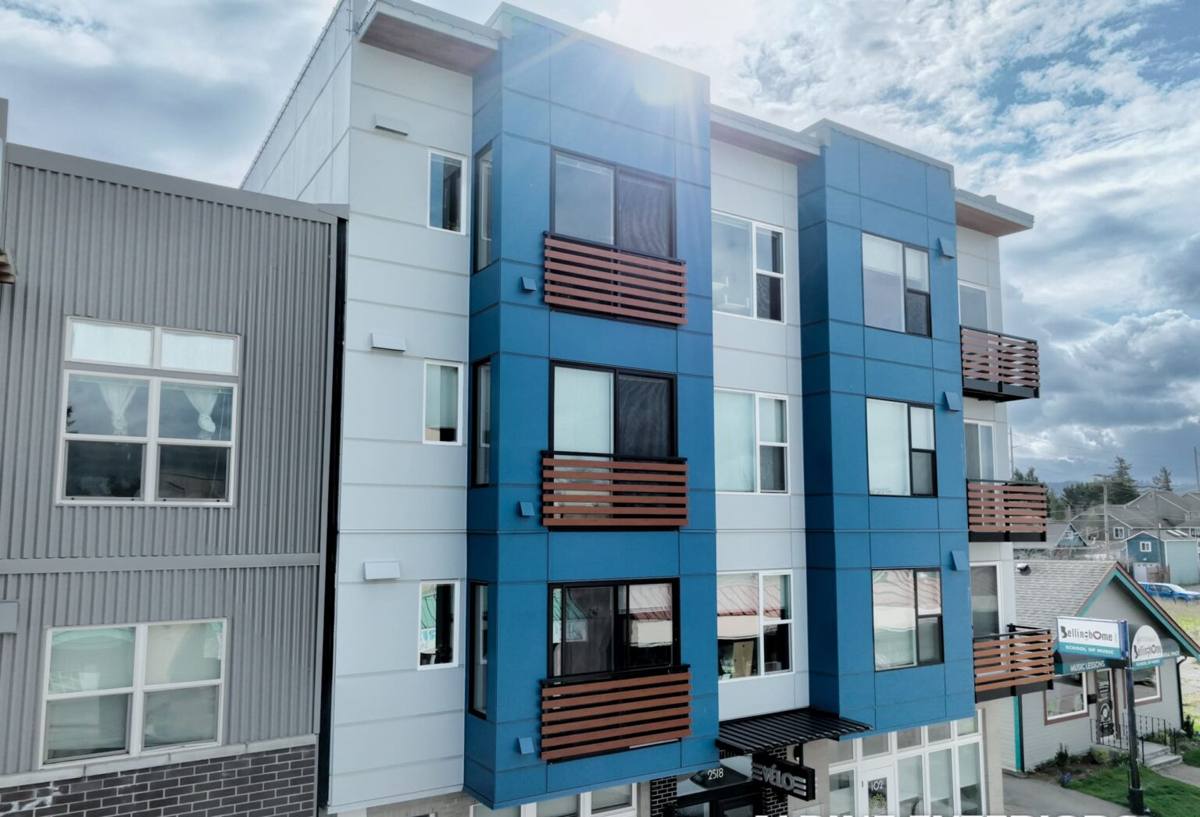
Why Shoreline's Climate Changes the Calculus
Shoreline sits right up against Puget Sound, and that proximity matters for window performance in ways that a builder working inland doesn't have to think about as much. Salt-laden air off the water accelerates corrosion on hardware, fasteners, and lower-grade cladding over time. Add in King County's long wet season — driving rain that comes in sideways off the Sound during winter storms — and any gap in the flashing detail becomes a slow leak instead of a dry wall.
Then there's moss. Shoreline's tree cover and near-constant damp keep north- and west-facing exteriors shaded and moist for much of the year, which is exactly what moss and algae need to take hold on sills, tracks, and exterior trim. None of this makes new-construction windows harder to install correctly — it just means there's less room for shortcuts. A window installed to a "good enough for drier climates" standard tends to show its weaknesses here faster than it would somewhere with less rain and less salt exposure.
What This Means in Practice
- Corrosion-resistant fasteners and hardware matter more here than in drier inland areas
- Sill pan flashing isn't optional — it's the difference between a nuisance leak and hidden rot
- Frame materials and finishes need to tolerate sustained moisture, not just occasional rain
- Drainage paths (weep holes, sloped sills) need to stay clear, since Shoreline's shade slows drying time
What a Correct New-Construction Installation Involves
The window itself is only part of the job. Most leaks and failures we're called to fix on newer homes trace back to the installation sequence, not the product. A proper install follows a specific order, and each layer has to lap over the one below it like shingles on a roof — never the reverse.
The Sequence That Matters
- WRB (house wrap) installed and lapped correctly around the rough opening
- Sill pan flashing set at the base of the opening, sloped to drain outward, not inward
- Window set into the opening, shimmed level and plumb, fastened through the nailing fin per the manufacturer's schedule
- Flashing tape applied to the side flanges, then the head flange, in that order — each strip overlapping the one before it
- Sealant applied at the specified points only — over-sealing can trap water instead of keeping it out
- Interior air sealing and insulation around the frame, separate from the exterior weatherproofing
Skipping the sill pan, reversing the flashing order, or relying on caulk to make up for a missed step are the most common shortcuts we see on homes that develop rot or interior staining within the first few years. In a climate like Shoreline's, those mistakes surface faster than they would in a drier region, because there's simply more water testing the assembly.
Choosing the Right Frame Material and Glass Package
New construction gives you a real choice of frame material, since you're not constrained by an existing pocket size. For a Puget Sound location like Shoreline, we weigh salt exposure, moisture exposure, and long-term maintenance alongside upfront cost.
| Frame Material | How It Handles Salt Air & Rain | Maintenance | Typical Fit |
|---|---|---|---|
| Vinyl | Won't corrode or rot; performs well in wet, salty air | Low — occasional cleaning | Most standard new-construction builds |
| Fiberglass | Excellent moisture and temperature stability; very low expansion/contraction | Low | Larger openings, higher-end builds |
| Wood-clad (aluminum or fiberglass exterior) | Good if cladding and flashing are done correctly; exposed wood interior needs protection from interior moisture | Moderate — depends on cladding integrity | Homeowners wanting a wood interior look |
| Aluminum | Prone to corrosion near saltwater without marine-grade coatings; conducts cold, increasing condensation risk | Moderate to high | Rarely our recommendation this close to the Sound |
On glass, we generally spec double-pane, low-E coated units as a baseline for this area, with attention to the window's condensation resistance rating, not just its U-factor. A window that scores well on energy efficiency but poorly on condensation resistance can still fog or sweat on the interior during Shoreline's cold, damp winter mornings.
How We Approach New-Construction Jobs in Shoreline
Whether we're working directly with a homeowner building new or coordinating with a general contractor on a build already underway, the process looks the same:
1. Rough Opening Review
We check rough openings against the actual window schedule before anything is installed — undersized or out-of-square openings are far easier to fix before the WRB goes on than after.
2. Flashing and Sill Pan Installation
We install sill pans and integrate flashing with the WRB per the window manufacturer's written instructions, since that's usually what governs warranty coverage if something ever needs to be claimed.
3. Window Setting and Fastening
Windows are shimmed, checked for level and plumb, and fastened per the specified nailing pattern — not just "enough to hold it in place."
4. Exterior Flashing and Sealant
Tape and sealant go on in the correct order and only at the points specified, so water sheds out and away from the wall assembly.
5. Final Walkthrough
Before siding closes everything in, we walk the openings with the builder or homeowner. Once siding is on, flashing mistakes are expensive to correct — this is the last easy point to catch them.
Mistakes We See Even From Otherwise Good Crews
Most window failures we get called out to inspect in Shoreline and the surrounding King County area aren't due to a bad product. They're installation issues, usually from crews rushing the flashing sequence or treating it as interchangeable with general framing work.
- Sill pan flashing skipped or replaced with just a bead of caulk
- Flashing tape applied out of sequence, so water runs behind a lap instead of over it
- Nailing fins fastened inconsistently, leaving the frame able to shift or rack over time
- Sealant applied everywhere "to be safe," which can trap moisture that has no way to drain out
- Weep holes or drainage gaps blocked by insulation, trim, or overspray
- Window sized or shimmed incorrectly, leading to operational problems (hard-to-open sashes, poor seal at the latch)
Permits, Energy Code, and Egress Requirements
New-construction windows in Shoreline fall under Washington State's energy code and King County's adopted building code, which set minimum requirements for U-factor and, in bedrooms, egress dimensions (a minimum clear opening size and sill height for emergency exit). These aren't just paperwork — an inspector will check window schedules against the approved plans, and a window that doesn't meet egress sizing in a bedroom can hold up your final inspection.
We factor code compliance into the window schedule from the start rather than discovering a problem at inspection. If you're working with a general contractor, we're glad to coordinate directly with them on window specs, order timing, and inspection scheduling so nothing falls through the cracks between trades.
Living With New Windows in Shoreline's Climate
A correctly installed window in this climate still needs some basic upkeep to perform well long-term:
- Clear weep holes and tracks of debris and moss growth at least once or twice a year, more often on shaded, north-facing walls
- Rinse salt residue and grime off exterior frames periodically, especially on homes closer to the water
- Check exterior sealant joints annually for cracking or separation, and have any gaps addressed before the next wet season
- Keep gutters and downspouts clear so runoff isn't sheeting directly across window heads
None of this is heavy maintenance, but it's the kind of thing that's easy to let slide — and in a climate that stays wet and shaded much of the year, small maintenance gaps turn into bigger problems faster than they would somewhere drier.
Why Local Installation Experience Matters
Window installation instructions look the same whether the job is in a dry inland climate or right on Puget Sound, but the margin for error isn't. A crew that mostly works in less demanding conditions can install a window correctly on paper and still miss the details that matter most here — the sill pan slope, the fastener choice, keeping drainage paths clear under heavy tree cover. We work new-construction jobs throughout Shoreline and the greater Seattle area regularly, so we're accounting for salt air, driving rain, and moss season as a matter of routine, not as an afterthought.
If you're planning new construction, an addition, or a window package for a build in Shoreline, we're happy to walk through your plans, talk through frame and glass options, and give you a straightforward, no-pressure estimate using the form below.