 Seattle
 Shoreline's Roofs Work Harder Than Most
Shoreline sits right along Puget Sound, and that location shapes everything about how a roof ages here. Salt-laden air drifts in off the water and slowly works on exposed metal fasteners, flashing, and vent caps. Add King County's long wet season, where driving rain comes in sideways during winter storms, and you've got moisture finding its way into every gap, lap, and penetration point a roof has. Then there's the tree canopy that gives so many Shoreline neighborhoods their character — beautiful, but it also means shade, damp debris, and a moss season that can run eight months or more in a typical year.
None of this means a Shoreline roof is doomed. It means the repair work has to account for these specific pressures instead of treating every roof the same way a dry-climate crew might. A patch that would hold up fine in Spokane can fail in two years here if it doesn't account for wind-driven rain and moss regrowth.
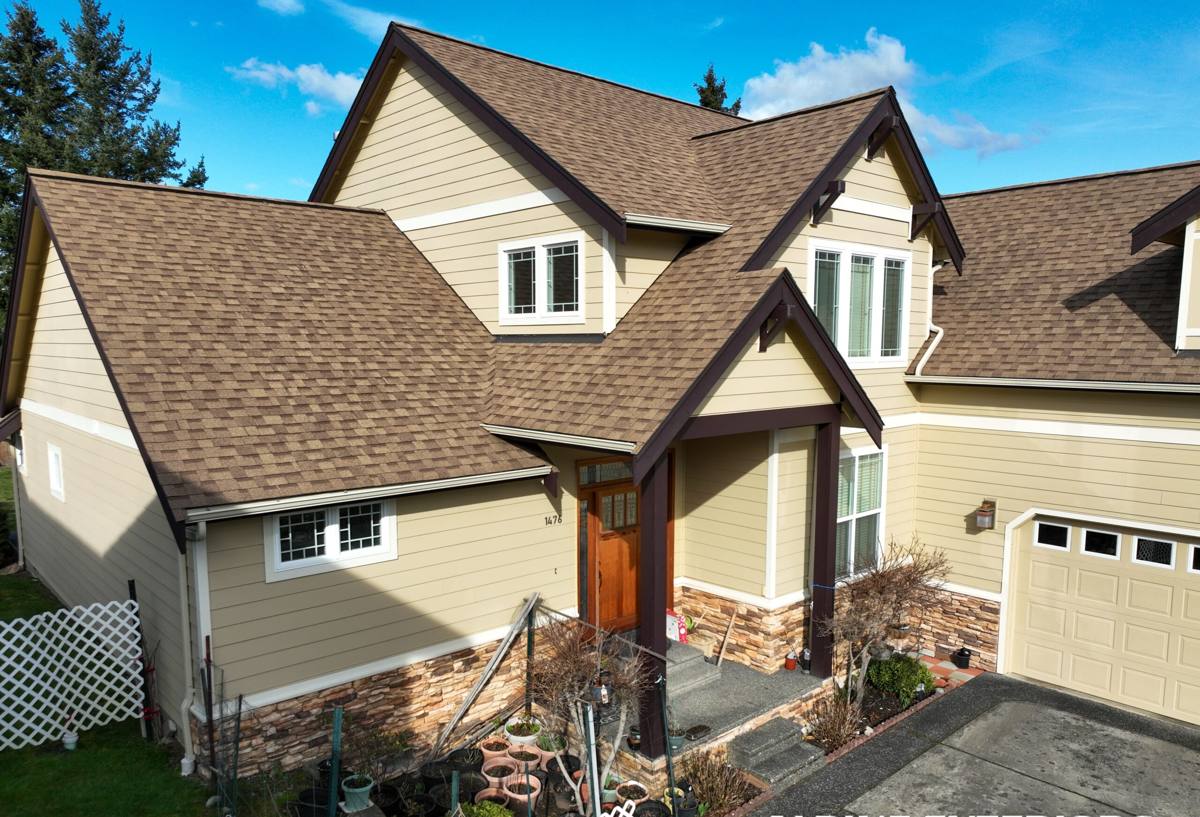
Moss: The Damage You Don't See Until It's Expensive
Moss gets treated as a cosmetic nuisance, but it's one of the more destructive things that happens to a roof in this part of Washington. It's not that moss eats through shingles directly — it's what moss does around it.
How moss actually causes damage
Moss holds moisture against the roof surface long after the rest of the roof has dried out. On composition shingles, that constant dampness breaks down the granules and asphalt mat underneath faster than normal weathering would. On wood shake or shingle roofs, it's worse — moss roots work into the wood grain and hold water directly against it, accelerating rot. Moss mats also lift shingle edges slightly as they grow, which gives wind-driven rain a path underneath during storms.
Cleaning versus prevention
A one-time moss removal helps, but it doesn't solve the underlying problem if the roof stays shaded and damp. Long-term moss control usually means a combination of careful physical removal (never pressure-washing, which strips granules and shortens shingle life), a treatment application, and often zinc or copper strips installed near the ridge that release trace metals with each rain and inhibit regrowth over time. We treat moss control as part of repair work, not a separate add-on — a repair that ignores active moss just fails again.
Signs a Shoreline Roof Needs Repair Now
Most roof problems in this climate start small and stay hidden until there's a leak inside the house. Homeowners who catch issues early spend far less than those who wait for a ceiling stain to show up. Watch for:
- Dark streaking or thick moss growth concentrated on north-facing or shaded slopes
- Granules collecting in gutters or at downspout outlets, especially after a windstorm
- Curling, cracked, or lifted shingle edges, particularly on slopes that catch the prevailing wind off the Sound
- Rusted or discolored flashing around chimneys, skylights, and roof-to-wall transitions
- Soft spots underfoot near valleys or penetrations, a sign moisture has already reached the decking
- Daylight visible through the attic roof deck, or damp insulation below it
- Gutters that overflow during heavy rain even when they're clear of debris, which usually points to a roof drainage or slope issue rather than the gutter itself
Any one of these is worth a look. Several at once usually means the repair window is closing and a fuller assessment makes sense.
What an Honest Repair Actually Involves
A proper roof repair isn't just sealing the spot where water is currently getting in. Water travels along the roof deck before it drips through the ceiling, so the visible leak is rarely directly above the actual source.
- Find the real entry point. This means checking flashing, fastener heads, valleys, and any roof penetration uphill from the interior stain — not just the nearest shingle.
- Check the decking underneath. If plywood or sheathing has softened from sustained moisture, patching over it just delays a bigger repair. Soft decking gets cut out and replaced before anything goes back on top.
- Replace flashing, not just shingles. Flashing around chimneys, skylights, and wall intersections fails more often than field shingles in this climate. Reusing old flashing to save time is a common shortcut that leads to repeat leaks.
- Match materials correctly. New shingles should match the existing roof's type, weight, and where possible, color batch so the repair doesn't stand out or create a mismatched wear pattern down the line.
- Address the moss or debris that contributed to the failure. If shaded, moss-prone areas caused the original damage, a repair that doesn't include cleanup and treatment is just buying time.
Repair or Replace? How We Help You Decide
Not every damaged roof needs a full replacement, and not every roof that looks rough from the ground is actually in trouble. The honest answer depends on the roof's age, how widespread the damage is, and what's happening at the deck level.
| Factor | Leans Toward Repair | Leans Toward Replacement |
|---|---|---|
| Roof age | Under 15-20 years, within expected service life | At or beyond material's rated lifespan |
| Damage extent | Isolated to one slope, valley, or penetration | Spread across multiple slopes or the whole roof |
| Decking condition | Solid, dry sheathing beneath the damaged area | Widespread soft spots or rot in the deck |
| Moss/algae staining | Surface-level, recent growth | Long-term staining with granule loss underneath |
| Shingle granule loss | Minor, localized | Heavy loss across most of the roof surface |
We'll walk the roof, check the attic side where accessible, and give you a straight answer — including telling you when repair is the right call even if replacement would be the bigger job for us.
Materials That Hold Up in This Climate
What we use for a repair matters as much as the workmanship. In a marine climate with salt air and heavy moss pressure, some choices age noticeably better than others.
- Fasteners: Corrosion-resistant roofing nails and flashing hardware hold up far longer near the Sound than standard-grade fasteners, which can start rusting within a few years.
- Underlayment: Synthetic underlayment sheds wind-driven rain better than older felt products and doesn't break down as quickly in sustained damp conditions.
- Flashing metal: Aluminum and galvanized flashing both work, but installation detail (proper laps, sealant placement) matters more than the metal choice itself — a well-installed roof with modest materials outperforms a poorly detailed one with premium materials.
- Moss-resistant options: Some shingle lines include copper or zinc granules built in specifically to slow moss and algae regrowth, which can be worth discussing for a repair on a heavily shaded slope.
How We Handle a Repair Visit
Because we work throughout Shoreline and the surrounding King County area regularly, we're familiar with how the housing stock here was built and where problems tend to show up first — many homes in this area date to the mid-20th century, and their original roof detailing wasn't always built for the moss and moisture load these lots see under mature tree cover. That familiarity shortens the assessment. We're not guessing at what "normal" looks like for this area's roofs.
A typical repair visit includes an on-roof inspection where safely accessible, photos of the problem areas, a clear explanation of what's causing the issue (not just what's leaking), and a written scope before any work starts. We tell you what's urgent, what can reasonably wait, and what's just cosmetic.
A Realistic Maintenance Schedule
Roofs in this climate benefit from a maintenance rhythm rather than a one-time fix-and-forget approach. A reasonable schedule for a Shoreline home looks something like this:
- Twice a year: Clear gutters and downspouts, especially after fall leaf drop and before the wettest winter months.
- Annually: Visual check for moss growth, lifted shingles, and flashing condition, ideally in early fall before the heavy rains set in.
- Every 2-3 years: Moss treatment reapplication on shaded slopes, sooner if regrowth is heavy.
- After major windstorms: A quick check for lifted or missing shingles, since wind off the Sound can do damage that isn't obvious from the ground.
Why It Matters Who Does the Repair
Roof repair looks simple from the ground, but a poorly executed one can trap moisture rather than shed it, which sometimes causes more damage than the original problem. A crew that regularly works Shoreline roofs already understands the interplay between shade, moss, and wind-driven rain that defines this area's roofing challenges — that's different knowledge than a crew that mostly works drier, more open parts of King County. We stand behind our repair work and explain our reasoning at every step, because a homeowner who understands what was done and why is in a much better position to maintain the roof going forward.
If you're noticing moss buildup, a stain on a ceiling, or just want an honest read on your roof's condition, we're happy to take a look. The estimate is free, there's no pressure to move forward, and you'll get a straight answer either way — use the form below to get started.