 Seattle
 University District's Climate Puts Real Demands on Exterior Siding
University District sits inside Seattle's broader Puget Sound marine climate, which means exterior siding here isn't just dealing with rain — it's dealing with wind-driven rain that hits walls sideways, salt-tinged air that moves inland off the Sound, and long stretches of overcast, damp weather that can keep wall surfaces wet for days at a time. Add in King County's extended moss season, which runs longer here than in drier parts of the country, and you have a climate that actively works against weak siding materials year-round, not just in winter.
University District's housing stock adds another layer to this. The neighborhood has a mix of older single-family homes — many built in the early-to-mid 1900s — alongside a dense concentration of rental housing and multifamily buildings that serve the University of Washington community. Mature street trees are common throughout the area, which is good for shade and character but bad for siding: tree canopy keeps walls shaded and slow to dry, drops organic debris into wall cavities and trim, and creates the exact damp, low-light conditions moss and algae need to establish.
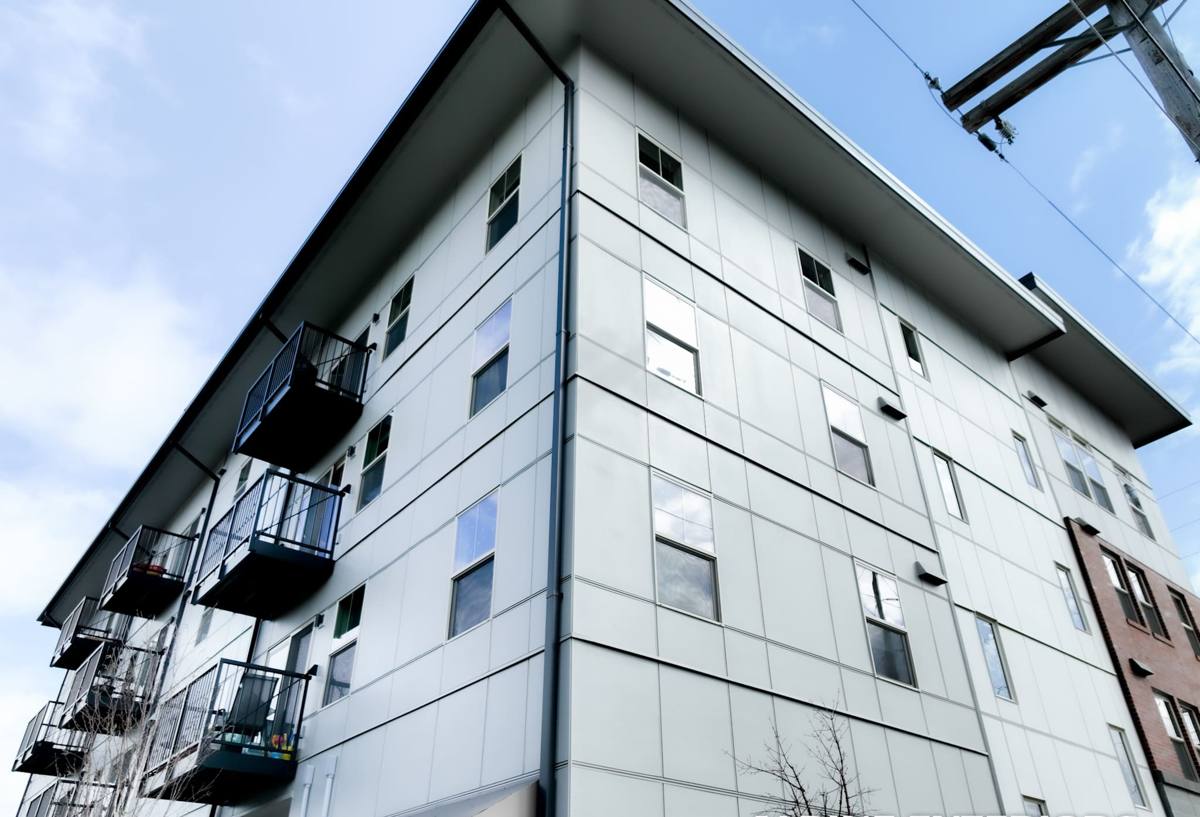
What Moss, Mildew, and Driving Rain Actually Do to Siding Over Time
Moss doesn't just sit on top of siding — it roots into seams, lap joints, and any surface irregularity it can grip. Once established, it holds moisture directly against the siding material around the clock, which is worse than open exposure to rain. On wood siding and lower-grade composite products, that sustained moisture leads to soft spots, swelling, and eventually rot at butt joints and lower courses. On older or improperly finished fiber cement, it shows up as persistent green-black staining that pressure washing only knocks back temporarily.
Driving rain compounds the problem. When wind pushes rain sideways instead of straight down, water finds its way behind trim, into unsealed laps, and around fasteners that weren't set correctly. Over enough winters, that moisture works its way into the wall assembly itself — not just the siding surface — which is where real damage and expensive repairs start.
Why James Hardie Is the Only Siding We Install in University District
We install James Hardie fiber cement exclusively. We don't install vinyl, LP SmartSide, primed wood, or cedar, and that's a deliberate standard, not a sales default. Fiber cement is non-combustible, which matters in a region where wildfire smoke and ember exposure have become a real seasonal concern even in urban King County. James Hardie's HZ5 product line is engineered specifically for climates like ours — moisture-heavy, freeze-thaw-capable, and moss-prone — with a formulation designed to resist the swelling, cracking, and moisture absorption that shorten the life of lesser siding materials.
The other piece is the ColorPlus factory finish. Instead of field-applied paint, which weathers unevenly and needs repainting on a cycle, ColorPlus is baked on in a controlled factory process that holds color and resists the staining moss and algae leave behind far longer than site-painted siding. Combined with a strong transferable warranty, it's a product built to actually perform through University District's damp, shaded, salt-air conditions — not just look good on installation day.
What "Climate-Engineered" Actually Means
HZ5 isn't a marketing label — it's a specific formulation with moisture-resistance and durability testing tied to regions that see sustained wet weather, which describes University District for most of the year. It's the reason we don't substitute a cheaper Hardie line or a competing fiber cement product on projects in this neighborhood.
HardiePlank, Panel, or Shingle — Matching the Product to U-District's Housing Stock
University District's mix of classic craftsman homes and denser rental or multifamily buildings means the right Hardie product isn't always the same from block to block. Here's how the main options compare for this neighborhood:
| Product | Best Fit | Why It Works Here |
|---|---|---|
| HardiePlank Lap Siding | Craftsman and traditional single-family homes | Matches the horizontal lap look common on older U-District homes; wide texture and color range |
| HardieShingle | Homes with gable accents or shingle-style detailing | Preserves period character without the maintenance burden of real cedar shingle |
| HardiePanel | Multifamily and rental properties | Faster coverage on larger wall areas, straightforward long-term maintenance for landlords |
| HardieTrim | All property types | Rot-proof trim at corners and openings, the most common failure point under driving rain |
What a Correct Installation Involves
Fiber cement siding is only as good as the water management behind it. In a climate that pushes rain sideways for months at a time, the details most homeowners never see are what actually keep a wall dry:
- A continuous, correctly lapped water-resistive barrier behind the siding, not just housewrap stapled up loosely
- Properly flashed windows, doors, and any wall penetrations, installed before siding goes on, not caulked after the fact
- Correct fastener placement and depth per James Hardie's published specifications — over-driven or under-driven nails are a leading cause of early failure
- Proper clearance between siding and grade, decks, and roof lines so water has somewhere to go instead of wicking upward
- Sealed, backed joints at butt seams and corners, using the right sealant for a product that expands and contracts with moisture and temperature
Skipping any one of these doesn't show up on installation day — it shows up three or five winters later as staining, soft trim, or moisture behind the wall. This is where installer discipline matters as much as the product itself.
Our Process for a University District Siding Project
We start with an on-site assessment that includes checking for existing moisture damage, not just measuring wall area. If your current siding has been trapping water — common with older wood or aging composite siding under tree canopy — we identify that before proposing a scope, not after removal.
- Assessment and moisture check — inspecting sheathing condition, trim, flashing, and any areas with visible moss or staining history
- Tear-off and prep — removing existing siding, repairing or replacing damaged sheathing, and installing a correct water-resistive barrier
- Installation to James Hardie specification — proper fastening, flashing, gapping, and joint treatment throughout
- Final inspection and cleanup — checking every seam and penetration before we call the job done
University District's dense lots, street parking, and mature trees also mean logistics matter more here than in a suburban setting. We plan for tree and root protection, tight scaffolding access, and — for rental and multifamily properties — scheduling that respects tenants and property managers rather than treating every job like a single-family driveway install.
Cost Factors for a University District Siding Project
Every home is different, but the same factors tend to drive cost up or down across the neighborhood's housing mix:
| Factor | Impact on Cost |
|---|---|
| Home size and wall complexity | More wall area and more corners, dormers, or gables increase material and labor |
| Condition of existing sheathing | Hidden moisture damage found during tear-off adds repair scope |
| Access and site constraints | Tight lots, street parking, and mature trees can affect staging and scaffolding time |
| Product selection | Plank, shingle, and panel carry different material and labor costs |
| Trim and detail work | Craftsman-era trim detailing takes more time than a simple panel elevation |
We provide a written, itemized estimate after the on-site assessment — not a rough number over the phone — so you know exactly what you're paying for before work starts.
Signs Your University District Home Needs New Siding
- Persistent green or black staining that returns within a season of cleaning
- Soft, spongy, or visibly warped siding, especially near the ground or under gutters
- Paint that's peeling or bubbling repeatedly in the same spots
- Visible gaps, cracks, or separation at seams and corners
- Moss growth that's thick enough to hold moisture rather than just discolor the surface
- Rising energy bills that may point to compromised insulation behind failing siding
Why Hiring a Crew That Already Works University District Matters
A crew that regularly works this neighborhood already understands its older wall assemblies, the realities of installing on tight urban lots with limited staging space, and how to work around mature trees without damaging root systems or triggering unnecessary tree-protection issues. We're also familiar with City of Seattle permitting requirements and the practical difference between a straightforward single-family install and a multifamily or rental property where tenant coordination is part of the job.
That local familiarity translates directly into fewer surprises mid-project — which matters most in a climate where every week the walls sit open is a week exposed to Seattle's rain.
If your University District home's siding is showing its age, we'll come take a look and give you a straight, no-pressure assessment of what it actually needs. Use the form below to request a free estimate.