 Seattle
 Windows Built for University District's Weather, Not Just Its Style
University District sits close enough to Puget Sound and Lake Washington that homes here deal with a steady mix of driving rain, damp air, and the kind of prolonged gray stretches that give moss and mildew all the time they need to take hold. Add in the salt-tinged air that moves through the Seattle area off the Sound, and window assemblies here work harder than they would in a drier climate. A window that's merely "installed" isn't the same as a window that's installed correctly for this environment. The difference shows up in year three, five, and ten — not on day one.
Window installation in this neighborhood means paying close attention to the building envelope around the window, not just the window unit itself. Older University District homes — a mix of early-1900s craftsman and foursquare houses, mid-century builds, and newer infill construction near the university corridor — each bring their own quirks to a window replacement or new install. What they share is exposure to King County's wet season for a good chunk of the year, which makes flashing, drainage, and sealing details every bit as important as the glass and frame you choose.
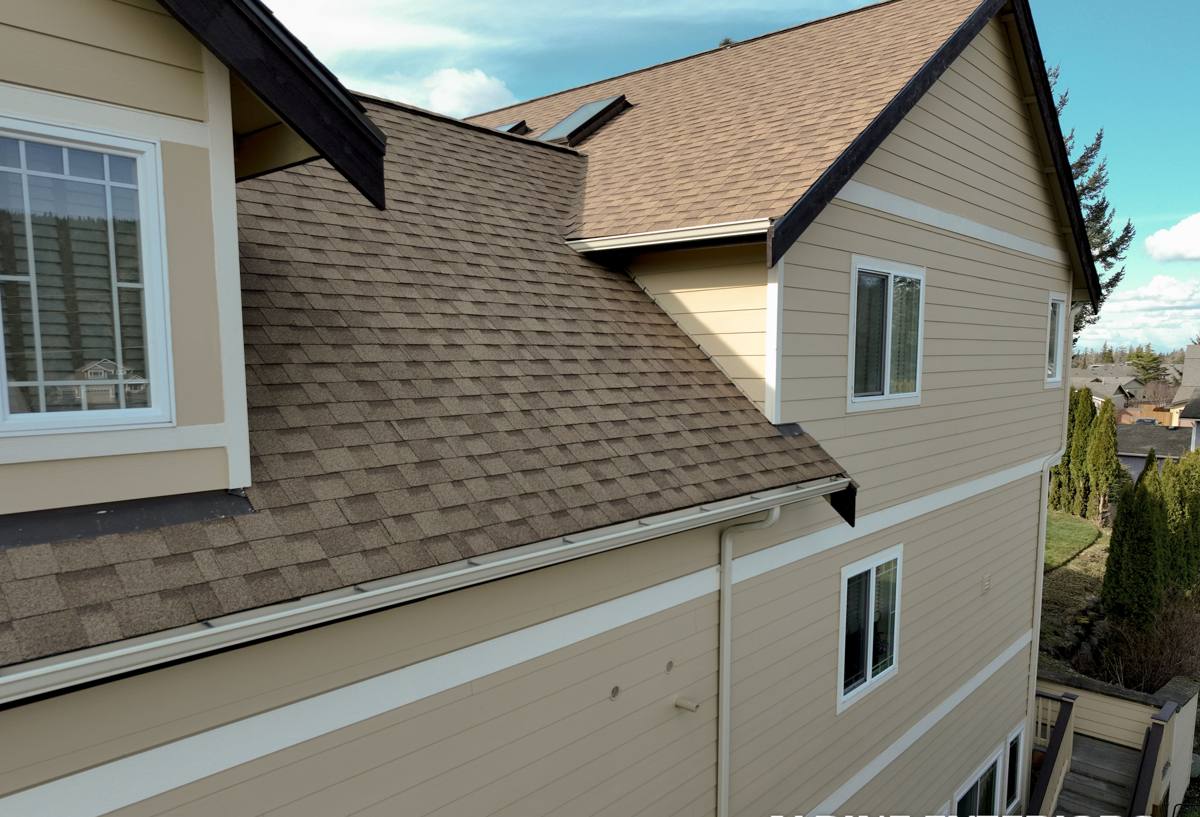
What Seattle's Climate Demands From a Window Installation
Moisture Management Comes First
Rain doesn't just fall in Seattle — it drives sideways in a stiff wind often enough that window installers here have to plan for water intrusion at the rough opening, not just at the visible trim. A correct install includes a properly lapped weather-resistive barrier, sill pan flashing that directs any water back outside the wall rather than into the framing, and head flashing that sheds water away from the top of the window rather than funneling it behind the siding.
Moss and Mildew Season Is Long
Because University District gets extended stretches of damp, low-light weather, anything that traps moisture against wood — old caulk lines, clogged weep holes, or trim without a drip edge — becomes a growth site for moss and mildew faster than it would in a sunnier climate. Window and trim details need to be built to shed water quickly and dry out between rain events, not just look tidy on installation day.
Salt Air and Material Fatigue
Homes closer to the water pick up trace salt air that accelerates corrosion on unprotected fasteners and hardware, and it can also degrade certain sealants and finishes faster than inland installations. We account for this with corrosion-resistant fasteners and sealants rated for the coastal Pacific Northwest environment, not just generic hardware store products.
What a Correct Window Installation Actually Involves
A window replacement is really an envelope repair project that happens to include a new window. The steps that matter most, in order:
- Remove the old unit carefully and inspect the rough opening, sill, and surrounding framing for hidden rot or water staining — common in older University District homes where original windows have been leaking slowly for years.
- Repair any damaged framing or sheathing before the new window goes in. Installing a new window over compromised framing just hides the problem, it doesn't fix it.
- Install sill pan flashing to catch and redirect any water that gets past the window itself.
- Set the window level, plumb, and square, then fasten according to the manufacturer's specifications — over- or under-fastening both cause long-term problems.
- Insulate the gap between the window frame and rough opening with low-expansion foam or backer rod, avoiding both gaps and over-packed insulation that can bow the frame.
- Integrate flashing with the weather-resistive barrier in the correct shingle-lap order so water is always directed outward and downward.
- Seal and trim with exterior-grade sealant and finish materials suited to our wet climate.
Skipping or rushing any one of these steps is usually invisible at first — the window looks fine, closes fine, and the homeowner has no reason to suspect a problem. It's typically two, three, or more rainy seasons later that a poor installation shows itself as staining, soft trim, or a musty smell near the window.
Choosing Windows That Hold Up in University District
There's no single "best" window brand or material for every home — the right choice depends on the home's age, existing window openings, budget, and how much maintenance the homeowner wants to take on. What matters most for our climate is how a given frame material and glazing package handle sustained moisture exposure and temperature swings between damp winters and warm summer days.
| Frame Material | Moisture Behavior | Maintenance | Typical Fit |
|---|---|---|---|
| Vinyl | Won't rot; performs well in wet climates | Low — occasional cleaning | Most replacement projects, budget-conscious upgrades |
| Fiberglass | Very stable in moisture and temperature swings | Low | Homes wanting a longer-term, lower-movement option |
| Wood (clad exterior) | Requires diligent sealing at the exterior cladding to prevent trapped moisture | Higher — exterior clad still needs monitoring | Historic or craftsman homes where interior wood look matters |
| Aluminum | Conducts cold and can condense more in our damp winters unless thermally broken | Low | Larger openings, contemporary infill builds |
For most University District replacement projects, we lean toward vinyl or fiberglass frames with dual-pane, low-E glazing, simply because they handle our rain-heavy climate with the least ongoing maintenance. Where a home's character calls for a wood interior look, we can still deliver that — it just means being extra disciplined about the exterior sealing details, since that's where wood-frame windows in wet climates tend to run into trouble.
Our Process for a University District Window Job
We keep the process straightforward and honest about what's involved:
- On-site assessment of existing windows, framing condition, and any signs of past water intrusion
- Clear, written estimate that separates the window units from labor, flashing, and any framing repair
- Scheduling that accounts for Seattle's weather — we avoid opening up a wall or window bay when heavy rain is forecast
- Careful removal and inspection before a single new window goes in
- Installation following manufacturer specifications and flashing best practices for our climate
- Final walkthrough so you can see the finished work and ask questions before we consider the job done
We don't push a homeowner toward a full-house replacement if a handful of windows are the real problem, and we don't quote a job without actually looking at the rough openings first — too much of what determines cost and scope on a Seattle window job is hidden until the old unit comes out.
Why It Matters That We Already Work in This Neighborhood
University District's housing stock spans several building eras, each with its own typical framing quirks, siding types, and past renovation habits. A crew that regularly works this part of Seattle has already seen how these homes were built, what shortcuts were common in past decades, and where water tends to find its way in on this style of house. That familiarity shortens the diagnostic part of the job and reduces surprises once a window is out and the opening is exposed.
It also means we understand the practical side of working in a dense, walkable neighborhood near the university — parking, street access, and being considerate of neighbors during the work. None of that changes the technical standard we hold the installation to, but it does make the process smoother for the homeowner.
Signs Your University District Home May Need Window Attention
Not every window problem requires full replacement. Some issues can be repaired; others are early warnings that replacement will save money over continued repairs. Watch for:
- Fogging or condensation between panes on double-pane windows — a sign the seal has failed
- Soft, discolored, or spongy trim or sill wood around the window
- Drafts you can feel near the frame even when the window is fully closed
- Difficulty opening, closing, or locking the window smoothly
- Visible moss, algae, or persistent black staining on exterior trim near the window
- A musty smell in the room that gets stronger during or after rain
Any of these are worth having looked at before Seattle's next wet stretch, since moisture problems around windows tend to get more expensive to fix the longer they sit.
Get a Straightforward Estimate
If you're weighing window replacement for a University District home, we're glad to take a look and give you an honest read on what your windows actually need — whether that's a full replacement, a partial one, or a repair. There's no pressure and no obligation. Fill out the form below to schedule a free estimate.