 Seattle
 Why Metal Roofing Makes Sense for University District Homes
University District sits in one of the wetter, greener pockets of Seattle, and that combination is hard on a roof. Between the tree canopy that shades many of the older lots, the moisture that never fully leaves the air for months at a time, and the near-constant freeze-thaw cycling in the shoulder seasons, asphalt shingles here tend to age faster than the manufacturer's numbers suggest. Metal roofing was built for exactly this kind of environment. It sheds water fast, doesn't hold onto moss the way shingles do, and handles wind-driven rain without the granule loss and curling that eventually catches up with composition roofs in King County.
That doesn't mean metal is automatically the right call for every home, or that every metal roof performs the same. The material, the fastening system, the flashing detail work, and the crew doing the installation all matter more here than they would in a drier climate. This page covers what a University District homeowner actually needs to know before choosing metal roofing for their house.
The Local Climate Factor
Seattle's Pacific Northwest weather pattern means long stretches of light-to-moderate rain punctuated by storms that push water sideways under eaves and around penetrations. Add in the salt-laden air that moves through the region off Puget Sound, and you've got a climate that rewards corrosion-resistant materials and punishes anything installed with shortcuts. A roof that would hold up fine in a drier inland climate can fail early here if the underlayment, fasteners, or flashing weren't chosen with this specific weather in mind.
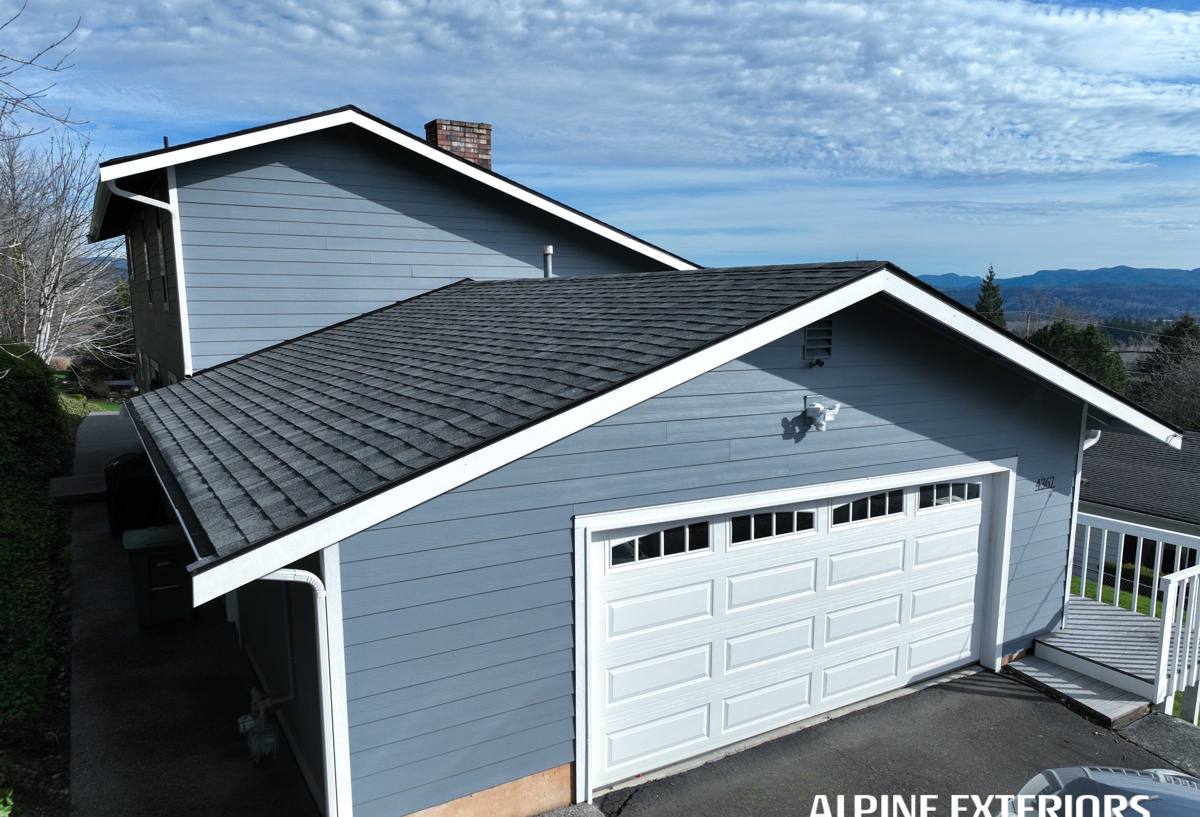
What Seattle's Wet Season Does to a Roof Over Time
Moss and Trapped Moisture
The tree cover common around University District's older streets keeps roofs shaded and slow to dry out after rain. That's ideal moss growth conditions. On asphalt shingles, moss roots work their way under the shingle edges and lift them, letting water get underneath. On a properly installed metal roof, there's no shingle mat for moss to root into, and the smooth, sloped panel surface sheds water quickly enough that moss has a much harder time establishing itself in the first place. It's not a total guarantee against moss on shaded roofs, but it removes the mechanism that causes moss to actually damage the roofing material.
Corrosion from Salt-Laden Air
Not all metal roofing handles coastal-influenced air the same way. Bare or poorly coated steel, cheap fasteners, and mismatched metals at flashing joints can corrode well before the panels themselves show any wear. This is where material selection and installation detail matter as much as the decision to go with metal in the first place — galvanic corrosion between dissimilar metals is a real and preventable problem, not a rare edge case, in a marine-influenced climate like this one.
Driving Rain and Wind
Storms coming off the Sound don't always drop rain straight down. Wind-driven rain finds its way under poorly lapped seams, around undersized flashing, and through fastener holes that weren't properly sealed. A metal roof's advantage here comes entirely from the installation — panel overlap, sealant placement, and flashing at every transition (chimneys, skylights, valleys, wall intersections) have to be done correctly, every time, or the material's natural water-shedding advantage is wasted.
What a Correct Metal Roof Installation Involves
A metal roof is only as good as the layers underneath it and the details around every penetration. On a correctly installed system, you should expect:
- A synthetic or high-temperature underlayment rated for the panel type, not a generic felt product
- Ice-and-water shield or equivalent membrane at eaves, valleys, and around all roof penetrations
- Matched fastener and flashing metals to prevent galvanic corrosion between dissimilar metals
- Proper panel overlap and seam sealing appropriate to the roof's pitch
- Ridge and hip ventilation that keeps the attic dry without letting wind-driven rain back in
- Flashing custom-fit to chimneys, skylights, dormers, and wall intersections rather than generic stock pieces
- Fastener spacing and torque set to the manufacturer's wind-load specification, not "close enough"
Skipping any one of these doesn't usually show up as a problem right away. It shows up two or three wet seasons later, as a leak that's hard to trace back to its source because the water is entering at one point and traveling before it drips.
Choosing the Right Metal Roofing System
Not all metal roofing is the same product wearing different colors. The systems differ in cost, appearance, longevity, and how well they handle a wet climate. Here's how the common residential options compare for a home in this area:
| System | Best For | Climate Performance | Trade-Offs |
|---|---|---|---|
| Standing Seam | Homes wanting a clean, modern look and maximum leak resistance | Excellent — concealed fasteners mean fewer penetration points for water | Higher upfront cost; requires precise installation |
| Exposed Fastener Panel | Budget-conscious projects, outbuildings, some roof pitches | Good if fasteners and gaskets are maintained; fastener seals wear over time | Fastener heads need periodic inspection and eventual re-sealing |
| Stone-Coated Steel | Homes wanting the look of shingles or tile with metal's durability | Very good — coating adds an extra weather barrier over the steel | More moving parts to the coating system; costs more than exposed fastener |
For most University District homes, we lean toward standing seam or stone-coated steel because the reduced number of exposed fasteners means fewer places for driving rain to find a way in over the roof's lifespan. Exposed fastener panels aren't a bad product — they're a reasonable choice on the right structure — but they ask more of ongoing maintenance in a climate that doesn't give a roof much of a break between storms.
Our Installation Process
A metal roof replacement or new installation on a University District home generally follows the same sequence, adjusted for the specific house:
- Roof assessment. We look at the existing structure, decking condition, ventilation, and any moisture damage before quoting anything — this tells us whether a straightforward install is realistic or whether decking repair needs to happen first.
- Tear-off and deck inspection. Old roofing comes off down to the deck so we can check for rot or soft spots, which are common on older Seattle homes where ventilation wasn't originally designed for today's insulation standards.
- Underlayment and flashing installation. This is the step that determines how the roof performs in a storm, and it's not one we rush regardless of schedule pressure.
- Panel installation. Panels go on with attention to seam alignment, fastener spacing, and manufacturer wind-load specs.
- Final inspection and cleanup. We walk the roof and the property line for stray fasteners and debris before calling the job finished.
Cost Factors for University District Metal Roofing
Metal roofing costs more upfront than asphalt shingles, and the exact number depends on several project-specific factors rather than a flat per-square-foot rate. Broadly, homeowners in the Seattle area should expect metal roofing to run higher than a standard shingle replacement, with the final number shaped by:
| Factor | Why It Matters |
|---|---|
| Roof size and pitch | Steeper pitches take longer to work and require more fall protection setup |
| Panel system chosen | Standing seam runs higher than exposed fastener panels due to labor and material |
| Tear-off vs. overlay | Full tear-off costs more but is usually the right call on older decking |
| Decking condition | Rot or soft spots found during tear-off add repair cost before installation continues |
| Roof complexity | Dormers, skylights, chimneys, and valleys all add flashing labor |
| Access and site conditions | Mature trees, tight lots, and limited street parking common in the neighborhood can affect setup time |
We don't quote a job without seeing the roof. Anyone giving you a firm number over the phone for a metal roof in this climate is guessing, and that guess tends to turn into change orders once the tear-off reveals what's actually under the old roofing.
Why a Crew That Already Works in University District Matters
University District's housing stock is a mix of early-20th-century homes near the University of Washington campus and newer infill construction, and that mix matters for a roofing project. Older homes in this part of Seattle often have decking, ventilation, and framing details that don't match what you'd find in a newer build — original skip sheathing, roofs that were re-covered more than once without addressing the underlying structure, or ventilation that was adequate decades ago but isn't now. A crew that's worked on homes like these in this specific neighborhood knows to check for those conditions before they become a mid-project surprise.
There's also the practical side: City of Seattle and King County permitting requirements, typical setback and access conditions on narrower older lots, and the reality of coordinating a roofing crew around a neighborhood with mature street trees and tighter parking than a suburban subdivision. None of that is exotic knowledge, but it's the difference between a crew that has to relearn these things on your roof and one that already knows them walking in.
Maintaining Your Metal Roof Year-Round
Metal roofing needs far less maintenance than asphalt shingles, but "far less" isn't "none." A simple annual routine keeps a metal roof performing the way it's supposed to through King County's wet season after wet season:
- Clear gutters and downspouts before the fall rains start, since overflow at the eaves can back water up under drip edge flashing
- Check for debris buildup in valleys, where leaves and needles trap moisture against the panel surface
- Look at exposed fasteners (if that's your panel type) for signs of a failed gasket or backed-out screw
- Watch for moss or algae staining in shaded sections and address it before it spreads
- Have flashing around chimneys, skylights, and vents inspected every couple of years, since sealant at these transitions is the most common point of eventual wear
- After any major windstorm, do a visual check for lifted panel edges or displaced flashing
Most of this is a once-or-twice-a-year task, not a constant chore — which is a large part of why metal roofing appeals to homeowners tired of re-treating moss or replacing lifted shingles every few years.
If you're weighing metal roofing for a University District home, we're happy to take a look and walk you through what your specific roof actually needs — no pressure, no generic quote pulled from a square-footage calculator. Use the form below to request a free estimate.