 Seattle
 Roof Repair Built for University District Homes
University District sits inland from the Sound but still gets the full package of Seattle's marine climate: long wet winters, driving rain that comes in sideways during storms, and a moss season that can run from early fall through late spring. The neighborhood's mix of early-twentieth-century craftsman homes, converted multifamily buildings, and newer infill construction means we see a wide range of roof ages and roof types on any given block — and each one wears differently under King County weather.
Roof repair here isn't a one-size-fits-all job. An older composition shingle roof on a craftsman bungalow needs a different repair approach than a low-slope roof on a converted triplex or a newer roof that's just showing its first sign of wear. What stays consistent is the climate stress: constant moisture, heavy tree cover on many streets, and freeze-thaw cycles that are mild by national standards but still enough to widen small cracks into real leaks over a wet winter.
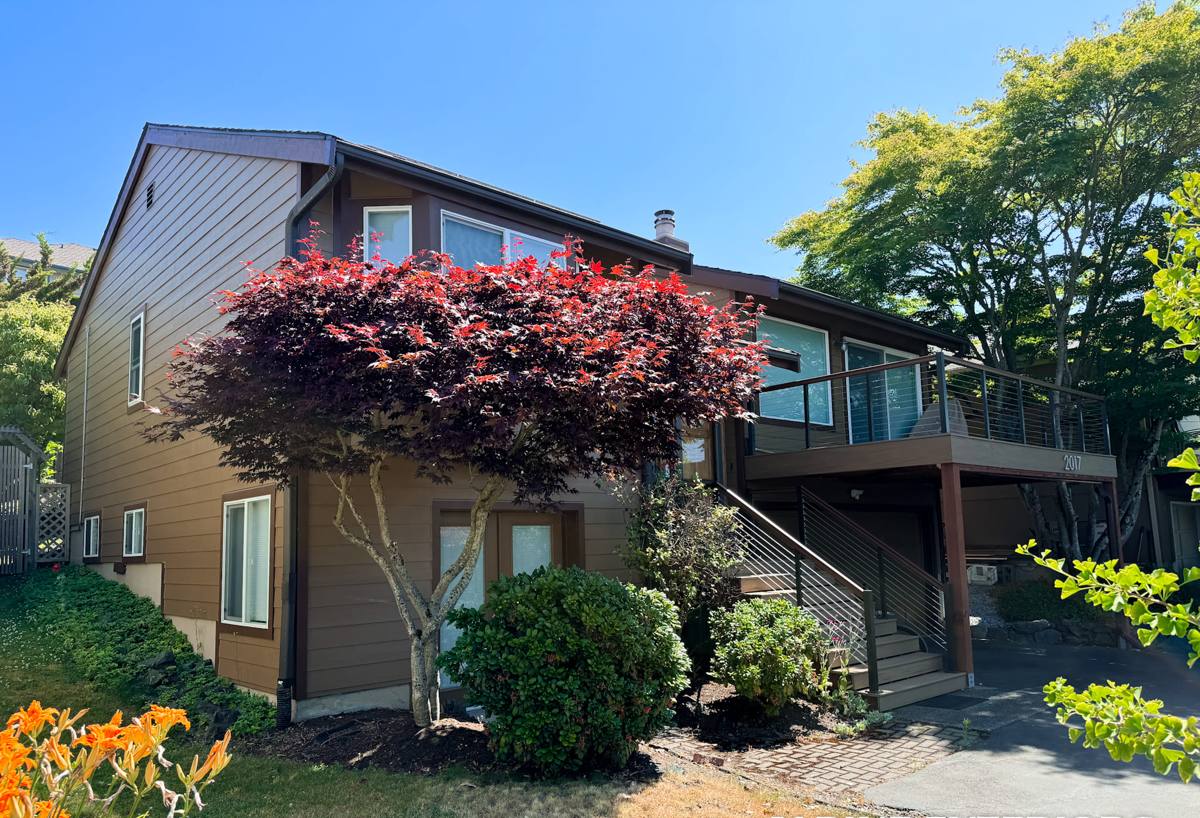
Common Roof Repair Issues We See in This Neighborhood
Most of the repair calls we run in University District fall into a handful of categories:
- Moss-related shingle damage — moss holds moisture against the roof surface, lifts shingle edges, and accelerates granule loss, especially on north-facing slopes and sections shaded by mature trees.
- Flashing failures — around chimneys, skylights, dormers, and roof-to-wall transitions, which are common on the neighborhood's older additions and remodeled homes.
- Clogged or damaged gutters and downspouts — leaf and needle debris from the tree canopy backs up water at the roof edge, which shows up as interior water stains long before the roof itself is actually failing.
- Wind and storm damage — lifted or torn shingles after a wind event, often concentrated on ridge lines and roof edges.
- Low-slope roof membrane issues — on flat and low-slope sections common to converted apartment buildings and additions, where ponding water and seam separation are the usual culprits.
- Aging underlayment and nail pops — on older homes where the roof covering has been replaced once or twice but the deck and underlayment are original.
Signs It's Time to Call for a Repair
- Water stains on ceilings or upper interior walls, especially after a heavy rain
- Visible moss growth thicker than a light green film, particularly in shaded areas
- Granules collecting in gutters or at downspout outlets
- Shingles that look curled, cracked, or are missing outright
- Daylight visible through the attic roof deck
- Soft or spongy spots when walking a low-slope roof
- Rusted or visibly separated flashing around chimneys and vents
Moss, Tree Canopy, and Driving Rain: The University District Factor
This neighborhood's tree cover is a mixed blessing for roofs. Shade keeps homes cooler in summer, but it also means many roof sections rarely get direct sun to dry out between rain events. Combined with Puget Sound's long stretch of overcast, drizzly weather, that creates ideal conditions for moss and moisture-loving growth to take hold — and once moss establishes itself, it doesn't just sit on the surface. It works into shingle tabs, holds water against the roof deck, and can shorten the useful life of an otherwise sound roof by years if it's left unaddressed.
Driving rain is the other half of the equation. Seattle storms often come in at an angle rather than straight down, which pushes water into places a well-maintained roof is designed to shed it from but a slightly compromised one isn't — lifted shingle tabs, gaps in step flashing, and worn seals around penetrations. A repair that looks cosmetic in dry weather can become an active leak the next time wind-driven rain hits from the wrong direction.
For homes near the University District's larger trees, we also pay attention to overhanging limbs. Repairing a roof without addressing a branch that drops debris onto the same spot every season is a short-term fix — we'll flag that as part of any repair visit.
Repair or Replace: How We Make the Call
Not every damaged roof needs to come off. We look at the age of the roofing material, the extent of the damage, and whether the underlying deck is still sound before recommending anything. Here's the general framework we use:
| Situation | Usual Recommendation | Why |
|---|---|---|
| Isolated leak, roof under 15 years old | Targeted repair | Surrounding material is still in good condition; a patch or section replacement solves it |
| Moss buildup with early shingle damage | Moss removal + spot repair | Addressing the moss stops further damage without full replacement |
| Multiple leaks across different roof sections | Full inspection before deciding | Scattered failures often point to underlayment or deck issues, not just surface wear |
| Roof past 20-25 years, widespread granule loss | Replacement likely more cost-effective | Repeated repairs on aging material rarely hold up through another wet season |
| Soft decking or visible rot | Repair scope expands to deck repair | Structural integrity has to be restored before new material goes on |
We'll always tell you honestly when a repair is the right call versus when you're better off putting that money toward a replacement instead of patching the same roof twice in three years.
What a Correct Roof Repair Actually Involves
A repair that holds up through a Seattle winter takes more than swapping a few shingles. Our process typically includes:
- Full roof assessment — not just the damaged spot, but the surrounding area and any related issues (flashing, gutters, ventilation) that could cause the same problem to return.
- Moss and debris removal — using methods that clear growth without damaging shingle granules, followed by treatment to slow regrowth where appropriate.
- Matching materials where possible — sourcing shingles or membrane material that reasonably matches the existing roof in profile and color, so the repair blends rather than standing out as a patch.
- Proper flashing work — reflashing chimneys, vents, and wall transitions rather than just sealing over old flashing, since caulk-only fixes tend to fail within a season or two.
- Deck inspection — checking for soft or rotted decking under the damaged area before closing the repair back up.
- Cleanup and gutter check — clearing debris generated by the repair and confirming water is draining properly off the repaired section.
Cost Factors for Roof Repair
Repair costs vary based on scope, but a few factors consistently move the price up or down:
| Factor | Effect on Cost |
|---|---|
| Size of damaged area | Larger sections require more material and labor |
| Roof pitch and access | Steep or hard-to-access roofs take longer to work safely |
| Number of stories | Taller buildings need more setup and safety equipment |
| Underlying deck condition | Rot or soft decking adds carpentry work beyond the surface repair |
| Material match availability | Older or discontinued shingle styles can be harder to source |
| Number of penetrations involved | Chimneys, skylights, and vents each add flashing work |
We give a written estimate before starting work, and we'll walk you through what's driving the cost rather than handing you a number with no explanation.
Why It Matters to Hire a Crew That Already Works University District
A roofing crew that regularly works this neighborhood knows what to expect before they climb the ladder. They know which streets have heavier tree cover and moss pressure, they've seen how the neighborhood's older homes were originally roofed and what's typically been done to them since, and they understand how driving rain off the Sound tends to find weak points on this style of home. That local pattern recognition shortens the diagnostic part of a repair and reduces the chance of a callback for something that got missed.
It also matters for permitting and code awareness — King County and city requirements around roofing, ventilation, and in some cases fire-rated materials on older homes can come into play depending on the scope of work, and a crew familiar with local jurisdictions handles that without it becoming your problem to sort out.
Our Approach to Materials and Workmanship
We stand behind repairs that are built to last through Seattle's wet season, not just patched to look fine until the next inspection. That means we don't cut corners on flashing, we don't rely on sealant alone to solve a structural gap, and we're upfront when a product or installation method isn't a good fit for this climate — not because a material is inherently bad, but because certain roofing choices carry real maintenance burdens or moisture risks in a region that stays wet as long as ours does. Our goal is a repair that holds up, not one that just gets us off the roof faster.
Get a Free, No-Pressure Estimate
If you're seeing a leak, moss buildup, or storm damage on a University District roof, we're happy to take a look and give you an honest read on what it actually needs — repair or otherwise. Fill out the form below and we'll get back to you to schedule a free estimate, no pressure and no obligation.