 Seattle
 Roofing in University District: A Different Kind of Housing Mix
University District isn't one type of roof job — it's several. Walk a few blocks and you'll pass early-1900s craftsman bungalows and Tudor-influenced homes sitting next to low-slope apartment buildings and converted multi-family properties that house students and staff connected to the university. That mix matters. A steep-slope composition shingle roof on a single-family home and a flat or low-slope membrane roof on a nearby fourplex fail in different ways, need different materials, and get inspected differently. A crew that only knows one type of roof is going to miss things in a neighborhood built like this one.
Why Roof Age Matters More Here
A lot of the housing stock in this part of Seattle dates back decades, and many of those roofs have already been replaced once, sometimes twice, since the home was built. That history matters when we show up for an estimate. A second or third layer of shingles changes the weight load, hides deck damage, and often voids warranty options unless it's stripped down to bare decking. We check layer count and deck condition before we ever quote a number, because guessing on an older roof is how homeowners end up with surprise costs mid-job.
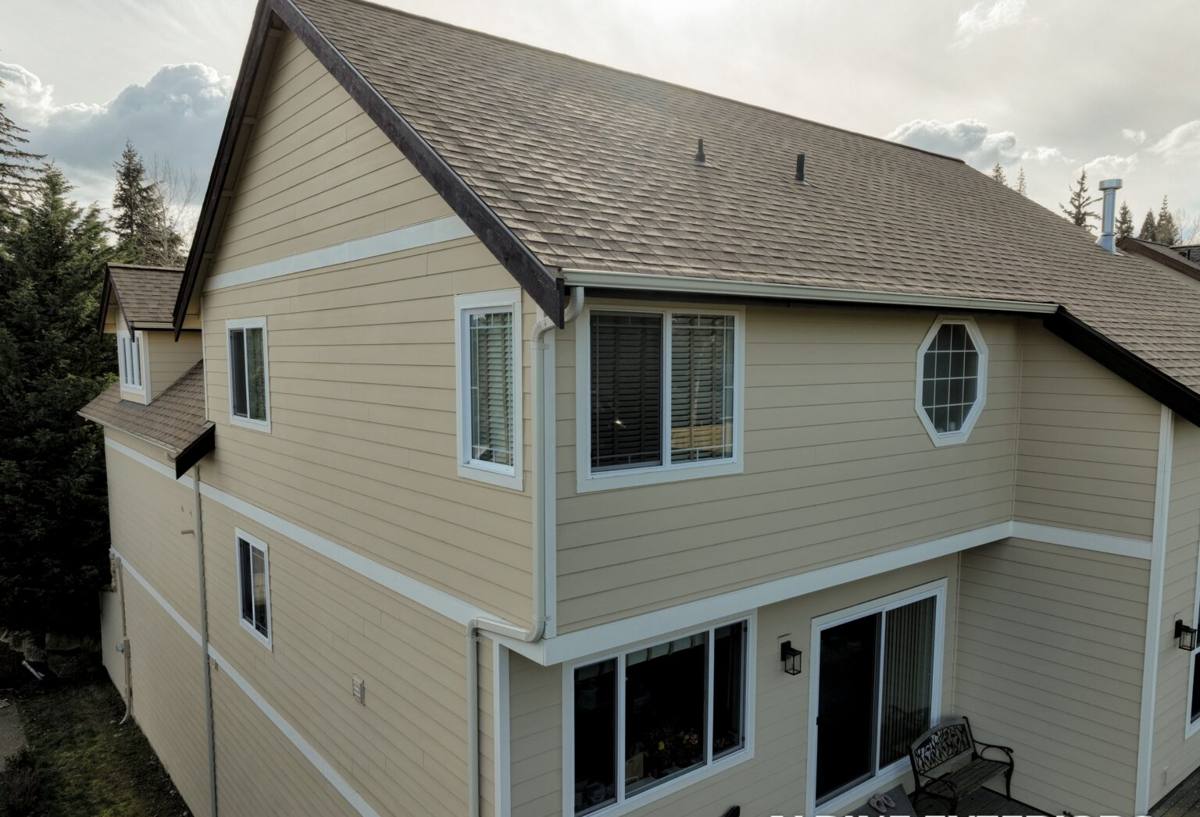
What Seattle's Climate Does to a University District Roof
King County's marine climate means long stretches of steady, driving rain rather than short heavy downpours — the kind of weather that finds every weak flashing detail and worn shingle edge over time. Add in Seattle's mature tree canopy, and University District's older residential streets have plenty of shade, which is exactly the condition moss needs to take hold. Between the rain and the shade, this neighborhood sees a moss season that runs longer than drier parts of the region, and it shows up fastest on north-facing slopes that never fully dry out between storms.
Moss, Moisture, and the Slow Kind of Damage
Moss doesn't just look bad — it lifts shingle edges as it grows, holding water against the roof deck instead of letting it run off. Over a season or two, that trapped moisture works into the underlayment and eventually the decking itself, and by the time it's visible from the ground, there's often already rot underneath. This is a slow-motion failure, which is why we look closely at moss patterns and staining during every inspection instead of just checking for obvious leaks.
Signs Your Roof Needs Replacement, Not Another Repair
Not every roof problem calls for a full tear-off. But there's a point where patching stops making financial sense and starts masking a bigger issue. Here's what we look for:
- Granule loss heavy enough that you can see bare fiberglass mat on multiple shingles
- Shingles that are curling, cupping, or cracking across large sections rather than one isolated spot
- Moss or algae staining covering more than a small portion of any slope
- Soft spots or visible sagging when walking the roof deck
- Daylight visible through the attic roof boards, or damp insulation below
- Multiple existing layers of shingles already on the roof
- Repeated leaks in different spots each wet season, even after patching
- A roof that's simply reached the end of its expected material life
What a Correct Roof Replacement Actually Involves
A roof replacement is a system, not just a layer of new shingles. Skipping any one of these steps is how a roof that looks fine on installation day starts leaking two winters later.
- Full tear-off down to the decking — no installing over existing layers
- Deck inspection, with rotted or delaminated sheathing replaced before anything else goes down
- Synthetic underlayment across the full roof, with self-adhered ice-and-water shield at eaves, valleys, and around penetrations where wind-driven rain is most likely to find a way in
- New drip edge at eaves and rakes
- New flashing at chimneys, sidewalls, and any roof-to-wall transitions
- Balanced intake and exhaust ventilation, not just an exhaust vent with no matching intake
- Shingles installed to manufacturer nailing patterns and exposure — not shortcut fastening
- Ridge cap and final flashing details, followed by a full site cleanup
Ventilation: The Step That Gets Skipped
Ventilation is the part of a roof job that's invisible once it's done, which is exactly why it gets cut on cheaper bids. In older University District homes — especially ones with attic space that's been partially finished or converted over the years — poor ventilation traps heat and moisture under the roof deck year-round. That shortens shingle life from the underside, which no amount of quality material on top will fix. We size intake and exhaust together as a system, not as an afterthought.
Choosing the Right Material for Your Home
The right roofing material depends heavily on whether you're looking at a steep-slope single-family home or a low-slope multi-family building — two very different sets of demands.
| Material | Best For | Typical Lifespan | Maintenance Notes |
|---|---|---|---|
| Architectural (laminate) asphalt shingle | Steep-slope single-family homes | 25-30+ years | Best moss resistance among asphalt options; heavier and more wind-resistant than 3-tab |
| 3-tab asphalt shingle | Budget-focused steep-slope reroofs | 15-20 years | Lower upfront cost, thinner profile, wears faster under constant rain exposure |
| Standing seam metal | Steep-slope homes wanting long-term, low-maintenance performance | 40-50+ years | Sheds moss and moisture well; higher upfront investment, specialized installation |
| TPO or modified bitumen membrane | Low-slope roofs on apartment and multi-family buildings | 15-25 years depending on system | Seams and flashing detail work are what determine long-term performance |
What Actually Drives the Cost of a Replacement
We don't quote a roof over the phone, because the same square footage can cost very differently depending on the details underneath it. These are the factors that move the number most:
| Factor | How It Affects the Job |
|---|---|
| Roof pitch and access | Steeper roofs and limited street or yard access slow down material staging and add safety requirements |
| Number of existing layers | More layers to strip means more tear-off labor and disposal volume |
| Decking condition | Rotted sheathing found during tear-off means replacement material and labor beyond the base bid |
| Roof complexity | Chimneys, skylights, valleys, and multiple roof planes all add flashing and labor time |
| Material choice | Asphalt, metal, and membrane systems sit at very different price points |
| Time of year | Scheduling around the wettest stretches of the season affects tarping needs and timeline |
Our Process, Start to Finish
- On-site inspection of the roof, decking, ventilation, and flashing details — not a drive-by estimate
- Written estimate that spells out material, scope, and what happens if we find deck damage mid-tear-off
- Planning for dumpster and material staging on narrow University District streets, where permit parking and limited curb space are the norm
- Scheduling around the wettest weather windows to keep the home protected during tear-off
- Full tear-off and haul-away of old roofing material
- Deck repair, underlayment, flashing, ventilation, and material installation in that order
- Daily job-site cleanup, including a magnetic sweep for stray nails
- Final walkthrough with the homeowner and warranty paperwork handed over on completion
Working on Narrow Streets Near Campus
University District's residential blocks weren't built with roofing dumpsters and material delivery trucks in mind. Street parking is tight, a lot of it is permit-restricted, and many properties are rentals where we're coordinating scheduling with a landlord while being considerate of tenants actually living there during the job. Getting a roof crew in and out cleanly here is as much about logistics — where the dumpster sits, when deliveries arrive, keeping noise reasonable — as it is about the roofing work itself. That's a skill you only really pick up by working this neighborhood regularly.
Long-Term Care After Replacement
A new roof still needs some upkeep in this climate, especially under mature trees. Zinc or copper strips near the ridge help slow future moss growth by running trace metal down the roof surface every time it rains. Gutters need clearing more often than in less tree-covered neighborhoods, since built-up debris backs up water at the eaves — exactly where ice-and-water shield and drip edge are doing the most work. A quick roof check after major windstorms is worth the ten minutes it takes, since flashing and ridge details are the first things a hard blow off Puget Sound will test.
Why a Crew That Already Works University District Matters
Every neighborhood in Seattle has its own quirks — permitting nuances with the city, typical construction details for the era homes were built, tree cover patterns, street access. A crew that already works University District regularly isn't guessing at any of that. We know what these roofs typically look like under the surface, what tends to go wrong first on homes of this age, and how to get equipment and material into tight residential streets without turning a roof job into a headache for neighbors. That local familiarity shows up in fewer surprises once the tear-off starts.
If your roof is showing its age, dealing with persistent moss, or you just want an honest read on what condition it's really in, we'll come take a look and give you a straightforward, no-pressure estimate — use the form below to get started.