 Seattle
 Siding Repair in a Neighborhood Built on Old Bones and New Infill
University District sits close enough to the University of Washington that its housing stock tells two stories at once. On one block you'll find century-old craftsman homes with original wood trim and layered additions; on the next, newer infill construction squeezed onto a narrow lot. Add in a dense rental and student-housing market where maintenance sometimes takes a back seat to turnover, and you get a neighborhood where siding problems can sit unnoticed for years before anyone calls a contractor.
That combination — old materials, mixed construction eras, and a lot of tree canopy shading the streets — means siding here ages differently than it does in a newer, sun-exposed subdivision. Add Seattle's climate on top of that and you have a specific, predictable set of repair issues that show up again and again.
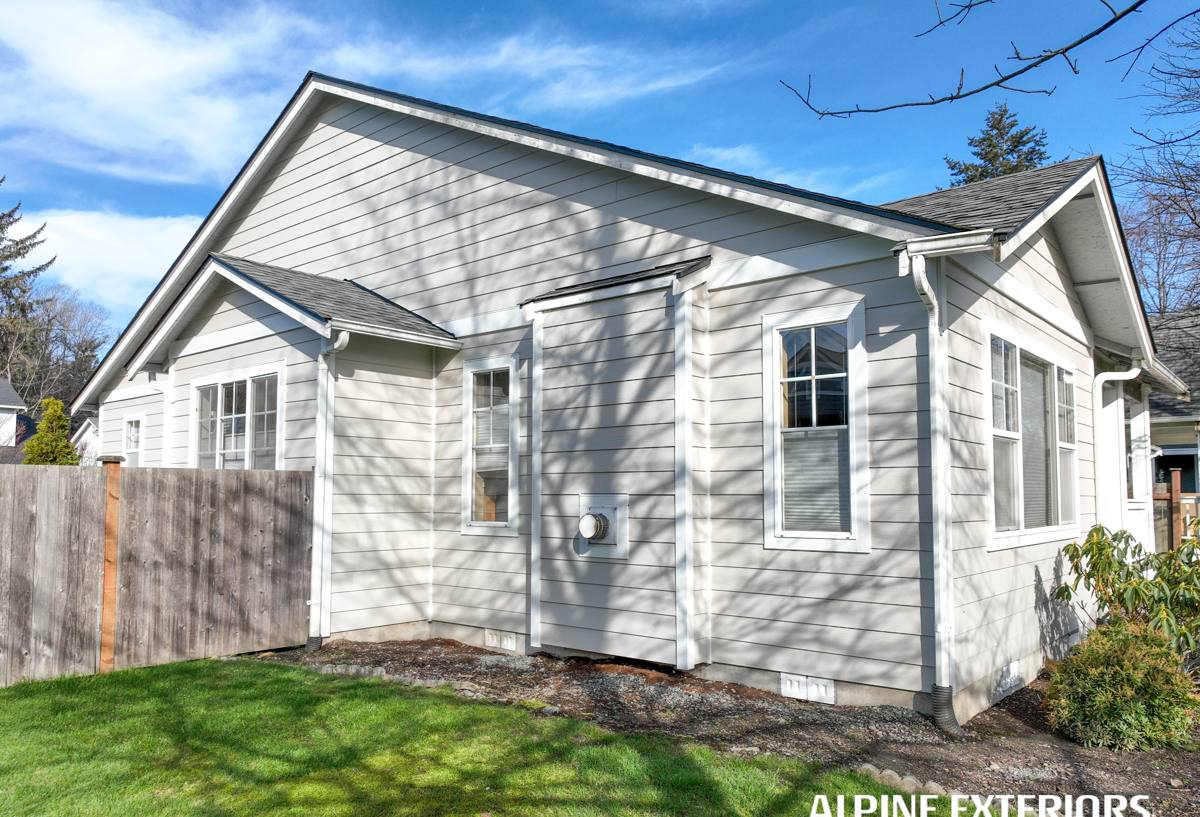
What the Climate Actually Does to Siding Here
Salt Air and Corrosion
Seattle sits on Puget Sound, and homes across King County deal with a steady dose of salt-laden air even well inland. Over years, that salt air accelerates corrosion on exposed fasteners, flashing, and any metal trim components. Once a fastener starts to rust and lose its grip, the siding panel around it loses its seal, and water finds a way in.
Driving Rain
Seattle rain isn't just steady drizzle — a good share of it comes in sideways during fall and winter storms, driven by wind off the Sound. Driving rain pushes water into laps, joints, and butt seams that were never designed to handle water moving horizontally instead of running straight down. Siding that looks fine in a light shower can still be letting water behind it during a real storm.
A Long Moss Season
Between the shade from mature street trees and months of damp weather, University District gets a moss season that runs longer than in more open, sun-exposed parts of the region. Moss and algae hold moisture directly against the siding surface for extended periods, which is exactly the condition that causes rot in wood-based products and staining or degradation in less moisture-tolerant siding materials.
Signs Your Siding Needs Repair, Not Just a Repaint
A fresh coat of paint can hide a lot of problems for a season or two, but it doesn't fix them. Before you repaint, it's worth checking for these signs that the siding itself needs attention:
- Soft, spongy, or crumbling spots when you press on the siding, especially near the bottom edges
- Visible moss or dark streaking that keeps coming back within weeks of cleaning
- Bubbling, peeling, or cracked paint that reappears in the same spots repeatedly
- Gaps or separation at butt joints, corners, or around window and door trim
- Warping or buckling panels, particularly on walls that face prevailing wind and rain
- Rust streaks below nail heads or metal flashing
- A musty smell or visible staining on interior walls that share an exterior wall with damaged siding
If you're seeing more than one or two of these, it's usually a sign that moisture has already gotten behind the siding, not just on top of it.
What's Actually Underneath Matters as Much as What's Visible
Siding repair that only addresses the outer surface is a temporary fix. A correct repair job starts by figuring out what's happening behind the panel:
Moisture and Rot Assessment
We check the sheathing and framing behind damaged siding for rot before doing anything else. Patching over wet or compromised wood just traps the problem and guarantees a repeat call in a year or two.
House Wrap and Flashing Integrity
Siding is one layer of a larger water-management system. If the house wrap is torn, the flashing above windows and doors is missing or improperly lapped, or the weep path at the bottom of the wall is blocked, replacing the visible siding alone won't stop the leak.
Matching and Blending
On older University District homes, matching existing siding — profile, reveal, and finish — takes more care than on newer construction where product specs are on file. We take care to match panel width and butt-joint spacing so a repair doesn't stand out from the rest of the wall.
Common Siding Materials We Find on U District Homes
Because the neighborhood spans building eras, we see a wide range of original siding materials when we go out for repair estimates. How each one holds up — and how repairable it is — varies quite a bit:
| Material | Common Failure Mode Here | Repairability |
|---|---|---|
| Original cedar (older homes) | Rot, splitting, and moss retention after decades of moisture exposure | Often repairable in small sections, but matching weathered cedar is difficult |
| Vinyl | Cracking in cold snaps, fading, and warping from heat or poor installation | Individual panels can be swapped, but discontinued colors rarely match |
| LP SmartSide / engineered wood | Edge swelling and delamination where moisture penetrates cut ends or seams | Repairable if caught early; swollen sections usually need full panel replacement |
| Fiber cement (James Hardie) | Rare — mainly impact damage or installation errors, not material breakdown | Individual planks replace cleanly without affecting surrounding panels |
This is also why so many of the repair calls we get on older wood and engineered-wood siding turn into a conversation about replacement — once moisture has been working on a moisture-sensitive material for years, patching one section often just shifts the problem to the section next to it.
Repair vs. Replacement: How We Help You Decide
Not every damaged section needs a full re-side. Our approach is straightforward:
- If damage is isolated, the sheathing underneath is dry, and the existing siding still has useful life, we repair the affected section
- If damage shows up in multiple areas, or if we find rot in the sheathing, that's usually a sign the whole wall's water management has failed and a section-by-section repair won't hold
- If your current siding is a moisture-sensitive material nearing the end of its practical service life, we'll tell you honestly rather than keep billing you for repeat repairs
We'd rather do an honest $400 repair than talk you into a $20,000 re-side you don't need yet — and we'll tell you just as directly when a repair is only buying time.
Why We Repair and Rebuild With James Hardie Fiber Cement
When a repair does turn into a full siding replacement, we install James Hardie fiber cement exclusively. We don't install vinyl, LP SmartSide, Cemplank, Allura, primed spruce, or cedar, and in a climate like this one, that's a deliberate standard, not a sales pitch.
Fiber cement doesn't feed moss the way wood fiber does, it doesn't swell or delaminate at cut edges the way engineered wood can, and it's non-combustible. James Hardie's HZ5 product line is specifically engineered for the wetter climate zones the Pacific Northwest falls into, and the factory-applied ColorPlus finish holds color and resists the kind of streaking and fading we see on repainted siding around the neighborhood. It also carries a strong transferable warranty, which matters in a neighborhood with a fair amount of turnover between owners and renters.
We're not saying every other material is a bad product — vinyl and engineered wood both have legitimate uses and reasonable price points. We're saying that after years of doing repair calls in this specific climate, fiber cement is what we're willing to put our name behind, and it's what we recommend when a repair job turns into a replacement decision.
Our Process for University District Siding Repair
- Inspection: We walk the exterior, check moisture levels with a meter where needed, and look behind a sample section of damaged siding to assess the sheathing.
- Honest scope: We tell you plainly whether this is a repair, a partial re-side, or a full replacement — and why.
- Water management first: Before new siding goes on, we correct any flashing, house wrap, or drainage issues we find, since that's what actually stops the next leak.
- Matched or upgraded materials: For repairs, we match existing siding as closely as possible. For replacements, we discuss James Hardie profiles and colors that fit the home.
- Cleanup and check-in: We clear debris and walk the finished work with you before we consider the job done.
Why Hiring a Crew That Already Works This Neighborhood Matters
A crew that regularly works University District already understands the pattern: older homes with layered repair history, a long moss season that hides moisture problems, and driving rain that tests every joint and seam on the house. That familiarity means fewer surprises during the job and a repair scope that's based on what actually fails here, not a generic checklist.
It also means we can tell you honestly, from experience with similar homes nearby, whether a repair will hold for years or whether you're looking at a bigger project down the line. That kind of straight answer is worth more than a lowball repair quote that doesn't address the real cause.
If you're dealing with soft spots, recurring moss, or siding that just doesn't look right anymore, we're happy to take a look. Reach out for a free, no-pressure estimate — we'll tell you what we actually find, not just what's easiest to sell.