 Seattle
 Windows Built for Wallingford's Weather, Not Just Its View
Wallingford sits close enough to the water that salt-laden air, driving rain off the Sound, and a long stretch of gray, moss-friendly months all work on a home's windows year-round. It's not dramatic weather — no hurricanes, no hail storms — but it's relentless. Window seals, wood sashes, and metal hardware in this part of Seattle are under slow, steady pressure almost every month of the year, and that changes what "a good window" actually means here compared to a drier climate.
A window that would hold up fine in Eastern Washington can fail early in Wallingford if it wasn't detailed for our conditions. The frame material, the flashing behind it, and the caulking around it all matter more here than the glass itself. We install and replace custom windows across Seattle and King County, and Wallingford's mix of older housing stock and tight lots gives it its own set of considerations worth walking through before you commit to a job.
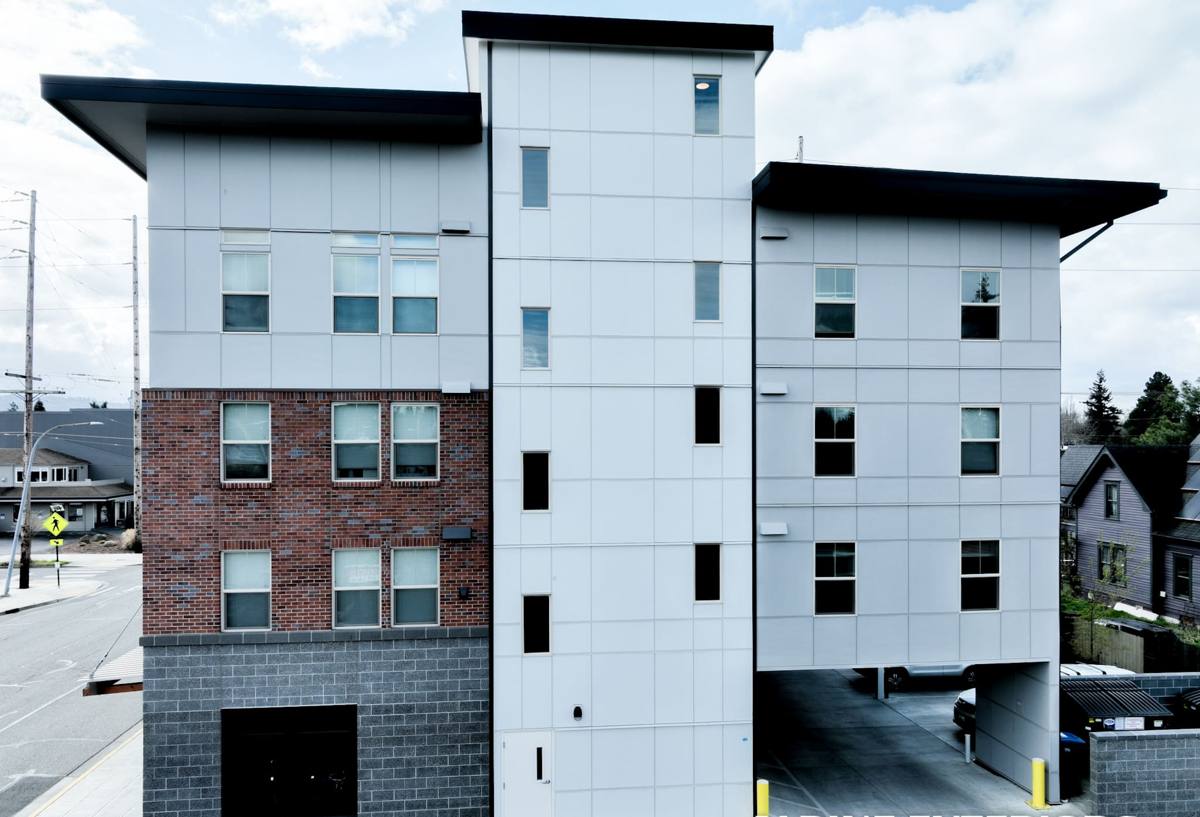
What Wallingford's Housing Stock Means for a Window Job
A large share of homes in Wallingford date back to the early twentieth century — craftsman-style bungalows and similar older construction are common in the neighborhood. That matters for window work in a few practical ways:
- Original window openings are often slightly out of square after decades of settling, so "custom" sizing is frequently the only option that actually fits without gaps.
- Older sash and trim details are part of the home's character, and a lot of owners want replacement windows that keep that look rather than an obviously modern profile.
- Older wall assemblies may not have the moisture barriers that newer construction has, which makes correct flashing and sealing at install time more important, not less.
- Lead paint is a real possibility on pre-1978 trim, which affects how removal and prep work has to be handled.
Newer construction and additions in the neighborhood don't have these constraints, but even there, the same regional weather applies — the window still needs to shed water and resist moisture intrusion for decades, not just look good on install day.
The Real Enemy: Moisture, Not Cold
Seattle winters aren't harsh in temperature terms, so insulation value is only part of the equation. The bigger threat to windows here is sustained moisture exposure: weeks of drizzle, wind-driven rain that hits window faces at an angle, and humid air that never fully dries out between storms. Combine that with salt air drifting in off Puget Sound and you get accelerated corrosion on hardware, cladding, and fasteners that aren't rated for it.
Moss and algae growth is the other piece. Anything that holds moisture against a window frame — a poorly sloped sill, a gap in caulking, debris sitting in a track — becomes a spot where moss and mildew take hold. Over a few seasons that growth holds even more moisture against the frame, and the cycle accelerates. Correct installation is largely about breaking that cycle before it starts.
What a Correct Custom Window Installation Involves
"Custom" doesn't just mean an unusual size — it means the window and its installation are matched to the specific opening, wall assembly, and exposure of your house. For Wallingford homes, that typically includes:
Frame material suited to the exposure
South and west-facing windows that take direct wind-driven rain need different consideration than a sheltered window under a deep eave. We factor in sun and rain exposure for each opening, not just the house as a whole.
Proper flashing and drainage
Water that gets behind the window needs somewhere to go. That means correctly lapped flashing tape, a sloped sill pan, and weep paths that aren't blocked — details that are invisible once the trim goes back on, but are the difference between a window that lasts and one that rots the wall around it.
Sealant that matches the materials
The right caulk and backer rod, applied at the right joints — not every gap, since some need to breathe — keeps water out without trapping moisture inside the wall assembly.
Hardware rated for coastal-adjacent exposure
Standard hardware can corrode faster in salt-influenced air. We spec locks, hinges, and fasteners that hold up to it rather than the cheapest option that happens to fit.
Signs Your Current Windows Are Losing the Fight
Most window failure in this climate is gradual, so it's easy to miss until it's a bigger repair than a replacement would have been. Worth checking for:
- Fogging or moisture between panes on double- or triple-glazed units — a sign the seal has failed
- Soft or discolored wood at the sill or lower frame corners
- Visible moss, algae, or black staining building up on the frame or sill
- Drafts you can feel with a hand near the frame on a windy day
- Windows that stick, won't stay open, or are hard to lock
- Paint that's bubbling or peeling specifically around the window opening (often a moisture sign, not just an aging-paint one)
- Visible daylight or gaps around the frame from outside
Any one of these on its own might be minor. Several together, especially clustered on one side of the house, usually points to a window (or the flashing around it) that's due for replacement rather than another round of caulk.
Choosing a Frame Material for This Climate
There's no single "best" window material — the right choice depends on the house, the budget, and how much upkeep you want to take on. Here's how the common options stack up for Wallingford's conditions specifically:
| Material | How it handles our climate | Trade-offs |
|---|---|---|
| Vinyl | Good moisture resistance, no corrosion risk, low maintenance | Fewer options for matching historic profiles; can look less premium on older homes |
| Fiberglass | Very stable in wet/humid swings, holds paint well, low maintenance | Higher upfront cost than vinyl |
| Wood (properly finished) | Best match for craftsman and period details; classic look | Needs ongoing finish maintenance or it's the first thing moss and moisture attack |
| Aluminum-clad wood | Wood interior look with a weather-resistant exterior shell | Cladding seams need correct sealing; higher cost |
| Bare aluminum | Durable but conducts cold and can corrode faster in salt-influenced air without proper coating | We generally don't recommend uncoated aluminum for this exposure |
For a lot of Wallingford's older homes, aluminum-clad wood or a well-finished wood window strikes the balance between keeping the original character and not signing up for constant upkeep. For homes where matching a historic profile isn't a priority, fiberglass tends to be the lowest-maintenance long-term choice in this climate.
Our Process for a Wallingford Window Project
- On-site assessment. We look at each opening individually — exposure, current frame condition, wall assembly, and any moisture damage already present — rather than quoting off a generic average.
- Custom measurement and material selection. Especially on older homes, we measure each opening as its own project since sizes and squareness can vary window to window.
- Removal and prep. Old frames come out carefully, with attention to lead-safe practices on pre-1978 trim, and any hidden rot or moisture damage gets addressed before the new window goes in — not covered over.
- Installation with proper flashing and sealing. This is the step that determines whether the window lasts 10 years or 30. We don't shortcut flashing or sealant details to save time.
- Finish work and cleanup. Trim, paint-ready surfaces, and a clean site when we're done.
What Drives Cost on a Custom Window Job
| Factor | Why it affects price |
|---|---|
| Frame material | Vinyl is generally the least expensive; wood and fiberglass cost more upfront but often less over time in this climate |
| Opening condition | Rot or moisture damage found behind an old window adds repair work before installation can proceed |
| Size and configuration | Larger openings, bay windows, or non-standard shapes cost more than a standard single or double-hung |
| Historic or custom trim matching | Matching original craftsman profiles takes more labor than a standard trim-out |
| Number of windows | Doing several windows in one project usually costs less per window than one-off jobs done separately |
We give straightforward, itemized estimates so you can see what you're actually paying for, rather than a single lump number.
Why Hiring a Crew That Already Works in Wallingford Matters
A crew that regularly works this neighborhood already understands the housing stock, the typical wall assemblies from that era of construction, and how this specific stretch of Seattle's weather behaves against a window over time. That's not a small thing — it means fewer surprises once a wall is opened up, and installation details that are already dialed in for this exposure rather than generic best practices from a drier region.
It also means accountability. A contractor who works Wallingford regularly has a reason to get it right the first time and to stand behind the work, because they're not disappearing to the next region over. For King County homeowners, that local familiarity is worth as much as any brand name on the window itself.
Keeping New Windows Performing for the Long Term
Once new windows are in, a little seasonal attention keeps them performing:
- Clear debris from tracks and weep holes each fall before the heavy rains set in
- Rinse off moss or algae buildup before it spreads, rather than letting it sit through winter
- Check exterior caulking annually for cracking or gaps, especially after a hard winter
- Repaint or refinish wood exteriors on the manufacturer's recommended schedule — don't wait until it's peeling
- Test operation each season so hardware doesn't seize from disuse or corrosion
None of this is complicated, but skipping it is exactly how a well-installed window ends up needing early repair in a climate like ours.
If your windows are drafty, fogged, sticking, or just original to a home built decades ago, it's worth getting a straightforward, no-pressure look before winter rains set in again. Fill out the form below and we'll set up a free estimate for your Wallingford home.