 Seattle
 Why Ballard Roofs Wear Differently
Ballard sits close to the salt water of Puget Sound, and that proximity changes how a roof ages. Salt-laden air corrodes exposed metal faster than it would a few miles inland — flashing, fasteners, gutter hardware, and vent caps all take a harder hit here than they would in, say, a dry inland suburb. Add in the near-constant marine moisture and Ballard's older housing stock, much of it built long before today's roofing underlayment and ventilation standards, and you get a neighborhood where roofs need more frequent, more careful attention than the citywide average.
None of this means Ballard roofs fail faster across the board. It means the failure points are different, and a repair crew that doesn't account for salt exposure, moss pressure, and wind-driven rain will end up chasing the same leak twice.
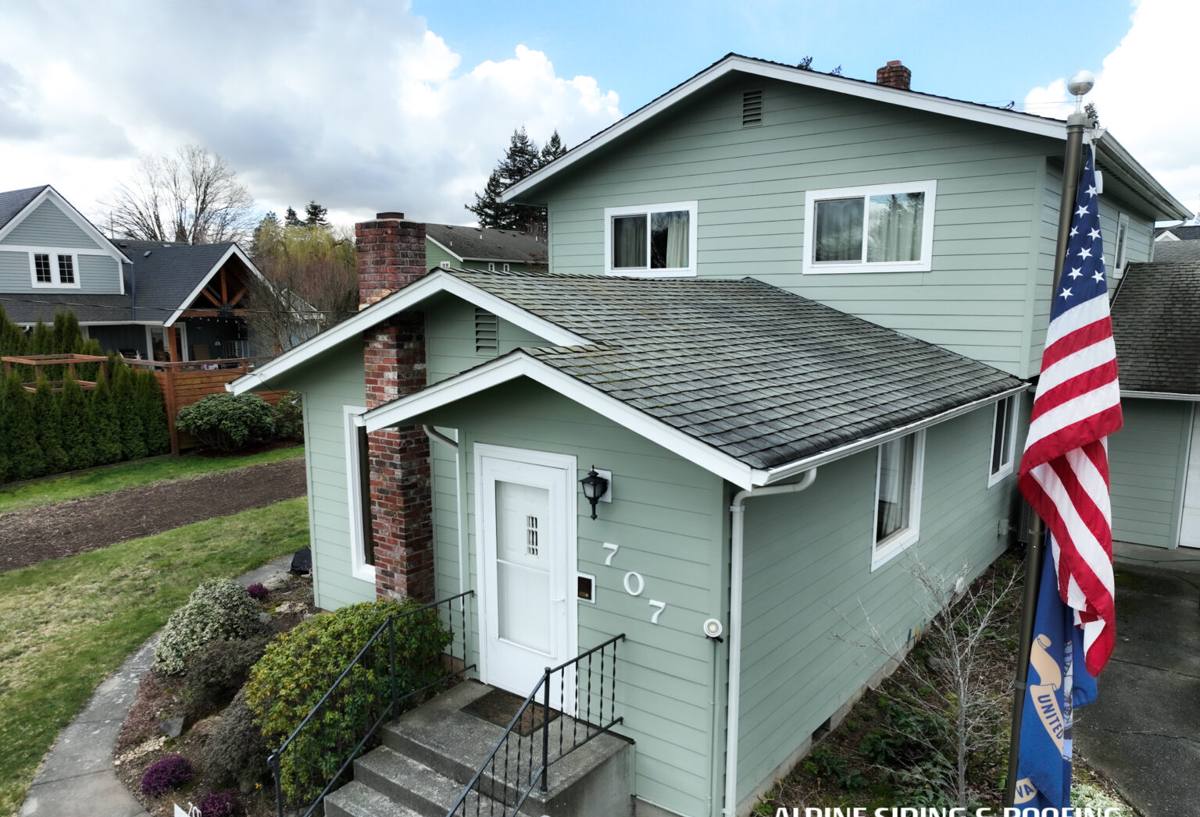
Moss: Ballard's Quiet, Ongoing Roof Problem
King County's long wet season gives moss months at a time to establish itself on shaded, north-facing, and tree-covered roof sections — and Ballard's mature street trees and close-set lots mean plenty of roofs stay damp and shaded well into the year. Moss itself doesn't punch holes in a roof, but it does three things that lead to real damage:
How moss actually causes leaks
- It holds moisture against the shingle or shake surface far longer than open air would, accelerating granule loss and wood rot underneath.
- Its root structures work into shingle laps and butt joints, gradually lifting edges and breaking the shingle's seal.
- Thick moss mats redirect water sideways instead of down and off the roof, pushing runoff toward laps, valleys, and fastener penetrations that were never designed to handle standing water.
By the time moss is visible from the ground, it's usually been doing this work for a season or more. Repairing the resulting damage without addressing the moss itself is a short-term fix — it'll be back.
Driving Rain and Where Ballard Roofs Actually Leak
Seattle's rain isn't just steady — a good share of it comes in sideways off Puget Sound during winter storm systems. Wind-driven rain finds weaknesses that vertical rain never would: it pushes up under shingle tabs, drives into loose flashing laps, and forces its way past vent boots that have hardened and cracked with age. This is why so many Ballard roof leaks show up first as a stain on an interior ceiling nowhere near where the actual entry point is — water rides along the underlayment or a rafter before it finally drips through drywall.
The usual suspects
In our experience working Ballard roofs, most repair calls trace back to one of a handful of spots: step flashing where a roof meets a wall or chimney, valley metal that's corroded or was never properly lapped, pipe boots with cracked rubber collars, and nail pops or lifted shingles along ridges exposed to prevailing wind. Gutters clogged with moss debris and fir needles are a close second — overflow from a blocked gutter behaves exactly like a roof leak once it saturates fascia and soffit framing.
What a Correct Roof Repair Actually Involves
A roof repair done right isn't just patching the spot where water is showing up inside the house. It starts with tracing the leak to its real source, which is often several feet away from the interior stain, and then addressing both the immediate failure and the condition that caused it.
| Step | What it covers |
|---|---|
| Inspection | Full roof walk (or ladder inspection on steep or fragile roofs), checking flashing, penetrations, valleys, and ventilation — not just the reported leak area |
| Diagnosis | Tracing water path from interior damage back to the actual entry point, which may be uphill or off to the side of the visible stain |
| Substrate check | Confirming the decking underneath hasn't gone soft from prolonged moisture — a patched shingle over rotten decking will fail again |
| Repair | Replacing the failed material — shingles, flashing, boots, or sealant — with matching or compatible product, not just caulk over the gap |
| Follow-up prevention | Moss treatment, gutter clearing, or ventilation notes if those conditions contributed to the failure |
Skipping the diagnosis step is the most common shortcut in the industry, and it's why homeowners sometimes pay for a "repair" that leaks again the next storm season.
Repair or Replace? How We Help You Decide
Not every roof problem needs a full replacement, but not every leak is a quick patch either. The honest answer depends on the roof's age, how widespread the damage is, and what's happening underneath the surface material.
| Factor | Leans toward repair | Leans toward replacement |
|---|---|---|
| Roof age | Under roughly two-thirds of expected material lifespan | At or beyond expected lifespan for the material |
| Damage extent | Isolated to one flashing point, valley, or a small shingle section | Multiple areas failing, or widespread granule loss and curling |
| Decking condition | Solid, dry decking beneath the failed area | Soft or delaminated decking found during inspection |
| Moss history | First real moss issue, caught early | Years of untreated moss with visible shingle lifting across the roof |
| Cost pattern | One or two repair calls addressing distinct issues | Repeated repair calls to the same general area over time |
We'll always tell you plainly which category your roof falls into. If a repair will genuinely hold, we'll recommend the repair — a roof doesn't need to be replaced just because it has a problem.
General cost ranges
Roof repair costs vary widely based on roof pitch, material, and how many separate issues need addressing, so we won't quote a number without seeing the roof. In general terms, a single flashing or vent boot repair sits at the lower end of the range, while jobs involving valley replacement, multiple penetrations, or partial decking replacement run higher. We'll give you a clear, itemized estimate before any work starts.
Our Process for Ballard Roof Repairs
1. Inspection and honest assessment
We start by finding the actual source of the problem, not just the symptom. That includes checking for moss buildup, flashing condition, and ventilation — the things that determine whether a repair will last through another wet season.
2. Clear, written estimate
You'll know what's being repaired, why, and what it costs before we start. No vague line items.
3. Repair with materials suited to marine exposure
Given Ballard's salt air, we pay attention to fastener and flashing material choices in exposed or corrosion-prone spots, not just whatever is fastest to install.
4. Cleanup and a final walk-through
We clear debris, haul away old material, and walk the finished repair with you so you know exactly what was done.
Signs Your Ballard Roof Needs Attention
Catching problems early is almost always cheaper than waiting for an interior leak to show up. Watch for:
- Visible moss growth, especially on north-facing or shaded roof sections
- Granules collecting in gutters or at downspout outlets
- Shingles that look curled, lifted, or discolored in patches
- Rust streaks or corrosion around flashing, vents, or metal valleys
- Ceiling stains that appear or grow after a windy rainstorm specifically
- Daylight visible through the roof deck from inside an attic
- Gutters overflowing during moderate rain, not just downpours
Any one of these is worth a phone call before the next storm system moves through — most are far cheaper to address as a repair than as water damage remediation later.
Why a Crew That Already Works Ballard Matters
Ballard's mix of older homes, tree-covered lots, and close proximity to salt water isn't unique to this neighborhood alone, but it's specific enough that experience here is genuinely useful. A crew that regularly works Ballard roofs knows which flashing details tend to fail on the area's older homes, understands how aggressively moss builds up on shaded lots in this part of King County, and has a realistic sense of how wind-driven rain off Puget Sound behaves against different roof orientations. That local pattern recognition shortens the diagnosis step and reduces the chance of a repair that misses the real cause.
It also matters for practical reasons — permitting familiarity with Seattle's requirements, realistic scheduling around the region's wet months, and knowing which repairs can wait for a dry stretch versus which need a tarp and immediate attention.
Maintenance That Extends a Repair's Life
A repair is only as good as the maintenance around it. For Ballard homes specifically, that means staying ahead of moss rather than reacting to it, keeping gutters clear of the fir needles and leaf debris common on tree-lined lots, and having the roof looked at after any major windstorm rather than waiting for a stain to appear inside. None of this needs to be elaborate — a yearly check during a dry stretch catches most problems while they're still small and inexpensive to fix.
If you're dealing with a leak, visible moss, or just want an honest read on where your Ballard roof stands, we're happy to take a look. The estimate is free, there's no pressure to act on it right away, and you'll get a straight answer about whether you're looking at a repair or something bigger — just fill out the form below to get started.