 Seattle
 Ravenna's Climate Is Harder on Siding Than It Looks
Ravenna is one of Seattle's greener, older neighborhoods — mature tree canopy, tree-lined streets, and a housing stock that skews toward craftsman bungalows and early-to-mid-century construction. That combination is charming to live in and rough on exterior materials. Overhanging trees keep siding shaded and damp long after a storm has passed. Marine air moving in off Puget Sound keeps humidity high across the Seattle basin for months at a stretch, and King County's long, wet fall-through-spring stretch means siding here rarely gets a real chance to dry out before the next system rolls through.
That's the real story behind moss and algae streaking on north-facing walls, soft trim at the bottom of siding runs, and paint that fails years before it should. It isn't bad luck — it's ordinary siding material meeting an environment it wasn't built for. The fix isn't more paint or more caulk. It's a siding system engineered for sustained moisture exposure, installed in a way that lets water move off the wall instead of sitting against it.
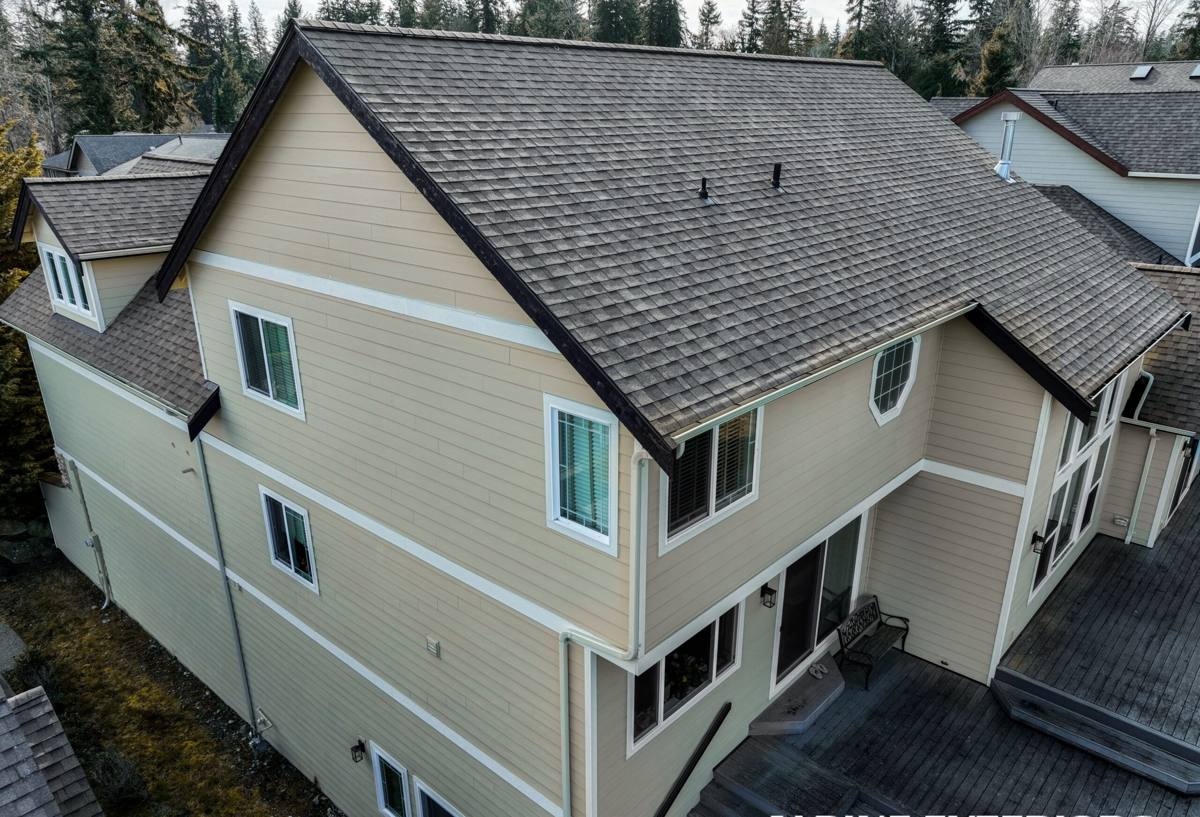
What Correct Fiber Cement Installation Actually Involves
Fiber cement siding has a reputation as a "install it and forget it" upgrade, but that reputation only holds when the installation is done right. A lot of the siding problems we get called out to inspect in older Seattle neighborhoods trace back to shortcuts taken during the original install, not a flaw in the material itself.
The details that separate a correct job from a callback
- A drainage plane behind the siding. A code-compliant weather-resistive barrier, properly lapped and taped, so any moisture that gets past the siding has somewhere to go besides your sheathing.
- A rainscreen gap where conditions call for it. A small air gap between the siding and the wall assembly lets trapped moisture evaporate instead of wicking into the boards — important on shaded, low-airflow walls, which describes a lot of Ravenna lots.
- Correct fastener placement and depth. Overdriven or misplaced fasteners crack the board or break the factory seal, creating entry points for water that show up as swelling months later.
- Flashing at every penetration. Windows, doors, hose bibs, light fixtures, and roof-to-wall transitions all need proper flashing detail — this is where the majority of real-world leaks originate, not the field of the siding itself.
- Factory-cut and factory-primed edges wherever possible. Field cuts should be sealed per manufacturer spec; raw, unsealed cut edges are one of the most common causes of early edge swelling.
None of this is exotic. It's disciplined, unglamorous work — the kind that's easy to skip when a crew is moving fast, and expensive to fix once the siding is closed up and painted.
Why We Only Install James Hardie Fiber Cement
We install James Hardie products exclusively. We don't install vinyl, LP SmartSide, Cemplank, Allura, or unfinished cedar or spruce siding, and we think homeowners deserve an honest explanation of why, not just a brand preference.
Where the alternatives fall short for this climate
Vinyl is inexpensive and low-maintenance in dry climates, but it expands and contracts significantly with temperature swings, and long-term exposure to sustained damp conditions can accelerate fading and warping at seams. LP SmartSide is a wood-strand product with an engineered resin coating — a real improvement over old-style hardboard, but it's still wood-based at its core, meaning cut edges and any coating failure expose it to moisture absorption in a way that fiber cement doesn't share. Unfinished cedar and primed spruce look excellent on day one, but they require an ongoing maintenance commitment — re-staining or repainting on a cycle — that most homeowners underestimate until the siding starts showing it.
Where Hardie earns the standard
James Hardie fiber cement is non-combustible, doesn't support moss and mildew growth the way wood-based products can, and holds paint and factory finish far longer than wood siding because the substrate itself doesn't absorb and release moisture the same way. Hardie's ColorPlus finish is baked on at the factory under controlled conditions — not brushed on in the field — which gives a more consistent, fade-resistant result than field-applied paint. Hardie also engineers specific product lines (their HZ5 formulation, for example) for climates with sustained moisture exposure like ours, and backs installations with a transferable warranty when installed by a certified applicator to their specifications. That's the standard we hold every Ravenna project to.
| Factor | James Hardie Fiber Cement | Vinyl | LP SmartSide / Untreated Wood |
|---|---|---|---|
| Moisture resistance in PNW climate | Engineered for it (HZ5) | Moderate — seams can trap moisture | Depends on coating/finish integrity |
| Combustibility | Non-combustible | Combustible | Combustible |
| Finish longevity | Factory-baked ColorPlus, long service life | Color molded in, can fade/chalk | Field-applied or factory coating, shorter repaint cycle |
| Ongoing maintenance | Occasional wash, minimal repainting | Low, but limited repair options | Regular inspection and recoating needed |
| Warranty structure | Manufacturer warranty, transferable when installed to spec | Varies by manufacturer | Varies, often shorter on coating |
Our Process on a Ravenna Project
Every home is different, but a properly run fiber cement job in this neighborhood follows the same basic sequence.
1. On-site assessment
We walk the exterior, check the condition of the existing siding and sheathing, and look specifically for the moisture and moss patterns that are common on shaded, tree-covered lots. We'll flag any soft sheathing or hidden rot before a bid is finalized — not after demo starts.
2. Tear-off and sheathing check
Old siding comes off, and we inspect what's underneath. This is the point where we find out if prior water intrusion has already reached the sheathing, which is common on homes with aging trim details or a history of deferred maintenance.
3. Weather barrier and drainage detail
We install or verify the weather-resistive barrier, add rainscreen furring where the wall assembly calls for it, and detail flashing at every window, door, and penetration before a single piece of siding goes up.
4. Hardie installation to manufacturer spec
Fastener spacing, joint treatment, and clearances (grade, roofline, deck) are all set to Hardie's published installation requirements — this is what keeps the manufacturer warranty intact and what actually determines how the siding performs over the next several decades.
5. Final walkthrough
We review the completed work with the homeowner, confirm caulking and trim details, and make sure everything matches what was scoped at the estimate.
Signs Your Current Siding Is Already Failing
Ravenna's older homes often have siding that's been patched, repainted, or partially replaced over the years. Here's what tends to show up first:
- Persistent moss or dark streaking on shaded, north- or east-facing walls that comes back within a season of cleaning
- Soft or spongy boards near the bottom of walls, around trim, or below windows
- Paint that's peeling or bubbling rather than just fading evenly
- Visible cupping, warping, or gaps opening up at board seams
- Interior signs — musty smell near exterior walls, or staining on interior trim near windows
Any one of these on its own isn't necessarily an emergency, but they're worth having looked at before a wet winter turns a cosmetic issue into a sheathing repair.
Living With Fiber Cement in a Wet, Mossy Climate
Hardie siding is genuinely low-maintenance compared to wood, but "low-maintenance" doesn't mean zero-maintenance, especially under Ravenna's tree cover. A periodic soft wash to knock back moss and organic growth on shaded elevations goes a long way toward keeping the ColorPlus finish looking like it did on day one. Keeping gutters clear and grading water away from the foundation matters too — siding performance is tied to the whole water-management system around a house, not just the boards themselves.
Why Hiring a Crew That Already Works in Ravenna Matters
Fiber cement installation isn't identical everywhere. A crew that mostly works drier inland climates can install Hardie siding competently and still miss the details that matter specifically here — where to prioritize rainscreen gaps, how aggressively to detail flashing around tree-shaded walls, and which parts of an older Seattle-area home are most likely to have hidden moisture already working against them. A local crew has seen the failure patterns particular to this neighborhood's housing stock and climate, and builds the installation around avoiding them, not just meeting a generic spec.
A short checklist for vetting any siding contractor
- Are they a certified James Hardie installer, and can they explain the specific product line they'd recommend for your home?
- Will they detail a rainscreen or drainage plane, or just nail the siding directly to the existing wall?
- Do they inspect and document sheathing condition during tear-off, before it's covered back up?
- Can they explain their flashing approach at windows, doors, and roof-to-wall transitions?
- Is the manufacturer warranty transferable, and is it contingent on their certification status?
If your home is in Ravenna and you're seeing moss buildup, failing paint, or you're just planning ahead for a siding replacement, we're happy to come take a look. The estimate is free, there's no pressure, and you'll get a straight answer about what your home actually needs.