 Seattle
 Why Rainier Valley Homes Need Siding Built for This Climate
Rainier Valley is one of Seattle's older, more established neighborhoods — a mix of early-1900s bungalows, mid-century homes, and newer infill construction sitting under a heavy tree canopy on the ridges above Lake Washington. That combination of age, shade, and terrain matters more than most homeowners realize when it comes to siding. Wood-frame homes in this part of King County spend a good chunk of the year wet, whether from direct rain or from the moisture-laden marine air that moves in off Puget Sound and settles into shaded yards and north-facing walls.
Add in a long moss season that runs well into spring, and you have a climate that is genuinely hard on exterior cladding. Siding here isn't just a cosmetic choice — it's the first line of defense against a wall assembly that, if it gets wet and can't dry out, leads to rot, mold, and expensive repairs behind the walls. This page focuses specifically on what fiber cement siding needs to do — and how it needs to be installed — to hold up on a Rainier Valley home.
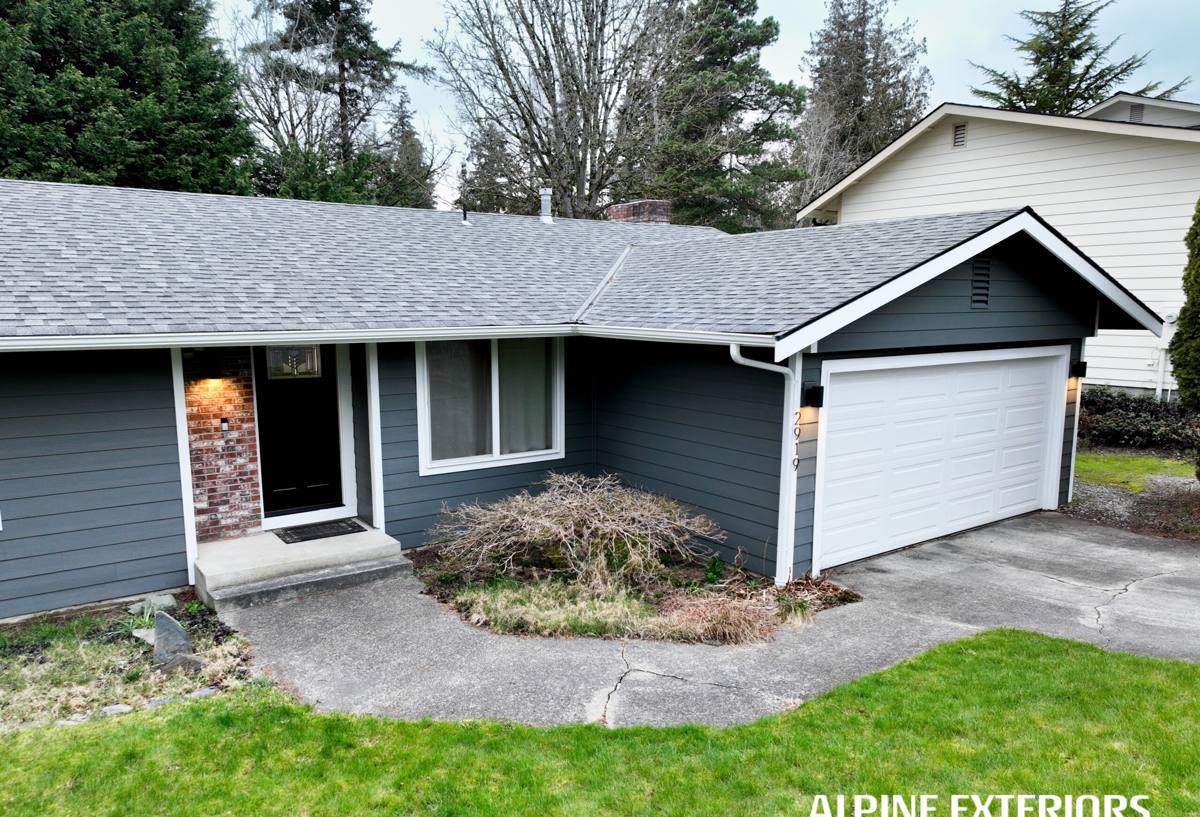
What Driving Rain and a Long Moss Season Do to the Wrong Siding
Every siding material in Seattle eventually gets wet. The difference between a wall that lasts and one that fails is what happens after that — does the material shed water, resist moisture absorption, and let the wall assembly breathe, or does it trap water against the sheathing?
- Wood-based products (cedar, primed spruce, engineered wood panels) absorb moisture at cut edges and fastener penetrations, which is exactly where driving rain and splash-back hit hardest on a shaded lot.
- Vinyl siding doesn't rot, but it expands and contracts with temperature swings, and its seams and J-channels give moss and mildew a place to take hold — especially on the shaded, tree-covered walls common throughout Rainier Valley.
- Poorly detailed cladding of any kind — missing kick-out flashing, caulked butt joints instead of proper drainage gaps, siding installed tight to grade — turns a long wet season into a slow-motion moisture problem, regardless of the material.
None of this means every other product is doomed. It means the material and the installation both have to be matched to a climate where things stay damp for months at a time, not just occasionally rained on.
Why We Install Only James Hardie Fiber Cement Siding
We made a decision as a company to install James Hardie fiber cement siding exclusively — not vinyl, not LP SmartSide, not cedar, not other fiber cement brands. That's not a marketing position; it's a standard we hold because of what we've seen matter over the long run on homes in this climate.
Fiber cement is a non-combustible blend of cement, sand, and cellulose fibers. It doesn't absorb water the way wood does, it doesn't expand and contract the way vinyl does, and it holds paint and factory finish far better than either. James Hardie specifically engineers its products by climate zone, backs them with a strong transferable warranty, and finishes its ColorPlus line in a factory-controlled process that resists fading and chipping better than field-applied paint. When we stand behind a siding job in Rainier Valley, we want the material itself to already be built for exactly the conditions it's going on.
What We Give Up by Not Installing Other Products
To be fair to homeowners comparing options: cedar has a warmth and grain that fiber cement can only approximate, and vinyl is genuinely less expensive up front. We don't pretend otherwise. Our position is that, for the maintenance burden, moisture risk, and long-term appearance homeowners are trying to avoid, James Hardie is the product we're willing to put our name behind here.
HZ5 — Siding Engineered for the Pacific Northwest
James Hardie makes climate-specific versions of its siding called HZ (HardieZone) products. HZ5 is the version engineered for regions with the kind of prolonged wet weather King County gets — it's formulated to resist moisture-related damage in exactly the conditions that give lesser products trouble. This isn't a marketing detail; it's the difference between a siding product designed for a dry climate and one designed for ours.
| Product Line | Best Use | What It Offers |
|---|---|---|
| HardiePlank Lap Siding | Most bungalows and mid-century homes | Traditional horizontal profile, wide range of widths and textures |
| HardieShingle | Craftsman-style and detail-focused homes | Staggered or straight-edge shingle look without cedar's moisture upkeep |
| HardiePanel | Modern or mixed-material facades | Vertical panel siding, often paired with lap siding as an accent |
| HardieTrim | Corners, fascia, window and door surrounds | Matches the siding's moisture resistance at the most vulnerable transition points |
Most of the older housing stock in Rainier Valley pairs well with HardiePlank in a traditional lap profile, but plenty of homes benefit from HardieShingle accents on gables or HardiePanel on additions — we'll walk through what actually fits your home's style during the estimate rather than pushing one product line.
What a Correct Fiber Cement Installation Actually Involves
The siding material is only half the job. Fiber cement fails prematurely almost exclusively because of installation mistakes, not product defects — and in a wet climate, those mistakes show up faster. A correct install includes:
- A weather-resistant barrier installed and lapped correctly behind the siding, with no gaps at seams or penetrations
- Proper flashing at every window, door, and roofline intersection — including kick-out flashing where a roof edge meets a wall, one of the most common leak points on older homes
- A drainage gap or rain screen behind the siding so any moisture that gets past the cladding can actually dry out instead of sitting against the sheathing
- Correct fastener placement and spacing per James Hardie's published installation specs, not "close enough"
- Factory-cut and factory-primed edges used wherever possible, with any field cuts properly sealed
- Butt joints and trim details installed per manufacturer spec — including where caulk is appropriate and where it isn't, since sealing the wrong joint can trap water instead of shedding it
- Clearance maintained between the bottom of the siding and grade, decks, or paved surfaces to avoid wicking moisture
Skip any one of these steps and you can have the best siding material available on the market and still end up with a moisture problem in five years. This is where the installer matters as much as the product.
Matching the Siding to Rainier Valley's Housing Stock
Rainier Valley's homes span several eras, and the right fiber cement approach isn't identical for all of them:
Early-1900s Bungalows
Many of these homes have original wood siding that's been patched or painted over for decades. Before any new siding goes on, we check what's happening underneath — old sheathing, insulation gaps, and outdated flashing details are common and need to be addressed as part of the job, not covered up.
Mid-Century Homes
These often have simpler wall assemblies and fewer architectural details, which usually makes for a more straightforward install, but original moisture barriers from that era are frequently degraded or missing entirely.
Newer Construction and Additions
Newer homes and additions sometimes already have a code-compliant weather barrier in place, but siding choices made during original construction (especially budget-grade vinyl or engineered wood) are common candidates for replacement once they start showing wear.
What This Job Costs — and What Actually Drives the Price
Every home is different, and we'll give you an exact number after walking the property, but the broad cost range for a full fiber cement siding replacement depends on a handful of factors:
| Factor | Why It Matters |
|---|---|
| Home size and wall complexity | More corners, gables, and dormers mean more cutting, flashing, and labor time |
| Condition of existing sheathing | Rot or moisture damage found once old siding comes off adds repair scope |
| Product line and profile | HardieShingle and custom trim details run higher than standard lap siding |
| Access and site conditions | Tight lots, mature landscaping, and sloped yards common in this neighborhood affect staging and labor |
| Trim and flashing scope | Full trim replacement costs more than reusing sound existing trim, but often pays off in moisture protection |
We'd rather walk your specific home and give you real numbers than quote a broad range that doesn't mean much either way.
Our Process, From Estimate to Finished Job
- An in-person walk-around of your home to assess current siding condition, trim, flashing, and any signs of existing moisture damage
- A written estimate that specifies the exact James Hardie products, profiles, and colors being proposed — not a vague allowance
- Removal of old siding with a check of the sheathing and framing underneath before anything new goes up
- Repair of any damaged sheathing or framing found during removal, discussed with you before proceeding
- Installation of the weather barrier, flashing, and fiber cement siding to James Hardie's published specifications
- A final walkthrough so you can see the finished work and ask questions before we consider the job done
Why Hiring a Crew That Already Works This Neighborhood Matters
Siding installation looks similar on paper everywhere, but the details that actually matter — how much drainage gap to leave, where kick-out flashing is non-negotiable, how a home's age affects what's likely hiding under the old siding — are things a crew learns by doing this work repeatedly in the same climate and on the same kind of housing stock. A contractor who works Rainier Valley regularly has already seen how bungalow-era sheathing tends to hold up, how shaded lots affect drying time, and where the neighborhood's older flashing details typically fall short. That familiarity translates into fewer surprises and a more accurate estimate up front.
If your Rainier Valley home needs new siding, or you're not sure whether your current siding is doing its job, we're glad to take a look. Fill out the form below for a free, no-pressure estimate — we'll walk the property, tell you honestly what we see, and give you real numbers for a James Hardie fiber cement install built for this climate.