 Seattle
 Rainier Valley sits inland from Puget Sound, but it still catches the same wet, gray stretch of weather that wears on decks across the rest of Seattle. Driving rain through the fall and winter, shade from the neighborhood's mature trees, and moss that takes hold on anything damp for more than a few days all add up over the years. If your deck feels soft in spots, has dark staining, or just looks tired, it's usually fixable — but only if the repair addresses what's actually causing the damage underneath, not just what shows on the surface.
Why Rainier Valley's Climate Is Hard on Decks
Seattle doesn't get extreme weather, but it gets a lot of the same weather, week after week, for months at a time. That steady moisture is what actually damages a deck — not one big storm, but months of boards that never fully dry out between rains. Add in a long moss season, tree cover that keeps parts of a deck shaded most of the day, and King County's generally humid air, and you have conditions that push wood decks toward rot and push fasteners toward rust faster than they would in a drier climate.
Decks that get afternoon shade or sit close to fences and shrubs tend to show problems first, since airflow is what lets a deck dry out between rain events. North-facing decks and ground-level decks with poor clearance underneath are usually the worst off, because moisture gets trapped instead of evaporating.
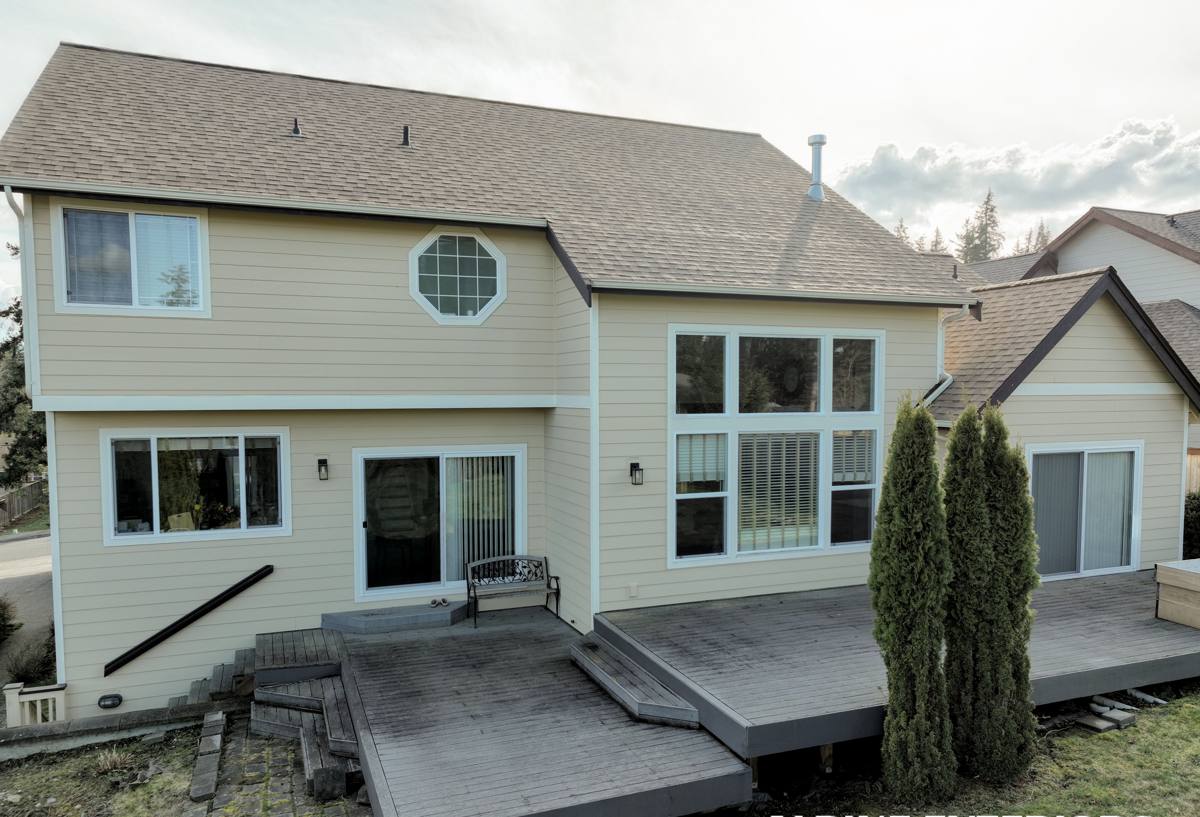
Signs Your Deck Needs Repair (Not a Full Rebuild)
Most decks don't fail all at once — they show warning signs first. Catching problems early is almost always the difference between a repair bill and a full replacement. Walk your deck and check for the following:
- Boards that feel spongy, springy, or noticeably softer than the boards around them
- Green or black staining that keeps coming back even after cleaning
- Nails or screw heads that have popped up or backed out on their own
- Visible rust streaks running down from fasteners or metal connectors
- A railing that wobbles or flexes when you lean on it
- Gaps opening up where the deck attaches to the house (the ledger board)
- Any noticeable sag, bounce, or unevenness when you walk across it
One or two of these on an otherwise solid deck usually means a targeted repair. Several of them together, especially near the ledger board or main support posts, means it's worth having someone look at the structure before you use the deck heavily again.
What a Proper Repair Actually Involves
A deck repair that only replaces the boards you can see often misses the actual source of the problem. Wood decking is a system — the visible boards sit on top of framing, fasteners, and flashing that all have to work together to keep water moving away from the structure instead of into it.
Framing and Structure
Joists, beams, and posts are what actually hold a deck up, and they're also the parts most likely to be quietly rotting under boards that still look fine from above. A real repair means checking these members for soft spots, not just replacing the decking on top of them.
Fasteners and Hardware
Standard steel screws and nails corrode faster in a wet climate, and corroded fasteners lose their grip long before they look obviously broken. Repairs done right use fasteners and structural connectors rated for the type of wood and exposure involved, so the fix doesn't need to be redone again in a few years.
Flashing and Water Management
Most serious deck failures start at the ledger board — the piece that attaches the deck to the house — where water gets behind the wood and rots it from the inside. Proper flashing at this connection, and anywhere else water can collect, is often the single most important part of a repair that lasts.
Wood vs. Composite: How Repair Approaches Differ
What your deck is built from changes what a repair looks like and how often you'll need one.
Wood Decking
Pressure-treated lumber and cedar are common in this area because they're affordable and easy to match when replacing individual boards. The trade-off is that wood needs regular sealing or staining to resist moisture, and it's more susceptible to rot and moss growth if that maintenance gets skipped for a season or two — which is common in a climate where there's rarely a long dry stretch to get the work done.
Composite Decking
Composite boards resist rot and don't need sealing, which appeals to homeowners who want less upkeep. But composite isn't maintenance-free — it can still trap moisture against the framing underneath if the substructure isn't properly ventilated and flashed, and repairs to composite decking require matching the specific product line, since colors and profiles vary by manufacturer and don't always blend cleanly with newer stock. We'll walk you through the honest trade-offs for your specific deck rather than pushing one material over another.
What Affects the Cost of a Deck Repair
Deck repair pricing varies a lot depending on what's actually wrong. Broad ranges below give a sense of scale, but the only way to know for sure is a hands-on inspection.
| Repair Type | Typical Scope | Rough Cost Range |
|---|---|---|
| Spot board replacement | A few damaged or rotted deck boards | $400 – $1,200 |
| Railing repair or rebuild | Loose posts, damaged rail sections | $500 – $1,800 |
| Fastener and hardware upgrade | Replacing corroded screws and connectors | $600 – $2,000 |
| Structural framing repair | Rotted joists, beams, or posts | $1,500 – $4,000+ |
| Ledger board and flashing repair | Rebuild the house-to-deck connection | $1,200 – $3,500 |
Accessibility, how much of the framing is affected, and whether we're matching existing wood or composite all move these numbers up or down. We'll give you a firm number after we've actually opened up the problem areas, not a guess from the driveway.
Our Repair Process
- Inspection. We check the decking, framing, fasteners, railings, and the ledger board connection, including probing for soft wood in spots that look fine on the surface.
- Honest scope. We tell you plainly whether you're looking at a repair or whether the damage has gone far enough that a rebuild makes more sense long-term.
- Repair plan and quote. You get a clear breakdown of what's being replaced and why, with pricing before any work starts.
- The repair itself. Rotted framing, boards, and hardware are removed and replaced with materials suited to this climate, and any flashing or water-management gaps get corrected as we go.
- Finish work. Wood repairs are sealed or finished to match the rest of the deck as closely as possible; composite repairs are cleaned up so the transition is as smooth as the product allows.
Older Rainier Valley Homes: What We Watch For
Rainier Valley has a lot of older housing stock, and decks added onto older homes over the years weren't always built to current standards. It's common to find decks attached with undersized or missing flashing, ledger boards fastened with lag screws instead of proper structural bolts, or footings that are shallower than what would be used today. None of that means the deck is unsafe to repair — it just means a repair on an older structure sometimes needs to correct the original construction, not just replace worn parts. We flag this kind of thing during the inspection so you're never surprised mid-project.
Keeping Your Deck in Good Shape After Repair
A repair holds up a lot longer with a little seasonal upkeep, especially in a climate where moss and standing moisture are the main enemy.
- Sweep leaves and debris off the deck regularly, especially in fall
- Treat moss and algae growth before it spreads, rather than after
- Keep gutters and downspouts clear so water isn't dumping onto or near the deck
- Reseal or restain wood decking on a regular schedule rather than waiting until it looks bad
- Check underneath the deck once a year for standing water or poor drainage
Why a Crew That Already Works in Rainier Valley Matters
A deck repair in this part of Seattle isn't quite the same job as one in a drier climate, and it isn't quite the same job as one on a brand-new house, either. A crew that regularly works Rainier Valley knows what King County's weather does to a deck over the years, has a feel for how older local homes were originally built, and understands what Seattle's permitting process expects for structural repairs versus cosmetic ones. That familiarity means fewer surprises, a more accurate first estimate, and a repair that's built to actually hold up through the next few wet seasons instead of needing to be redone.
If your deck in Rainier Valley is showing soft spots, moss, loose railings, or just isn't aging the way it should, we're happy to take a look. Reach out for a free, no-pressure estimate using the form below — we'll tell you honestly what needs to happen and what it'll take to fix it right.