 Seattle
 Queen Anne's Climate Is Harder on Siding Than It Looks
Queen Anne sits on one of Seattle's highest hills, and that elevation comes with a trade-off: the same views that make the neighborhood desirable also mean more direct exposure to wind and wind-driven rain than homes tucked into lower, more sheltered parts of the city. On top of that, mature tree canopy on many of the shadier slopes keeps north- and west-facing walls damp well after a storm has passed, which is exactly the kind of condition that feeds a long moss season. Homes with a Sound-facing exposure also pick up salt-laden air off Puget Sound, which accelerates corrosion on fasteners and finishes that aren't built to handle it.
None of this means Queen Anne is a uniquely brutal place to own a house. It means siding here has to do more work than a spec sheet written for a mild, dry climate assumes it will. Replacement done right accounts for wind exposure, moisture cycling, and moss pressure specific to how and where a home sits on the hill — not just whatever the previous siding happened to be.
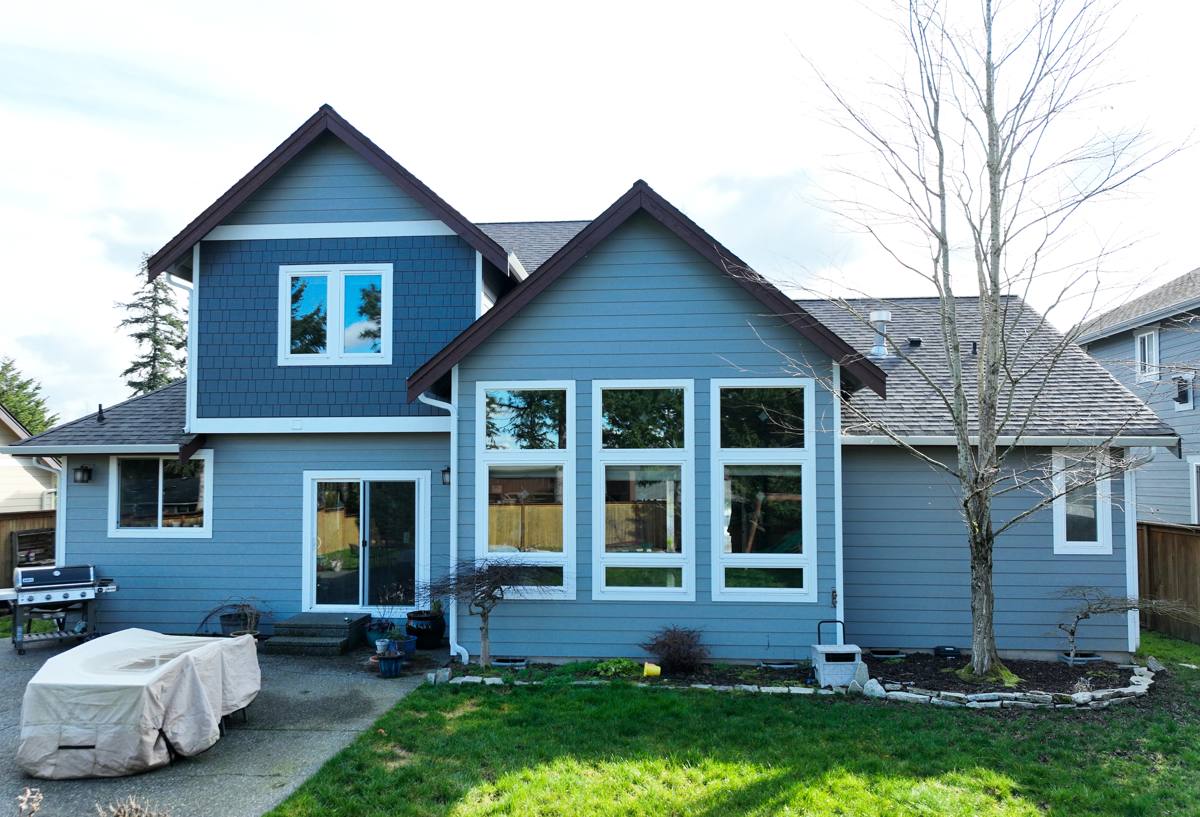
Signs a Queen Anne Home Needs Replacement, Not Just Repair
Repair makes sense when the underlying material is sound and the damage is isolated. Replacement becomes the right call once the siding itself, or what's behind it, has started to fail broadly. Common signs we see on Queen Anne homes include:
- Soft, spongy, or visibly warped boards, especially on walls that face prevailing wind and rain
- Paint that fails every two to three years no matter how well it was applied
- Moss or algae staining that comes right back within a season of being cleaned
- Gaps opening at seams, corners, and trim as boards shrink, swell, or cup
- Visible buckling or separation on upper stories and wind-facing gables
- Siding that's simply reached the end of its realistic service life for its material — often 20-30 years for wood, sooner if maintenance lapsed
If you're only seeing one or two of these on a small section of wall, a targeted repair may still buy time. If several are showing up across multiple elevations, that's usually a sign the whole envelope is due for replacement rather than another round of patching.
Why the Siding Material You Choose Matters Here
In a drier, more sheltered climate, the gap between siding materials is mostly cosmetic. In a place with Queen Anne's combination of wind, driving rain, and prolonged shade-driven moisture, the material you choose has a much bigger say in how the next 20-30 years go.
| Material | Moisture & moss resistance | Maintenance | Fire rating |
|---|---|---|---|
| James Hardie fiber cement | Engineered specifically for wet, wind-driven climates; does not rot or absorb water like wood | Low — factory-finished, no regular repainting on schedule | Non-combustible |
| Cedar / wood siding | Attractive but absorbs moisture; moss and rot take hold if finish isn't kept up religiously | High — refinishing every few years, ongoing moss and rot watch | Combustible |
| Vinyl siding | Sheds water on the surface but seams and panel movement let moisture behind it; can warp or crack in strong wind | Low, but limited repair options once damaged | Combustible, can deform in heat |
| LP SmartSide | Engineered wood core, better than older wood-composite products, but still wood-based — vulnerable at cut edges and seams if sealing fails | Moderate — relies on caulking and coating staying intact | Combustible |
This is the core reason our company installs only James Hardie fiber cement siding. Cedar looks great going up, but on a shaded, wind-exposed Queen Anne wall it demands a maintenance commitment most homeowners underestimate. Vinyl handles cost well but its seams and thermal movement work against it in a windy, wet climate. LP SmartSide is a real improvement over older engineered wood products, but it's still wood at its core, and wood-based sidings depend on perfect, permanent sealing at every cut edge — a standard that's hard to guarantee for 20+ years on a hillside home. Fiber cement doesn't have that vulnerability, which is why it's what we put on homes here.
What a Correct Siding Replacement Job Actually Involves
Swapping old boards for new ones isn't the job — the job is rebuilding the wall's moisture management from the sheathing out. A correct replacement includes:
- Full tear-off of the old siding down to the sheathing, not siding-over-siding
- Inspection of the sheathing and framing for hidden rot or water damage before anything new goes up
- Repair or replacement of any compromised sheathing, not just covering it up
- A properly lapped weather-resistive barrier installed to manufacturer specification
- Correct flashing at every window, door, roofline, and penetration — this is where most future leaks start if it's rushed
- A drainage plane or rainscreen gap on walls that see heavy, sustained moisture exposure
- Fastener placement, spacing, and clearance from grade and roof lines done to the siding manufacturer's published specs
- Factory-finished siding installed with the correct exposure and caulking only where the manufacturer actually calls for it
Skipping any of these steps doesn't usually show up as a problem in year one. It shows up in year five or ten, as moisture damage behind siding that looked fine from the curb the whole time.
Our Process for Queen Anne Siding Replacement
- On-site assessment. We look at your home's specific exposure — which walls take the worst of the wind and rain, where moss patterns show up, and what condition the current siding and sheathing are really in.
- Written scope and estimate. You get a clear picture of what's being replaced, what products are being used, and what the job covers before any work starts.
- Tear-off and sheathing inspection. Old siding comes off, sheathing gets inspected, and any rot or damage is repaired before we move forward.
- Weather barrier and flashing. This is the part of the job nobody sees once it's finished, and it's the part that determines whether the wall stays dry for the next few decades.
- Hardie siding installation. Installed to manufacturer specification for fastening, exposure, and clearance.
- Trim, finish work, and walkthrough. Final details get buttoned up and we walk the job with you before calling it done.
- Cleanup and haul-away. Old material and job-site debris are removed — you're not left managing that.
The James Hardie Products We Use
James Hardie builds its siding in climate-specific formulations rather than a single one-size-fits-all product, and for the Pacific Northwest that means the HZ5 line, engineered for regions with sustained rain and moisture cycling rather than dry heat. On top of that, we install Hardie's ColorPlus factory-applied finish, which is baked on under controlled conditions rather than field-painted — it resists fading and chipping better than a job-site paint job, and it carries its own finish warranty separate from the product warranty on the siding itself.
Hardie's lap siding, panel siding, and trim products give us the range to match the look of a traditional Queen Anne home or a more contemporary build without stepping outside a non-combustible, climate-engineered material.
Working Queen Anne's Lots: Access and Permitting
A lot of Queen Anne housing sits on narrow lots with steep grades, retaining walls, and tight side-yard access — all of which change how a siding job gets staged, scaffolded, and sequenced compared to a flat, open lot. A crew that hasn't worked this kind of terrain before will often lose time (and sometimes damage landscaping or hardscape) figuring it out on your job. Siding replacement in Seattle also typically requires permitting through the city depending on the scope of work, and a contractor familiar with King County jurisdictions knows what triggers a permit and what doesn't before the job starts, not after an inspector flags it.
What Affects Siding Replacement Cost in Queen Anne
Every home is different, so we don't publish blanket pricing — but the factors that actually move the number are consistent:
| Factor | Why it matters |
|---|---|
| Total wall area | More square footage means more material and labor |
| Tear-off complexity | Multiple layers of old siding or difficult removal add time |
| Sheathing condition | Hidden rot found during tear-off requires repair before new siding goes up |
| Home height and access | Multi-story hillside homes and tight lots need more staging and care |
| Architectural detail | Trim, gables, and dormers take more time than flat, simple walls |
| Siding profile and color | Different Hardie profiles and ColorPlus finishes carry different material costs |
The only way to get a real number is a walkthrough of your specific home — anything else is a guess.
Why Hire a Crew That Already Works This Neighborhood
Queen Anne's mix of hillside lots, older housing stock, and hard weather exposure rewards a crew that has already worked through the access challenges, seen how moisture and moss behave on shaded slopes here, and knows the local permitting process cold. That experience shows up in fewer surprises mid-job and a wall system built for the conditions it's actually going to face, not a generic install.
If your Queen Anne home's siding is showing its age, we're happy to come take a look and give you a straightforward, no-pressure estimate — just fill out the form below.