 Seattle
 Why Queen Anne Roofs Wear Differently
Queen Anne sits up on one of Seattle's higher hills, with long, open exposure toward Elliott Bay and Puget Sound. A roof up here takes more direct wind and wind-driven rain than a roof tucked into a low, sheltered block a mile away. That exposure matters more than most homeowners realize — it's not just about rainfall totals, it's about rain hitting the roof sideways at flashing points and eaves that were never designed to shed water horizontally.
The marine air coming off the Sound also carries a fine salt content. Over years, that accelerates corrosion on exposed metal — flashing, fasteners, vent stacks, gutter hangers — faster than you'd see on an identical roof twenty miles inland. Add in the mature tree canopy found through much of the neighborhood, and you get shaded, damp roof planes that barely dry out between King County's fall-through-spring storms. That combination is exactly what moss needs to take hold, and once moss gets under shingle edges, it lifts them and starts letting water in underneath.
Finally, Queen Anne's housing stock skews older than a lot of the city — plenty of homes here were built in the early-to-mid 1900s, with additions and re-roofs layered on over the decades. A roof can look fine from the sidewalk and still have decking, ventilation, or flashing details that don't match current practice. We factor all of this in before we ever quote a replacement, not just the shingle color.
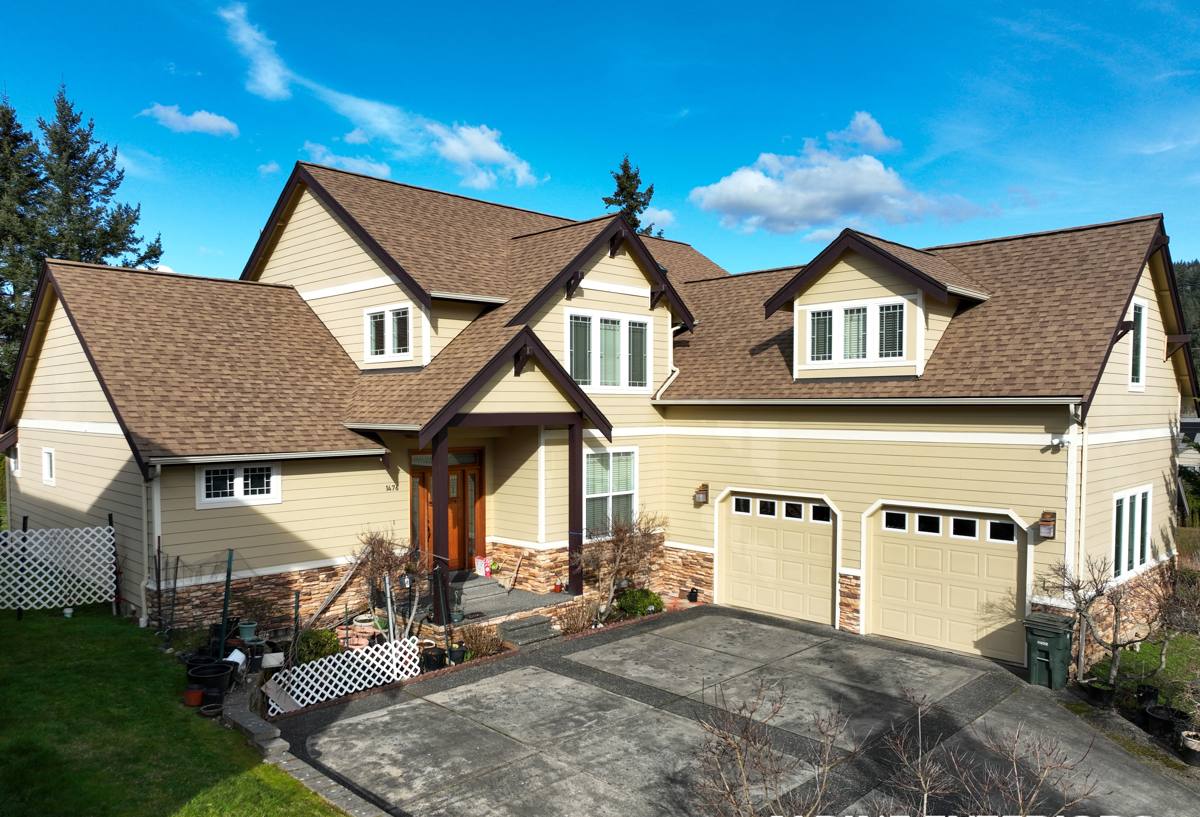
Signs You're Looking at Replacement, Not Another Repair
Every roof reaches a point where patching stops making financial sense. On Queen Anne homes, we typically see these signs cluster together by the time a roof is truly done:
- Granule loss heavy enough that you can see bare, shiny patches on asphalt shingles
- Shingles curling, cupping, or cracking, especially on south- and west-facing slopes
- Moss or algae mats thick enough to lift shingle tabs at the edges
- Soft, spongy decking underfoot when walked, or visible sagging between rafters
- Daylight visible through the roof deck from inside the attic
- Water stains on interior ceilings or exterior fascia boards that reappear after repairs
- A roof already past or close to its material's expected service life
- Repair costs that are starting to add up to a meaningful fraction of a full replacement
One or two of these on their own might mean a targeted repair is still the right call. Several at once, especially on a roof already fifteen-plus years old, usually means you're paying to patch a system that's failing as a whole.
What a Correct Roof Replacement Actually Involves
A roof replacement is more than stripping old shingles and nailing down new ones. The parts that don't show from the street are what determine whether the roof performs through our wet season or starts failing again in five years.
Tear-Off and Deck Inspection
We remove the existing roofing down to the deck rather than layering over it. That's the only way to actually see the plywood or plank sheathing underneath — soft spots, delamination, or old water damage hide under even a good-looking roof. Any damaged decking gets replaced before anything new goes down; skipping this step is one of the most common shortcuts in the trade, and it's the one most likely to cause problems you can't see until the next leak.
Underlayment and Water Protection
Given how much of our precipitation arrives as steady, driving rain rather than snow or ice, the underlayment layer matters as much as the shingles themselves. We pay particular attention to eaves, valleys, and low-slope transitions — the spots where wind-driven rain is most likely to find its way under a shingle edge.
Ventilation
Proper intake and exhaust venting keeps the attic close to outdoor temperature and humidity. Without it, trapped moisture condenses on the underside of the deck, which rots sheathing from the inside and shortens the life of insulation below it — regardless of how good the shingles on top are.
Flashing and Transition Details
Chimneys, dormers, skylights, and valleys are where most roof leaks actually start, not the open field of shingles. Queen Anne's older homes frequently have additions or dormers that were tied into the original roofline at some point, and those transitions deserve careful, individually formed flashing rather than a generic one-size fits-all piece.
Roofing Material Options for Queen Anne Homes
There's no single "right" material for every house — it depends on your roof's slope, sun and shade exposure, and how the house looks from the street. Here's how the common options compare for a home in this climate and setting.
| Material | Typical Lifespan | How It Handles Our Climate | Trade-Offs |
|---|---|---|---|
| Asphalt composition shingle | 20–30 years | Good performance with proper underlayment and ventilation; algae-resistant granule options help in shaded, moss-prone areas | Lower upfront cost, wide color range, needs periodic moss/debris maintenance |
| Standing seam metal | 40–60 years | Sheds moss and driving rain very well; low maintenance | Higher upfront cost; requires correct fastener and coating selection to resist corrosion from salt-tinged air |
| Cedar shake | 20–30 years with upkeep | Traditional look that suits many Queen Anne homes, but our long damp season is hard on wood roofing | Meaningful ongoing maintenance to manage moss and moisture; we're upfront with clients about that maintenance burden before they commit |
| Synthetic shake/slate | 40–50 years | Mimics traditional profiles without wood's moisture sensitivity | Higher material cost than asphalt; fewer installers experienced with the product |
For most Queen Anne homes we work on, a quality architectural asphalt shingle with algae-resistant granules and correct ventilation offers the best balance of cost, appearance, and durability against moss. Metal earns its higher price tag on steeper, more exposed roof planes where longevity and low maintenance matter more than upfront cost.
Our Process, Start to Finish
- On-site inspection. We walk the roof (or use a ladder/drone where pitch or access doesn't allow safe foot traffic) and inspect the attic from inside, not just the surface from the ground.
- Written estimate. You get a clear scope of work and price — what's being torn off, what decking repair allowance is included, what materials and ventilation are specified.
- Permitting. We handle the City of Seattle permit application for the replacement so you don't have to navigate it yourself.
- Tear-off and deck inspection. Old roofing comes off, decking gets inspected and repaired as needed, and we walk you through anything unexpected before covering it back up.
- Underlayment, flashing, and new roofing installed. Following manufacturer specifications so your warranty stays intact.
- Site cleanup and magnetic sweep. Debris and stray nails are cleared from the yard and driveway before we consider the job done.
- Final walkthrough. We review the finished roof with you and answer any questions before closing out the permit.
Permits and Neighborhood Considerations
Roof replacements in Seattle require a permit through the city, and we handle that process as part of the job rather than leaving it to the homeowner. If your property sits within a design review overlay or carries any historic designation — which does apply to certain properties in and around Queen Anne — that can add a review step to the timeline. We flag this during the initial inspection so it's built into your schedule from the start, not discovered halfway through the project.
Parking and street access are also worth planning for. Queen Anne's streets are steep and, in places, narrow, which affects how we stage material delivery and set up for tear-off. It's a small logistical detail, but it's the kind of thing that catches crews unfamiliar with the neighborhood off guard and slows a job down.
Keeping a New Roof Performing Through Our Wet Season
A correctly installed roof still needs basic upkeep to hit its full lifespan here. The biggest factor working against any Queen Anne roof is time spent wet under tree cover, so the maintenance that matters most is straightforward:
- Clear gutters and downspouts at least twice a year, more often under heavy tree cover
- Remove moss and debris buildup before it accumulates thick enough to hold moisture against the shingles
- Trim overhanging branches to cut down shade and leaf litter on the roof plane
- Have flashing around chimneys, skylights, and vents checked periodically, since these are the first points to fail
- Address small leaks or lifted shingles promptly rather than waiting for them to spread
None of this is complicated, but it's the difference between a roof that reaches the top end of its expected lifespan and one that needs early intervention because moss and standing moisture were left unchecked.
Why a Crew That Already Works Queen Anne Matters
A roofer who works this neighborhood regularly already knows what a Queen Anne roof is up against: the wind exposure near the top of the hill, the moss pressure under mature tree canopy, the age and construction quirks of the housing stock, and the access challenges of steep, narrow streets. That familiarity shows up in small but real ways — knowing to inspect certain flashing details on older additions without being told, planning material staging around a tight street before the truck shows up, or recognizing early moss damage that a less experienced eye might miss.
It also means straight answers instead of guesswork. We're not going to recommend the most expensive material on the table if a well-installed asphalt system with proper ventilation will serve your specific roof just as well — and we'll tell you honestly when a material like cedar shake is going to demand more upkeep than most homeowners want to sign up for in this climate.
Questions Worth Asking Before You Hire
Whoever you choose for a roof replacement, these are worth confirming upfront:
- Are you licensed and insured to work in Washington State, and can you provide proof?
- Will you inspect the decking before quoting, or only after tear-off begins?
- What's included in the estimate if decking repair or replacement is needed?
- Who pulls the City of Seattle permit — you or the homeowner?
- What underlayment and ventilation specifications are included, not just the shingle brand?
- What does the workmanship warranty cover, separate from the manufacturer's material warranty?
- Do you have recent experience working on homes in this neighborhood specifically?
A contractor who answers these clearly and without hedging is usually one who does this work correctly and often.
If your roof is showing its age, or you just want an honest opinion on whether repair or replacement makes more sense, we're happy to take a look. Fill out the form below for a free, no-pressure estimate.