 Seattle
 Queen Anne's Roofing Climate: What Asphalt Shingles Are Up Against
Queen Anne sits on one of the higher points in Seattle, with a mix of hillside lots, mature tree cover in places, and open exposure toward Puget Sound in others. That combination puts a shingle roof through more than most people realize over a Pacific Northwest winter. It isn't one big storm that wears a roof down here — it's the slow, repeated cycle of wet, dry, wet again, plus wind and organic growth, stacked up over years.
Salt Air and Wind Off the Sound
Homes closer to the water-facing slopes of the hill deal with salt-laden air and wind-driven rain that pushes moisture up under shingle edges and around flashing details that would stay dry on a calmer site. Salt and moisture together accelerate corrosion on exposed metal fasteners, flashing, and vents faster than a purely inland roof would see. It's not dramatic damage in any one year — it's cumulative, and it shows up first at the details: nail heads, valley metal, and pipe boots.
Moss, Shade, and a Long Wet Season
King County's wet season runs long, and any part of a roof that stays shaded or slow to dry — north-facing slopes, areas under overhanging branches, low-pitch sections — becomes a place where moss and moisture-loving growth can get established. Moss isn't just cosmetic. It holds water against the shingle surface, lifts tabs as it grows under the edges, and keeps that section of roof wet well after the rest has dried out. Left unaddressed over multiple seasons, it shortens the life of an otherwise sound roof.
Hillside Exposure and Roof Pitch
Queen Anne's elevation and hillside streets mean wind exposure varies a lot from one property to the next, and older homes here often have steeper, more complex rooflines than a typical single-story suburban ranch — multiple planes, dormers, and valleys that all need correct flashing and underlayment work. Steeper pitches shed water faster, which helps, but they also mean more roof surface exposed to wind uplift and more places where two roof planes meet and need careful detailing.
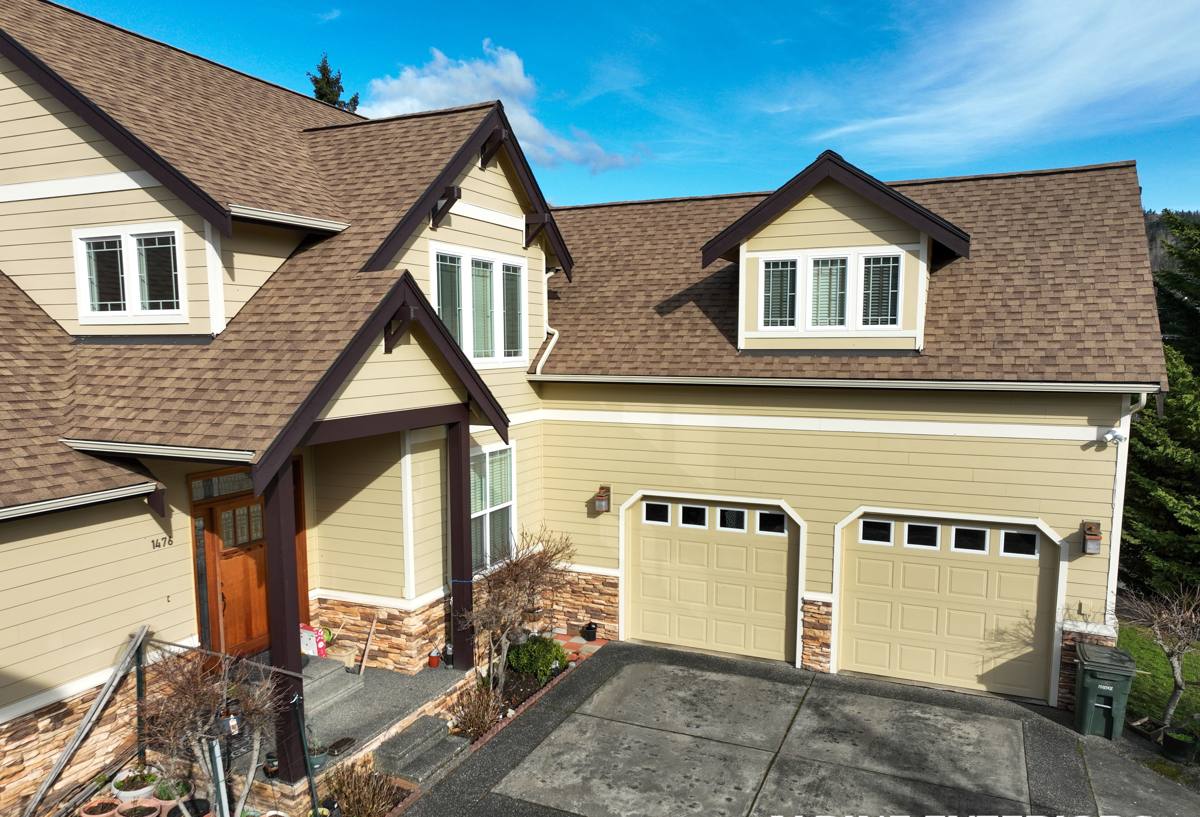
What a Correctly Installed Shingle Roof Includes
An asphalt shingle roof is a system, not just a layer of shingles nailed to plywood. In a climate like this one, skipping or shortcutting any single layer of that system is usually where premature leaks and moss problems start.
- Deck inspection and repair — any soft, delaminated, or water-damaged sheathing gets replaced before anything new goes down, not covered up.
- Ice and water shield at eaves and valleys — a self-adhering waterproof membrane at the vulnerable low points where standing water and ice dams are most likely to cause a leak.
- Synthetic underlayment across the field — a secondary water barrier under the shingles that matters most during the exact wind-driven rain events this area gets in winter.
- Correct flashing at every penetration and transition — chimneys, skylights, sidewalls, valleys, and pipe boots are where the large majority of roof leaks actually originate, not the open field of shingles.
- Balanced attic ventilation — intake at the eaves and exhaust at the ridge, sized to the attic, so moisture from inside the home doesn't condense against the underside of the deck.
- Starter strip and correct nailing pattern — details that don't show once the job is done, but directly determine wind resistance and whether the manufacturer's warranty actually applies.
Any one of these done wrong won't necessarily cause a problem the first year. It's the roof's performance in year eight or twelve, through repeated wet winters, that reveals which jobs were done to spec and which were done to look finished.
Choosing a Shingle Line for a Queen Anne Home
Shingle selection matters more in a marine climate than in a drier region, mainly because of algae and moss resistance, wind rating, and how the shingle handles repeated wet-dry cycling. Here's how the common tiers compare for this kind of application.
| Shingle Type | Typical Lifespan | Algae/Moss Resistance | Wind Rating | Best Fit |
|---|---|---|---|---|
| 3-tab asphalt | Shorter end of the range | Limited unless AR-rated | Lower | Budget-driven projects, secondary structures |
| Architectural/dimensional | Mid-to-long range | Good when algae-resistant granules specified | Higher, laminated construction | Most Queen Anne homes — balance of durability and cost |
| Premium/designer laminate | Longer range | Best available granule technology | Highest | Steep, highly visible rooflines; homes prioritizing longevity and appearance |
For most homes in this neighborhood, an architectural shingle with algae-resistant (AR) granules is the practical middle ground — the granule technology specifically resists the organic growth that this climate encourages, without paying premium-tier pricing for performance most homes don't need. On steep, highly visible sections of roof, or where a homeowner wants to get as many years as possible between re-roofs, the premium laminate lines earn their higher cost.
Signs Your Queen Anne Roof Needs a Look
Most shingle roof problems give some warning before they become an active leak. Worth checking for, especially after the wetter months:
- Moss or dark streaking concentrated on shaded or north-facing slopes
- Granules collecting in gutters or at downspout outlets
- Shingle tabs that look curled, cupped, or lifted at the edges
- Visible daylight or staining in the attic near valleys, chimneys, or vent penetrations
- Flashing that looks rusted, loose, or separated from the roof plane
- Any soft spots or sagging noticeable when viewed from the ground
- Interior ceiling stains that appear or expand after a heavy rain event
None of these automatically means a full replacement is needed. Often it's a repair, a flashing fix, or a moss treatment. But the earlier any of these are addressed, the less likely they are to turn into deck damage that costs significantly more to fix.
Our Process for Queen Anne Roofing Projects
Inspection and Honest Assessment
We start on the roof itself, not just from ground-level photos — checking the shingle field, all flashing details, attic ventilation, and deck condition where accessible. We'll tell you plainly whether you're looking at a repair, a partial re-roof, or a full replacement, and why.
A Clear, Written Scope
The quote lays out the shingle line, underlayment, flashing plan, and ventilation approach in writing, so there's no ambiguity about what's included before work starts.
Careful Site Setup on Hillside Lots
Queen Anne's terrain means staging, material delivery, and debris disposal often take more planning than a flat-lot job. We plan access and protection for landscaping, driveways, and neighboring property before the first shingle comes off.
Tear-Off, Deck Repair, and Installation
Old roofing comes off down to the deck, any damaged sheathing is replaced, and the new system goes down in the sequence that actually protects the home — underlayment, flashing, shingles, ventilation — not just the visible top layer.
Cleanup and Walkthrough
Magnetic sweep for nails, full debris removal, and a walkthrough so you know what was done and what to watch for going forward.
Keeping a Shingle Roof Healthy in a Marine Climate
A well-installed asphalt shingle roof in this climate still needs periodic attention — it isn't a install-and-forget product here the way it might be in a dry climate.
- Moss treatment and gentle removal — treating moss growth before it's allowed to lift shingle edges, using methods that don't damage the granule surface.
- Gutter and downspout maintenance — keeping water moving off the roof matters more when the wet season runs long; clogged gutters back water up under the roof edge.
- Attic ventilation checks — confirming intake and exhaust vents stay clear, since blocked ventilation traps moisture against the deck from the inside.
- Periodic visual inspections — especially after wind events, checking that flashing and shingle tabs haven't shifted.
These are inexpensive habits compared to the cost of a deck repair caused by a leak that went unnoticed for a season or two.
Cost Factors for a Queen Anne Shingle Roof
Every roof is priced on its own specifics, but the same handful of factors drive most of the variation from one Queen Anne project to the next.
| Factor | Effect on Cost |
|---|---|
| Roof pitch and access | Steeper pitches and hillside access increase labor and safety setup |
| Number of existing layers | Tear-off of multiple old layers adds labor and disposal cost |
| Deck condition | Any sheathing replacement adds material and labor beyond the base scope |
| Shingle tier selected | 3-tab is lowest cost; premium laminate lines cost more per square |
| Roof complexity | Valleys, dormers, and multiple planes add flashing detail and time |
| Ventilation upgrades | Adding or correcting intake/exhaust venting is a modest add if not already adequate |
We walk through these factors specifically for your roof during the estimate, so the number you get reflects your actual home rather than a generic average.
Why Local Experience in Queen Anne Matters
Queen Anne's housing stock spans a wide range of ages, and many of the older homes on the hill were built with plank or skip sheathing rather than the plywood decking common in newer construction — something a crew needs to recognize and work with correctly, not treat the same as a modern deck. The neighborhood's hillside streets and mature landscaping also mean site access and material staging take real planning, and its mix of wind exposure from Puget Sound and shaded, tree-covered lots means two roofs a few blocks apart can need different flashing and ventilation approaches. A crew that regularly works this part of Seattle already knows what to look for and plans around it, rather than working it out for the first time on your home. King County permitting requirements for reroofing and repair work are also part of doing the job right, not an afterthought handled after the fact.
If you're seeing moss buildup, granule loss, or just want an honest read on where your roof stands, we're glad to take a look. Use the form below to request a free, no-pressure estimate for your Queen Anne home.