 Seattle
 Metal Roofing in Capitol Hill: Built for Seattle's Wet Side
Capitol Hill homes take a beating that a lot of roofing material simply isn't designed for. Between salt-laden air moving in off Puget Sound, driving rain that hits roofs sideways during winter storms, and a moss season that can stretch from fall through spring, King County's climate is hard on shingles and unforgiving of a sloppy install. Metal roofing, done correctly, holds up to all three better than most alternatives — but "done correctly" is doing a lot of work in that sentence. This page covers what Capitol Hill homes specifically need from a metal roof, what a proper installation looks like, and how our process is built around this neighborhood's housing stock and weather, not a generic playbook.
What King County's Climate Does to a Roof Over Time
Every roofing material has a failure mode. In Seattle, the failure modes that matter most are moisture intrusion, organic growth, and slow corrosion — and they compound each other if a roof isn't detailed for the conditions.
Salt Air and Fastener Corrosion
Capitol Hill sits close enough to the water that salt-bearing air is a real factor, even if it's less severe than a waterfront property. Over years, that air accelerates corrosion on exposed fasteners, cut edges, and lower-grade coatings. It's a slow process, which is exactly why it gets overlooked — the roof looks fine for a decade, then fastener heads or panel seams start failing all at once. Coating quality and fastener spec matter more here than in a dry inland climate.
Driving Rain and Wind-Driven Water
Seattle rain is rarely a hard downpour, but it's frequently wind-driven, which pushes water sideways and upward under laps, flashing, and fastener heads that would stay dry in a straight-down rain. A metal roof's actual weather resistance comes almost entirely from how the panels, seams, and flashing are detailed — not from the metal itself. A well-built standing seam roof sheds wind-driven rain for decades; a poorly flashed one leaks in year two.
Moss Season and Organic Buildup
Long, damp falls and winters give moss and algae months to establish themselves, especially on north-facing slopes and anywhere shaded by mature trees. Moss holds moisture against a roof surface and, on the wrong material, works into seams and fastener penetrations. Metal doesn't feed moss growth the way organic shingle surfaces do, but debris and moss can still collect in valleys and against parapet walls if drainage isn't planned for it.
Capitol Hill's Housing Stock: What That Means for Your Roof
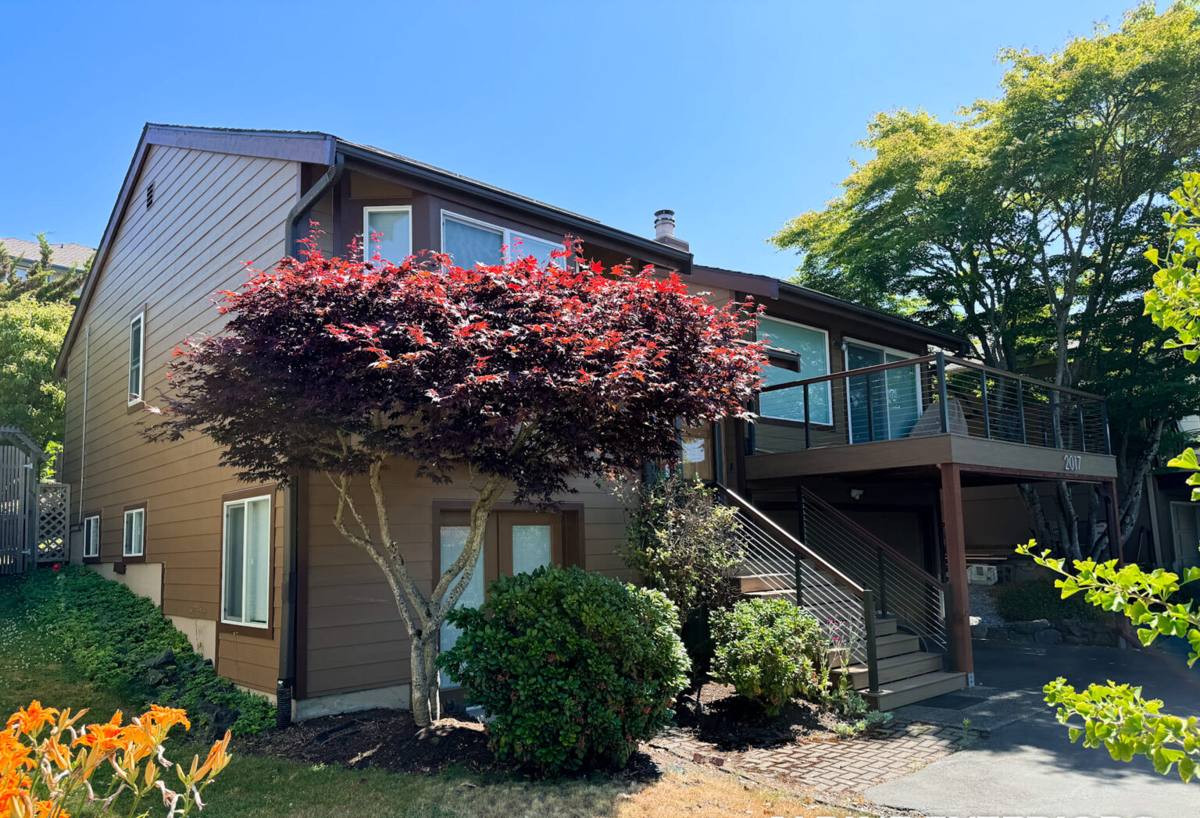
Capitol Hill's roofs aren't uniform. The neighborhood mixes older Craftsman bungalows and early-1900s houses with steeper, more traditional rooflines, converted multi-family buildings, and newer infill construction with lower-pitch or mixed-material roof sections. That variety changes what a correct metal roofing job looks like from one property to the next.
Older homes often have older decking, sometimes with multiple roofing layers already on it, which affects whether a full tear-off is needed and how much deck repair to budget for. Multi-family and converted buildings frequently have party walls, shared parapets, or roof-to-wall transitions that need careful flashing work — these are the details that separate a roof that lasts from one that leaks at the first hard rain. And because parts of Capitol Hill fall within historic or design-review overlays, it's worth checking early whether your property has any restrictions on visible materials, profiles, or colors before finalizing a metal roofing plan.
Comparing Metal Roofing Options for Capitol Hill Homes
Not all metal roofing is the same product wearing different colors. The panel style you choose affects upfront cost, expected lifespan, maintenance needs, and how well it performs against wind-driven rain specifically.
| Type | Typical Lifespan | Cost Tier | Best Fit |
|---|---|---|---|
| Standing seam (concealed fastener) | 40-60+ years | Higher | Homes wanting the strongest weather-tightness and minimal long-term maintenance |
| Exposed-fastener metal panels | 25-40 years | Mid-range | Budget-conscious projects; requires periodic fastener inspection |
| Stone-coated steel | 40-50+ years | Mid to higher | Homeowners wanting a traditional shingle or tile look with metal's durability |
| Metal roofing over historic profiles | 40+ years | Higher | Older or design-review properties needing a specific approved appearance |
Concealed-fastener standing seam is generally our default recommendation for Capitol Hill's wind-driven rain, since there are no exposed fastener heads for water to work at over time. Exposed-fastener panels can still be a sound, honest choice on a tighter budget, as long as the homeowner understands the maintenance trade-off and the panel spec is right for the exposure.
What a Correct Metal Roof Installation Actually Involves
The panels are the visible part of a metal roof. Everything that actually keeps water out happens underneath and around them.
Underlayment and Ice-and-Water Barrier
A synthetic, high-temp-rated underlayment goes down across the full deck, with self-adhered ice-and-water barrier at eaves, valleys, and any low-slope transitions — the spots most exposed to wind-driven rain and standing water. Skipping or shorting this step is one of the most common causes of metal roof leaks we're called to fix.
Flashing at Every Penetration and Transition
Chimneys, dormers, skylights, party walls, and roof-to-wall junctions all need custom-formed flashing, not generic trim pieces caulked into place. On Capitol Hill's older and multi-family buildings especially, these transitions are often where a roof was already patched once before — worth addressing properly rather than covering over.
Fastening and Panel Layout
Fastener type, spacing, and panel overlap all need to match the wind and rain exposure of the specific roof face, not a single generic spec applied everywhere. A north-facing slope catching driving rain needs tighter detailing than a sheltered, low-exposure section.
Ventilation
Metal roofs need proper intake and exhaust ventilation underneath just like any other roofing material — arguably more, since trapped moisture under a non-breathing metal surface has nowhere to go. Poor ventilation shows up later as condensation, rot in the decking, or premature failure of insulation.
Moss, Tree Canopy, and Drainage Design
Capitol Hill's mature street trees are part of the neighborhood's character, but overhanging branches mean shade, leaf litter, and moss spores land on roofs constantly. A good metal roofing job accounts for this in the details, not just the material choice: valleys and gutters sized and pitched to keep debris moving, minimal flat or low-slope catch points where organic matter can sit and hold moisture, and flashing at parapets and walls that doesn't create a ledge for debris to pile against. None of this eliminates the need for occasional cleaning, but it dramatically reduces how often it's needed and how much damage moss buildup can cause in the meantime.
Our Process for a Capitol Hill Metal Roofing Project
We walk every project through the same stages, adjusted for the specific house:
- On-site inspection of the current roof, decking condition, ventilation, and any existing leak history or repair patches.
- Honest assessment of whether a full tear-off is needed or whether the existing roof can be built over, based on deck condition and local code allowances.
- Panel and finish selection, including a look at whether the property falls under any design-review or historic guidelines that affect appearance.
- Underlayment, flashing, and ventilation work done to spec before a single panel goes down — this is the stage that determines whether the roof performs in year fifteen, not just year one.
- Panel installation with attention to the property's specific exposure: which slopes take the worst of the driving rain, where trees drop debris, and where party walls or additions create tricky transitions.
- Final walkthrough covering what maintenance the specific roof will actually need going forward.
Maintenance Checklist for Metal Roofs in Capitol Hill
Metal roofing is low-maintenance compared to most materials, but "low" isn't "none," especially with a long moss season and mature tree cover in the neighborhood.
- Clear gutters and valleys of leaves and debris at least once heading into fall and again after the worst of the winter storms pass.
- Check north-facing and shaded slopes for early moss or algae growth, since these areas dry out slowest.
- Inspect flashing around chimneys, walls, and penetrations every couple of years for sealant wear or movement.
- On exposed-fastener panels, check fastener heads periodically for backing out or early corrosion.
- Trim back overhanging branches that keep sections of the roof shaded and damp longer than the rest.
- After any major windstorm, do a quick visual check for lifted panels or dislodged flashing.
Why Hiring a Crew That Already Works in Capitol Hill Matters
Capitol Hill's narrow lots, street parking constraints, and mix of single-family homes with multi-family buildings all affect how a roofing job actually gets staged and executed — not just how it's designed on paper. A crew that regularly works this neighborhood already knows how to plan material delivery and equipment access on tight urban streets, has a realistic sense of which blocks fall under design-review or historic guidelines, and has seen firsthand how the local combination of salt air, wind-driven rain, and shaded tree cover plays out on real roofs over time. That local pattern recognition is what turns a generic metal roofing installation into one that's actually built for where it sits.
If you're weighing metal roofing for a Capitol Hill property, we're happy to take a look and walk you through what your specific roof needs — no pressure, no upsell, just a straight assessment and a free estimate.