 Seattle
 Siding on a Hill Above Puget Sound
Queen Anne sits high above the rest of Seattle, which is exactly why siding here takes a different kind of beating than siding two miles inland. The elevation and the water views that make the neighborhood desirable also mean more direct exposure to wind coming off Puget Sound and Elliott Bay, more driving rain hitting walls at an angle instead of falling straight down, and a mature tree canopy on the quieter streets that keeps north- and east-facing walls shaded and damp for long stretches of the year. None of that is unique to any one block. It's a neighborhood-wide condition, and it's the reason a siding job that would hold up fine in a drier, more sheltered part of King County can start failing early once it's up on a Queen Anne wall. We install James Hardie fiber cement siding exclusively — not vinyl, not engineered wood, not primed spruce or cedar. This page is about why that standard holds up especially well on this hill, what a correct Hardie installation actually involves here, and what to look for if you're comparing bids for a Queen Anne re-side.
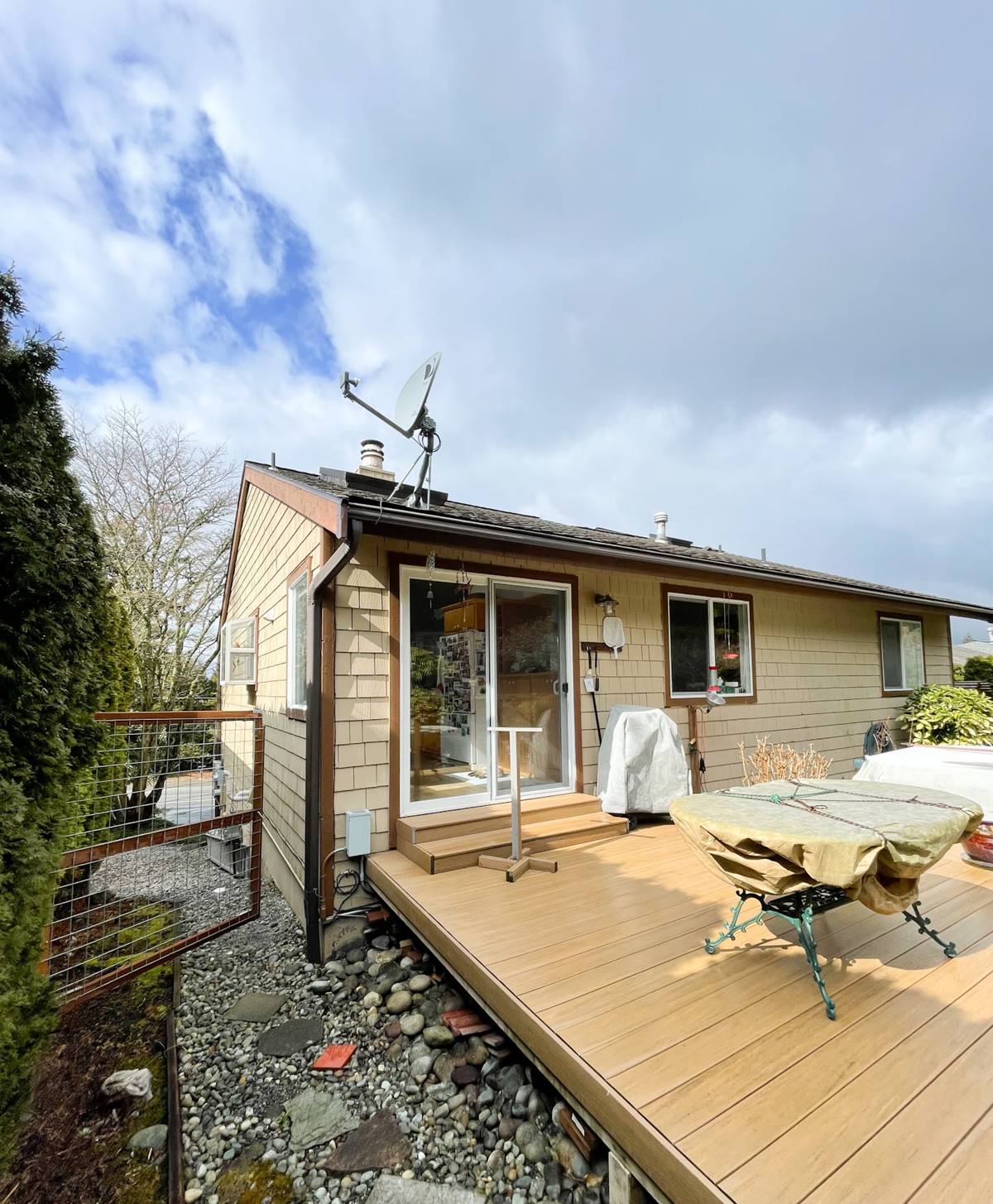
What This Climate Actually Does to a Wall
Wind and Salt Air Off the Water
Queen Anne's elevation puts it in the path of wind moving off Puget Sound with less to break it up than a low-lying, inland block would see. That wind carries a light salt content off the water, and salt-laden air accelerates the breakdown of paint films, corrodes fasteners and trim hardware faster than dry inland air, and works into any gap in a siding system's water management sooner than manufacturers' general climate ratings assume. A home doesn't need to sit directly on the waterfront to feel this. Homes well up the hill, several blocks back from any view of the water, still see more of this exposure than a similar home east of Lake Washington.
Driving, Wind-Pushed Rain
Seattle's rain reputation is mostly about steady drizzle, but the rain that actually damages siding is the wind-driven kind that hits walls sideways instead of falling straight onto a roof. On an elevated, exposed neighborhood like Queen Anne, that wind-pushed rain finds its way into lap joints, behind trim, and into any seam where the water-resistive barrier or flashing detail wasn't done right. A siding product's real test in this climate isn't how it looks on a dry day — it's how it behaves at every seam, corner, and penetration during a February storm coming off the Sound.
A Moss Season That Runs Most of the Year
Queen Anne's older, tree-lined streets keep plenty of walls in partial shade for most of the day, and combined with the region's mild, consistently damp weather, that adds up to a moss and algae season that's active across most of the calendar rather than a few weeks in fall. Any siding surface that stays damp for extended stretches becomes a growth surface, and organic growth on a wall does more than look bad — it holds moisture against the surface underneath it, which compounds whatever moisture problem was already there.
Why We Standardized on James Hardie for This Hill
James Hardie fiber cement is built from cement, sand, and cellulose fiber — an inorganic core that doesn't absorb and swell with water the way wood-based products do, and doesn't burn the way vinyl softens and deforms under heat. That matters most exactly where Queen Anne's climate is hardest on a wall: at cut edges, at fastener penetrations, and along lap joints, which are the same spots where wind-driven rain and prolonged dampness do the most damage over time.
Hardie's HZ5 product line is engineered specifically for regions with heavy moisture exposure, which is a closer match to an elevated, wind-exposed Seattle neighborhood than a general-purpose formulation built for a drier climate. Most Hardie lines are also available with the factory-baked ColorPlus finish, which holds color and resists fading and chipping better than a field-applied paint job, and it means fewer repaint cycles over the life of the siding — a real advantage on a house where scaffolding and hillside access make repainting more expensive than it would be on a flat lot.
What Correct Installation Looks Like
Fiber cement performs to its rating only when it's installed to spec, and on an exposed hillside home the margin for a shortcut is thinner than it would be somewhere more sheltered. A correct job on a Queen Anne home involves:
- Proper clearance from grade, roofline, and any horizontal surface, so water has somewhere to go instead of wicking into the bottom edge of a panel.
- Correct fastener type, spacing, and depth — over-driven or under-driven nails are a leading cause of early failure and aren't always visible from the ground.
- A water-resistive barrier and flashing detail at every window, door, and penetration, sealed to shed wind-driven rain rather than just straight-down rain.
- Factory-primed or ColorPlus-finished cut edges sealed correctly, since a raw cut edge is the fastest way for moisture to get into the panel.
- Caulk used sparingly and only where Hardie's installation instructions call for it, not as a substitute for correct flashing and clearances.
Every one of those steps is inspectable, and every one of them is a place where a rushed crew can cut a corner that won't show up as a problem for a few years. On a hill that takes more wind and more direct rain than most of the city, those few years come faster.
Matching the Product Line to Queen Anne's Housing Stock
Queen Anne has a real mix of older homes with traditional lap and shingle detailing alongside newer construction with cleaner, more modern lines. James Hardie's product lines cover both without forcing a house into a look it wasn't built for.
| Hardie Product | Look | Best Fit |
|---|---|---|
| HardiePlank lap siding | Traditional horizontal clapboard | Craftsman and traditional homes common on the hill |
| HardieShingle | Staggered or straight-edge shingle profile | Homes with existing shingle detailing or a cottage-style look |
| HardiePanel with battens | Vertical board-and-batten | Modern remodels and accent walls |
| HardieTrim | Smooth trim boards and fascia | Finishing windows, corners, and rooflines on any of the above |
We'll walk your specific house during the estimate and talk through which profile and color actually suits it, rather than defaulting to whatever's fastest to install.
What Drives Cost on a Queen Anne Re-Side
Every home is different, but a few factors come up consistently on this hill and are worth knowing before you start collecting bids.
| Factor | Why It Matters Here |
|---|---|
| Street access and grade | Steep streets and limited parking on some blocks affect staging, material delivery, and scaffolding setup |
| Home height and roofline complexity | Multi-story homes with view-oriented upper floors need more scaffolding and lift time |
| Existing siding removal | Tear-off of old siding, especially anything with hidden moisture damage, adds labor once walls are opened up |
| Trim and detail work | Craftsman-style trim and window detailing takes more time than a plain modern facade |
| Product line and finish | ColorPlus factory finish costs more upfront than field-primed siding but reduces repaint costs over time |
Our Process, Start to Finish
A free estimate starts with an actual walk of the property, not a drive-by guess. We look at the current siding condition, note any soft spots or moisture damage while walls are still closed up, and talk through which product line fits the house and your budget. If you move forward, we handle removal of the old siding, inspect the sheathing underneath for damage before anything new goes up, install the water-resistive barrier and flashing details correctly the first time, and then install the Hardie siding to manufacturer spec — not a shortcut version of it. We walk the finished job with you before we consider it done.
Why a Crew That Already Works This Hill Matters
Queen Anne's steep, narrow streets and limited parking aren't a minor detail — they change how a job gets staged, where a dumpster and material delivery can actually go, and how scaffolding gets set up safely on a sloped lot. A crew that's worked this neighborhood before isn't guessing at any of that on your job. They also already understand the wind and moisture pattern specific to an elevated Seattle neighborhood, which shows up in the flashing and clearance decisions made on-site, not just in a sales pitch. That local experience is the difference between a crew that installs Hardie siding correctly in general and one that installs it correctly for this specific hill.
A Few Things Worth Checking Before You Hire Anyone
- Ask whether the crew is James Hardie certified or has documented, verifiable experience installing it to spec.
- Ask how they handle wind-driven rain detailing specifically, not just standard flashing.
- Ask what happens if they find moisture damage in the sheathing once your old siding comes off.
- Get the warranty terms in writing, including what's covered by Hardie versus what's covered by the installer's labor warranty.
- Ask for a plan for site access and staging on your specific street before the crew shows up on day one.
If your Queen Anne home's siding is showing its age, or you're planning ahead before a small problem turns into an expensive one, we're glad to take a look. Reach out using the form below for a free, no-pressure estimate — we'll tell you honestly what we see and what we'd recommend.