 Seattle
 Siding Repair Built for Green Lake's Microclimate
Green Lake sits close enough to open water, mature tree canopy, and Seattle's marine air that siding here ages differently than it does even a few miles away. The combination of a long, damp moss season, driving rain off the lake, and shaded, slow-drying wall sections means small siding problems don't stay small for long. A hairline crack that would sit dormant on a sunnier, drier lot can become a moisture pathway within a season here. We repair siding in this neighborhood regularly, and the patterns of damage we see are consistent enough that we can usually tell what's happening behind a wall before we ever pull a board.
This page covers siding repair specifically for Green Lake homes: what causes damage in this microclimate, what a correct repair looks like, how our process works, and why we do repairs with James Hardie fiber cement rather than whatever material happens to already be on your house.
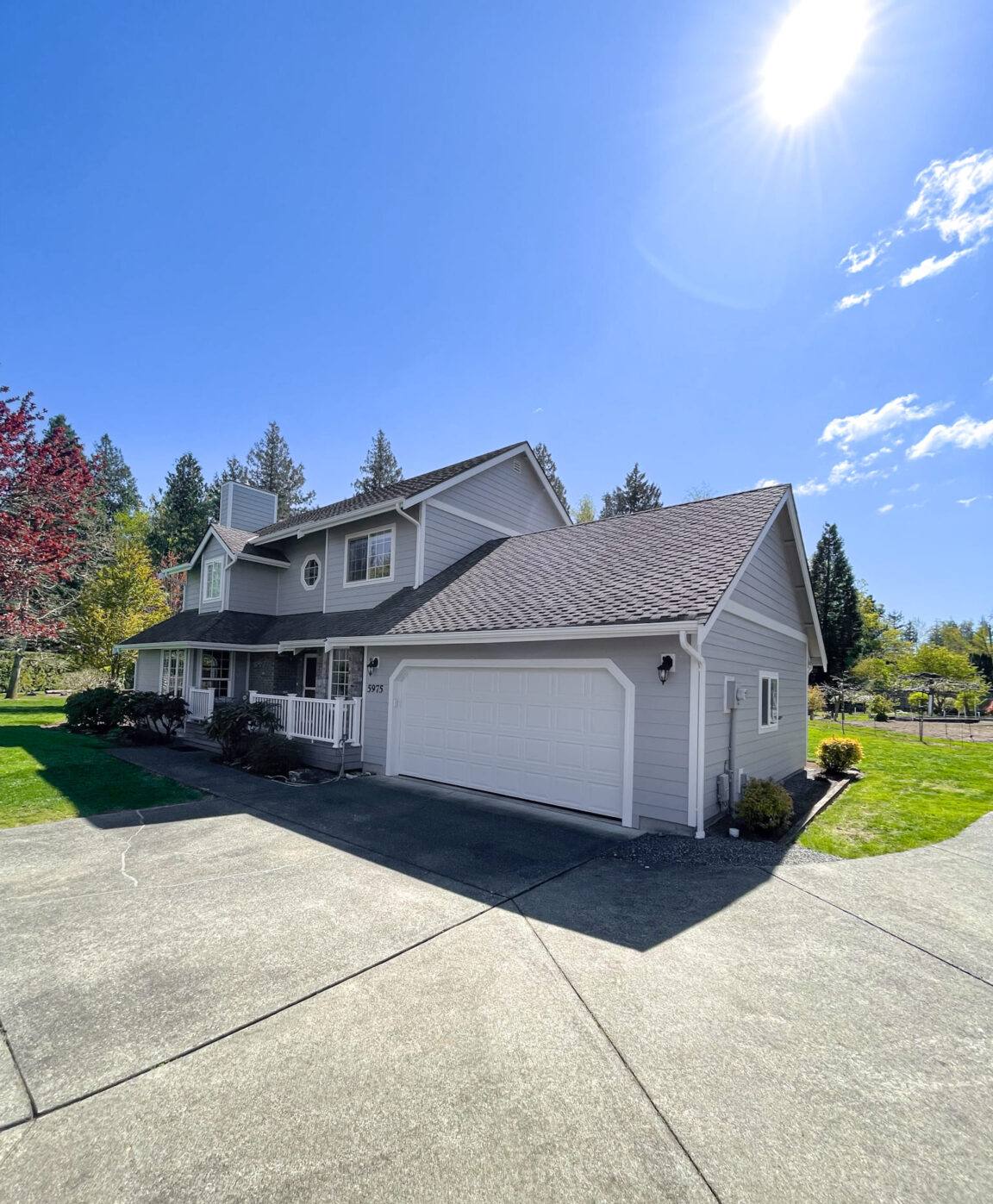
Why Siding Fails Faster Around Green Lake
A few local conditions combine to put extra stress on exterior siding in this part of Seattle:
- Persistent moisture and humidity from the lake keep north- and shade-facing walls damp longer after storms, slowing the natural dry-out that siding depends on.
- Moss and algae growth thrives in the shaded, humid pockets common around mature trees and closely spaced homes, holding moisture directly against the siding surface.
- Driving, wind-blown rain off the water pushes water sideways into seams, trim joints, and butt joints instead of letting gravity carry it straight down and away.
- Tree cover and shade patterns mean some wall sections dry within hours after rain while others stay wet for days — uneven drying is one of the biggest drivers of localized rot and paint failure.
None of this is unique to Green Lake in isolation — it's the King County climate generally — but the specific mix of shade, humidity, and lake-driven weather here tends to concentrate the damage in predictable spots: lower wall sections, areas behind shrubs or fences, and any siding that was installed too close to grade or without proper clearance.
Signs Your Siding Needs Repair, Not Just Cleaning
Moss and surface grime can usually be cleaned. The signs below mean something has already gotten past the surface and needs a repair, not a wash:
- Soft, spongy, or crumbling siding when you press on it
- Visible cracking, splitting, or buckled boards
- Paint that's bubbling, peeling, or repeatedly failing in the same spot
- Dark staining or streaking that returns shortly after cleaning
- Gaps opening up at seams, corners, or trim joints
- A musty smell near an exterior wall, or a soft spot on the interior drywall nearby
- Visible daylight or drafts around window and door trim
Any one of these on its own might be minor. Several together, especially on a shaded or lake-facing wall, usually means moisture has been getting behind the siding for a while.
What's Actually Happening Behind the Siding
Siding is the visible layer of a wall system that also includes a weather-resistive barrier, flashing at windows, doors, and penetrations, and the sheathing underneath. When siding fails in this climate, it's almost never just a cosmetic problem. The moisture that got past a cracked board or open seam has usually been sitting against the sheathing or framing for months, sometimes longer, before it shows up as a visible symptom on the outside.
This is why we don't treat siding repair as a surface-level patch job. A repair that only addresses what's visible from the driveway, without checking the barrier and flashing underneath, tends to fail again in the same spot within a year or two — especially on a wall that gets the kind of sustained damp exposure common around Green Lake.
What a Correct Repair Involves
- Remove the damaged siding section cleanly, without disturbing more of the surrounding material than necessary
- Inspect the sheathing and weather-resistive barrier underneath for soft spots, staining, or existing rot
- Check and correct flashing at any nearby window, door, or penetration if it's contributing to the problem
- Replace any compromised sheathing or framing before new siding goes back on
- Install new siding material with correct fastening, clearance, and joint treatment
- Match the finish so the repair blends into the surrounding wall rather than standing out as an obvious patch
Skipping the inspection step is the single most common shortcut in cheap siding repairs, and it's the reason so many "repaired" walls end up with the same damage back within a couple of seasons.
Why We Repair With James Hardie, Even on Existing Non-Hardie Siding
We install and repair with James Hardie fiber cement exclusively. We don't stock or install LP SmartSide, vinyl, Cemplank, Allura, primed spruce, or cedar. When a Green Lake home has one of those materials and needs a repair, we're upfront that a perfect material match usually isn't the right long-term move — here's why.
| Repair Approach | What Happens Over Time |
|---|---|
| Patch with the same wood or engineered-wood product already on the house | Matches immediately, but carries the same moisture sensitivity that likely caused the original damage — often fails again in the same spot |
| Patch with vinyl over an existing vinyl wall | Cheap and fast, but vinyl repairs are notoriously hard to color-match after sun fading, and vinyl still doesn't solve underlying moisture issues |
| Repair the damaged section in James Hardie fiber cement | Non-combustible, engineered for Pacific Northwest moisture exposure, factory-finished color that holds up better against streaking and fading |
In practice, this usually means we repair the immediately damaged section in Hardie material, finished to blend as closely as possible with the surrounding wall, while being honest with the homeowner that a full re-side is the cleaner long-term fix once several sections start failing. We'd rather tell you that up front than sell you a patch we know won't hold.
Why Hardie Specifically
James Hardie's fiber cement is engineered to resist moisture absorption and swelling far better than wood-based products, it doesn't feed moss and algae growth the way some organic and engineered-wood sidings can, and it's factory-finished with ColorPlus technology rather than relying on field-applied paint that has to be redone every several years. For a neighborhood with Green Lake's moisture load, that combination matters more than it does in a drier part of the state.
Our Repair Process
- Inspection: We assess the damaged area and the wall system behind it, not just the visible siding
- Honest diagnosis: We tell you what's causing the damage — a one-time event, an ongoing flashing problem, or a sign the whole wall section is past its useful life
- Scope and estimate: A clear, written scope covering exactly what's being repaired and why
- Repair or replace: Damaged sheathing and barrier material addressed before any new siding goes on
- Finish match: New material finished to blend as closely as possible with the surrounding siding
- Walkthrough: We show you what we found and what we did before we consider the job done
Repair vs. Replace: How We Help You Decide
Not every siding problem around Green Lake needs a full re-side, and not every problem is a candidate for a simple patch. These are the factors that actually drive that decision:
| Factor | Leans Toward Repair | Leans Toward Replacement |
|---|---|---|
| Extent of damage | Isolated to one or two sections | Recurring across multiple walls |
| Age of existing siding | Relatively new, otherwise sound | Nearing or past its expected service life |
| Underlying wall condition | Sheathing and barrier intact | Signs of widespread moisture intrusion |
| Material match | Repair material can blend acceptably | Original material is discontinued, faded, or incompatible |
| Long-term plan | Homeowner plans to re-side eventually anyway | Homeowner wants one durable, uniform result now |
We'll always give you our honest read on which side of this table your home falls on. If a targeted repair genuinely solves the problem, that's what we'll recommend — a full re-side isn't the right call for every damaged wall.
Why a Crew That Already Works Green Lake Matters
Siding repair mistakes usually come from treating every house the same. A crew that regularly works this part of Seattle already knows which wall orientations around the lake tend to hold moisture, how tree canopy and shade patterns here affect drying time, and what the older housing stock in this neighborhood is typically built with underneath the siding. That local pattern recognition is the difference between a repair that addresses the actual cause and one that just covers the symptom.
It also means fewer surprises on scheduling and permitting. King County and City of Seattle exterior work has its own permitting expectations, and a crew that's already navigated that process locally can move a repair along faster than one working through it for the first time on your house.
Keeping Repaired Siding in Good Shape
Once a repair is done, a little routine maintenance goes a long way in this climate, particularly for shaded and lake-facing walls:
- Trim back vegetation and tree branches that keep siding shaded and damp
- Rinse off moss and algae buildup before it gets a foothold, rather than after it's established
- Keep gutters and downspouts clear so water isn't dumping onto or behind siding
- Do a quick visual check of caulking and trim joints once a year, especially after a hard winter
- Address any new soft spots or cracking early, before moisture has months to work behind the wall
If you're seeing signs of siding damage on a Green Lake home, we're happy to take a look and give you a straight answer on whether it needs a repair, a partial re-side, or nothing urgent at all. Reach out for a free, no-pressure estimate using the form below.