 Seattle
 Building a Deck That Actually Holds Up in Fremont
Fremont sits close to the water, with the Ship Canal and Lake Union both nearby, which means the air here carries more moisture and salt than you'd find further inland in King County. Combine that with Seattle's long wet season and the shade thrown by mature trees on many Fremont lots, and you've got a climate that's tough on outdoor wood structures. A deck built here needs to handle standing moisture, resist rot at every joint, and shed the moss that thrives in shady, damp corners. That's not a different service than "deck building" in general, but it does change which materials, fasteners, and detailing choices actually make sense for a Fremont backyard.
We build and repair decks throughout Fremont and the surrounding Seattle neighborhoods, and most of the problems we get called out to fix trace back to decisions made at construction time that ignored the local climate: undersized drainage gaps, missing flashing, fasteners that weren't rated for wet-coastal exposure, or decking laid flat against a ledger with no way for water to escape. We'd rather build it right the first time.
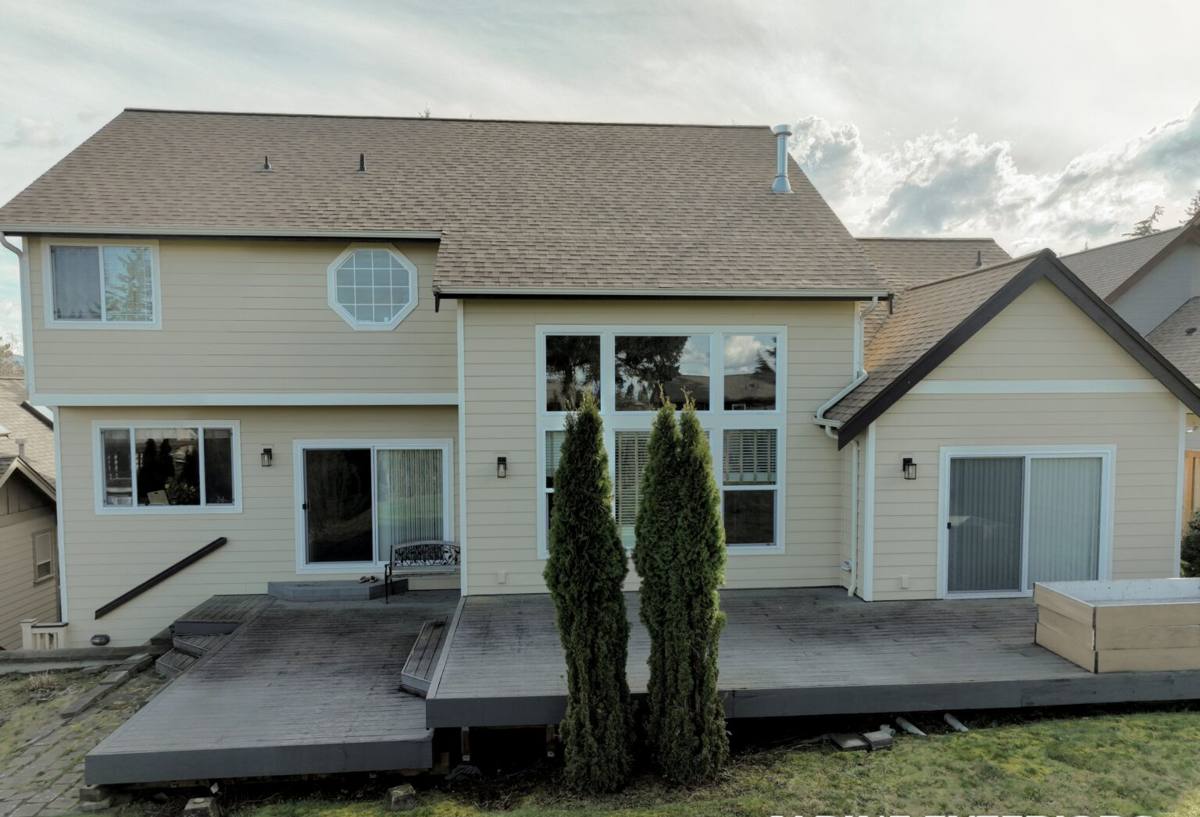
What Fremont's Weather Does to a Deck Over Time
It helps to understand the specific mechanisms at work, because they point directly to how a deck should be built.
Salt-tinged, humid air
Proximity to the Ship Canal and Puget Sound means metal hardware here corrodes faster than it would in a dry inland climate. Standard interior-grade screws and brackets will streak, weaken, and eventually fail. This is a fastener and hardware decision, not a decking-material decision, and it's one of the most common corners cut on budget deck jobs.
Driving rain
Seattle's rain doesn't just fall straight down — wind-driven rain gets pushed sideways into ledger boards, under railings, and into any gap that isn't properly flashed or sealed. Water that gets behind a ledger board and can't escape is one of the leading causes of structural rot we find on older decks in this area.
Moss and shade
Many Fremont properties have tree cover or sit close to neighboring structures, limiting direct sun on the deck surface. Moss and algae take hold fast in that kind of shaded, damp environment, and once established they hold moisture against the decking and turn the surface slick and dangerous underfoot.
Freeze-thaw cycling
Seattle winters aren't extreme, but the region does see repeated freeze-thaw swings. Water that's trapped in a crack or a poorly sealed joint expands and contracts, widening the damage over successive winters.
Choosing Decking Material for This Climate
There's no single "best" decking material — the right choice depends on budget, how much upkeep you're willing to do, and how much shade your specific lot gets. Here's how the common options compare for a Fremont-area install:
| Material | Moisture/Moss Resistance | Maintenance | Typical Lifespan |
|---|---|---|---|
| Pressure-treated fir/pine | Good if sealed regularly; treatment resists rot but surface still holds moss in shade | Annual cleaning and re-sealing recommended | 15-20 years with upkeep |
| Cedar | Naturally rot- and insect-resistant; still needs cleaning in shaded, damp spots | Periodic staining/sealing to maintain appearance and protection | 20-25 years with upkeep |
| Composite decking | Very good — doesn't absorb water like wood, though surface algae can still grow in constant shade | Occasional washing; no sealing or staining | 25-30+ years, manufacturer-dependent warranty |
| PVC decking | Excellent — fully synthetic, no wood fiber for moisture to enter | Lowest — occasional rinse | 25-30+ years, manufacturer-dependent warranty |
We'll walk through these options honestly during your estimate, including the real trade-offs — composite and PVC cost more up front but save you the recurring labor of sealing and staining, which matters if your deck sits in a shaded, moss-prone spot. Wood costs less initially but only performs well if someone actually keeps up with the maintenance schedule.
The Structural Work That Doesn't Show
The decking surface is what you see, but the framing underneath is what determines whether the deck is still sound in fifteen years. This is where we focus the most attention, because it's also where corners get cut most often on lower-bid jobs.
Footings and posts
Seattle-area soil holds moisture longer than drier climates, so footing depth and drainage around posts matter more here than they would somewhere arid. We set footings to depth requirements that account for local soil conditions and frost behavior, not just the legal minimum.
Ledger attachment and flashing
The ledger board — where the deck attaches to your house — is the single most common failure point on decks in wet climates. Proper flashing directs water away from the house band joist instead of letting it wick in behind the ledger. We flash every ledger connection; it's not an upgrade, it's a requirement for a deck that's going to survive Fremont's rain.
Fasteners and hardware
Given the salt content in the air near the Ship Canal and Lake Union, we use corrosion-resistant, coated fasteners and structural hardware rated for wet coastal exposure rather than standard interior-grade hardware. It costs a little more up front and saves you from hidden rust damage down the line.
Joist spacing and drainage gaps
Boards spaced too tightly trap water and debris, accelerating rot and moss growth. We set spacing to let water and air move freely under and between boards, which is one of the simplest, cheapest ways to extend a deck's life in a wet climate.
Railings, Stairs, and Code Requirements
Seattle and King County building codes set specific requirements for deck railing height, baluster spacing, stair rise and run, and guardrail strength — and permitting is typically required for new decks above a certain height or size. We handle the permitting and inspection process as part of the job, so you're not left guessing whether your new deck is actually compliant. Skipping permits might save time short-term, but it can create real problems later when you go to sell the house or if an inspector flags unpermitted work.
Beyond the legal minimums, we also think about practical safety in a wet climate: railings and stair treads get slicker faster here than in dry regions, so tread spacing, surface texture, and handrail placement all get extra attention on our builds.
Our Process, Start to Finish
- On-site assessment — We look at your lot's sun/shade exposure, drainage patterns, soil, and how the deck will tie into your home, since these all affect material and structural choices.
- Design and material selection — We walk through decking, railing, and hardware options with honest pros and cons for your specific site conditions.
- Permitting — We handle the permit application and coordinate required inspections.
- Framing and structural work — Footings, posts, ledger flashing, and joists are built to hold up under long-term wet exposure, not just pass a first inspection.
- Decking, railing, and finish work — Surface installation, railing, stairs, and any staining or sealing the material requires.
- Final walkthrough — We go over the finished deck with you, including a maintenance plan specific to the material you chose.
Keeping a Fremont Deck in Good Shape Year-Round
Even a well-built deck needs some seasonal attention in this climate. A short annual routine prevents most of the problems we see on service calls:
- Sweep debris (leaves, needles, seed pods) off the deck surface regularly, especially in fall — trapped debris holds moisture against the boards.
- Clean moss and algae off the surface and railings before it builds up; a stiff brush and a deck-safe cleaner usually handles it if you stay on top of it.
- Check and re-seal or re-stain wood decking on the manufacturer's or installer's recommended schedule — don't wait until it's visibly weathered.
- Inspect fastener heads and hardware once a year for early signs of corrosion or loosening.
- Confirm gutters and downspouts near the deck are directing water away from posts and footings, not onto them.
- Look under the deck once a year for standing water, soft wood, or signs of pests.
Why Local Experience in Fremont Matters
A crew that's built and repaired decks throughout Fremont and the rest of Seattle already knows how the local rain patterns, tree cover, and proximity to the water tend to play out on real properties here — not from a manual, but from having actually seen which details hold up and which ones fail after a few wet Puget Sound winters. That local track record shapes the material and construction choices we make on your job, before problems have a chance to show up.
If you're planning a new deck or replacing one that's showing its age, we're happy to take a look and give you a straightforward, no-pressure estimate — just fill out the form below.