 Seattle
 Wallingford's Siding Needs Are Different From a Spec-Sheet Answer
Ask a national siding retailer what product to put on a Wallingford home and you'll get a generic answer built for a generic climate. Wallingford isn't generic. It's a tightly built, tree-shaded Seattle neighborhood full of early-1900s craftsman bungalows and narrow lots, sitting inside a Puget Sound climate that stays damp for most of the year. Siding here has to do more than look good on install day — it has to shed water correctly under a tree canopy, survive a long moss season, and hold up through decades of driving rain without trapping moisture behind the cladding. That's a different job than siding a house in a dry, sunny climate, and it should be treated that way.
We install fiber cement siding exclusively in the greater Seattle and King County area, and Wallingford is one of the neighborhoods we work in regularly. This page covers what the local climate actually does to siding, what a correct installation looks like, and why the details matter more here than almost anywhere else in the region.
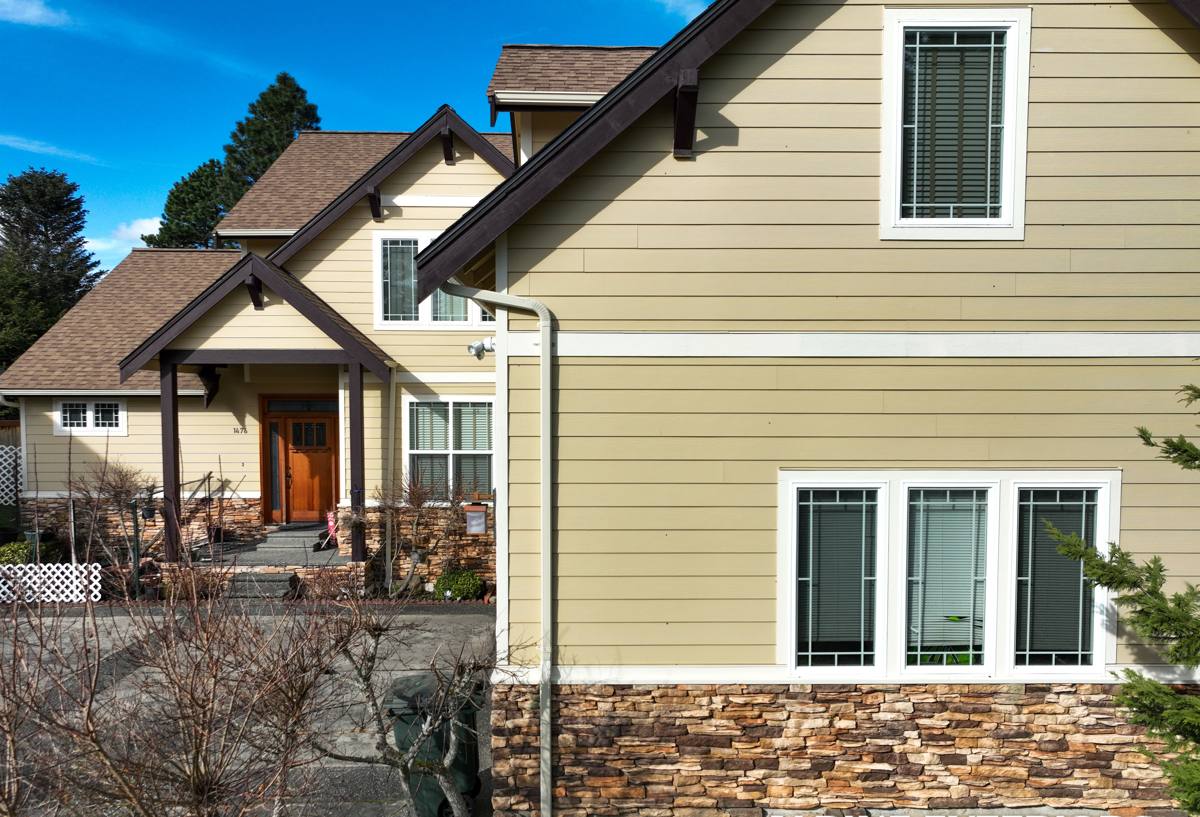
What the Puget Sound Climate Does to Siding in Wallingford
Seattle's marine climate brings mild temperatures, but "mild" doesn't mean easy on a house. The combination of persistent moisture, limited direct sun on shaded lots, and salt-tinged marine air moving in off Puget Sound creates conditions that punish the wrong siding material and reward correct installation of the right one.
Moss Season and Shaded Lots
Wallingford's mature street trees and established yards are part of the neighborhood's character, but they also mean many homes get long stretches of shade, especially on north-facing walls. Shade plus moisture is exactly what moss and algae need to take hold. On wood-based sidings, that growth holds water against the surface and accelerates rot. On siding installed with poor clearances or clogged drainage paths, it does the same thing regardless of material.
Driving Rain and Wind-Driven Moisture
Rain in this region doesn't just fall — storms off the Sound regularly drive it sideways into exterior walls. That means water gets forced up under laps, around trim, and into any gap that isn't properly flashed or sealed. A siding system that isn't engineered and installed to manage wind-driven rain will eventually let moisture behind the cladding, and once that happens the damage is happening where you can't see it.
Humidity and Slow-Drying Assemblies
Even on a dry day, King County's ambient humidity is high enough that wall assemblies dry slowly. A siding material and installation method that trap moisture, rather than letting the wall breathe and drain, extend every wet event into a longer problem. This is the core reason material choice and installation quality matter more here than in a drier climate — mistakes don't get a chance to dry out before the next storm.
Why We Install Only James Hardie Fiber Cement
We made a deliberate decision to install one product line: James Hardie fiber cement siding, in the HardieZone HZ5 formulation engineered for climates like the Pacific Northwest. We don't install vinyl, LP SmartSide, Cemplank, Allura, primed spruce, or cedar. That's not brand loyalty — it's a standard we hold because of what we've seen these products do, or fail to do, in exactly the conditions Wallingford deals with every winter.
Fiber cement is a cement, sand, and cellulose fiber composite. It doesn't absorb moisture the way wood-based products do, it doesn't warp or delaminate the way some engineered wood sidings can when a seal fails, and it's non-combustible — a real advantage given the wildfire smoke seasons the region has seen in recent summers. James Hardie's ColorPlus factory finish is baked on under controlled conditions, which gives more consistent, longer-lasting color than field-applied paint, and it comes with a real, transferable warranty backing both the material and the finish.
None of that matters if the product goes on the wall wrong. Fiber cement's advantages only show up over time when the installation respects the manufacturer's specifications for clearances, fastening, and flashing — which is the next section.
What a Correct Fiber Cement Installation Actually Involves
Most siding failures we get called to look at, on any material, trace back to installation shortcuts rather than the product itself. A correct Hardie installation in a wet climate like Wallingford's is not complicated, but it is unforgiving of skipped steps.
Flashing and Water Management
Every window, door, and horizontal trim transition needs proper flashing that directs water outward and down, not into the wall assembly. A weather-resistive barrier goes behind the siding as the last line of defense, and the siding itself is installed as a rain-screen system, not sealed flush against the sheathing.
Fastening and Clearances
James Hardie specifies exact fastener types, spacing, and placement, along with minimum clearances from grade, roofing, decks, and other siding terminations. Those clearances exist specifically to keep splashback and standing moisture away from the bottom edge of the siding — the single most common place we see rot start on any home in this climate.
Caulking and Paint Lines
Manufacturer-approved sealant at the right joints, and factory-finished cut edges properly primed and sealed in the field, keep water from wicking into the panel edges. This is a small step that gets skipped constantly, and it's one of the fastest ways for an otherwise good installation to fail early.
- Weather-resistive barrier installed continuously behind the siding
- Rain-screen gap maintained, not sealed flush to sheathing
- Manufacturer-specified fastener type, spacing, and penetration depth
- Proper clearance from grade, roofing, decks, and hardscape
- Flashing at every window, door, and horizontal transition
- Field-cut edges primed and sealed before installation
- Sealant used only at manufacturer-approved joints, not as a substitute for flashing
Working on Wallingford's Craftsman and Bungalow Housing Stock
A lot of Wallingford's homes date to the early-to-mid 1900s streetcar-suburb era, with craftsman and bungalow details — visible rafter tails, wide trim boards, distinct porch and gable proportions. Re-siding a home like this isn't just a material swap. Lap reveal size, trim thickness, and corner treatment all affect whether the finished house still reads as the style it was built in, or looks noticeably "redone."
These lots also tend to be narrower than newer Seattle construction, often with alley access and limited street parking, which affects how a crew stages material and manages debris removal. A crew that already works this neighborhood knows to plan logistics around that reality instead of figuring it out on the first day of your project.
Cost Factors for a Wallingford Siding Project
Every home is different, so we don't quote pricing sight unseen — but the factors that move a siding project's cost up or down are consistent. This table covers the main ones we walk through with Wallingford homeowners during an estimate.
| Factor | Why It Matters | Typical Impact on Cost |
|---|---|---|
| Removal of existing siding | Older homes often have wood or asbestos-era siding that requires careful removal and disposal | Moderate to high |
| Underlying sheathing and framing condition | Hidden rot from prior moisture intrusion has to be repaired before new siding goes on | Variable, found during tear-off |
| Trim complexity and architectural detail | Craftsman-style corner boards, gable detailing, and window trim take more labor than flat modern facades | Moderate |
| Home height and story count | Second-story and steep-gable work requires more staging, scaffolding, and time | Moderate to high |
| Lot access | Narrow lots, alley-only access, or limited staging space slow material handling | Low to moderate |
| Siding profile chosen | Lap, shingle-style, and panel profiles have different material and labor costs | Low to moderate |
Maintaining Fiber Cement Siding in a Wallingford Yard
Fiber cement is low-maintenance compared to wood, but "low-maintenance" in this climate still means some seasonal attention, especially on a shaded, tree-heavy lot. A little upkeep goes a long way toward getting the full lifespan out of the material and finish.
- Rinse moss, pollen, and organic debris off siding once or twice a year, more often on shaded north walls
- Keep shrubs and tree branches trimmed back so air can circulate and siding can dry between rain events
- Check caulk lines around windows and trim annually and re-seal any that have cracked or pulled away
- Keep gutters clear so overflow doesn't run down the face of the siding
- Address any impact damage or chipped finish promptly with manufacturer-matched touch-up product
Why Hire a Crew That Already Works in Wallingford
Siding a Wallingford home well means understanding the neighborhood before the first board goes up: the shaded lots that need extra attention to drainage detailing, the older framing that sometimes hides moisture damage behind the original siding, the narrow-lot logistics, and the architectural character worth respecting rather than flattening. A crew that's done this work throughout Seattle and King County, on homes like the ones in this neighborhood, isn't learning those lessons on your project.
We stand behind a single product because we've seen what happens when climate, installation quality, and material choice line up correctly — and what happens when any one of those is wrong. If you're planning a siding project in Wallingford, we're glad to take a look at your home and walk you through what it actually needs.
If you'd like a straightforward, no-pressure look at your home's siding, the free estimate form below is the easiest way to get started.