 Seattle
 Deck Repair in Ravenna: What Local Homes Need
Ravenna is one of Seattle's older, more established neighborhoods, and that shows up in its decks. Many homes here were built decades ago under a mature tree canopy, with additions and outdoor living spaces added over the years. That combination — older framing, big shade trees, and King County's wet weather — means Ravenna decks tend to show wear in specific, predictable places. Our job is to find those spots, explain honestly what's going on, and fix what actually needs fixing.
This page is about deck repair specifically — patching, sistering, replacing boards, re-securing ledgers and railings, and restoring a deck that's still structurally sound but showing its age. If a deck is beyond repair, we'll tell you that too, but most of the decks we look at in Ravenna don't need a full rebuild. They need focused, correct repair work.
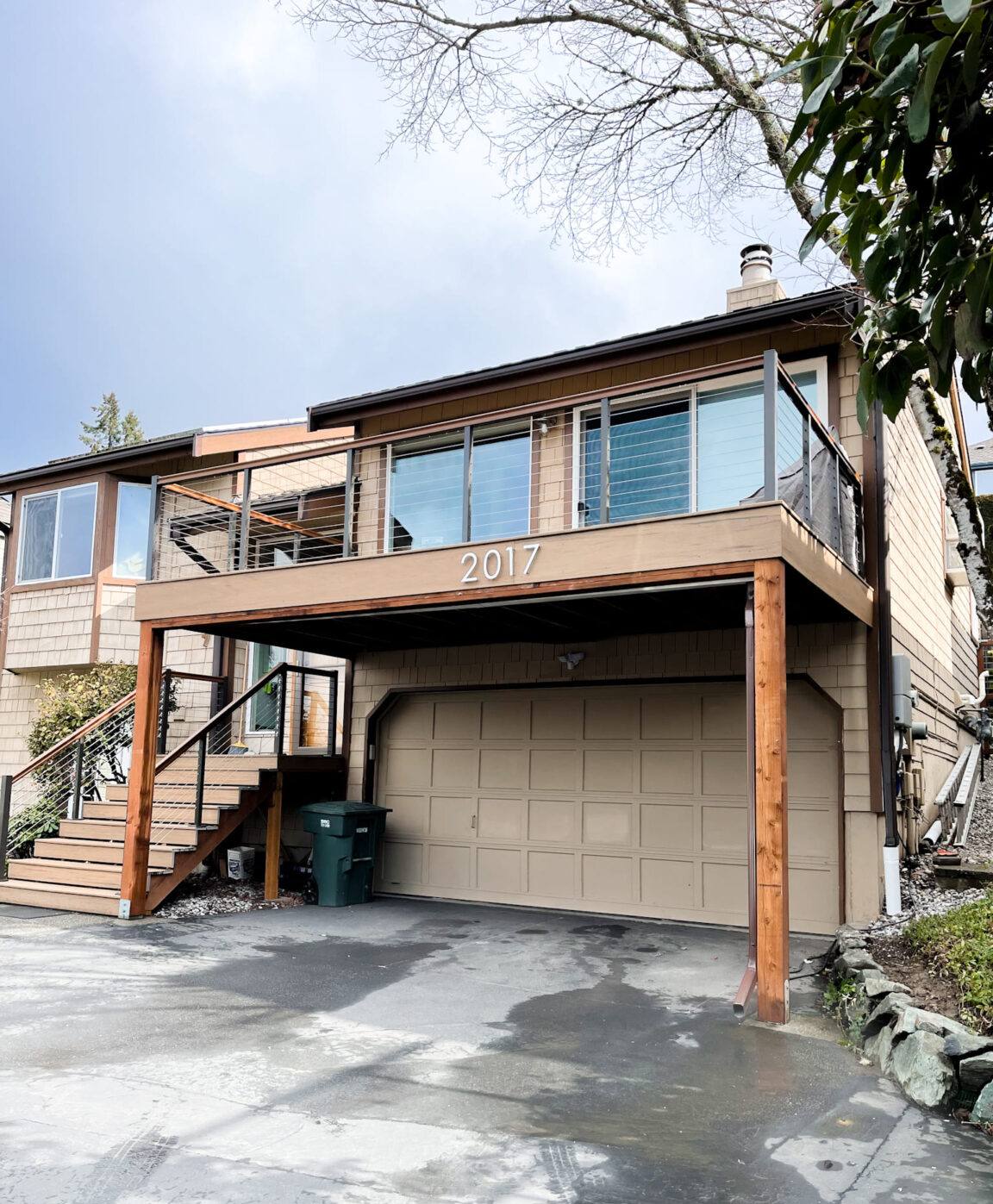
Why Ravenna Decks Take a Beating
Seattle's marine climate is hard on any exterior wood or composite structure, and Ravenna's landscape adds a few local wrinkles.
Shade and Moisture Don't Dry Out
A lot of Ravenna lots have significant tree cover — mature evergreens and deciduous trees that shade decks for large parts of the day. Shade feels nice in summer, but it also means a deck surface stays damp much longer after rain than it would in full sun. Combined with the region's long, wet fall and winter stretch, that's exactly the environment moss, algae, and slow wood decay need to take hold.
Driving Rain Finds the Gaps
Puget Sound weather isn't just steady drizzle — it includes wind-driven rain that gets pushed sideways into ledger connections, under flashing, and into any gap where a board meets the house. Over time, driving rain works its way into spots that were sealed correctly when the deck was built but have since opened up as materials aged and moved.
Moss Season Is Long, Not Occasional
In this part of King County, moss isn't a once-a-year nuisance — it's a season that can run for months. Moss holds moisture directly against decking boards and stair treads, which accelerates rot in wood and can make composite surfaces dangerously slick. Left alone, moss buildup is one of the most common reasons a repairable deck turns into a replacement project.
Salt Air Adds to the Corrosion Load
Seattle's proximity to Puget Sound means fasteners, brackets, and metal connectors are exposed to a mild but constant salt-air influence on top of everyday moisture. That combination speeds up corrosion in lower-grade hardware, which is one reason we pay close attention to fastener condition on every repair, not just the wood itself.
Common Deck Problems We See in Ravenna
- Soft or spongy decking boards, usually in shaded sections or near planters and hose bibs where water sits longest
- Ledger board moisture damage where the deck attaches to the house — often hidden until flashing or siding is pulled back
- Corroded or failing fasteners, especially older galvanized nails or screws that were adequate when installed but weren't rated for long-term coastal exposure
- Loose or wobbly railings from post connections that have loosened as wood shrinks and swells with the seasons
- Moss and algae buildup on decking and stair treads, creating both a rot risk and a slip hazard
- Stair stringer wear, since stairs see concentrated foot traffic and constant water runoff
What a Correct Deck Repair Actually Involves
Not all "deck repair" is the same. A quick board swap or a coat of stain over surface mold isn't a repair — it's a delay. A correct repair addresses the cause, not just the symptom.
| Cosmetic Patch (what we avoid) | Proper Repair (our standard) |
|---|---|
| Replace only the visibly damaged board | Check surrounding joists and framing for hidden moisture damage before replacing anything |
| Caulk over a gap at the ledger | Inspect ledger-to-house flashing and correct the water path, not just the visible crack |
| Pressure-wash moss and stop there | Remove moss, assess wood condition underneath, and address the moisture source (shade, drainage, or debris buildup) |
| Reuse existing fasteners | Replace corroded or undersized fasteners with hardware rated for exterior, coastal-climate use |
| Tighten a loose railing post | Open the connection, check for rot at the post base, and rebuild the connection if the wood underneath is compromised |
The difference matters because Ravenna's climate punishes shortcuts. A board replaced without checking the joist beneath it can look fine for a season and then fail once the hidden rot spreads.
Our Deck Repair Process
1. On-Site Assessment
We walk the full deck — surface, railings, stairs, and the ledger connection to the house — and check for soft spots, movement, and moisture with a combination of visual inspection and probing where needed. We'll tell you plainly which areas are cosmetic and which are structural.
2. Honest Scope, in Writing
You get a clear explanation of what needs repair, what's optional, and what we'd flag as a future concern but isn't urgent yet. We don't pad a repair into a replacement, and we don't quietly skip a structural issue to keep the estimate low.
3. Targeted Demolition
We remove only what needs to come out — damaged boards, compromised framing, failing hardware — while protecting sound material around it.
4. Repair to Current Standards
Replacement lumber or composite is matched to the existing deck where possible, framing is sistered or replaced as needed, and all fasteners and connectors are upgraded to hardware suited for our regional climate, not just whatever was original to the build.
5. Moisture Management
Where the root cause is drainage, shade, or flashing, we address that directly — this is the step that actually prevents the same repair from recurring in two or three years.
6. Final Walkthrough
We walk the deck with you, point out what was done and why, and give straightforward maintenance guidance for your specific setup — shaded sections need different attention than sunny ones.
Repair vs. Replace: Cost Factors
Every deck is different, and we won't quote a number without seeing the deck in person, but these are the main factors that push a project toward repair or toward replacement.
| Factor | Favors Repair | Favors Replacement |
|---|---|---|
| Framing condition | Joists and ledger are sound; damage is localized | Widespread rot in joists, posts, or ledger |
| Age of structure | Structure is mid-life, decking is the weak point | Deck is at or past its expected structural lifespan |
| Extent of moisture damage | Isolated to a few boards or one connection | Present in multiple structural members |
| Code compliance | Railings, guards, and spacing already meet current code | Railings or stairs are undersized or non-compliant by today's code |
| Owner's plans | Deck size and layout still work for how you use the space | You want a different footprint, material, or layout anyway |
Maintenance Checklist for Ravenna Homeowners
A little seasonal attention goes a long way toward keeping a repair a repair, instead of a repeat.
- Clear leaves and debris from between boards and along the ledger before the fall rains set in
- Sweep or brush off moss as soon as it appears, rather than waiting for a heavy buildup
- Check that gutters and downspouts near the deck are directing water away, not onto the deck surface
- Look at railing posts and stair stringers each spring for movement or soft wood
- Keep planters, rugs, and furniture legs from sitting directly on decking for long stretches, since trapped moisture underneath speeds up rot
- Re-seal or re-stain wood decking on the manufacturer's recommended schedule, not just when it looks faded
Why Hire a Crew That Already Works Ravenna
Ravenna's mix of older homes, mature landscaping, and tight lot layouts means access, staging, and even parking can be different from a newer neighborhood. A crew that already works this part of Seattle knows what to expect before showing up — how to work around established trees and root systems without damaging them, how to protect landscaping during material staging, and how ledger and flashing details tend to have been done in homes of this era.
We also know that decisions made for a deck in full sun on the other side of King County don't always apply here. A repair plan for a heavily shaded Ravenna deck needs to account for slower drying times and heavier moss pressure, and that shapes both the materials we recommend and the maintenance advice we give you afterward.
Get an Honest Look at Your Deck
If your Ravenna deck has soft spots, a wobbly railing, or moss that keeps coming back no matter what you do, we're glad to come take a look. We'll give you a straightforward assessment of what's actually going on and what it would take to fix it right — no pressure, no inflated scope, just a clear estimate you can use to make a decision on your own timeline.