 Seattle
 Custom Decks Built for How Green Lake Actually Lives Outdoors
Green Lake is one of the most-used outdoor neighborhoods in Seattle. Between the lake path, the parks, and a housing stock that ranges from older bungalows to newer infill homes, most owners here want a deck that works for daily life — morning coffee, dinner outside in July, a place to watch the lake fill up with runners and paddleboards. A deck in this neighborhood has to do double duty: look good against a well-kept house, and hold up to a Pacific Northwest wet season that runs far longer than most homeowners expect when they're only picturing the two or three dry months.
We build custom decks for homes around Green Lake and elsewhere in Seattle and King County, and the design conversation always starts with the same question: how is water going to move off this structure, away from the house, and off the site — because everything else about deck longevity here follows from that answer.
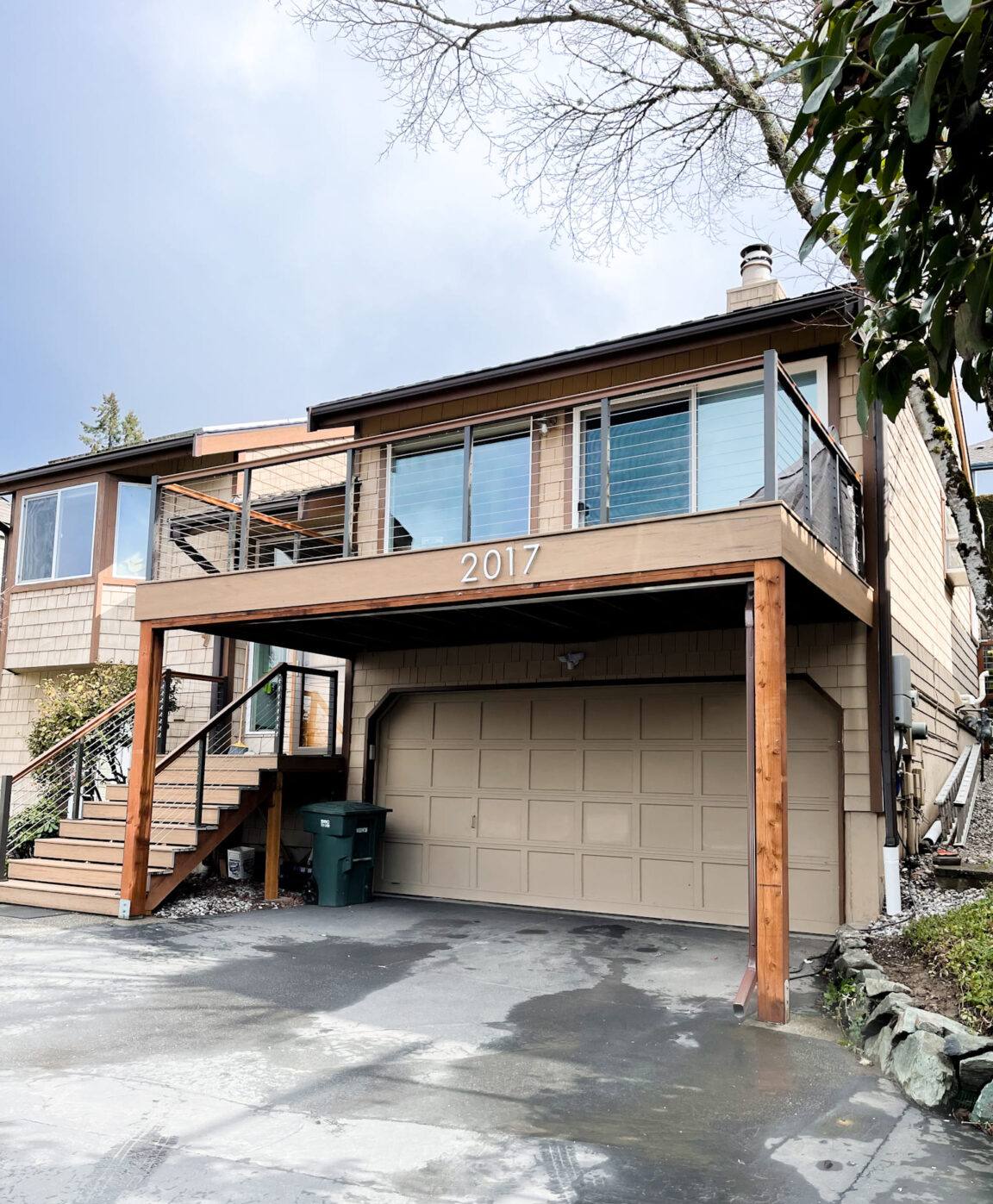
What Green Lake's Climate Actually Does to a Deck
Seattle's marine climate means Green Lake gets a long stretch of low-intensity rain rather than a short violent storm season, and that changes how a deck fails. It's rarely wind damage or hail. It's slow moisture intrusion — water finding its way into end grain, fastener holes, and ledger connections over years, not days.
Driving Rain and Standing Moisture
Driving rain off Puget Sound pushes moisture sideways under railings and against house walls, not just straight down. Decks that don't shed water fast enough end up with standing moisture in low spots, which is where rot, mildew, and eventually structural softness start. This is a slope-and-drainage problem as much as a material problem.
Moss Season
King County's moss season is long — moss doesn't need much light or warmth, just consistent damp shade, which describes most Green Lake yards for a good chunk of the year. Moss on deck boards isn't just a housekeeping issue: it holds moisture against the wood surface and makes boards slick and dangerous underfoot, especially on stairs.
Marine Air
Green Lake sits inland from Puget Sound, but the same moist marine air that carries salt farther out along the shoreline still keeps humidity higher here than in a dry inland climate. That constant ambient moisture is part of why fastener choice and wood treatment matter more here than they would in a drier region — hardware that would be fine for a few decades elsewhere can corrode or streak a lot sooner under Seattle's year-round dampness.
What a Correctly Built Deck Includes Here
A deck that's going to hold up around Green Lake isn't just about picking a nice decking board. The parts nobody sees are what determine whether it's still solid in fifteen years.
- Ledger board flashing that actually sheds water away from the house rim joist, not just a bead of caulk
- Joist tape or flashing on top of every joist, so screw penetrations don't become entry points for rot
- Correct slope built into the frame (not just the decking) so water runs off rather than pooling
- Stainless or coated fasteners rated for the decking material and exposure — mismatched hardware is a common failure point we see on older decks
- Proper joist spacing and blocking for the specific decking product, since composite and wood have different span requirements
- Ventilation underneath low decks so the framing can dry out between rain events instead of staying damp
- Post bases that keep wood posts off standing water and out of direct soil contact
Skipping any one of these doesn't usually show up in year one. It shows up in year five or six as soft spots, dark staining, or a railing post that's gone spongy at the base — by which point it's a repair job instead of a five-minute detail during construction.
Choosing Decking Material for This Neighborhood
There's no single right answer here — it depends on how much maintenance the household wants to take on and how the deck will be used.
| Material | Upkeep in Seattle's Climate | Honest Trade-Offs |
|---|---|---|
| Pressure-treated wood | Annual cleaning and re-sealing to fight moss and moisture | Lowest upfront cost, but needs the most ongoing attention to avoid graying, splitting, and moss buildup |
| Cedar | Periodic cleaning and oiling to keep natural rot resistance intact | Attractive and naturally moisture-resistant, but still organic material that will weather without maintenance |
| Composite decking | Occasional washing to keep moss and algae from taking hold on the surface | Higher upfront cost, very low maintenance, but board and fastener systems vary by brand — installation has to match the manufacturer's spec exactly or the warranty is at risk |
| PVC decking | Simple washing; doesn't absorb moisture into the board itself | Most resistant to rot and moss staining, but can look and feel less like natural wood, and cost is highest of the group |
We'll walk through these options honestly rather than pushing whatever has the best margin. If a homeowner wants real wood and is comfortable with a yearly maintenance routine, that's a legitimate choice. If low maintenance matters more than upfront cost, composite or PVC makes more sense in a climate that gives wood so many wet months to work against it.
Railings, Stairs, and the Details That Fail First
On most decks we inspect or replace, the railing posts and stair stringers show wear long before the deck surface does. Railing post connections take on water at the top where caps and hardware penetrate the wood, and stair stringers sit closer to grade where splash-back and standing water are more common. We detail both of these areas with the same attention as the ledger — proper flashing at post tops, stringers set on standoffs rather than directly on concrete or soil, and hardware matched to the material.
Code and Permit Considerations
Seattle has specific requirements around railing height, baluster spacing, and stair geometry, and decks above a certain height or attached to the house typically require a permit and inspection. We handle the permitting process as part of the build rather than leaving it to the homeowner, since getting this wrong can turn into a real problem at resale or insurance time.
Our Process for a Green Lake Deck Project
- On-site assessment of the yard, grade, sun and shade exposure, and how the deck connects to the house
- Design conversation covering layout, material options, and realistic maintenance expectations for this climate
- Written estimate that breaks out material, labor, and any permit or structural work needed
- Permit submission and structural planning where required by the project size or attachment method
- Construction, with ledger flashing, joist protection, and drainage slope built in from the start — not added after the fact
- Final walkthrough covering how to clean and maintain the specific material chosen
We don't sell a deck package and move on. Every yard around Green Lake drains differently depending on lot grade and how close the house sits to the lake basin, and the framing plan should reflect that specific site, not a generic template.
Maintenance That Actually Matters Here
A well-built deck in this climate still needs some seasonal attention — the goal of good construction is to reduce that burden, not eliminate it entirely.
- Clear leaves and debris out of gaps between boards before fall rains start, so water and organic matter don't sit and feed moss
- Sweep or wash off moss growth on shaded sections at least once during the wet season, before it gets slick
- Check railing posts and stair connections yearly for any softness or movement
- Re-seal or re-stain wood decking on the manufacturer's recommended cycle rather than waiting until it visibly grays
- Confirm gutters and downspouts near the deck are directing water away, not onto the structure
Why Hire a Crew That Already Works This Neighborhood
Green Lake has a mix of lot sizes, older foundations, and mature landscaping that shapes what's actually possible for a deck footprint and attachment point. A crew that's worked houses in this part of Seattle already knows what King County permitting expects, how the local grade and drainage patterns tend to run, and which details matter most given how long the wet season really is here. That local familiarity shows up in fewer surprises mid-project and a deck that's built for the climate it's actually in, not a generic set of national building standards.
If you're weighing materials, thinking about replacing an aging deck, or planning a new one from scratch, we're happy to come take a look and talk through honest options for your yard. There's no pressure and no cost to get a straightforward estimate — the form below will get us started.