 Seattle
 Why Ballard's Marine Climate Is Hard on Roofs
Ballard sits close enough to Puget Sound that salt-laden air is a constant factor in how roofing materials age here. Combine that with King County's long wet season, driving rain that comes in sideways off the water during winter storms, and deep shade from mature trees on many lots, and you get a roofing environment that's tougher than what a generic national article about "roof maintenance" accounts for. Metal fasteners corrode faster near the water. Asphalt shingles hold moisture longer under tree cover. And moss doesn't just grow here — it thrives, sometimes for eight or nine months of the year. A roof that would last two decades in a dry inland climate can show serious wear in Ballard well before that mark if it wasn't installed with this specific climate in mind.
None of this means Ballard homes need exotic materials or constant repairs. It means the details — ventilation, flashing, underlayment, and moss prevention — have to be handled correctly the first time, because the freeze-thaw cycles are mild but the wet-dry cycles are relentless.
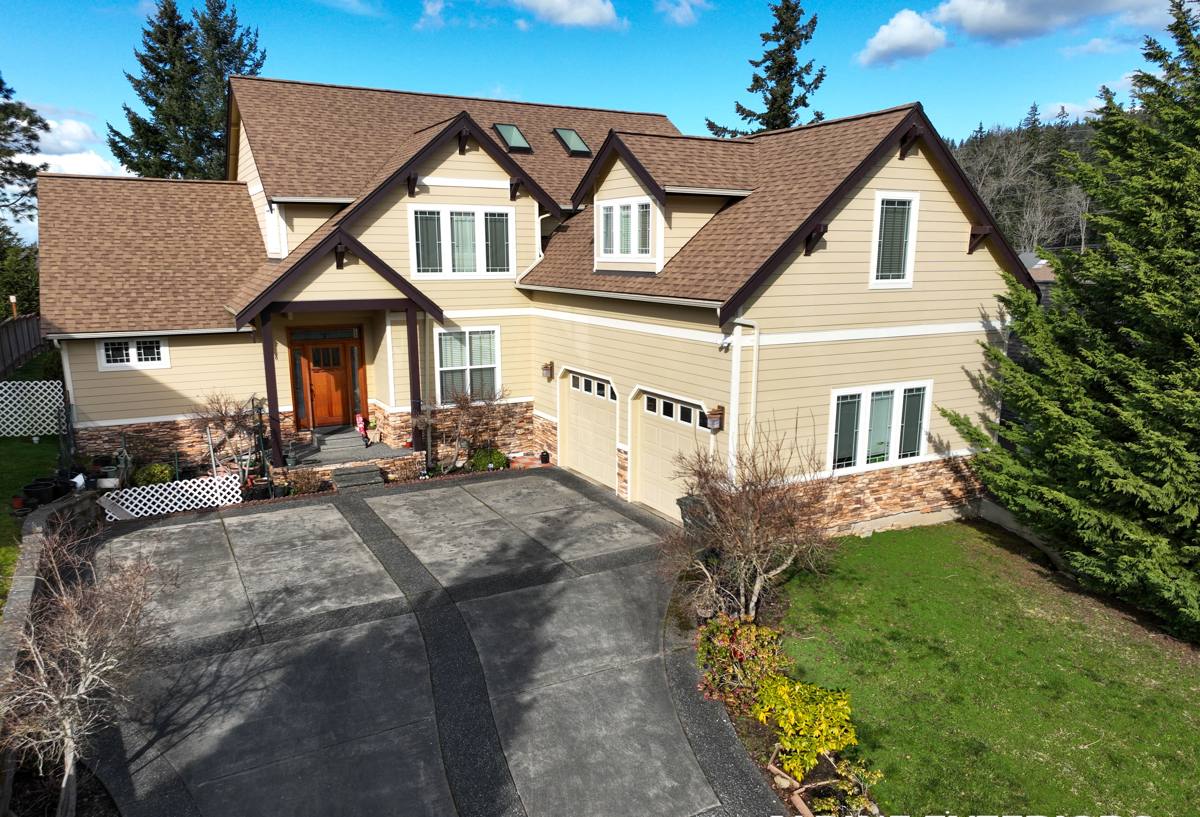
Signs a Roof Needs Replacement, Not Another Repair
Homeowners often ask us to patch a leak, and sometimes a patch is genuinely the right call. But there's a point where repeated repairs stop making financial sense. Here's what tends to signal that point in this climate:
- Granule loss heavy enough that you can see bare, shiny patches of asphalt from the ground
- Shingles that are cupping, curling at the edges, or cracking when touched
- Soft or spongy spots on the roof deck, especially near valleys and chimneys
- Moss that has worked into the shingle mat itself, not just sitting on the surface
- Leaks that reappear in a new spot after being patched, which usually means the underlayment has failed broadly, not just at one point
- Daylight or damp insulation visible from inside the attic
- A roof that is already 18-25 years old (asphalt) or has never had proper ventilation installed
If a roof only shows one or two of these, a repair may still buy real years. If several are present at once, that's usually the roof telling you it's done — and further repairs become money spent delaying an outcome that's already decided.
What a Correct Roof Replacement Actually Involves
A roof replacement is more than stripping old shingles and nailing down new ones. In a climate like Ballard's, the parts you don't see after the job is done matter more than the parts you do.
Tear-Off and Deck Inspection
We remove the existing roofing down to the deck rather than installing over old layers. Overlay ("roof-over") jobs trap moisture and hide deck damage — a real problem when the deck underneath has been absorbing Puget Sound humidity for two decades. Tear-off lets us inspect every section of plywood or plank decking and replace any that's soft, delaminated, or rotted before new material goes down.
Underlayment and Ice-and-Water Protection
Synthetic underlayment goes down over the entire deck as the roof's real waterproofing layer — the shingles are the weather-facing layer, but the underlayment is what actually keeps a home dry if wind-driven rain gets under a shingle edge, which happens often during winter storms off the Sound. Self-adhering ice-and-water membrane goes in at eaves, valleys, and around penetrations, where the majority of leaks in this region actually start.
Flashing Details
Flashing around chimneys, skylights, dormers, and sidewalls is where most "mystery leaks" originate on older Ballard homes, especially craftsman-era houses with additions or dormers bolted on over the years. We replace flashing rather than caulk over old, corroded metal — caulk is a maintenance item, not a repair.
Ventilation
Balanced intake (soffit) and exhaust (ridge) ventilation keeps attic temperature and moisture in check. This matters as much for moss prevention and deck longevity as it does for energy efficiency — a poorly ventilated attic in a wet climate is a slow-motion path to trapped moisture, mold, and premature deck rot.
Material Options for Ballard Homes
There isn't one "best" roofing material for every house — it depends on the roof's pitch, the amount of tree cover, the home's style, and budget. Here's how the common options compare specifically for this climate:
| Material | Typical Lifespan | Moss/Moisture Behavior | Best For |
|---|---|---|---|
| Architectural (laminate) asphalt shingle | 25-30 years | Good with proper ventilation and zinc/copper strips; moderate moss resistance | Most Ballard homes; best value-to-performance ratio |
| 3-tab asphalt shingle | 15-20 years | Lower moisture tolerance, more prone to curling under shade | Budget-limited projects; less ideal under heavy tree cover |
| Standing seam metal | 40-50+ years | Sheds moss and moisture very well; minimal maintenance | Homeowners planning to stay long-term; modern or renovated homes |
| Synthetic composite (shake/slate look) | 30-50 years | Strong moisture resistance, holds up well near salt air | Homes wanting a traditional look without cedar's upkeep |
| Low-slope membrane (TPO/modified bitumen) | 20-25 years | Depends heavily on correct drainage and seam work | Additions, dormers, and porch roofs with minimal pitch |
We're candid with clients about wood shake and shingle roofs specifically: they can look great, but in a marine, shaded climate they demand a maintenance schedule (cleaning, treating, inspecting) that most homeowners underestimate going in. If a client wants that look, we'll install it — we just make sure they understand the upkeep before signing off, because a neglected wood roof in this climate ages fast.
Our Replacement Process, Step by Step
- On-site assessment — we walk the roof and attic, not just the ground, to check deck condition, ventilation, and flashing before quoting anything
- Written estimate — material options, scope, and a clear breakdown, no vague "roofing package" pricing
- Material selection — we help weigh trade-offs for your specific roof, not just upsell the most expensive option
- Permitting — handled before work starts, since most full replacements in Seattle require one
- Property protection — tarps and plywood over landscaping, walkways, and any windows near the work area
- Tear-off — full removal down to the deck, with debris hauled off the same day where possible
- Deck repair — any soft or damaged sheathing replaced, priced transparently as it's found
- Underlayment, ice-and-water shield, and flashing — installed to manufacturer spec, not shortcut
- Roofing installation — per manufacturer nailing and exposure requirements, which matters for warranty validity
- Ventilation check and correction — intake and exhaust balanced, not just "a ridge vent added on top"
- Magnet sweep and cleanup — nails and debris cleared from the yard and driveway
- Final walkthrough — we go over the finished roof with you and hand over warranty paperwork
Moss, Moisture, and Long-Term Roof Health
Moss is the single most common complaint we hear from Ballard homeowners, and it's rarely just a cosmetic issue. Moss holds moisture against the shingle surface, which accelerates granule loss and, over years, works its way under shingle edges. The fix isn't just a one-time cleaning — it's a combination of proper ventilation (which reduces the humid, shaded microclimate moss loves), zinc or copper control strips near the ridge that release trace metal ions with each rain to suppress regrowth, and keeping overhanging branches trimmed back so the roof gets more light and airflow. We build these into the replacement rather than treating moss as a separate maintenance sale afterward.
Attic condensation is the quieter version of the same problem. In a climate with mild temperatures but near-constant humidity, an attic without balanced ventilation can trap moisture that condenses on the underside of the deck, leading to mold and slow rot that isn't visible until it's advanced. This is one of the most common issues we find on roofs being replaced after 20-plus years — the shingles look old, but the real damage is underneath, in ventilation that was never done right.
Permits and Practical Considerations for Ballard Properties
Seattle requires a permit for most full roof replacements, and we handle that process as part of the job rather than leaving it to the homeowner. Ballard's housing stock is a mix of early-1900s craftsman bungalows, mid-century homes, and newer infill construction, and each of those can come with different structural quirks — older homes sometimes have skip-sheathing (spaced boards instead of solid plywood decking) that needs to be addressed or overlaid before new roofing goes down, which we check for during the initial assessment rather than discovering it mid-tear-off.
Tree canopy is another practical factor. Many Ballard lots have mature trees close to the house, which means more debris on the roof, more shade (and therefore more moss pressure), and sometimes tighter access for material delivery and disposal. We plan around this during scheduling and staging rather than treating every job like it's on an open, sunny lot.
What Drives the Cost of a Roof Replacement
Every roof is different, so we don't publish flat prices — but these are the factors that actually move the number, in order of typical impact:
| Factor | Why It Matters |
|---|---|
| Roof size and number of facets | More square footage and complexity (valleys, dormers, hips) means more material and labor time |
| Number of existing layers | Tear-off of two layers costs more than one; some jurisdictions and manufacturers don't allow overlays at all |
| Deck condition | Rotted or soft sheathing found during tear-off is replaced at a per-sheet rate — a real cost that only shows up once the old roof is off |
| Material choice | Metal and high-end synthetics cost more up front but less over the life of the roof |
| Roof access and tree cover | Steep pitches, limited driveway access, and heavy tree cover all add labor and protection time |
| Ventilation upgrades | Adding proper intake/exhaust venting where none existed is a modest add that pays for itself in roof lifespan |
We give clients a written estimate that separates these out, so if something like deck repair comes up mid-project, you already understand how it's priced instead of getting a surprise number.
Why Hire a Crew That Already Works in Ballard
A roofing crew that mostly works east of the mountains or in a dry climate will size ventilation, flashing, and moss prevention differently than one used to Puget Sound weather — and that difference shows up in how the roof performs in year eight or ten, not on the day it's installed. Working regularly in this neighborhood also means we're familiar with Seattle's permitting process, common structural quirks in older Ballard homes, and the scheduling realities of the region's wetter months, so we plan tear-offs around weather windows instead of hoping for the best. It also means faster response if a storm causes damage, since we're not driving in from across the county.
What to Ask Before You Hire
- Is the estimate a firm scope of work, or a vague allowance that can change later?
- Does the quote specify tear-off to the deck, or does it allow for a roof-over?
- Is deck repair priced up front per sheet, so there's no surprise if rot is found?
- Does the plan include ventilation correction, not just new shingles over old venting?
- Is there a written manufacturer warranty, and is the installer certified to offer it?
- Who handles the permit, and is that cost included in the estimate?
- What's the cleanup and magnet-sweep process for nails and debris?
A contractor who answers these clearly, without hedging, is generally one who does this work often enough to know exactly what's involved.
If your Ballard roof is showing its age or you just want an honest read on how much life it has left, we're happy to take a look. The estimate is free, there's no pressure to sign anything on the spot, and you'll get a straight answer about repair versus replacement — use the form below to get started.