 Seattle
 Fremont's Climate Is Harder on Siding Than It Looks
Fremont sits close to the water, wrapped in mature tree canopy, and squarely inside the marine weather pattern that defines the Seattle area. That combination is deceptive. The neighborhood doesn't get dramatic storms very often, but it gets something siding has a harder time with: months of low-intensity moisture exposure with very little drying time in between. Driving rain off Puget Sound pushes horizontally into wall assemblies during winter systems, salt-laden marine air corrodes fasteners and finishes faster than inland air does, and shaded, tree-covered lots keep north- and west-facing walls damp long after the rain stops. String those conditions together across a Pacific Northwest winter and you get the slow, cumulative damage that shows up as moss, soft trim, and paint failure years before a homeowner expects it.
Older siding materials were never engineered with this specific stress test in mind. Many were designed for drier regions and simply tolerate wet climates rather than perform well in them. That distinction matters more in Fremont than in most parts of the country, which is why the siding choice for a replacement project here deserves more thought than picking whatever matches the neighbor's house.
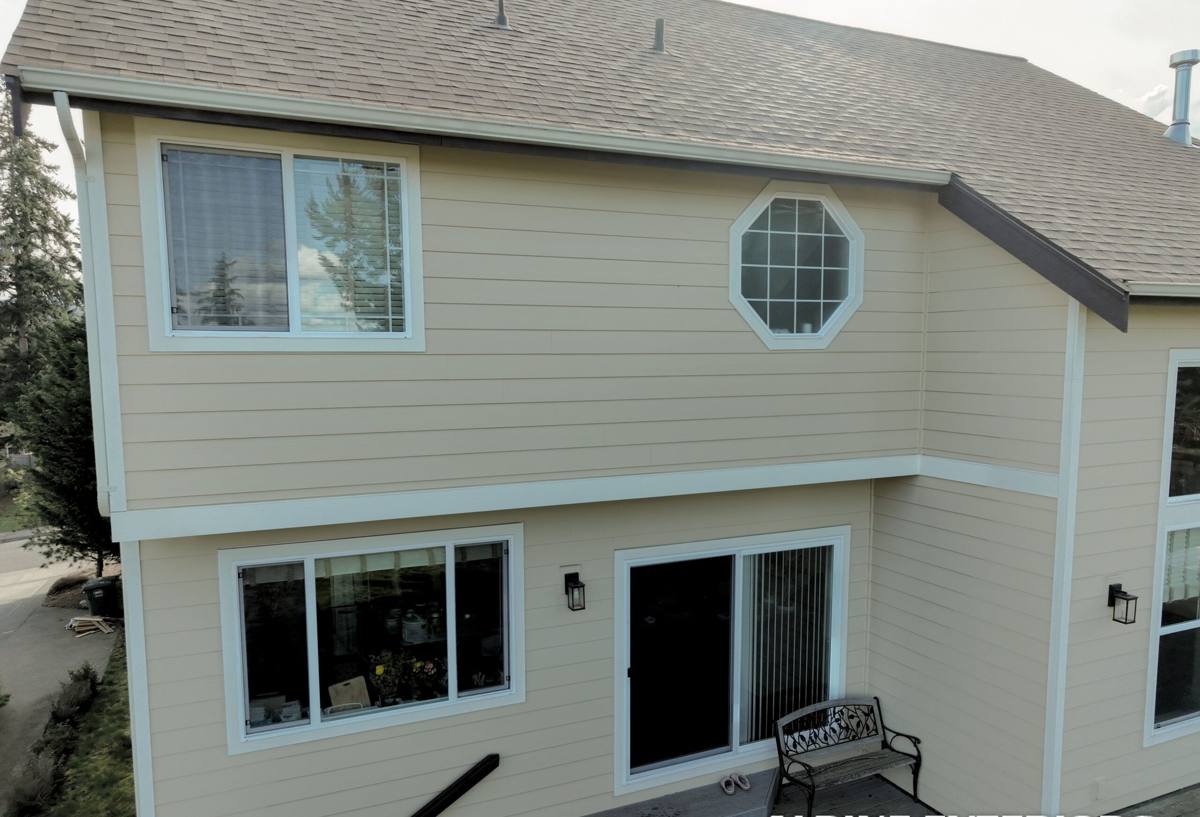
Signs a Fremont Home Needs Siding Replacement, Not Just Repair
Siding failure in this climate is usually gradual, and homeowners often patch symptoms for years before addressing the underlying problem. Watch for these signs, especially on shaded or water-facing walls:
- Moss or dark green-black algae staining that returns within weeks of being cleaned
- Soft, spongy, or crumbling spots when you press on the siding or trim
- Paint that's peeling, bubbling, or needing repainting far more often than it used to
- Visible warping, buckling, or cupping in individual boards or panels
- Gaps opening up at seams, corners, or where siding meets trim and window casings
- A musty smell or visible mold near interior walls that back up to exterior siding
- Rising heating bills that suggest the wall assembly is no longer insulating the way it should
Any one of these can sometimes be handled with a repair. Several showing up together, especially combined with soft sheathing underneath, usually means the siding has been letting moisture in for a while and full replacement is the more honest recommendation.
What a Correct Siding Replacement Actually Involves
Replacing siding is not just removing old boards and nailing up new ones. In a climate like Fremont's, the work happening underneath the visible siding matters as much as the siding itself.
Tear-off and inspection
Old siding comes off in sections so the sheathing underneath can be inspected as we go, not just at the start. Rot, soft spots, or hidden water damage found during tear-off gets repaired before anything new goes up — covering damaged sheathing with new siding just traps the problem.
Weather-resistive barrier and flashing
A properly lapped weather-resistive barrier, correctly integrated window and door flashing, and rainscreen or drainage detailing where appropriate give the wall a way to shed water that gets past the siding surface. This is the layer that does the real work protecting a home from driving rain, and it's also the layer that's easiest to shortcut when a crew is moving fast.
Fastening and installation to manufacturer spec
Fiber cement siding has specific nailing patterns, fastener types, clearances from grade and roof lines, and caulking requirements. Installed off-spec, it can still look fine on day one and then fail early through cracking, buckling, or moisture intrusion at the seams. Installed correctly, it's built to hold up through decades of Pacific Northwest winters.
Why James Hardie Fiber Cement Is What We Install
We install James Hardie fiber cement exclusively, and Fremont's climate is a good illustration of why. Fiber cement doesn't absorb moisture and swell the way wood-based products can, it doesn't become brittle or fade under UV and salt air exposure the way some vinyl does, and it carries a factory-applied ColorPlus finish that's engineered to hold color and resist the streaking and staining that shaded, damp walls are prone to.
Where other materials fall short here
Vinyl siding is affordable and low-maintenance in dry climates, but it expands and contracts with temperature swings, can warp or crack in impacts, and its seams and butt joints give moisture more opportunities to work behind the panel over a long wet season. Engineered wood products like LP SmartSide perform reasonably well when maintained perfectly, but they rely on an intact factory coating to keep moisture out — any breach, and the wood-based core is vulnerable to the exact swelling and rot that Fremont's damp, shaded lots accelerate. Primed spruce and cedar are beautiful materials, but both require an ongoing maintenance commitment (recoating, caulking, moss treatment) that most homeowners underestimate until the siding is already showing damage.
What Hardie gets right for this specific climate
James Hardie's HZ5 product line is engineered for climates with significant moisture exposure, which fits the Puget Sound region well. It's non-combustible, resists moss and mildew better than wood-based sidings, holds its factory finish for years without repainting, and comes with a transferable limited warranty that protects the investment if the home is sold. None of that makes it maintenance-free, but it shifts the maintenance burden from "constant vigilance" to "periodic care," which is a meaningfully different ownership experience over 20-plus years.
| Material | How It Handles Fremont's Wet, Shaded Conditions |
|---|---|
| James Hardie fiber cement | Doesn't absorb moisture or swell; factory finish resists moss staining and fading; non-combustible |
| Vinyl | Low maintenance but seams and joints allow moisture behind panels; can warp with temperature swings |
| LP SmartSide / engineered wood | Wood-based core is vulnerable once the factory coating is breached; needs consistent upkeep |
| Primed spruce / cedar | Natural material requiring regular recoating and moss treatment to prevent moisture damage |
Our Siding Replacement Process
- On-site assessment — we walk the home, check for moisture damage, and evaluate how sun exposure and tree cover on your specific lot affect the recommendation
- Written estimate — a clear scope of work, product selection, and cost breakdown before any commitment
- Permitting — we handle the paperwork required for exterior work in Seattle so you don't have to track it down yourself
- Tear-off and sheathing repair — old siding removed in sections, damaged sheathing repaired as it's uncovered
- Weather barrier and flashing installation — the moisture-management layer that protects the home long-term
- Hardie siding installation — installed to manufacturer specification for fastening, clearances, and joint treatment
- Final walkthrough — we review the finished work with you before calling the job complete
Cost Factors for Siding Replacement
Every Fremont home is different, and an accurate number requires an on-site look. In general, these factors move the price up or down:
| Factor | Why It Affects Cost |
|---|---|
| Home size and number of stories | More square footage and taller walls mean more material and labor, plus added scaffolding for multi-story homes |
| Existing siding removal | Multiple layers of old siding or extensive rot repair adds time before new siding can go up |
| Trim and architectural detail | Homes with more window trim, corner boards, and detail work require more precise cutting and fitting |
| Sheathing and structural repair | Hidden water damage found during tear-off needs to be repaired before installation continues |
| Siding profile and finish selection | Lap width, shingle-style panels, and color selection affect material cost |
| Access and site conditions | Narrow lots, mature landscaping, or limited driveway access can affect staging and labor time |
Why a Crew That Already Works in Fremont Matters
Fremont's housing stock is a genuine mix — older bungalows and early-20th-century homes sitting near newer infill construction, often on lots with mature trees and limited street access. A crew that already works in this neighborhood knows what that mix tends to mean in practice: older homes are more likely to have outdated sheathing or hidden moisture damage from decades of the same wet-shade conditions described above, while narrower lots and established landscaping call for more careful staging and site protection during tear-off. That familiarity shows up in fewer surprises mid-project and a more accurate estimate up front, rather than change orders once the old siding comes off.
It also matters for permitting and code compliance. Seattle has its own permitting process for exterior work, and a crew that pulls permits here regularly moves through that process faster than one encountering it for the first time.
Get a Free, No-Pressure Estimate
If your Fremont home is showing moss staining that won't quit, soft spots in the trim, or siding that's simply reached the end of its useful life, we're happy to take a look and give you an honest assessment — no pressure, no obligation. Use the form below to request a free estimate.