 Seattle
 Queen Anne Decks Work Harder Than Most
Queen Anne is one of Seattle's hillier neighborhoods, and a lot of its homes were built to take advantage of that elevation — decks that catch views toward Elliott Bay, downtown, or the Olympics. That's great for the homeowner and hard on the deck. Elevated and view-oriented decks carry more structural load, sit higher off grade, and take direct exposure from wind-driven rain coming off Puget Sound. Add in King County's long, damp fall-through-spring stretch and the moss and algae growth that comes with it, and you've got a structure that's under more stress than a typical ground-level deck in a drier climate.
None of this means Queen Anne decks are poorly built. It means they need repair work that accounts for the actual conditions they live in, not a generic patch job. We work on decks in this neighborhood regularly, and the failure patterns we see here are consistent enough that we can usually tell what's going on before we even pull a board.
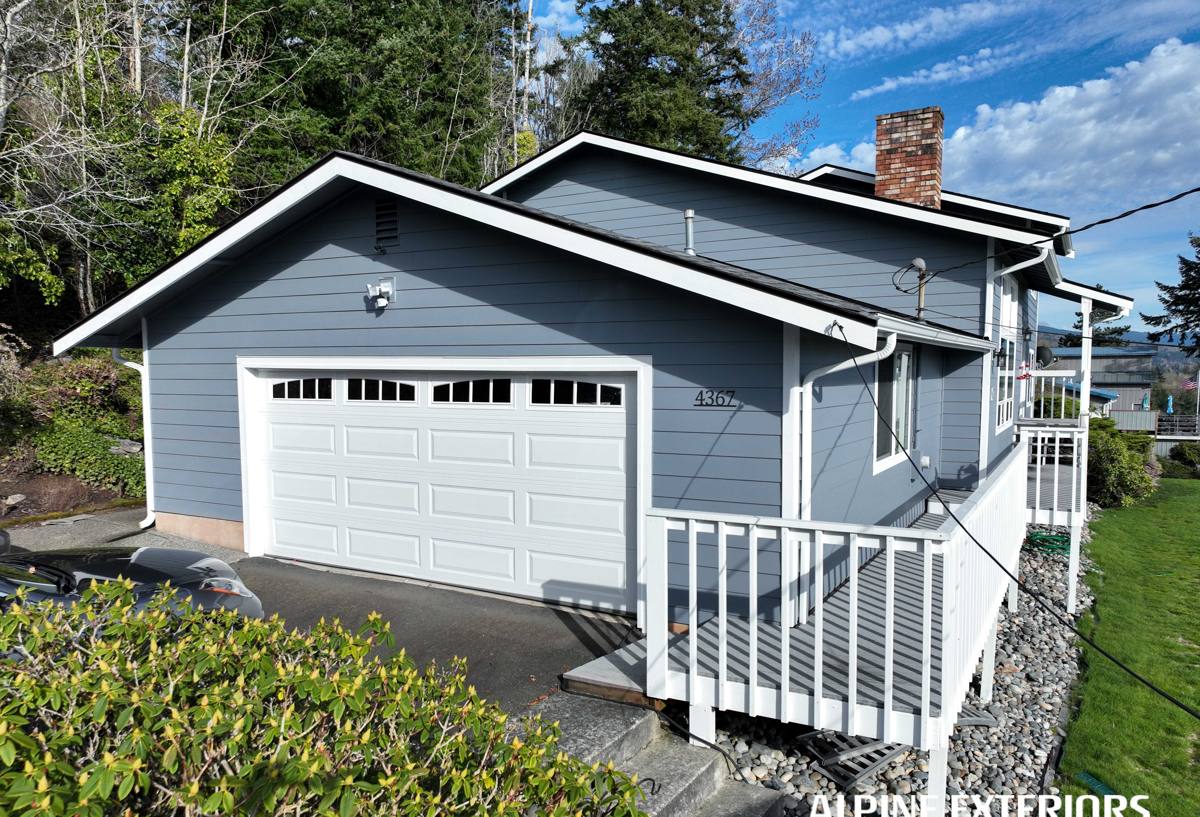
How Salt Air, Rain, and Moss Actually Damage a Deck
Salt air and moisture
Homes closer to the Sound get a steady, low-level dose of salt-laden air. Salt is hygroscopic — it draws moisture in and holds it against metal and wood longer than plain rainwater would. On a deck, that shows up first in fasteners: screws, joist hangers, and nail heads that corrode faster than the framing around them, which weakens connections well before the wood itself looks bad.
Driving rain
Seattle's rain is rarely a hard downpour — it's a steady, wind-pushed drizzle that finds its way into every gap, seam, and end-grain cut on a deck. Ledger boards (where the deck attaches to the house), stair stringers, and any spot where two pieces of lumber meet are the places driving rain gets in and stays, because those joints dry out slower than open, sun-exposed decking.
Moss and organic growth
King County's long wet season gives moss and algae months to establish themselves on decking, especially on the north or shaded sides of a house, or under tree cover, which is common in Queen Anne's older, more established yards. Moss isn't just a slip hazard — it holds moisture against the wood surface around the clock, which accelerates rot underneath a surface that might still look intact from a few feet away.
Signs a Deck Needs Repair — Not Just a Wash and a Coat of Stain
- Boards that feel spongy, springy, or noticeably softer underfoot in one area versus another
- Visible gaps or rust streaks at joist hangers, ledger bolts, or post bases
- Railings or posts that wiggle more than a firm push should allow
- Stairs that feel less solid than the deck surface itself
- Persistent moss or dark staining that comes back within weeks of cleaning
- Any separation where the deck meets the house — even a hairline gap
- Fasteners with rust bleeding onto the surrounding wood
Any one of these on its own might be minor. Two or three together usually mean the problem started below the surface and has been working its way up.
What a Correct Deck Repair Actually Involves
A repair that's done right starts with figuring out why the damage happened, not just where it is. Replacing a rotted board without addressing the flashing detail or drainage path that let water in just buys you a few more years before the same board fails again.
The ledger connection
Because the ledger board ties the deck to the house, it's the single most important structural connection to get right — and the most common place we find hidden rot on Queen Anne homes, especially where flashing was missing or installed incorrectly during original construction. Correct repair means proper flashing that sheds water away from the house framing, not just caulk over a gap.
Framing and fasteners
Joists, beams, and posts need to be checked for both rot and corrosion — hangers and structural screws that have lost integrity should be replaced with fasteners rated for exterior and, where there's salt exposure, marine-grade or stainless hardware, not standard galvanized.
Drainage and grading
Water needs a clear path off the deck surface and away from the house foundation. On sloped Queen Anne lots, this sometimes means correcting how water was originally directed, not just replacing decking in place.
Surface materials
Whether we're repairing existing wood decking or replacing sections with composite, the goal is matching moisture behavior across old and new material so one section doesn't trap water against another.
Repair or Replace? How We Make That Call
| Factor | Usually points to repair | Usually points to replacement |
|---|---|---|
| Structural framing | Solid, only isolated soft spots | Widespread rot in joists or beams |
| Ledger connection | Sound, properly flashed | Rotted, missing flashing, or improperly attached |
| Age of deck | Under 15-20 years, built to current code | Older, undersized framing or outdated hardware |
| Extent of damage | Concentrated in a few boards or one section | Spread across the whole surface or multiple systems |
| Design fit | Layout and size still work for the home | Homeowner wants a different footprint or use |
We'll always tell you honestly which side of this table your deck falls on. A repair that's really a stopgap on a failing structure isn't a service to you — it's a bill you'll pay twice.
Our Deck Repair Process
- On-site assessment. We walk the entire deck, check the ledger connection, probe suspect boards and framing, and look at drainage and grading around the structure.
- Written scope and estimate. You get a clear breakdown of what needs to be repaired, what we recommend beyond the minimum, and why — no surprise add-ons once work starts.
- Structural repairs first. Framing, ledger flashing, hardware, and posts get addressed before any cosmetic work, since surface repairs over a compromised structure don't hold.
- Surface and finish work. Decking, railings, and stairs are repaired or replaced to match, with attention to consistent moisture behavior across old and new materials.
- Final walkthrough. We check the repair together and go over any maintenance steps specific to your deck's exposure and materials.
Materials: What Holds Up Here and What We Recommend
Every decking material has trade-offs. Our job is to be straight with you about them rather than push whatever's easiest to install.
| Material | Strengths in this climate | Trade-offs |
|---|---|---|
| Pressure-treated lumber | Cost-effective, easy to repair in sections, widely available | Needs regular sealing; end grain and cuts are vulnerable if not treated after installation |
| Cedar | Naturally rot-resistant, ages well, good look for older homes | Softer material, needs periodic finish maintenance to keep that resistance working |
| Composite decking | Low maintenance, resists moss staining better than wood surfaces | Installation sensitivity around fastening and spacing; substructure still needs to be wood or approved framing and must be kept dry |
| Fasteners and hardware | Stainless or marine-grade resists salt-air corrosion far longer than standard galvanized | Higher upfront cost, but far cheaper than repairing corrosion damage later |
For homes with direct exposure to salt air, we typically recommend upgrading hardware to stainless or marine-grade even during a partial repair, since mismatched fasteners tend to become the next failure point.
Keeping a Repaired Deck in Good Shape
- Clean moss and algae off the surface at least once a year, more often on shaded sections
- Keep gutters and downspouts clear so runoff isn't landing on or near the deck
- Check the ledger area and any post bases for standing water after heavy rain
- Re-seal wood decking on the schedule recommended for the specific product used
- Trim back vegetation that keeps a section of decking shaded and damp
- Walk the deck periodically and note any new soft spots or movement at railings
Why Hire a Crew That Already Works in Queen Anne
Repair work on a hillside, view-oriented deck is different from a flat backyard deck job — access can be tighter, elevation changes the structural math, and the exposure to wind-driven rain off the Sound is more direct. A crew that already does this work in the neighborhood has seen how these specific decks fail and knows what to check first instead of guessing. That saves you time during the estimate and money during the repair, because we're not learning the terrain on your project.
We also know this climate doesn't forgive shortcuts. A repair that skips proper flashing or uses the wrong fastener grade might look fine for a season, but King County's wet stretch will find the weak point. We'd rather tell you the honest scope up front than come back to redo it.
If you're noticing soft spots, rust staining, or a deck that just doesn't feel as solid as it used to, we're glad to take a look. Fill out the form below for a free, no-pressure estimate — we'll walk the deck with you and tell you plainly what it needs.