 Seattle
 Magnolia's Windows Work Harder Than Most
Magnolia sits on a bluff surrounded on three sides by Puget Sound, and that position is exactly why windows here take more abuse than windows a few miles inland. Homes closer to the water's edge see near-constant airflow off the Sound, which means fine salt spray settles on glass, frames, and hardware even when there's no visible storm. Add Seattle's long wet season and the moss and algae growth that comes with it, and you have a combination that shortens the life of window components that weren't built or installed with that exposure in mind.
We've worked on homes throughout Magnolia and the surrounding King County neighborhoods long enough to know this isn't a one-size-fits-all job. A window that performs fine in a dry, sheltered inland lot can fail early on a bluff-facing exposure with unobstructed wind and rain. Getting it right here means paying attention to material choice, hardware, and flashing details that a generic installation crew might skip.
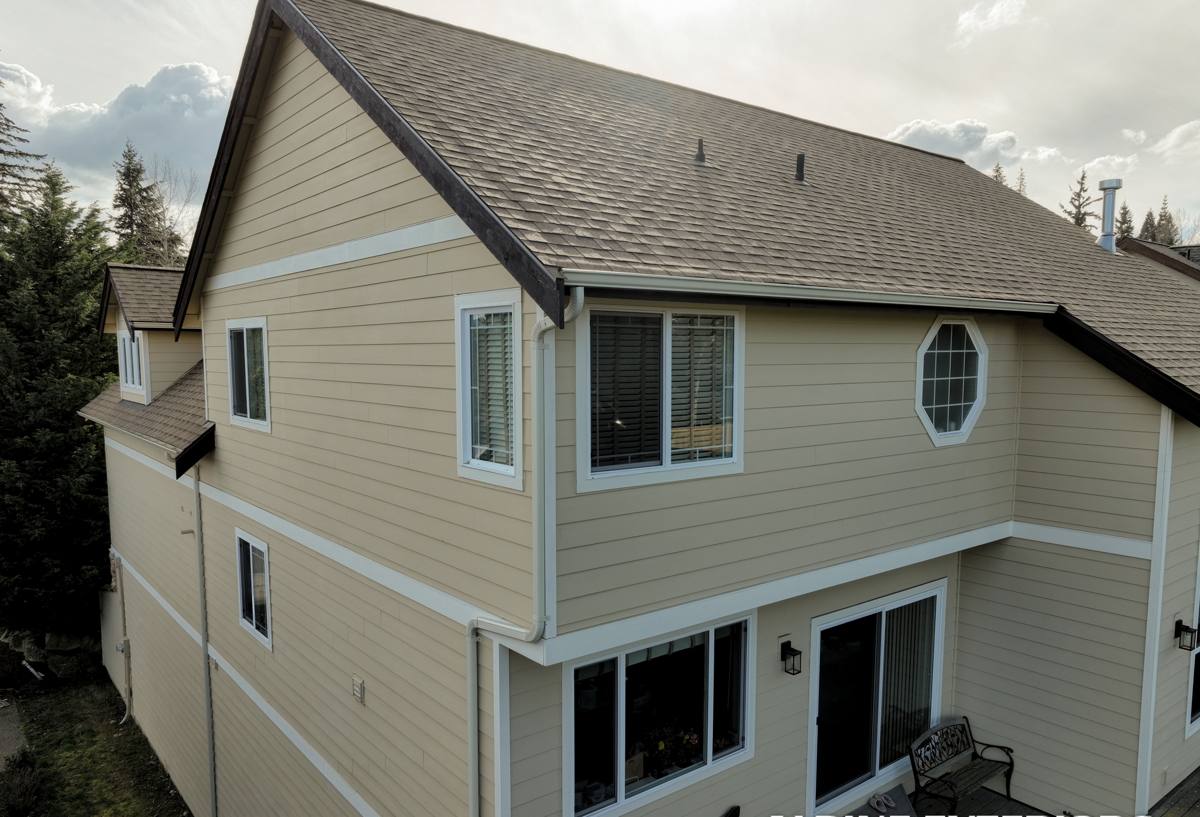
What Salt Air, Driving Rain, and Moss Season Actually Do to Windows
Salt Air and Corrosion
Salt-laden air accelerates corrosion on metal window components — hinges, locks, balance mechanisms, and screen frames in particular. Aluminum-clad and lower-grade steel hardware can start pitting and sticking years before they should, especially on homes with a clear line of sight to the water. This is less about the glass and more about the small moving parts that keep a window sealed and operable.
Driving Rain and Wind-Driven Water
Storms coming off the Sound don't just fall straight down — wind pushes rain sideways into wall assemblies and window openings. If flashing, sill pans, and sealant details aren't installed correctly, water finds its way behind the window frame and into the wall cavity. That's where the real damage happens: hidden rot, mold, and insulation failure that isn't visible until it's already extensive.
Moss and Sustained Moisture
Seattle's long, damp stretch of the year keeps north-facing and shaded window sills and sashes wet for extended periods. On older wood windows, that sustained moisture feeds moss and algae growth on sills and exterior trim, which holds even more water against the wood and speeds up rot. Even on newer windows, debris and organic buildup in weep holes and tracks can block proper drainage if they're not cleared periodically.
Common Window Problems We See in Magnolia Homes
Magnolia's housing stock spans a wide range — mid-century single-family homes, older bungalows and Craftsman-style houses, and newer construction closer to the commercial core. Each brings its own window issues:
- Original single-pane wood windows with failing glazing putty and swollen sashes that stick or won't latch
- Aluminum-frame windows from the 1960s-80s with no thermal break, causing heavy condensation on cold mornings
- Vinyl replacement windows installed 15-20+ years ago with failed seals, fogged glass, or brittle weatherstripping
- Wood sills and trim near ground level or under roof valleys showing soft spots, moss growth, or visible rot
- Bedroom windows that don't meet current egress size requirements, which matters at resale and for safety
None of these are unusual for the Puget Sound region, but they do mean the right fix is rarely "just swap the glass." Most of the time the frame, flashing, and surrounding trim need attention too, or the new window fails the same way the old one did.
What a Correct Window Installation Actually Involves
A window install that's done right is mostly about what happens before and around the window itself, not just the unit that gets set in the opening.
Proper Flashing and Drainage
Every window opening needs a sill pan to direct any water that gets past the exterior cladding back out, not into the wall. Head flashing above the window and properly lapped side flashing keep wind-driven rain from working its way in around the edges. This is the single most important part of the job for a wet, wind-exposed area like Magnolia, and it's also the step that's easiest to shortcut if a crew is moving fast.
Air and Water Sealing
Backer rod and quality exterior sealant at the right joints, paired with correctly installed weather-resistive barrier tie-in, keep the assembly airtight without trapping moisture where it can't escape. Sealing the wrong joint — or sealing everything solid with no way for incidental moisture to drain — causes as many problems as leaving gaps.
Corrosion-Resistant Hardware and Fasteners
Given the salt exposure many Magnolia properties deal with, we pay attention to fastener and hardware material — stainless or coated fasteners hold up far better near the water than standard galvanized options, which can start showing rust streaks on siding and trim within a few years.
Correct Sizing and Squaring
An out-of-square opening — common in older homes that have settled over decades — needs to be corrected with proper shimming, not forced to fit. A window installed slightly racked will bind, won't seal evenly, and will wear out its hardware faster.
Full-Frame Replacement vs. Insert Replacement
One of the first decisions on any project is whether to do a full-frame (also called "new construction") replacement or an insert (pocket) replacement into the existing frame.
| Factor | Insert Replacement | Full-Frame Replacement |
|---|---|---|
| Best used when | Existing frame is sound, square, and dry | Frame shows rot, water damage, or is significantly out of square |
| Access to flashing/sill pan | Limited — relies on existing flashing being intact | Full access to install new flashing and sill pan correctly |
| Typical cost | Lower labor and material cost | Higher — more trim, siding, and flashing work involved |
| Glass area | Slightly reduced (frame-within-a-frame) | Can match or improve original glass area |
| Best fit for Magnolia's exposure | Sheltered, inland lots with sound existing frames | Bluff-facing, wind-exposed, or any home with signs of past water intrusion |
We don't default to insert replacements just because they're faster and cheaper — on a wind-exposed lot with any sign of past moisture problems, full-frame is usually the more honest recommendation even though it costs more upfront.
Choosing the Right Window Material for This Climate
There's no single "best" window material for every home, but some hold up better than others against sustained damp and salt-tinged air:
- Vinyl: Budget-friendly and low maintenance, with no risk of corrosion, but quality varies a lot between manufacturers — cheaper vinyl can warp or discolor over time in constant sun-and-rain cycling.
- Fiberglass: Dimensionally stable across temperature swings, resists moisture and corrosion well, and generally holds paint and finish longer — a strong fit for exposed, weather-heavy lots, at a higher price point than vinyl.
- Wood-clad: Attractive for older or historic-style homes and offers good insulating properties, but the exterior cladding and any exposed wood need regular maintenance to keep moisture from reaching the wood core, especially under Seattle's rain totals.
- Aluminum: Strong and slim-profiled, but without a thermal break it performs poorly in our climate and is prone to condensation — we generally steer clients away from non-thermally-broken aluminum for that reason, not because the metal itself is a problem.
We'll walk through these trade-offs based on your home's exposure, style, and budget rather than pushing one product line for every job.
Energy Performance and Seattle's Building Code
Washington's energy code sets minimum performance requirements for replacement windows, generally expressed as U-factor (how well the window resists heat loss) and, in some cases, solar heat gain coefficient. In our climate, U-factor matters more than solar gain control for most homes, since Seattle winters are about retaining heat, not blocking sun. Bedroom and basement windows also have egress size and opening requirements that matter both for code compliance and for safety in an emergency — this comes up often in older Magnolia homes where original window openings were sized differently than current code requires. Depending on scope, work in Seattle may require a permit through the city; we handle that as part of the process rather than leaving it for the homeowner to sort out.
Our Installation Process
- On-site assessment: We check existing frames, flashing, sill condition, and look for signs of past water intrusion before recommending insert or full-frame replacement.
- Measurement and product selection: Exact measurements, material and glass package selection based on the window's orientation and exposure — bluff-facing and west-facing openings often warrant a different spec than sheltered, east-facing ones.
- Tear-out: Careful removal of the old unit and inspection of the framing underneath for hidden rot before anything new goes in.
- Flashing and sill pan installation: Correct lapping order — sill pan first, then side flashing, then head flashing — so water sheds outward at every layer.
- Window setting and shimming: Leveled, squared, and shimmed so the sash operates smoothly and seals evenly on all sides.
- Sealing and insulation: Low-expansion foam or batt insulation in the gap, backer rod and sealant at the exterior joint.
- Exterior trim and finish work: Trim reinstalled or replaced, paint or caulk lines finished to match the home.
- Final walkthrough: Every window operated, checked for square, and inspected with you before we call the job done.
Why a Crew That Already Works Magnolia Makes a Difference
A window installer who mainly works drier, inland King County neighborhoods may not think twice about hardware grade or flashing detail that's non-negotiable on a bluff-exposed Magnolia lot. Working this neighborhood regularly means we already know which streets face direct wind off the Sound, which homes are more likely to have moss-related sill damage, and which older housing stock tends to have out-of-square openings from decades of settling. That local pattern recognition shortens the assessment phase and reduces the chance of a callback for a problem that should've been caught the first time.
It also means faster response if something needs attention after the install — a stuck sash, a hardware adjustment, a caulk line that needs a touch-up after the first hard winter. We're not driving in from across the county for a ten-minute fix.
Signs It's Time to Replace, Not Just Repair
- Visible fogging or a hazy film between panes of a double-pane window (seal failure)
- Sashes that stick, won't latch fully, or have been painted shut
- Soft, spongy, or visibly rotted wood at the sill or lower frame
- Persistent moss or dark staining on sills that returns shortly after cleaning
- Noticeable draft or cold air near the frame on windy days
- Condensation forming on the interior glass or frame regularly in cold weather
- Difficulty opening windows for egress in a bedroom
If you're only seeing one or two of these, a repair may be enough. Several at once, especially combined with visible frame damage, usually means replacement is the more cost-effective path long-term.
Maintenance That Extends the Life of New Windows
Even a correctly installed window benefits from basic upkeep in this climate. Clearing weep holes and tracks of debris a couple of times a year keeps drainage working as designed. Rinsing salt residue off frames and glass near the water helps slow hardware corrosion. Keeping gutters and downspouts clear reduces the amount of water running past window openings during heavy storms. And catching moss growth on sills early — before it takes hold — saves you from a much bigger repair down the line.
If your Magnolia home has windows showing any of the wear signs above, or you're planning ahead of the next wet season, we're happy to take a look and give you a straightforward, no-pressure estimate — no obligation, just an honest read on what your windows actually need.