 Seattle
 Windows Built for Wallingford's Weather
Wallingford sits in one of Seattle's older, denser residential pockets, where craftsman bungalows and early-20th-century Seattle boxes still make up a large share of the housing stock. That means a lot of original or early-replacement windows that were never designed for today's energy costs, and frames that have spent decades absorbing King County's wet-side-of-the-Cascades climate. Driving rain off Puget Sound, damp air carrying a hint of salt on windier days, and a moss season that seems to stretch longer every year all work on wood, glass seals, and weatherstripping in ways that a drier climate never would. Windows here don't just need to look good — they need to shed water, resist rot, and keep conditioned air where it belongs through eight or nine months of gray, wet weather.
When we talk about "energy-efficient windows" for a Wallingford home, we're really talking about three things working together: glass that manages heat transfer, a frame and seal system that stays weathertight in sustained rain, and an installation that accounts for the way this specific climate stresses a window over time. Get any one of those wrong and the other two don't matter much.
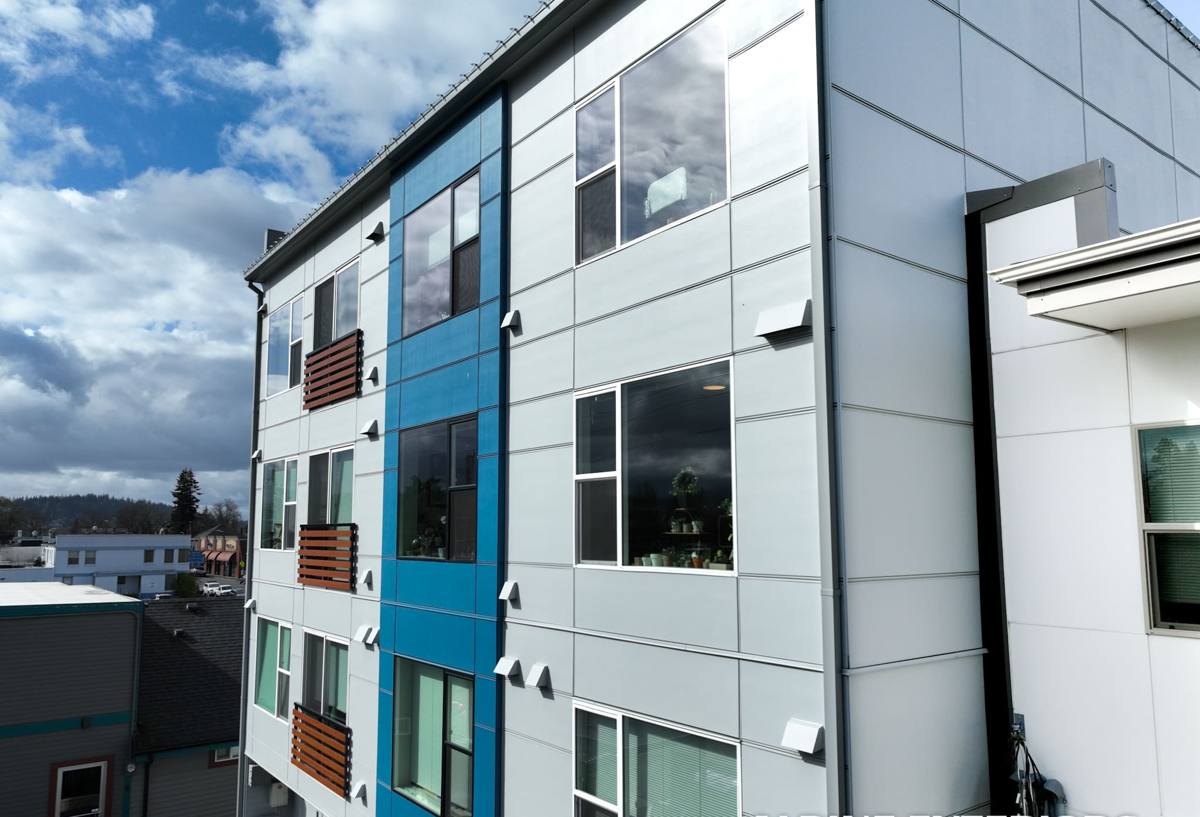
What Energy-Efficient Actually Means
Glass Performance
Modern replacement windows use double- or triple-pane insulated glass units (IGUs) with a low-emissivity (low-E) coating and an inert gas fill, usually argon, between the panes. The low-E coating reflects infrared heat back into the room in winter and blocks it from entering in summer, without noticeably darkening the glass. In a marine climate like Seattle's, where winters are mild but persistently damp and cool, the priority is usually a lower U-factor (how much heat escapes) over an aggressively low solar heat gain coefficient (how much solar heat gets in) — unlike a hot, sunny climate where blocking solar gain is the bigger concern.
Frame Materials
Frame choice matters as much as glass in a wet climate. Vinyl frames resist moisture and never need painting, but quality varies a lot between manufacturers — cheap vinyl can warp or discolor over time. Fiberglass frames are more dimensionally stable across temperature swings and hold paint well if you want a custom color. Wood-clad windows (wood interior, aluminum or vinyl exterior cladding) give you the traditional look many Wallingford craftsman and bungalow homes call for, with the exterior cladding taking the weather instead of bare wood. We don't recommend bare wood exteriors for this climate as a matter of practice — not because wood is a bad material, but because the maintenance burden of repainting and resealing exposed wood every few years in near-constant rain and moss exposure is more than most homeowners want to sign up for.
| Frame Type | Moisture Resistance | Maintenance | Best Fit |
|---|---|---|---|
| Vinyl | Very good | Minimal — no painting | Budget-conscious replacements, rear/side elevations |
| Fiberglass | Excellent | Low — holds paint well | Long-term durability, custom colors |
| Wood-clad | Excellent (cladding protects wood) | Low on exterior, wood care on interior trim | Craftsman and period-detail homes |
| Bare wood | Fair — needs upkeep | High — repainting/sealing on a schedule | Historic restoration where authenticity is required |
Common Problems We See in Wallingford Homes
A big share of the calls we get from this neighborhood fall into a handful of patterns:
- Original single-pane wood windows with cracked or missing glazing putty, letting cold air and moisture straight through the sash
- Aluminum-frame replacements from decades past that conduct cold straight through the frame, causing condensation and, over time, mold at the sill
- Failed insulated glass seals — visible as fogging or a haze between the panes that no amount of cleaning will fix
- Wood sills and trim showing early rot where flashing was skipped or improperly lapped during a past replacement
- Persistent moss and algae staining on north-facing frames and sills that never get direct sun to dry out
- Drafts around the frame perimeter from settled framing or degraded weatherstripping, common in homes with 80-100 years of minor foundation movement
None of these are unusual for a house this age in this climate — they're the predictable result of time plus moisture. The fix depends on which one you're dealing with, which is why an honest assessment before any sales pitch matters more than the window brand itself.
What a Correct Installation Actually Involves
The window unit itself is maybe half the job. The other half is what happens at the rough opening, and it's the part that determines whether a window performs for twenty years or starts leaking in three.
Flashing and Water Management
Every opening needs a proper flashing sequence — sill pan flashing at the bottom, side flashing lapped over it, and header flashing lapped over the sides — so that any water that gets past the exterior cladding drains back out instead of into the wall cavity. This is the single most common shortcut on rushed jobs, and it's invisible once the trim goes back on, which is exactly why it matters to hire people who won't skip it.
Air Sealing
The gap between the window frame and the rough opening needs to be sealed with a proper low-expansion foam or backer rod and sealant — not just caulk smeared around the exterior trim. A window with excellent glass but a poorly sealed rough opening will still feel drafty.
Sizing and Fit
Replacement windows should be measured to the actual opening, not assumed from the old unit's nominal size, since older houses often have openings that have shifted slightly out of square over the decades. A unit that's shimmed and forced to fit an out-of-square opening puts ongoing stress on the frame and can compromise the seal from day one.
Interior and Exterior Finish
Trim, casing, and any paint or caulk lines need to be finished cleanly on both sides, and old glazing compound, lead paint (common in pre-1978 housing, which covers much of Wallingford's older stock), and debris need to be handled and disposed of properly rather than left in the yard or landscaping.
Our Process
- On-site assessment: We look at every window being considered, not just the ones you called about, and note frame condition, glass seal status, sill and header condition, and any signs of past water intrusion.
- Honest scope and product recommendation: We tell you which windows genuinely need replacing now, which can wait, and which frame/glass combination fits your home and budget — including telling you when a repair is the more sensible option.
- Written estimate: Line-item pricing so you know what you're paying for the units versus the labor and any incidental repairs (rotted sill stock, for example) uncovered during the assessment.
- Installation: Proper flashing, air sealing, and fit as described above, with daily cleanup so your home is livable throughout the job.
- Final walkthrough: We test operation, check seals, and review warranty coverage with you before calling the job done.
Choosing the Right Windows for Your House
Not every home needs the same answer. A few things worth thinking through before you decide:
- Is this a full-house replacement or are you prioritizing the worst-performing rooms first (often north- and west-facing rooms that take the brunt of driving rain)?
- Do you want to preserve original craftsman details — divided lites, specific trim profiles — or is a clean, modern look acceptable?
- How much exterior maintenance are you realistically willing to do each year? This should drive the frame material decision more than looks alone.
- Are any windows in rooms with high humidity, like bathrooms or kitchens, where condensation resistance matters more than elsewhere?
- Is there existing rot or water damage that needs to be addressed as part of the job, not patched over and covered with new trim?
What Affects the Cost
Every home is different, but the main cost drivers on a Wallingford window project are consistent enough to plan around:
| Factor | Why It Matters |
|---|---|
| Frame material | Vinyl is typically the most affordable; fiberglass and wood-clad cost more but last longer and hold up better to moisture |
| Number of windows | Whole-house projects usually bring a lower per-window cost than one-off replacements |
| Opening condition | Rot repair, out-of-square framing, or old lead paint abatement adds labor beyond the window itself |
| Glass upgrades | Triple-pane or upgraded low-E coatings cost more upfront but reduce heating costs over the window's life |
| Access and site conditions | Second-story windows, tight side yards, or older siding that needs careful handling can add labor time |
We'd rather walk you through these factors honestly during the estimate than quote a number without context. Broad ranges are easy to find online; what actually determines your price is the condition of your specific openings and the finish level you want.
Why a Local Wallingford Crew Matters
A crew that regularly works this neighborhood already knows what a hundred-year-old Seattle box or craftsman bungalow tends to hide behind its trim — the flashing shortcuts of past decades, the framing quirks common to the era, and how a north-facing wall in this part of King County holds moisture longer than a south-facing one ever will. That familiarity shows up in faster, more accurate assessments and fewer surprises mid-project. It also means we're not guessing at how a product will hold up to a full Puget Sound winter — we've already seen how the last one performed on houses just like yours.
Maintaining Your Investment Through Moss Season
Even the best window installation benefits from basic upkeep in a climate like this. Clear debris and moss buildup from sills and tracks a couple of times a year, especially before the wet season sets in, so water has a clear path to drain rather than pooling against the frame. Check exterior caulk lines annually for cracking or separation, and address it early — a small gap caught in summer is a much smaller job than water damage discovered the following spring. If you notice condensation forming between panes of an existing window, that's a sign the seal has failed and the insulating gas has escaped; it's not something that can be repaired, only replaced.
If your windows are drafty, fogged, or original to a home that's decades old, we're happy to take a look and give you a straightforward, no-pressure estimate — just fill out the form below and we'll get in touch.