 Seattle
 Why Decks in Wallingford Wear Out Faster Than People Expect
Wallingford's mix of craftsman bungalows, mid-century houses, and newer infill sits under the same weather pattern as the rest of Seattle: long stretches of low-intensity rain from fall through spring, humid marine air off Puget Sound, and short summers that don't give wood much time to fully dry out between wet spells. A deck built anywhere else in the country would age differently than one built here. In King County, the enemy isn't one big storm — it's months of steady moisture finding every gap, every fastener hole, and every spot where two boards meet.
That slow, patient moisture cycle is what drives the two most common deck failures we see in this neighborhood: wood rot in structural framing that's hidden from view, and surface decay on decking boards and railings that homeowners can see but often underestimate. Add in a shaded lot under mature trees — common on Wallingford's older residential blocks — and you get a longer moss season than a deck in full sun would ever deal with. Moss holds water against wood and finish coatings, and it's slippery underfoot long before it's obviously destructive.
The Salt Air Factor
Being close to the water in the Seattle area also means dealing with marine air that carries salt and moisture further inland than most homeowners assume. It accelerates corrosion on fasteners, hinges, and any exposed metal hardware — nails and screws that were never rated for exterior marine exposure will show rust and weakening years before a wood problem becomes visible. A repair that only addresses the wood and ignores the hardware underneath is a repair that will need to happen again.
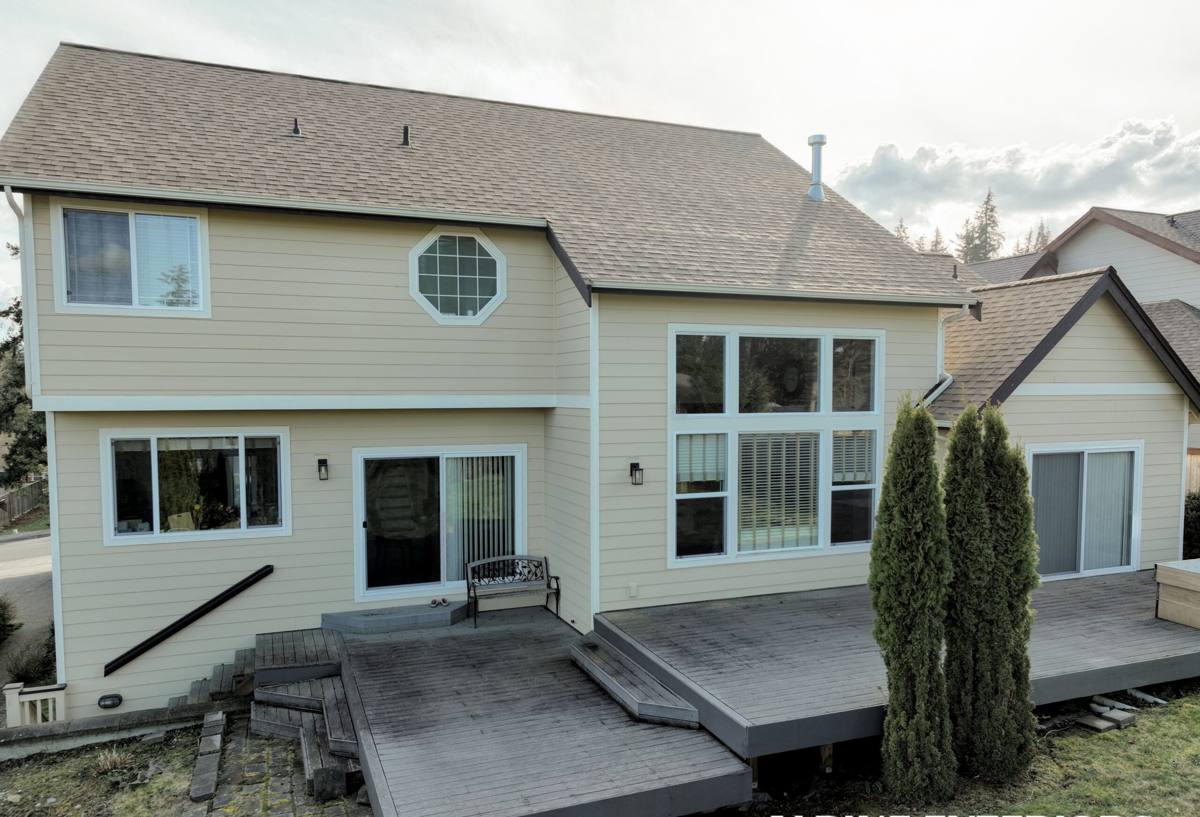
Signs Your Deck Needs Repair, Not Just a Cleaning
Homeowners often power-wash a deck, see it look better for a season, and assume the underlying structure is fine. Cosmetic cleaning and structural health are two different things. Here's what actually signals a repair is due:
- Boards that feel spongy, springy, or noticeably softer underfoot than they used to
- A screwdriver or awl that sinks into a joist or ledger board with light pressure
- Visible gaps opening up where the deck meets the house (ledger separation)
- Railings that wobble or flex when leaned on — a safety issue, not a cosmetic one
- Rust streaks running down from fasteners or metal connectors
- Persistent dark green or black staining that comes back within weeks of cleaning
- Standing water that takes more than a day to dry after rain
- Stair stringers that feel uneven or have visible splitting at the notches
Any one of these on its own might be minor. Two or three together usually means moisture has been working on the structure for a while, and it's worth having someone look underneath rather than just at the surface.
What a Correct Deck Repair Actually Involves
A repair that's done right starts below the decking boards, not on top of them. The framing — ledger board, joists, beams, and posts — carries the actual load. If a contractor replaces a few visibly bad boards but never inspects the structure underneath, the repair is cosmetic, and the real problem is still there.
The Ledger Board and Flashing
The ledger board — where the deck attaches to the house — is the single most common failure point on decks in wet climates like ours. Water gets behind improperly flashed ledgers and rots both the ledger and the house's rim joist from the inside out, often with no visible sign from the yard. Correct flashing directs water away from this joint entirely; missing or failed flashing is something we check on every repair, even when that's not what the homeowner called about.
Joists, Posts, and Fasteners
Once the ledger is confirmed sound, the next check is the joists and support posts for soft spots, checking (splitting along the grain), and any point where standing water has been sitting against end grain — the most water-absorbent part of any board. Fasteners matter more than most homeowners realize: hardware rated for exterior and coastal exposure resists corrosion far longer than standard galvanized fasteners, and mixing metals (like the wrong screws with certain hardware) can actually accelerate corrosion through galvanic reaction.
Decking Boards and Surface
Only after the structure is confirmed solid does it make sense to address the decking surface itself — replacing individual damaged boards, resetting fasteners, sanding and refinishing wood, or addressing composite boards that have shifted or discolored. Doing this step first, without checking what's underneath, is how repairs end up being redone within a couple of years.
Repair or Replace? How We Help You Decide
Not every deck problem calls for a full rebuild, and not every deck is worth patching. The honest answer depends on how much of the structure is affected versus how much is cosmetic.
| Situation | Repair Usually Makes Sense | Replacement Usually Makes Sense |
|---|---|---|
| Rot location | Isolated to a few boards or one section | Found in multiple joists, the ledger, or main posts |
| Deck age | Under 15-20 years, built to a reasonable standard | Original construction is old, undersized, or non-compliant with current framing practice |
| Railings | Solid posts, loose balusters or hardware only | Posts themselves are rotted or under-anchored |
| Footings | Stable, no visible heaving or settling | Shifted, undersized, or missing proper footings entirely |
| Overall footprint | You're happy with the size and layout | You want a different size, shape, or added stairs/landing |
We'll always tell you if a "repair" would just be a temporary patch on a deck that really needs to come down. That's a harder conversation than just doing the work requested, but it's the one that saves money in the long run.
Our Deck Repair Process in Wallingford
- On-site assessment. We walk the deck, check the ledger and flashing, probe joists and posts for soft spots, and look at drainage and grade around footings.
- Straight explanation. You get a plain-English rundown of what's failing, what's just cosmetic, and what your realistic options are — repair, partial rebuild, or full replacement.
- Written scope and estimate. No vague line items. You know what's being replaced, what hardware is used, and what the timeline looks like before we start.
- Structural work first. Any compromised framing, ledger flashing, or connections are corrected before anything cosmetic is touched.
- Surface and finish work. Decking, railings, stairs, and finish coatings are completed to match the existing deck or to the new spec you've chosen.
- Final walkthrough. We check the work with you before calling the job done — not before we've left the site.
Material Choices and Trade-Offs Worth Understanding
When boards need replacing, homeowners usually choose between wood and composite decking. Both are legitimate choices — the right one depends on your budget, maintenance appetite, and how the deck is used.
Wood
Cedar and pressure-treated lumber are more affordable up front and can be refinished to a natural look. The trade-off is maintenance: in our wet, moss-prone climate, wood decking needs regular cleaning and re-sealing to keep moisture from taking hold, especially in shaded yards where boards don't get much direct sun to dry.
Composite
Composite decking costs more initially but doesn't rot, doesn't need staining, and resists moss growth better than untreated wood. The trade-offs are a higher upfront cost and, with lower-quality products, sensitivity to installation details — improper gapping or fastening can cause boards to buckle or discolor unevenly over time. We install composite decking to the manufacturer's specified fastening and spacing tolerances precisely because skipping that step is what causes the problems composite decking has a reputation for.
Keeping Moss and Moisture From Coming Back
A repaired deck in a shaded, rain-heavy climate needs a maintenance rhythm, not a one-time fix. A few habits go a long way between our visits:
- Sweep leaves and debris off the deck surface regularly, especially in fall — trapped organic matter holds moisture and feeds moss
- Keep gutters and downspouts near the deck clear so runoff isn't draining directly onto or under it
- Trim back overhanging branches where practical to let more light and airflow reach the surface
- Reseal or re-stain wood decking on the schedule recommended for the product, not just when it looks faded
- Address small issues — a loose board, a hairline crack, a soft spot — before winter's wet season sets in
Why It Matters to Hire a Crew That Already Works This Neighborhood
Deck problems in Wallingford tend to follow patterns — ledger flashing failures on homes of a certain era, moss buildup on north-facing and tree-shaded decks, corrosion on hardware near the water. A crew that repairs decks across Seattle and King County day in and day out recognizes those patterns quickly instead of treating every job as a first-time guess. That familiarity means faster, more accurate assessments and fewer surprises once work is underway — because the surprises for this climate and this kind of housing stock are already known.
It also means someone who understands what Seattle's rain schedule does to a work timeline, plans around it, and doesn't leave a deck half-finished and exposed to the next system rolling in off the Sound.
If your deck has soft spots, rust stains, persistent moss, or just doesn't feel as solid as it used to, we're happy to take a look and give you a straight answer — no pressure, no inflated scope. Reach out through the form below for a free estimate.