 Seattle
 Window Replacement on Queen Anne Hill Is a Different Job Than Windows Anywhere Else in Seattle
Queen Anne sits high above the rest of the city, and that elevation is a blessing and a curse. The views are part of why people love living up here, but that same exposure means homes on the hill take more direct wind and driving rain than houses tucked into lower, more sheltered Seattle neighborhoods. Add in the area's older housing stock — a mix of early-1900s Craftsman and Victorian-era homes alongside mid-century builds — and you get a lot of original or aging window installations that were never designed for the weather loads they're absorbing decades later. Replacing windows here isn't just a matter of swapping out glass; it's about understanding how wind-driven moisture moves against an exposed wall and making sure the new installation actually stops it.
We've worked enough houses on Queen Anne to know the difference between a home that needs a full window replacement and one that just needs better flashing and a competent re-caulk. That distinction matters, because replacing windows that don't need it wastes money, and patching windows that are actually failing just delays a bigger repair bill down the road.
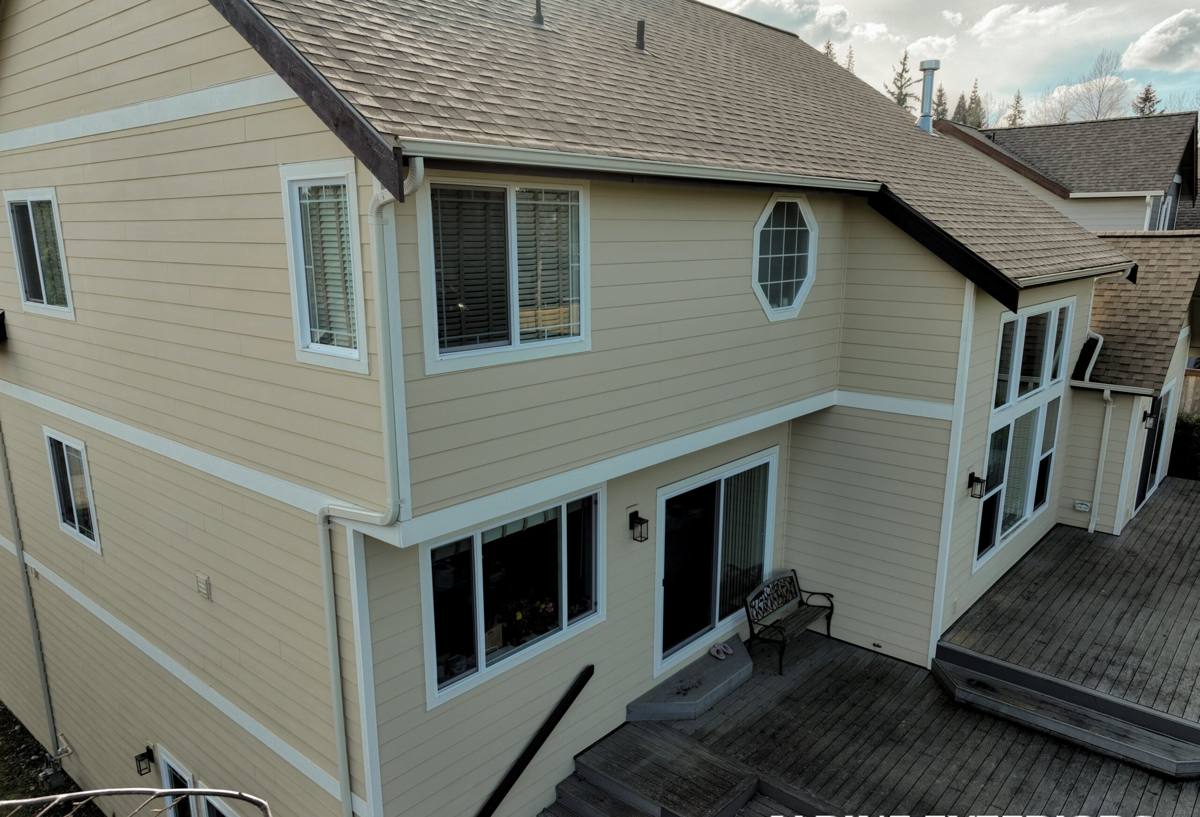
What King County's Climate Does to Windows Over Time
Seattle's weather is often described as mild, and in a lot of ways it is — but "mild" doesn't mean gentle on building materials. A few things stack up against windows here, especially on an exposed hill like Queen Anne:
Driving Rain
Our rain isn't usually heavy, but it's frequent and it often comes in sideways during winter storms. Wind-driven rain finds any weak point in a window's seal — a cracked bead of caulk, a gap in the flashing, a sash that's warped just enough to not close tight — and it will exploit that weak point for months at a time, not just during one storm.
Long Moss and Mildew Season
Between the rain and our extended stretches of overcast, damp weather, moss and mildew get a long runway to establish themselves on window sills, frames, and the wood trim around older windows. Once moss takes hold on painted wood trim, it holds moisture against the surface and accelerates rot underneath — often before it's visible from the ground.
Salt Air and Wind Exposure
Queen Anne's elevation and proximity to Puget Sound mean homes here catch salt-laden air and wind that inland Seattle neighborhoods don't deal with as much. Over years, that combination degrades exterior hardware, seals, and finishes faster than a sheltered lot would see.
None of this means Queen Anne homes fall apart faster than average — it means the windows and the installation details around them have to be built for these specific conditions, not generic ones.
Signs a Queen Anne Home's Windows Need Replacing
- Visible gaps between the sash and frame, or a window that won't stay latched
- Fogging or moisture between panes on double-glazed units — a sign the seal has failed
- Soft, spongy, or discolored wood at the sill or lower frame corners
- Moss or dark staining building up on the frame or trim year after year, even after cleaning
- Noticeable draft or cold spot near the window even with it fully closed
- Paint that keeps bubbling or peeling on the frame regardless of how often it's repainted
- Difficulty opening or closing, especially on older wood double-hung windows
- A visible increase in condensation on interior glass during cold, wet stretches
If a window is showing one or two of these signs, it might be a repair. If it's showing several, replacement is usually the more honest recommendation — patching a window that's already failing in multiple ways just moves the same problem down the road a year or two.
What a Correct Window Replacement Job Actually Involves
The window unit itself gets most of the attention, but on an exposed hill like Queen Anne, the installation details are what determine whether the job holds up through ten Seattle winters or starts failing again in three.
Removal and Inspection
Before anything new goes in, we pull the old window and check the surrounding framing for rot or water damage. On older homes, this step often reveals problems that weren't visible from outside — and it's much cheaper to catch and fix that damage now than after a new window is sealed over it.
Flashing and Moisture Barrier
This is the step that gets skipped most often on rushed jobs, and it's the one that matters most in a climate like ours. Proper flashing directs any water that gets behind the siding back out, away from the framing, instead of letting it pool and soak in. Given how much wind-driven rain a Queen Anne exterior wall can see in a given winter, this isn't optional detail work — it's the difference between a window that lasts and one that causes a rot problem five years from now.
Air Sealing and Insulation
Gaps around the window frame get properly sealed and insulated, not just caulked on the surface. This affects both moisture control and how much the window costs you in heating during our long damp winters.
Trim and Finish Work
On older homes especially, matching the existing trim profile matters for keeping the house's character intact — a mismatched or sloppy trim job stands out on a Craftsman or Victorian in a way it wouldn't on a newer build.
Choosing the Right Window Type for an Exposed Hill Location
There's no single "best" window material — the right choice depends on the home's age, your budget, and how exposed the specific wall is. Here's how the common options generally compare for a wind- and rain-exposed location like Queen Anne:
| Material | Moisture Resistance | Maintenance | Best Fit |
|---|---|---|---|
| Vinyl | Good — won't rot, but seals can degrade with age and UV exposure | Low | Budget-conscious replacements, rear or side elevations |
| Fiberglass | Very good — stable in wide temperature and moisture swings | Low | Exposed walls that take direct wind and rain |
| Wood (clad exterior) | Good on the exterior face, but interior wood still needs upkeep | Moderate to high | Historic-character homes where matching original trim matters |
| Aluminum | Poor thermal performance, prone to condensation in our damp winters | Low | Rarely our first recommendation for this climate |
For most Queen Anne homes we work on, fiberglass or vinyl with a solid installation detail package outperforms what a cheaper aluminum-frame window can offer, especially on walls that take the brunt of storms coming off the Sound. For homes where preserving original Craftsman or Victorian character is a priority, a clad-wood option can be worth the added maintenance — but that's a conversation about your specific home and budget, not a one-size-fits-all answer.
Our Window Replacement Process
- Site visit and assessment — we look at each window individually, not just the house as a whole, since sun exposure and wind exposure often vary wall to wall on a hillside lot.
- Honest recommendation — repair versus replace, and which windows can wait versus which need attention now.
- Measurement and material selection — sized for the actual opening, not a generic stock size, especially important on older homes with non-standard framing.
- Removal, inspection, and any needed framing repair — done before the new unit goes in, not covered up.
- Installation with proper flashing, air sealing, and trim work — the details that determine how the window performs in our weather, not just how it looks on install day.
- Final walkthrough — checking operation, seal, and finish before we consider the job done.
What Window Replacement Typically Costs, and What Drives the Price
| Factor | Why It Matters |
|---|---|
| Number of windows | Whole-house projects typically cost less per window than one-off replacements |
| Window material | Vinyl generally costs less upfront than fiberglass or clad-wood options |
| Existing damage | Rot or framing repair found during removal adds labor and material cost |
| Access and elevation | Upper-floor or hard-to-access windows on a hillside home take more time to install safely |
| Trim and finish complexity | Matching historic trim profiles on older homes takes more skilled labor than standard trim |
We don't publish a flat price list because these variables genuinely change the cost from house to house — but we'll always walk you through what's driving your specific estimate before any work starts, so there are no surprises.
Why It Matters to Hire a Crew That Already Works Queen Anne
Window replacement is a trade that rewards local, repeat experience. A crew that's worked a lot of houses on Queen Anne Hill has already seen how wind-driven rain behaves against these specific wall exposures, knows what kind of rot patterns tend to show up in homes of this age, and has a feel for how to match trim on the Craftsman and Victorian houses that make up so much of the neighborhood. That's not something you get from a crew that mostly works flatter, more sheltered parts of the city. We also understand that a hillside job site — parking, access, protecting your yard and neighbors' property during the work — takes a level of planning that a generic job doesn't.
Before You Hire, a Quick Checklist
- Ask what flashing and moisture-barrier approach they use — not just what window brand
- Ask if they inspect and repair framing before installing, or install over existing damage
- Get a clear answer on how they handle trim matching on older homes
- Confirm licensing and insurance, and ask for references from work on similar-age homes
- Get the warranty terms in writing — both on the window and on the installation labor
Get a Straightforward Estimate
If your windows on Queen Anne Hill are showing their age — drafts, sticking sashes, moss buildup, or fogged glass — it's worth getting an honest look before another wet Seattle winter puts more stress on them. We'll walk your home, tell you plainly what's repair and what's replacement, and put together an estimate with no pressure attached. Use the form below to get started.