 Seattle
 Storm Damage Roofing in Magnolia: What Makes This Neighborhood Different
Magnolia sits on a bluff surrounded on three sides by water — Puget Sound to the west, Elliott Bay and the Ship Canal to the east and north. That position gives the neighborhood some of the best views in Seattle, and it also means Magnolia roofs take a different kind of beating than roofs a few miles inland in, say, Ballard or Wallingford. Homes up on the bluff catch wind gusts coming straight off the Sound with nothing to slow them down. Homes lower down near Smith Cove or the Magnolia Village flats deal with more standing moisture and slower drainage after a heavy blow. Both situations lead to the same call to us: something happened during a storm, and now there's a soft spot, a leak, or missing shingles that need to be dealt with before the next system rolls through.
We've been working on roofs across Seattle and King County long enough to know that "storm damage" here rarely looks like the dramatic wind-torn roofs you see in national news footage. It's usually quieter than that — a ridge cap that lifted in a gust, a section of flashing that worked loose, a tree limb that came down on a slope, or water finding its way in through a spot that was already weakened by months of moss growth. Catching and fixing that kind of damage correctly, the first time, is what this page is about.
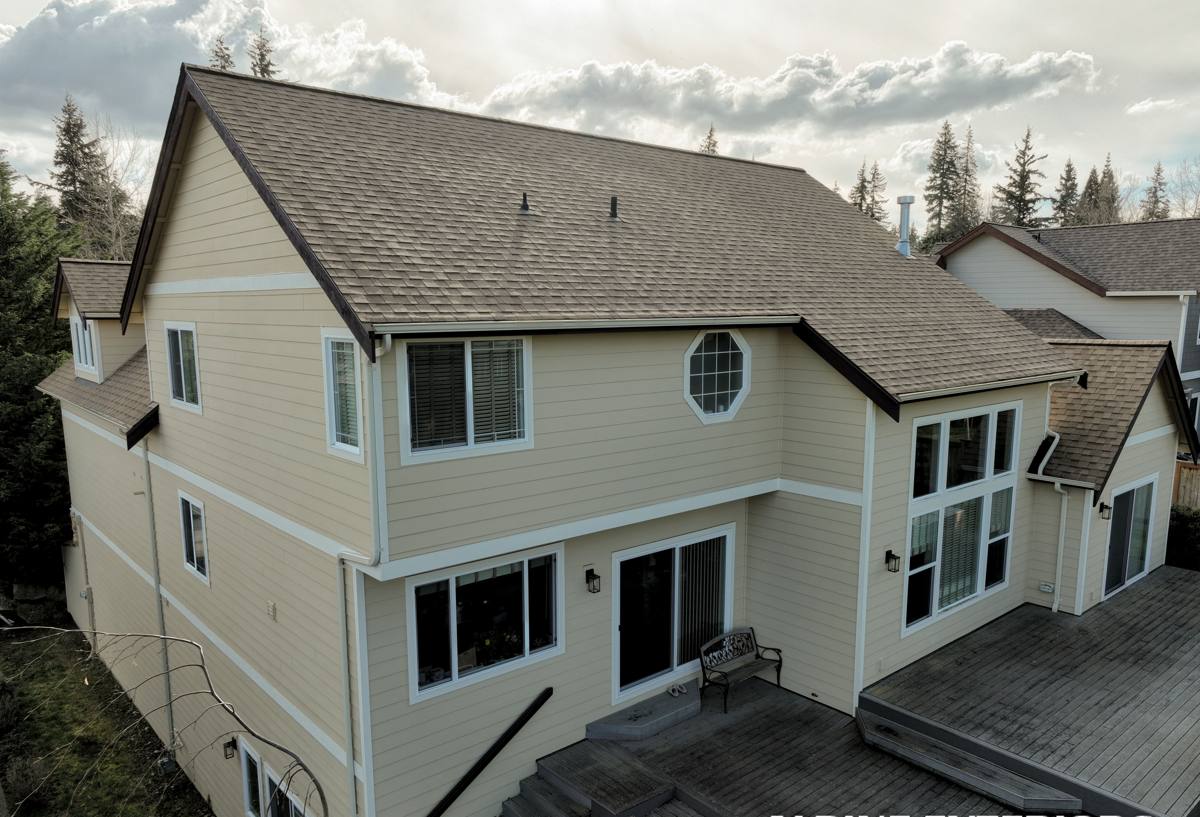
How Seattle's Climate Sets Up Storm Damage in Magnolia
Three things in particular do the damage here, and they compound each other:
Salt Air and Wind Off the Sound
Magnolia's exposure to Puget Sound means roofs absorb more salt-laden air than most Seattle neighborhoods. Salt air accelerates corrosion on exposed metal — flashing, fasteners, gutter hardware, vent caps — which is exactly the hardware a storm needs to find a weak point and exploit. A fastener that's lost some of its holding strength to corrosion is a lot more likely to back out or fail under a wind gust than one on a roof further from the water.
Driving Rain
Seattle storms rarely bring the kind of straight-down rain that a roof is designed to shed easily. More often it's driving rain pushed sideways by wind, which tests every lap, seam, and flashing detail on the roof rather than just the open field of shingles. Driving rain finds problems that vertical rain never would — a slightly under-lapped shingle course, a step flashing that's a half-inch short, a valley that wasn't sealed quite right. After a storm event, these are exactly the spots we check first.
A Long Moss Season
Western Washington's mild, wet fall-through-spring stretch is close to ideal growing conditions for moss, and Magnolia's tree cover and marine humidity don't help. Moss holds moisture against the roof surface year-round, which softens shingles, degrades their granule coating, and lifts edges over time — all of which makes an otherwise sound roof much more vulnerable when a storm actually hits. A lot of what we find after a windstorm in Magnolia isn't damage that started with the storm at all; it's moss-weakened material that the storm was simply the final straw for.
What Correct Storm Damage Repair Actually Involves
A rushed storm repair is one of the most common ways homeowners end up paying for the same problem twice. Doing it right means treating the storm as an opportunity to check the whole roof, not just patch the obvious spot.
1. A Full Roof Assessment, Not Just a Patch
We walk the whole roof, not just the area where the leak showed up inside the house. Wind and water damage often shows up in one place while the actual entry point is somewhere else — a lifted shingle three feet upslope, a flashing detail at a chimney or dormer, a clogged valley backing water up under the field. A repair that only addresses the visible symptom leaves the real cause in place for the next storm.
2. Matching Materials and Techniques to What's Already There
Repairs need to match the existing roofing system in material, weight, and installation method — not just color. A patch that doesn't shed water the same way the surrounding roof does becomes its own weak point. This matters more on older Magnolia homes where the original roofing may no longer be a current product line, which sometimes means a slightly larger repair area to get a clean, water-tight transition.
3. Checking Flashing and Fasteners, Not Just Shingles
Given the salt air exposure here, we specifically check flashing and exposed fasteners for corrosion during storm repairs, even in areas that look fine at a glance. Corroded metal that survived this storm is a good candidate to fail in the next one.
4. Documentation for Insurance
If the damage may be covered by a homeowner's insurance policy, we document conditions with photos and a written scope before any repair work starts, so there's a clear record of what the storm caused versus pre-existing wear. We're happy to work alongside your adjuster, but we work for you, not the insurance company.
Our Process for a Magnolia Storm Call
- Initial contact and triage: We ask what you're seeing — active leak, missing material, visible damage — and prioritize active leaks and safety issues first.
- On-site inspection: A crew member walks the roof and the attic/interior where accessible, checking the storm-affected area and the roof as a whole.
- Written scope and estimate: You get a clear explanation of what's damaged, what needs to happen, and an honest cost range before any work begins.
- Temporary protection if needed: If there's an active leak and full repair can't happen immediately, we can install temporary weatherproofing to stop further interior damage.
- Repair: Matched materials, proper flashing and fastening technique, and attention to the details driving rain will test.
- Final walkthrough: We show you what was done and what to watch for going forward.
Why a Crew That Already Works Magnolia Matters
Storm damage repair isn't a specialty product — it's a judgment call about what's actually wrong and what a durable fix looks like on the roof in front of you. A crew that already works in Magnolia has seen how the bluff-top wind exposure differs from the lower, more sheltered lots, knows which flashing details tend to be original-builder shortcuts versus later repairs, and isn't guessing at how salt air and moss have been quietly working on a roof for years before a storm ever hit it. That local pattern recognition is the difference between a repair that holds and one that reopens with the next weather system.
It also matters for response time. After a King County storm event, roofing crews get busy fast, and homeowners with active leaks need someone who can prioritize a genuine emergency over a routine estimate. Being established in the neighborhood means we're not learning the area for the first time while your ceiling is taking on water.
Cost Factors for Storm Damage Roof Repair
Every storm repair is different, but the cost generally comes down to a handful of factors. This table gives you a general sense of what drives price up or down — not a quote, since that requires seeing the actual roof.
| Factor | Lower Cost | Higher Cost |
|---|---|---|
| Extent of damage | Isolated area, a few shingles or one flashing detail | Multiple areas or a full slope affected |
| Roof access | Simple, low-pitch, easy ladder access | Steep pitch, multiple stories, limited access |
| Material match | Current, readily available roofing product | Older or discontinued material requiring wider tear-back |
| Underlying condition | Roof otherwise sound and well-maintained | Moss-weakened or aged roofing needing more than a patch |
| Flashing/metal work | Flashing intact, just re-securing needed | Corroded or damaged flashing requiring replacement |
| Water intrusion | Caught early, no interior damage | Interior damage requiring drywall, insulation, or structural repair |
Signs Your Magnolia Roof May Have Storm Damage
After any significant wind or rain event, it's worth a quick visual check — from the ground, not on a ladder — for these warning signs:
- Shingles or shakes visible in the yard or gutters after a storm
- Lifted, curled, or missing shingles visible from the ground or a neighboring vantage point
- New or worsening water stains on ceilings or upper interior walls
- Granules collecting in gutters or downspout runoff, more than usual
- Visible gaps or misalignment in flashing around chimneys, vents, or skylights
- A sagging or uneven roofline in any section
- Daylight visible through the roof deck from inside the attic
- Sudden increase in moss or dark streaking concentrated in one area, which can indicate a spot where water is now sitting rather than shedding
If you see any of these, especially an active leak, it's worth having it looked at promptly. Storm damage that sits through another rain event tends to get more expensive to fix, not less.
What We Won't Do
We won't sell a full roof replacement off a storm call that only needs a targeted repair, and we won't patch over a roof that's genuinely past its service life just to get through one more storm season. Both calls require an honest look at the actual condition of the roof, which is what our estimate is for. If a full re-roof does make more sense — because the storm damage exposed a roof that was already near the end of its useful life — we'll explain exactly why, in plain terms, before you decide anything.
If you've got storm damage on a Magnolia home — an active leak, missing shingles, or just something that doesn't look right after the last blow off the Sound — we're glad to come take a look. The estimate is free, there's no pressure to move forward, and you'll get a straight answer about what's actually going on with your roof.