 Seattle
 Queen Anne Hill Puts Real Demands on a House's Exterior
Queen Anne sits high above the rest of Seattle, and that elevation is a double-edged sword. The views are part of what makes the neighborhood desirable, but the same exposure that opens up those views also opens up the siding to weather that lower, more sheltered parts of King County don't deal with as often. Wind off Puget Sound reaches the hill with less to slow it down, rain arrives sideways more often than straight down, and the older tree canopy on many streets keeps north- and east-facing walls shaded and damp for long stretches of the year. None of that is a reason to panic about your siding — it's just a reason to take the material choice and the installation details seriously.
We install siding on homes across Seattle and King County, and Queen Anne is one of the areas where we see the clearest gap between a siding job that was done to spec and one that wasn't. The houses that are still holding up well after a decade or two almost always have two things in common: a fiber cement product built for this climate, and an installer who paid attention to water management, not just appearance.
What Queen Anne's Climate Actually Does to Siding
Salt Air and Wind Exposure
Homes with west- and north-facing exposure toward the water pick up salt-laden air carried inland off the Sound. Over years, that salt content accelerates corrosion on exposed metal fasteners and trim, and it speeds up the breakdown of finishes that aren't formulated to resist it. It's a slower process than what you'd see on a coastal home right at the waterline, but Queen Anne's elevation and exposure make it more of a factor than most inland Seattle neighborhoods experience.
Driving Rain and Wind-Driven Moisture
Seattle doesn't get the heaviest rainfall totals in the country, but King County's rain tends to come with wind behind it, and wind-driven rain behaves very differently than a straight downpour. It gets pushed up under laps, into seams, and behind trim that wasn't flashed correctly. A siding system that only holds up in calm, vertical rain will show problems on an exposed Queen Anne wall faster than it would somewhere more sheltered.
Moss, Shade, and a Long Damp Season
Between the tree cover on many Queen Anne blocks and our long stretch of overcast, cool months, north-facing and shaded walls can stay damp for weeks at a time. That's exactly the environment moss and mildew need to take hold. On the wrong siding material, that moisture sits on the surface and works its way into seams and fastener holes. On the wrong installation, it gets trapped behind the siding entirely, where you can't see it until the damage is already done.
Common Siding Problems We Find on Queen Anne Homes
When we're called out to look at failing siding in the neighborhood, the issues tend to fall into a short list of repeat offenders:
- Moss and algae staining concentrated on shaded, north- or east-facing walls
- Soft or delaminating wood siding near ground level, decks, and downspouts where moisture collects
- Cupped, warped, or buckled panels on wind-exposed elevations facing the water
- Rust streaking below fasteners or trim on older installations
- Caulk failure and gapping at butt joints and trim, letting wind-driven rain behind the cladding
- Paint or finish failure well ahead of the manufacturer's expected repaint interval
Almost none of these are "bad luck." They're the predictable result of a material or an installation detail that wasn't matched to what this specific hillside climate does to a house.
What a Correct Siding Installation Actually Involves
Siding looks simple from the curb, but the parts that determine whether it lasts 10 years or 40 are the parts you can't see once the job is finished.
Water-Resistive Barrier and Drainage Plane
Every wall gets a continuous weather-resistive barrier underneath the siding, lapped correctly from bottom to top so water is always directed outward and down, never trapped behind the cladding. On a wind-exposed Queen Anne wall, a barrier with a gap, a reverse lap, or a poorly sealed penetration is where moisture problems start, even if the siding itself is a good product.
Flashing at Every Transition
Windows, doors, deck ledgers, roof-to-wall intersections, and any place where two different materials meet all need proper flashing, not just caulk. Caulk is a maintenance item that degrades over years of UV and moisture cycling; flashing is a physical barrier that doesn't rely on staying perfectly intact to keep water out. This is one of the most common shortcuts we find on older or lower-bid installations.
Fastening, Clearances, and Ventilation
Fiber cement siding has manufacturer-specified nailing patterns, fastener types, and clearances from grade, roofing, and decking that exist specifically to keep the bottom edge of the siding from sitting in standing moisture. A rainscreen gap behind the siding gives any moisture that does get past the surface a way to drain and dry out instead of sitting against the wall sheathing. Skipping or shortcutting these details is invisible on installation day and expensive five years later.
Why We Install James Hardie Fiber Cement — And Nothing Else
We made a deliberate decision to install James Hardie fiber cement siding exclusively. We don't install vinyl, LP SmartSide, primed wood, or cedar, and on a hill like Queen Anne — with real wind, real salt air, and real moss pressure — that decision matters more than it might in a more sheltered part of the county.
| Material | How It Handles Wind-Driven Rain | How It Handles Moss/Shade | Long-Term Maintenance |
|---|---|---|---|
| James Hardie fiber cement | Engineered HZ product lines and factory-applied ColorPlus finish built for Pacific Northwest exposure | Non-combustible, moisture- and rot-resistant core; doesn't feed mold the way organic materials can | Low; finish is warrantied against fading and peeling |
| Vinyl | Can warp, buckle, or blow off in sustained wind exposure | Doesn't rot, but moss and algae still stain the surface and seams can trap moisture behind it | Low cost but limited lifespan on exposed elevations |
| LP SmartSide (engineered wood) | Wood-based core is vulnerable if water gets past the finish at cuts or joints | Prone to moisture absorption in prolonged damp, shaded conditions | Moderate; finish and joints need ongoing attention |
| Cedar / primed spruce | Natural wood movement and joint gaps under wind-driven rain | Organic material is a food source for moss, mildew, and rot in shaded, damp conditions | High; regular refinishing and moisture monitoring required |
We're not saying every other product fails on every house — plenty of homes carry these materials without disaster. What we're saying is that after years of doing this work in Seattle's specific weather, we decided the maintenance burden, moisture sensitivity, and installation forgiveness of the alternatives weren't worth putting our name on. Hardie's fiber cement composition doesn't rot or feed mold, its factory-baked ColorPlus finish is built to hold color and resist the fading and peeling that UV and moisture cycling cause, and the HZ5 product line specifically is engineered for climates like ours. It's also backed by a strong transferable warranty, which matters if you ever sell the house.
Our Installation Process
- On-site assessment — we walk the exterior, check existing siding and sheathing condition, note wind exposure by elevation, and identify any moisture damage that needs to be addressed before new siding goes on.
- Product and profile selection — we help you choose the Hardie plank width, panel style, and ColorPlus color that fits the home's architecture and your preferences.
- Tear-off and substrate repair — old siding comes off, and any soft or damaged sheathing is repaired before anything new is installed. Covering over hidden rot is how small problems become expensive ones.
- Weather-resistive barrier and flashing — installed and lapped to manufacturer and code specification at every seam, window, door, and penetration.
- Siding installation — fastened per James Hardie's specifications for nailing pattern, clearance, and fastener type, with attention to the details that are easy to skip and hard to inspect later.
- Final walkthrough — we go over the finished work with you before we consider the job done.
Matching Siding to Queen Anne's Architectural Character
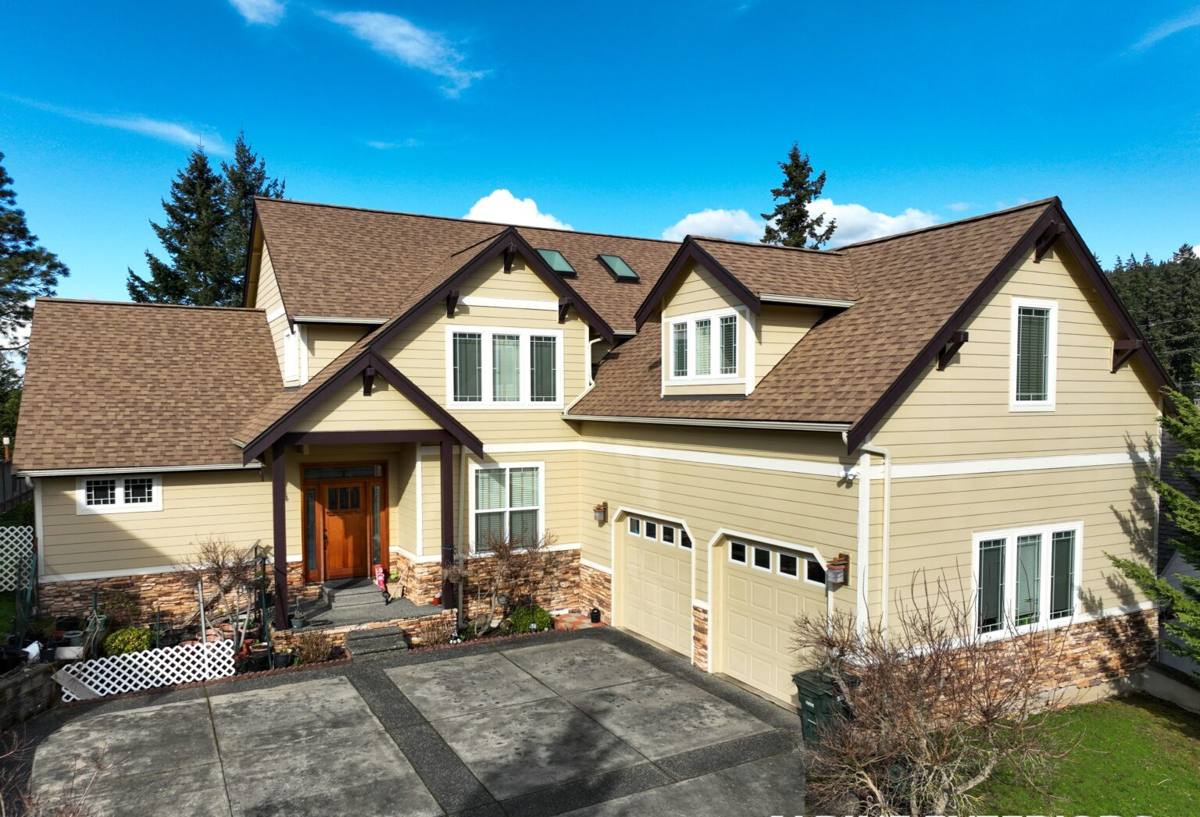
Queen Anne's housing stock spans a wide range — Craftsman bungalows, older character homes from the neighborhood's early development, and newer construction mixed in on the same blocks, many taking advantage of the hill's views. James Hardie's lap siding, board-and-batten, and shingle-style panels cover that range without forcing a home into a style that doesn't fit it. Because the ColorPlus finish is factory-applied and consistent, it also holds up well on homes where the exterior is highly visible from the street or from neighboring properties looking across the hill — a common situation on Queen Anne's slopes.
What Siding Installation Costs Depend On
We're not going to quote a number here that would be meaningless without seeing your house — every project depends on the home's size, current condition, and access. But these are the factors that actually move the price on a Queen Anne job:
| Cost Factor | Why It Matters |
|---|---|
| Home size and wall complexity | More square footage and more corners, gables, and trim details mean more labor and material |
| Existing siding removal and disposal | Tear-off adds labor, especially with multiple layers of old material |
| Sheathing or framing repair | Hidden moisture damage found during tear-off has to be fixed before new siding goes on |
| Site access | Steep lots, narrow side yards, and limited street parking common on the hill can affect staging and labor time |
| Siding profile and trim detail | Board-and-batten, shingle-style accents, and custom trim take more time than straight lap siding |
| Color and finish choice | Factory ColorPlus finishes vs. field-applied paint affect both cost and long-term maintenance |
Why Hiring a Crew That Knows Queen Anne Matters
A lot of what separates a siding job that lasts from one that doesn't comes down to details a homeowner can't easily check themselves — flashing under the surface, fastener placement, drainage behind the panels. That's exactly why the installer's experience with this specific hill matters. A crew that's worked Queen Anne's steep streets, tight lots, and mature tree canopy knows to plan for limited staging space and difficult access before the job starts, not partway through it. They also know which elevations on a given block tend to take the worst of the wind and rain, and which walls are going to sit in shade and moisture long enough to grow moss if the material and installation aren't right. That's judgment that only comes from doing the work here repeatedly, not from a general contractor working the whole region without a feel for any one neighborhood.
Before you hire anyone for a siding project on the hill, it's worth asking a few direct questions:
- Do you install James Hardie fiber cement, and are your installers factory-trained on it?
- What weather-resistive barrier and flashing details will you use at windows, doors, and roof-to-wall transitions?
- Will you inspect and repair sheathing if you find moisture damage during tear-off, and how is that priced?
- What's your plan for site access and material staging given the lot's slope and street parking?
- What warranty applies to the product, the finish, and your labor, and is it transferable if I sell the home?
A contractor who answers those clearly and specifically, without dodging into vague reassurances, is one worth taking seriously.
If your Queen Anne home's siding is showing moss staining, warping, soft spots, or a finish that's fading well ahead of schedule, we're happy to take a look. We offer free, no-pressure estimates — walk us through what you're seeing, and we'll give you a straight assessment of what your siding needs and what correct James Hardie installation would involve for your home.