 Seattle
 Building a Deck That Actually Holds Up in Queen Anne
Queen Anne sits high above the rest of Seattle, which is part of why people love it — the views over Elliott Bay and Puget Sound, the breeze, the older homes with real character. It's also exactly why decks up here take more of a beating than a deck in a sheltered, low-lying part of King County. Elevation means more wind-driven rain hitting the structure sideways instead of straight down. Proximity to Puget Sound means a faint but constant load of salt air working on fasteners and metal connectors year-round. And the long stretch of wet, mild months that define a Seattle winter and spring gives moss and algae months to take hold on anything horizontal that doesn't drain and dry properly.
None of that means a deck can't last decades in this neighborhood. It means the build has to account for those conditions from the framing up, not just the decking boards on top. A deck that looks identical to one built in a drier inland suburb can perform very differently after five or six Puget Sound winters if the underlying details weren't done with this climate in mind.
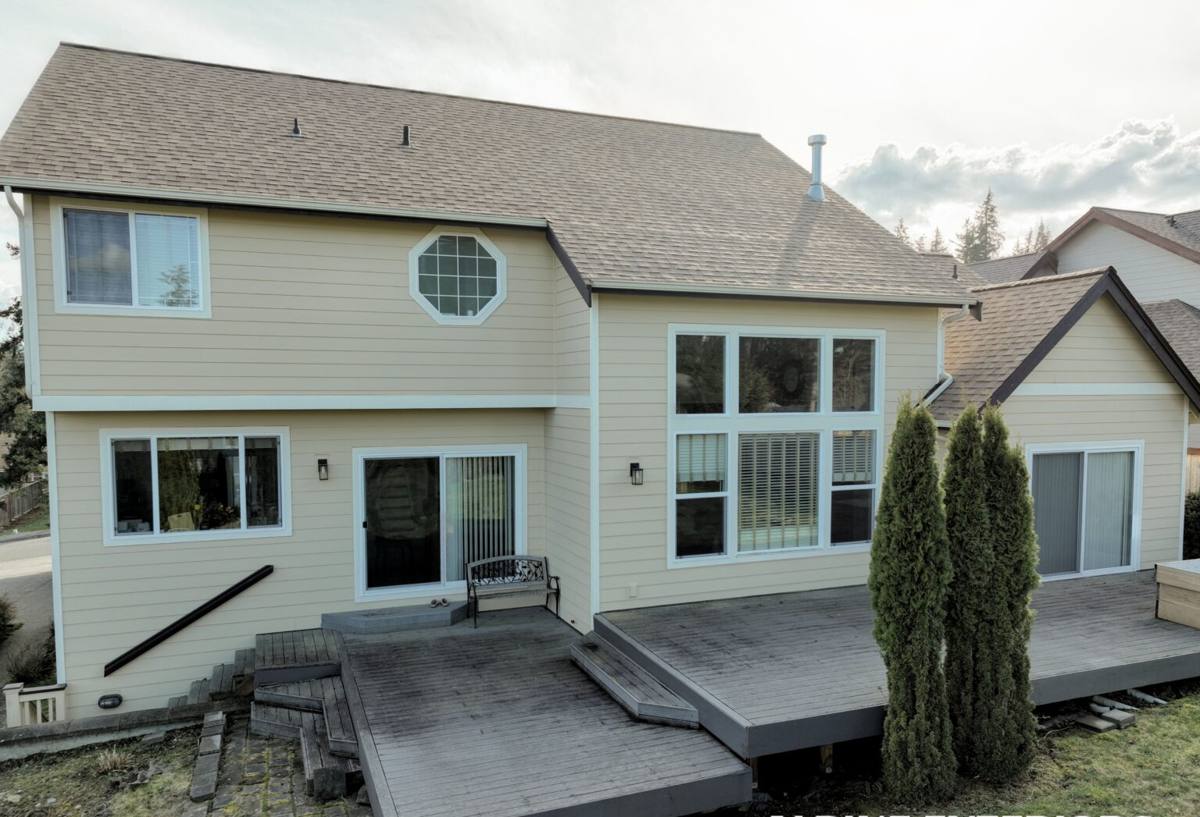
What Queen Anne's Climate Actually Does to a Deck
Driving rain and wind exposure
Because much of Queen Anne is elevated and open to wind off the water, rain doesn't just fall on a deck — it gets pushed under railings, into ledger connections, and behind fascia boards. Flashing details that would be "good enough" in a wind-sheltered yard need to be tighter here.
Salt air and hardware corrosion
Salt air doesn't have to come from directly on the water to matter. Homes with a view toward the Sound get a steady, low-level dose of salt-laden air that accelerates corrosion on any fastener, bracket, or ledger bolt that isn't rated for it. Standard interior-grade hardware corrodes faster here than most homeowners expect.
Moss and algae season
Seattle's moss season isn't a short window — it's essentially fall through spring. Any deck surface that stays damp longer than it should, whether from poor drainage, tight board spacing, or shade from trees and the house itself, will grow moss and algae. Beyond looking bad, a mossy deck surface gets genuinely slippery and holds moisture against the boards, which shortens the life of the material underneath.
What a Correctly Built Deck Involves Here
A deck built for Queen Anne's conditions isn't a different design so much as a more disciplined execution of the same basic structure. The parts that matter most:
- Ledger flashing that fully sheds water away from the house wall, not just a bead of caulk behind the board
- Joist tape or a comparable membrane on top of every joist so end grain and fastener holes aren't absorbing rainwater directly
- Corrosion-resistant fasteners and connectors rated for the coastal-adjacent exposure Queen Anne gets, not generic hardware
- Proper board spacing and slope so water actually leaves the surface instead of sitting on it
- Ventilated framing underneath, especially on lower decks close to grade, so the structure can dry out between storms
Skip any one of these and the deck can still look fine for a year or two — the problems that show up from driving rain and salt air are almost always slow ones. By the time a homeowner notices soft decking near the ledger or rust bleeding through a board, the damage has usually been building for a while.
Choosing a Decking Material for This Climate
There's no single "right" material for every Queen Anne home — it depends on budget, how much upkeep you want to do, and how exposed the deck is to sun, rain, and shade. Here's how the common options actually perform under Seattle's wet, moss-prone conditions:
| Material | How it handles rain & moss here | Maintenance | General lifespan |
|---|---|---|---|
| Pressure-treated wood | Absorbs moisture; needs a clear path to dry or it stays damp and grows moss/algae in shaded spots | Annual cleaning and re-sealing/staining | 10–15 years with upkeep |
| Cedar | Naturally rot-resistant but still absorbs water; looks best with regular care in a wet climate | Cleaning plus periodic oiling or sealing | 15–20 years with upkeep |
| Capped composite | Doesn't absorb water like wood; still needs airflow underneath and periodic washing to keep surface algae from taking hold | Occasional washing, no staining/sealing | 25+ years typical |
| PVC decking | Fully moisture-resistant board, performs well in wet PNW conditions; can be slicker when wet without a textured surface | Occasional washing | 25+ years typical |
Composite and PVC boards cost more upfront but remove the annual staining/sealing cycle that wood demands — a real consideration for a deck that's wet for a large part of the year. Wood still has a place, especially where a homeowner wants a specific look and is willing to keep up with maintenance.
Framing, Footings, and Queen Anne's Terrain
A lot of Queen Anne lots slope, sometimes steeply, and many homes are older with foundations and grade conditions that don't match what's on a new-construction plan set. That matters for a deck build in a few concrete ways:
- Footings often need to be set deeper or in a different pattern than a flat-lot deck to properly bear on sloped or variable soil
- Post heights and beam spans change quickly on a slope, which affects both structural design and permit drawings
- Drainage at the base of the deck has to be planned so runoff isn't directed back at the foundation, a bigger risk on a hillside lot in a high-rainfall area
- Access for equipment and materials can be tighter on older Queen Anne lots, which affects how footings and framing get built
None of this is exotic, but it's exactly the kind of detail that gets missed by a crew that mostly builds on flat, easy lots elsewhere in the county.
Our Process
1. On-site assessment
We look at slope, drainage paths, sun/shade exposure, and how the deck ties into the house before we talk materials. What works for a shaded, view-side deck is often different from what works on a sunnier side of the same house.
2. Design and permitting
Seattle and King County have permit requirements for most deck work, particularly anything attached to the structure or above a certain height. We handle the drawings and permit process so the deck is built to code, not just to "looks fine."
3. Framing and flashing first
We treat the structural and moisture-management work — ledger flashing, joist protection, fasteners, footings — as the part of the job that determines how the deck ages. The decking boards go down last, on top of a substructure built to actually shed water.
4. Final walkthrough
Before we call it done, we walk the deck with the homeowner, check drainage under real conditions where possible, and go over what maintenance (if any) the chosen material needs going forward.
Keeping a Queen Anne Deck Ahead of Moss Season
Even a well-built deck benefits from a little seasonal attention in a climate like this. A simple yearly routine goes a long way toward keeping moss and algae from taking hold:
- Sweep leaves and debris off the deck regularly in fall — trapped organic matter is what moss needs to get started
- Rinse or wash the surface at least once before winter and again in spring to remove early algae growth
- Check that gaps between boards are clear so water keeps draining through, not sitting on top
- Look underneath periodically for standing water or blocked airflow, especially on lower decks close to grade
- For wood decks, plan on re-sealing or staining on the schedule the product calls for — skipping a year in this climate shows up fast
Why Local Experience on Queen Anne Specifically Matters
A deck contractor who mostly works flatter, more sheltered parts of the Seattle area can still build a technically sound deck — but they're solving problems from scratch that a crew already familiar with Queen Anne has seen many times: sloped lots, older home tie-ins, tighter access, wind exposure near the top of the hill, and the permit realities of building in this part of the city. That experience shows up in fewer surprises during the build and a deck that's designed for the specific way rain, wind, and moss behave on this particular hill, not a generic version of "Seattle weather."
If you're weighing a new custom deck or replacing one that hasn't held up, we're happy to take a look and talk through what makes sense for your home and your lot. Reach out for a free, no-pressure estimate using the form below.