 Seattle
 Why Magnolia Puts Windows Through More Than Most Seattle Neighborhoods
Magnolia sits out on its own peninsula, with water on three sides and some of the most exposed bluff-top lots in Seattle. That location is part of what makes the neighborhood beautiful, and it's also exactly why windows here take more abuse than windows a few miles inland. Salt-laden air off Puget Sound works its way into aluminum tracks and steel hardware year-round. Wind-driven rain off the water doesn't just fall on a window — it gets pushed sideways into the frame and sill under pressure, which is a very different test than a straight-down drizzle. And King County's long, damp shoulder seasons feed a moss and algae cycle that most drier climates never deal with.
None of that means Magnolia homes need exotic products. It means the replacement has to be specified and installed with those specific stresses in mind — the right frame material, the right flashing detail, and a crew that has actually dealt with a bluff-facing wall in a January windstorm, not just a catalog spec sheet.
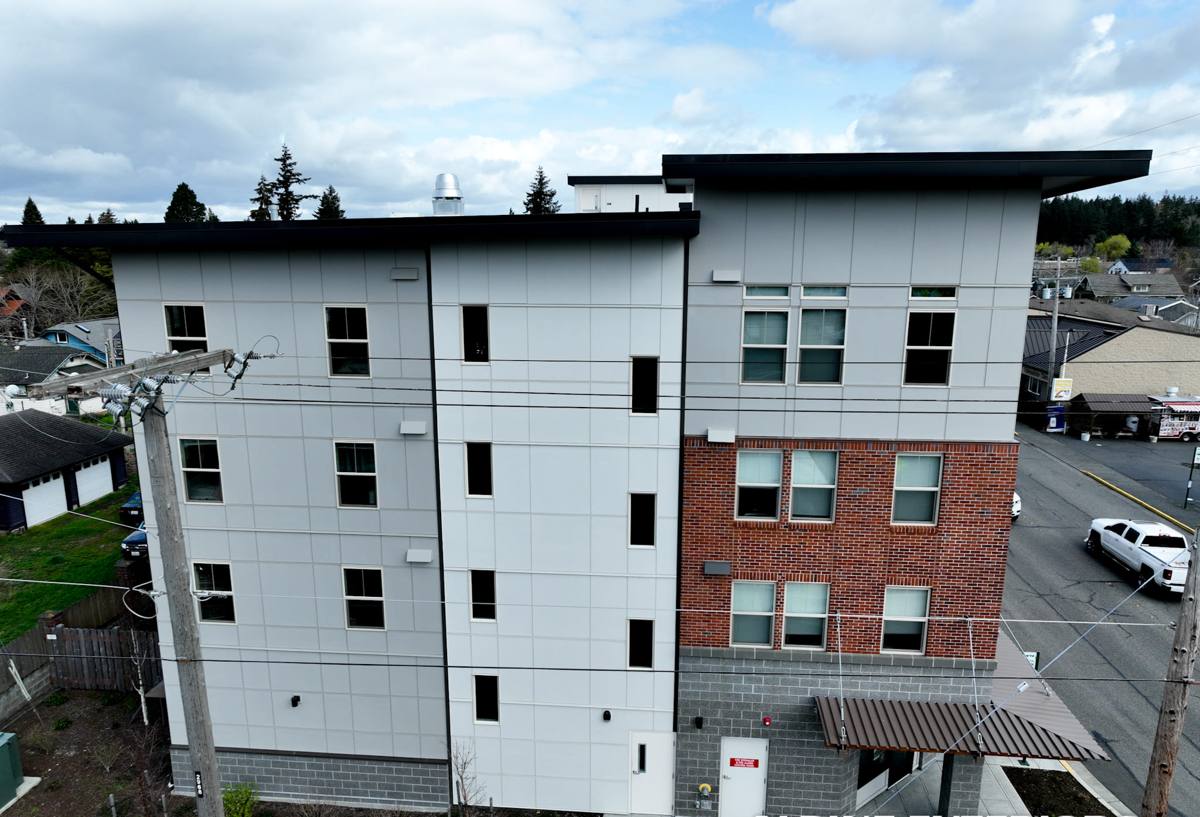
What Salt Air, Driving Rain, and Moss Actually Do to a Window
Salt Air
Airborne salt is corrosive to unprotected metal. On windows closer to the water, it accelerates pitting and corrosion in aluminum frames, hinges, cranks, and balance hardware. Once hardware starts to bind or corrode, homeowners often force operable windows, which stresses the seals and shortens the life of the whole unit.
Wind-Driven Rain
A window can be perfectly watertight in a calm rain and still leak in a Puget Sound windstorm, because horizontal wind pressure forces water into gaps that gravity alone would never find. This is a bigger factor on exposed west- and south-facing walls, upper stories, and anything without much roof overhang for protection — common conditions on Magnolia's elevated lots.
Moss and Trapped Moisture
Seattle's long wet season gives moss and algae months to establish themselves on sills, in corners, and anywhere water sits instead of draining. Beyond the cosmetic issue, trapped organic growth holds moisture against wood trim and sheathing, which is one of the more common paths to hidden rot around older window openings.
Signs a Magnolia Home Is Due for Window Replacement
- Visible fog or moisture between panes — a failed seal on a double- or triple-pane unit
- Windows that are hard to open, close, or lock, especially after damp weather
- Soft, discolored, or spongy trim or sill wood around the frame
- Persistent moss, black staining, or algae that returns within weeks of cleaning
- Drafts or a noticeable temperature difference near the window on windy days
- Condensation forming on the inside of the glass regularly, even with normal ventilation
- Rising heating bills with no other clear cause
- Visible daylight or gaps around the frame from outside
One or two of these on their own might just mean a repair. Several together, especially on a wall that faces the water or catches prevailing wind, usually means the unit has reached the end of what caulk and weatherstripping can fix.
What a Correct Window Replacement Actually Involves
The window itself is only part of the job. Most leaks and early failures we see in this climate trace back to installation details, not the product. A correct job includes:
Opening Inspection
Before anything goes in, the existing opening gets checked for rot, deteriorated flashing, or water damage that's been hidden behind trim. Installing a new window over a compromised opening just seals the problem in.
Proper Flashing and Water Management
Flashing has to be layered correctly — sill pan first, then side flashing, then head flashing — so that any water that does get past the exterior finish is directed back out, not trapped against the sheathing. This detail matters more on exposed, wind-facing walls than on sheltered ones.
Air Sealing and Insulation
The gap between the window frame and the rough opening needs to be sealed and insulated correctly — not overpacked with expanding foam, which can bow a frame, and not left with gaps that undercut the window's own energy performance.
Level, Plumb, and Square Setting
A window that's out of square will bind, won't seal evenly, and will wear its hardware unevenly over time. This is a basic step, but it's the one that gets rushed on jobs done too fast.
Exterior Finish Detail
Trim, caulking, and paint or stain lines need to shed water away from the window, not channel it toward the frame. On a moss-prone exterior, the finish detail also affects how much organic growth the window will collect over time.
Choosing the Right Frame Material for a Magnolia Exposure
There's no single "best" window material — the right choice depends on the wall's exposure, the home's style, and how much upkeep an owner wants to take on. Here's how the common options generally hold up in this climate:
| Frame Material | Salt Air / Corrosion | Wind-Driven Rain Performance | Maintenance |
|---|---|---|---|
| Vinyl | Not affected by salt corrosion | Good when installed with proper flashing | Low — occasional cleaning |
| Fiberglass | Excellent resistance, very stable | Very good; dimensionally stable in wind and rain | Low |
| Wood-clad | Cladding protects the exterior, but any breach exposes wood beneath | Good, but installation sensitivity is higher | Moderate — cladding seams need occasional inspection |
| Aluminum | More vulnerable to pitting near the water without a quality finish | Fine structurally, but more prone to condensation | Moderate — hardware needs periodic attention |
For homes with direct water exposure or an elevated, wind-exposed lot, we lean toward vinyl or fiberglass for most Magnolia projects, simply because they don't give salt air or moisture a foothold. Wood-clad is a reasonable choice on more sheltered walls where the look matters and the exposure is lower. We'll walk through the trade-offs for your specific walls rather than push one material across the whole house.
Our Process for a Magnolia Window Replacement
1. On-Site Assessment
We look at each window opening individually — not just the glass, but the trim, sill, and any signs of past water intrusion. Exposure varies a lot from one wall of a house to another, especially on Magnolia's bluff and hillside lots, so the recommendation isn't always the same window for every opening.
2. Measurement and Product Selection
Openings are measured precisely, and we talk through frame material, glass package, and hardware based on that wall's actual exposure to wind, rain, and salt air — not a one-size answer.
3. Scheduling Around Seattle Weather
We plan install timing with King County's rain patterns in mind, so openings aren't sitting exposed longer than necessary.
4. Installation
Old units are removed, the opening is inspected and repaired if needed, flashing is installed in the correct sequence, and the new window is set level, plumb, and square before final sealing and trim work.
5. Cleanup and Walkthrough
We clean up the work area and walk through the finished windows with you — operation, locks, and any care notes specific to the product installed.
What Affects the Cost of a Window Replacement Project
| Factor | Why It Matters |
|---|---|
| Number and size of windows | More openings and larger units mean more material and labor |
| Frame material | Vinyl is typically the most budget-friendly; fiberglass and wood-clad cost more upfront |
| Glass package | Double-pane, low-E coatings, and gas fills affect price and long-term energy performance |
| Condition of the existing opening | Rot or hidden water damage found during removal adds repair time before the new window goes in |
| Wall exposure | Wind- and water-facing walls may need more robust flashing and detailing |
| Access and site conditions | Upper-story or hard-to-reach openings on sloped Magnolia lots can affect labor time |
We won't quote a project without seeing the actual openings — condition varies too much house to house to give a meaningful number sight unseen. What we can promise is a straightforward, itemized estimate with no surprise add-ons once work starts.
Why a Crew That Already Works Magnolia Matters
Window replacement done wrong doesn't usually fail on day one — it fails eighteen months later, when a poorly flashed sill lets water behind the trim during the first real windstorm off the Sound. A crew that regularly works Magnolia's bluff-top and water-facing homes has already seen how these specific conditions expose weak installation details, and builds the job around them from the start rather than treating every window as a generic replacement.
That experience also shows up in smaller ways: knowing which walls in this neighborhood tend to hold moss longest, which exposures call for a more corrosion-resistant hardware choice, and how to sequence a job around Seattle's rain rather than fighting it.
How to Vet a Window Replacement Contractor
- Ask for proof of current Washington state contractor licensing and insurance
- Ask what flashing method they use and why — a vague answer is a red flag
- Confirm whether they inspect and repair the opening if rot is found, or just install over it
- Get the warranty terms in writing — both the manufacturer's and the installer's labor warranty
- Ask how they handle disposal of old windows and job-site cleanup
- Confirm the crew doing the work is the same crew that gave the estimate, not a subcontracted unknown
If your Magnolia home has windows showing any of the wear signs above, or you're planning ahead for a renovation, we're happy to take a look and give you a straightforward, no-pressure estimate. Use the form below to get started.