 Seattle
 Building New in Magnolia Means Building for the Bluff
Magnolia sits up on a bluff above Puget Sound, and that position is part of what makes it such a desirable place to build — but it also means new construction here takes a different kind of weather than a lot of Seattle projects will see. Homes closer to the water catch salt-laden air off the Sound, exposed lots take driving rain sideways instead of straight down, and the long gray stretch from fall through spring keeps everything damp long enough for moss and algae to get a foothold on anything that stays wet. None of that is a reason to avoid big glass or west-facing views. It just means the window package and the installation detailing have to be chosen and built with King County's climate in mind from day one, not treated as an afterthought once the framing is already up.
New construction is actually the easiest time to get this right. You're not fighting an existing wall assembly or patching around old flashing — you're setting windows into a fresh rough opening where the weather-resistive barrier, flashing, and window can all be sequenced correctly the first time. Get it wrong at this stage, though, and you're locking in a leak path that won't show up for a few years, right when it's hardest to trace back to the source.
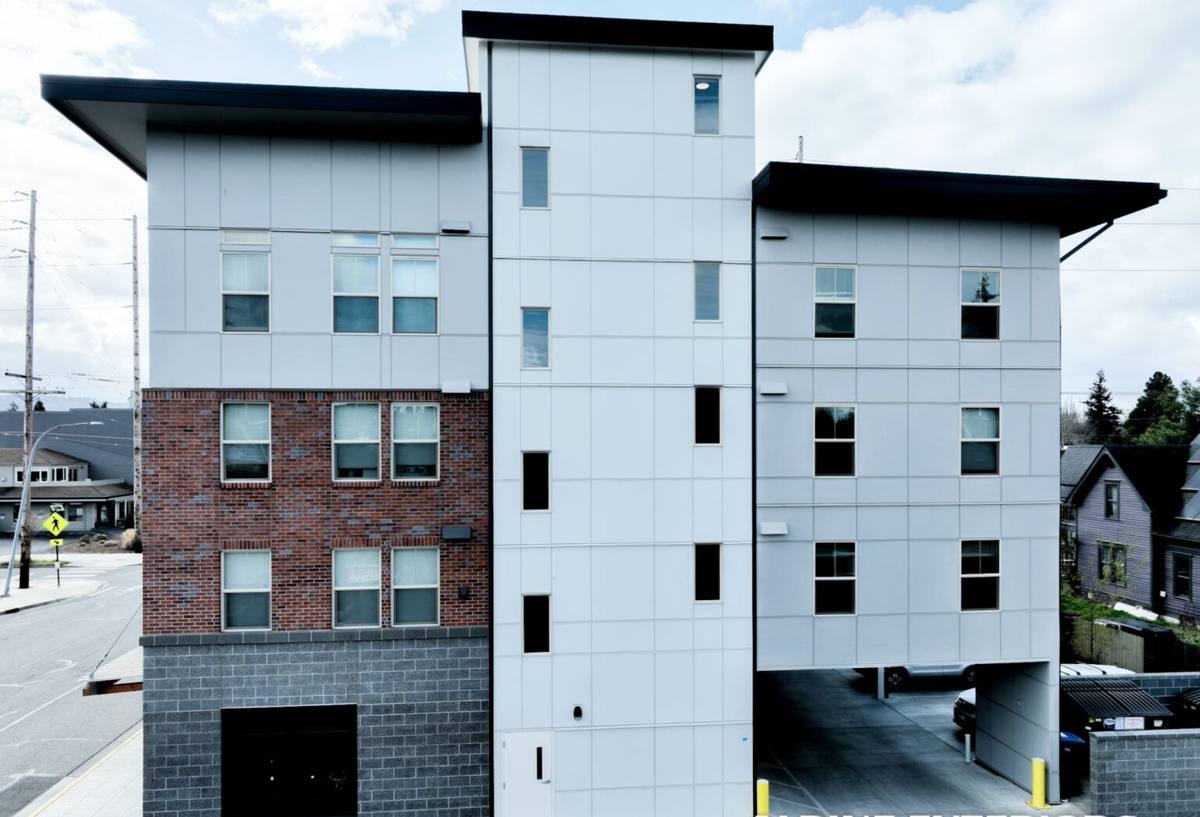
What Magnolia's Climate Actually Demands from a Window
Salt Air and Corrosion
Proximity to the Sound means airborne salt settles on exterior surfaces, especially on homes with more open exposure toward the water. Over time that accelerates corrosion on unprotected fasteners, hardware, and some finishes. It's not usually dramatic — it's slow, and it shows up as pitting, discoloration, or hardware that starts sticking a few years before it should. For new construction, this means picking corrosion-resistant fastener packages and hardware finishes, and being deliberate about which frame materials and coatings hold up in a marine-influenced environment versus which ones are really meant for drier inland climates.
Driving Rain
Wind off the Sound can push rain sideways against a wall, and elevated or less-sheltered lots get more of this than a sheltered inland lot would. A window that's rated fine for still-air rain exposure can still leak under wind-driven conditions if the flashing detail underneath it isn't built to handle water that's being pushed uphill against the sill, not just falling straight down. This is one of the areas where new-construction sequencing really pays off — the flashing can be integrated with the house wrap in the correct shingle-lap order before siding ever goes on.
Moss and Prolonged Dampness
Seattle's long wet season doesn't just mean more rain — it means more consecutive days where wood, trim, and sill areas simply don't fully dry out. That's exactly the condition moss and algae need to establish. Window details that trap water or create standing moisture (poor slope on sills, missing weep paths, capillary gaps that hold water against wood trim) become moss magnets over a few winters. Getting drainage and slope right at the sill is a small detail with an outsized long-term effect on how the window area looks and performs five and ten years out.
What a Correct New-Construction Window Install Involves
- Rough openings framed and squared to the window manufacturer's actual tolerances, not "close enough"
- Weather-resistive barrier integrated with window flashing in proper shingle-lap sequence, so water sheds outward at every layer
- Sill pan flashing that directs any incidental water back out of the wall assembly rather than letting it sit against framing
- Head flashing and drip caps sized to actually kick water clear of the wall below, not just cover the top of the frame
- Corrosion-appropriate fasteners and hardware selected for a marine-influenced, high-moisture environment
- Proper shimming and fastening so the window operates correctly and doesn't rack out of square as the house settles
- Interior and exterior sealant details that allow the assembly to manage minor moisture without trapping it
- Final operation check — every window opens, closes, and locks the way it's supposed to before we call it done
Choosing Frame Materials for This Environment
There's no single "best" window material for every new build — it depends on the home's design, budget, and exposure. But some honest trade-offs are worth knowing upfront, especially for a Magnolia lot with real Sound exposure.
| Frame Material | How It Handles This Climate | Trade-Off to Know |
|---|---|---|
| Vinyl | Handles moisture well, no corrosion concerns, budget-friendly | Fewer color options if a specific architectural look is required |
| Fiberglass | Very stable dimensionally, holds paint and finish well over time, good moisture resistance | Higher upfront cost than vinyl |
| Wood / wood-clad | Classic look, warm interior appearance | Exterior wood needs consistent maintenance in a wet, salt-influenced climate — clad exteriors reduce this but add cost |
| Aluminum | Slim sightlines, strong for large glass spans | Requires a quality thermal break and corrosion-resistant finish near the water; we're selective about which aluminum systems we'll install here |
We'll talk through these honestly during the estimate — including where we'd steer you away from a choice given the specific exposure of your lot, and why.
Our Process on a Magnolia New-Construction Job
1. Plan Review and Window Schedule
We start from the architectural plans or window schedule and walk the site (or the framed shell, if it's already up) to confirm rough opening sizes, orientation, and exposure. West and north-facing openings toward the water get extra attention in the flashing plan.
2. Material and Hardware Selection
We help match frame material, glazing package, and hardware finish to the home's design and to the realities of a marine-influenced Seattle lot — not just whatever's cheapest to stock.
3. Coordinated Installation Sequencing
On new construction, timing matters. We coordinate with the builder or GC so windows go in at the right point in the wall assembly sequence — house wrap, flashing, window, then siding — so nothing gets buttoned up out of order.
4. Flashing and Weatherproofing Detail
Sill pans, jamb flashing, and head flashing go in following shingle-lap principles so water always sheds outward and down, never into the wall.
5. Final Walkthrough
Every window gets operated, checked for square and level, and inspected for proper sealant lines before we consider the job complete.
Why It Matters That We Already Work in This Neighborhood
A crew that mostly installs windows on inland, sheltered lots isn't automatically thinking about salt exposure, wind-driven rain, or moss-prone sill details — because most of their jobs don't demand it. Working regularly in Magnolia and elsewhere around Seattle and King County means we're used to building in those margins by default: the fastener spec, the flashing lap order, the sill slope. It's not a special upgrade we sell — it's just what a correctly built window opening looks like in this part of the region. That local familiarity is also why we tend to catch site-specific issues (an exposed corner, a lot with more wind funneling than the neighbors, a shaded north wall that stays damp longer) before they become problems, rather than after.
Common Missteps We See on Newer Builds
- Flashing installed in the wrong lap order, so water gets directed into the wall instead of away from it
- Sills with little or no outward slope, leaving standing water that invites moss and slowly degrades sealant
- Standard fastener packages used on high-exposure elevations where a corrosion-resistant spec was warranted
- Window units set slightly out of square during framing, which shows up later as doors and sashes that stick or won't latch cleanly
- Sealant used to cover for a flashing detail that was skipped, rather than as the finishing layer over correct flashing
Every one of these is fixable at the new-construction stage for a fraction of what it costs to correct after siding and interior finish are complete.
Timeline and Cost Factors
New-construction window costs vary based on quantity, size, glazing package, and frame material — there's no honest flat number without seeing the plans. What we can say is that the factors below are the ones that actually move the price, so it's worth thinking about them early rather than after the order is placed.
| Factor | Why It Affects Cost |
|---|---|
| Number and size of openings | More glass and larger units mean more material and labor |
| Frame material | Vinyl, fiberglass, wood-clad, and aluminum carry different material costs |
| Glazing package | Double vs. triple pane, low-E coatings, and gas fill options each add cost and performance |
| Exposure and elevation | High-exposure walls toward the Sound may warrant upgraded fasteners and flashing detail |
| Coordination complexity | Jobs requiring tight scheduling with a GC or other trades take more planning time |
If you're building new in Magnolia and want the window package done right the first time — matched to the site, not just the plan set — we're happy to walk the lot with you and put together a straightforward, no-pressure estimate.