 Seattle
 Why Green Lake Homes Need Windows Built for This Climate
Green Lake sits in one of Seattle's older, denser residential pockets, with housing stock that spans early-1900s bungalows, mid-century ramblers, and newer infill construction squeezed onto narrow lots. What most of these homes have in common is exposure to the same year-round pattern: long stretches of low-intensity rain, high ambient humidity, short cool summers, and winters where the sun barely clears the tree line for weeks at a time. Windows in this environment aren't just a comfort feature — they're one of the main lines of defense against moisture intrusion, heat loss, and the slow rot that shows up years later behind trim you never think to check.
Older single-pane and early dual-pane windows common in this neighborhood were never built for the sealed, high-performance standards available today. Over a few decades, seals fail, wood sashes swell and stick, and aluminum frames turn into a direct thermal bridge straight through your wall. The result is condensation on the inside of the glass, cold drafts near the sill, and heating bills that creep up every winter without an obvious cause.
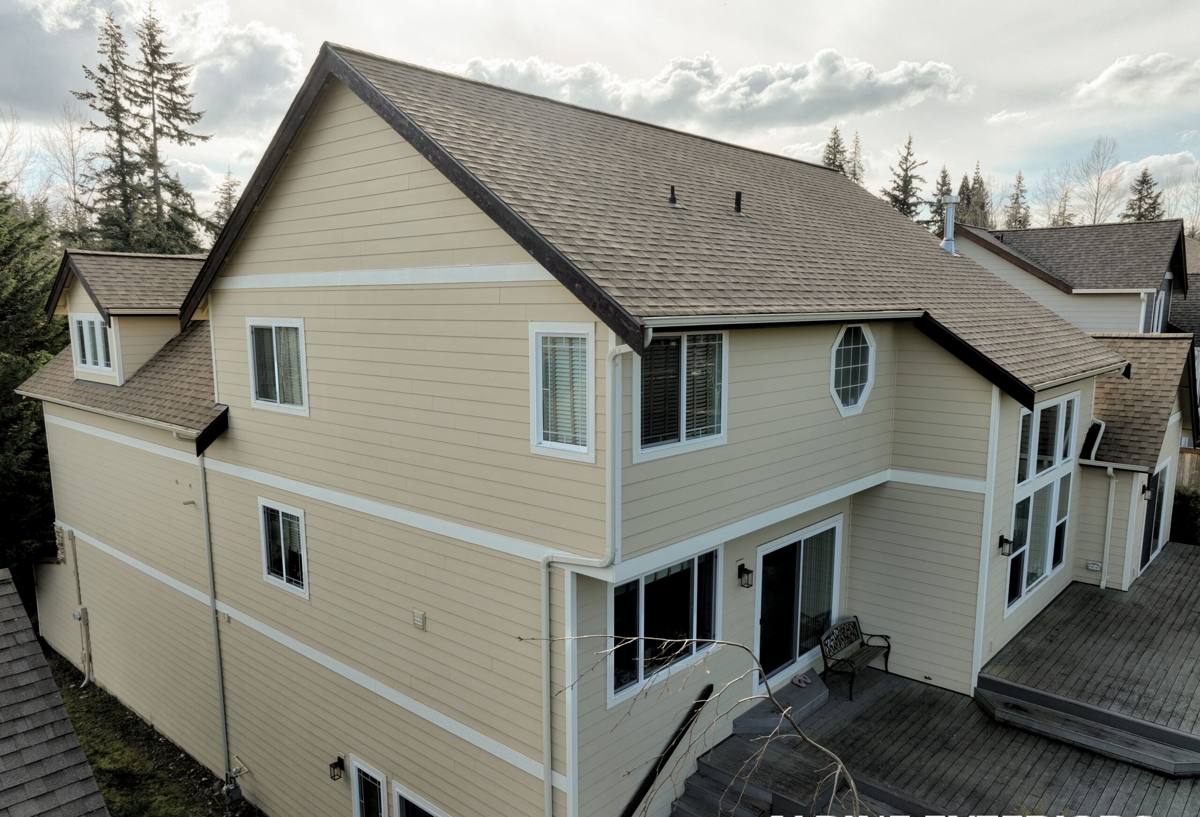
What "Energy-Efficient" Actually Means for a Seattle Window
"Energy-efficient" gets used loosely in this industry, so it's worth being specific about what actually matters for a King County home. It comes down to three things working together: the glass package, the frame material, and the quality of the installation. A high-performance window with a sloppy install will still leak air and moisture. A well-installed budget window will still underperform on comfort and utility costs. You need both done right.
Glass Performance
For this region, we prioritize a low U-factor (how much heat escapes through the window) over solar heat gain coefficient, since Seattle's climate is heating-dominated rather than cooling-dominated. Double-pane windows with a low-E coating and an argon or krypton gas fill are the practical standard for most Green Lake homes. Triple-pane glass exists and does perform better, but the added cost often doesn't pencil out unless you're dealing with a noise issue near a busy street or a north-facing wall with almost no solar gain to offset heat loss.
Frame Material
Frame choice affects both thermal performance and how the window handles years of damp weather. We'll walk through the tradeoffs in the comparison table below, but the short version is: the frame has to resist moisture absorption and expansion/contraction cycling without needing constant upkeep.
Signs Your Current Windows Are Costing You Money
- Visible condensation or fogging between the panes — the seal has failed and the gas fill is gone
- Cold air noticeable near the sill or frame even when the window is fully closed
- Wood sashes that stick, swell, or won't stay latched through the wet season
- Soft or discolored trim, sill, or wall area below the window — a sign moisture is getting behind the frame
- Visible daylight or a draft you can feel with your hand along the frame edge
- Noticeably higher heating bills compared to similar-sized homes nearby
Any one of these on its own might just mean a single window needs attention. Several of them together, especially on a home more than 25-30 years old, usually mean it's time to look at the whole window package rather than patching one at a time.
What a Correct Installation Involves
The window itself is only part of the job. In a climate that delivers steady rain for months at a stretch, how the opening is prepped and flashed matters just as much as the product going into it. A correct installation includes removing the old unit down to the rough opening, checking the sheathing and framing underneath for any hidden rot or moisture damage, and rebuilding the water management system around the new window before it ever goes in.
That means proper flashing tape or pan flashing at the sill so any water that gets behind the siding has a path back out, correct integration with the existing weather-resistive barrier, and sealant used only where it belongs — not as a substitute for proper flashing. Skipping these steps is the single most common reason a "good" window ends up with rot damage five or ten years later. It's also the step that's easiest for an inexperienced or rushed crew to shortcut, because it doesn't show up on the surface right away.
Frame Material Comparison for This Climate
| Material | Moisture Resistance | Maintenance | Typical Cost | Best Fit |
|---|---|---|---|---|
| Vinyl | Very good — won't rot or absorb water | Low — occasional cleaning | Lower | Most Green Lake homes prioritizing value and low upkeep |
| Fiberglass | Excellent — very stable in wet, temperature-swinging conditions | Low | Higher | Homes wanting a longer service life and minimal expansion/contraction |
| Wood (clad exterior) | Good on the exterior face if the cladding is intact; interior wood needs protection from condensation | Moderate to high | Highest | Historic or period-style homes where matching original wood interior trim matters |
| Aluminum | Poor thermal performance — conducts cold directly through the frame | Low | Moderate | We generally steer homeowners away from it for this climate outside of very specific commercial-style applications |
We don't push one material on every job. A century-old home near the lake with original wood trim calls for a different answer than a 1980s rambler getting a straightforward upgrade. What we won't do is install a frame material that's a poor match for sustained damp exposure just because it's cheaper up front — that trade-off tends to show up as a callback a few years later, and we'd rather have that conversation honestly before the work starts.
Our Process, Start to Finish
1. On-Site Assessment
We look at each window opening individually, not just the house as a whole. Sun exposure, wall assembly, and existing damage vary window to window, even on the same home.
2. Straightforward Estimate
You get a written estimate that breaks out product, labor, and any anticipated repair work if we expect to find rot or sheathing damage once the old window is out.
3. Removal and Opening Prep
Old window comes out, the opening gets inspected, and any hidden moisture damage is addressed before anything new goes in — not covered up.
4. Flashing and Installation
Proper flashing sequence, correct shimming and leveling, and insulation around the frame gap — not just spray foam and caulk as a catch-all.
5. Final Walkthrough
We check operation, seals, and finish work with you before calling the job done.
Living With a Long Moss and Rain Season
Seattle's stretch of wet, low-light months puts real demands on anything installed on the exterior of a home, and windows are no exception. Moss and algae growth on nearby roofing or siding can hold moisture against adjacent trim longer than in drier climates, so keeping gutters clear and vegetation trimmed back from window openings does real work in protecting your investment. A well-installed, properly flashed window in a durable frame material won't need much from you — but a little seasonal attention goes a long way in King County.
Simple Upkeep That Extends Window Life
- Clear debris and moss buildup from nearby gutters and sills each fall
- Check that exterior caulking around the frame perimeter stays intact — reseal if it's cracking
- Keep weep holes on vinyl and fiberglass frames clear so water can drain properly
- Wipe down interior sills periodically to catch condensation before it sits
- Trim back shrubs or branches that trap moisture against the exterior frame
Checklist: What to Ask Before You Hire a Window Contractor
- Do you pull permits and follow current Seattle/King County building code for window replacement?
- Will you inspect and repair sheathing or framing if you find moisture damage, or just install over it?
- What's your flashing method, and can you explain it in plain terms?
- What's the manufacturer's warranty, and what's your own labor warranty?
- Can I see your general liability insurance and any required state license information?
- How many jobs like mine have you done in this specific neighborhood or housing style?
A contractor who answers these clearly and without hesitation is usually one who does this work correctly and consistently — not just occasionally.
Why Local Experience in Green Lake Matters
Window replacement isn't a one-size-fits-all job. A crew that regularly works in and around Green Lake has already seen how this neighborhood's mix of older wood-frame homes and newer construction behaves through a full Puget Sound winter — which openings tend to hide moisture problems, which orientations take the worst weather, and what flashing details actually hold up over time here versus in a drier inland climate. That familiarity translates into fewer surprises during the job and a finished product that's set up to perform for years, not just look good on installation day.
If your windows are drafty, fogged, or just older than you'd like to admit, we're happy to take a look and give you a straightforward, no-pressure estimate — no obligation, just an honest read on what your home actually needs.