 Seattle
 Deck Building Built for Green Lake's Weather, Not Just Its Looks
Green Lake homes see a specific kind of wear on outdoor structures. Long, wet winters, a marine-influenced climate that moves through the greater Seattle area, and tree canopy around many lots near the lake all add up to conditions that are hard on untreated wood, poorly sealed fasteners, and decks that weren't built with drainage in mind. A deck that looks fine when it's installed in July can start showing problems by its second or third King County winter if it wasn't built for this climate in the first place.
We build and rebuild decks for homes throughout Seattle, and Green Lake is one of the neighborhoods we work in regularly. That matters because deck problems here tend to follow patterns — the same moisture points, the same shaded north-facing sections that never fully dry out, the same railing hardware that starts to streak with rust after a few wet seasons. A crew that already knows those patterns builds differently from one that's guessing.
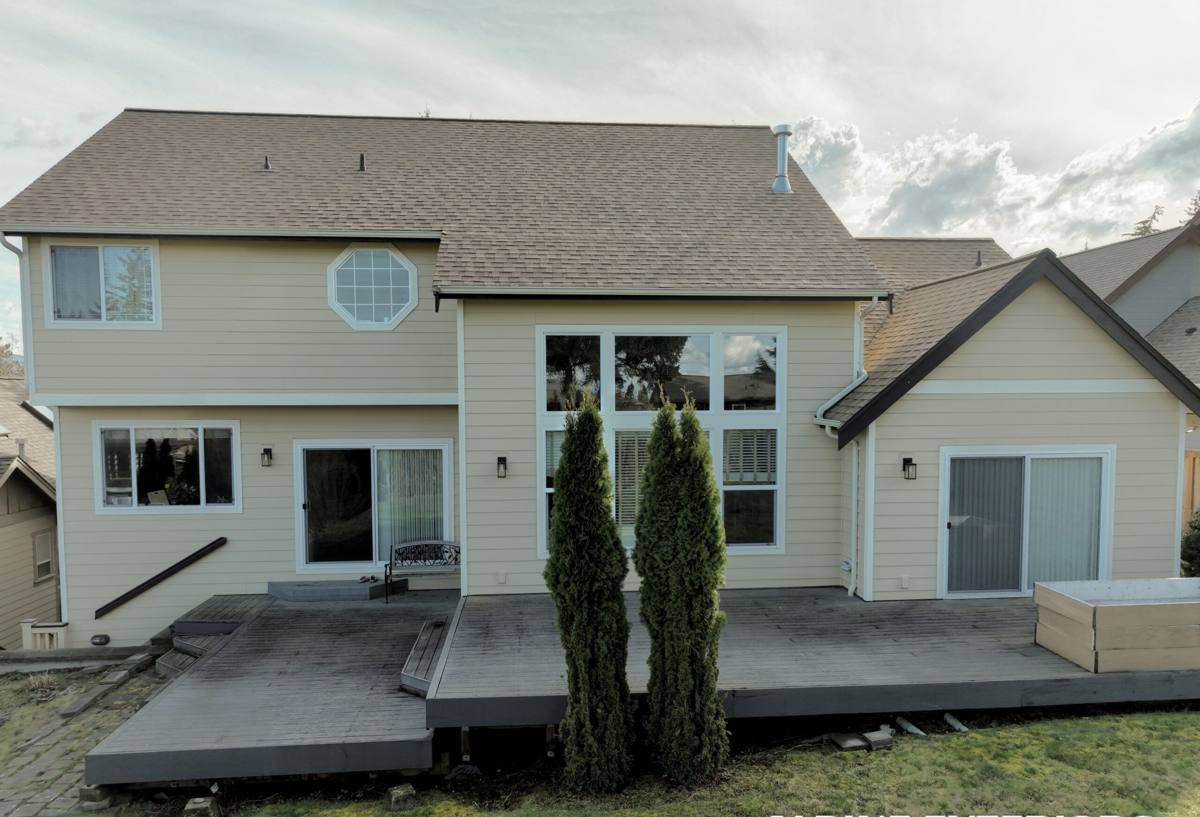
What Seattle's Climate Actually Does to a Deck
It helps to be specific about what "built for the weather" means, because it's not just a marketing phrase. Three things do most of the damage to decks in this part of King County:
Sustained Moisture
Seattle doesn't get the heaviest rainfall totals in the country, but it gets long stretches of steady, low-intensity rain combined with high humidity and short winter daylight. That means wood and fasteners often don't get a real chance to dry out for days or weeks at a time. Framing lumber, ledger boards, and post bases that stay damp longer are the parts of a deck most likely to rot or corrode first.
Moss and Algae Growth
Shaded, damp surfaces are exactly what moss and algae need to establish. Decks near mature trees or on the north side of a house — common around Green Lake, where many lots have significant tree cover — are especially prone to green growth on boards and stairs. Beyond the maintenance headache, moss holds moisture against the decking surface and can make stairs and low-traffic areas slippery.
Corrosive, Salt-Tinged Air
The Puget Sound region's marine air carries a mild salt content that moves through the broader Seattle area, and it accelerates corrosion on unprotected metal hardware — fasteners, brackets, railing posts, and connectors. Over years, that corrosion is one of the more common reasons we find failing joints on older decks during inspections.
None of this means a deck can't last in Green Lake. It means the build details — footings, flashing, fastener grade, and material selection — have to account for these conditions from the start, not get treated as upgrades.
What a Correctly Built Deck Involves
Footings Sized for This Soil and Climate
Footings need to be sized and set to local code depth, on soil that has been properly evaluated rather than assumed. Undersized or shallow footings are a common source of movement and settling over time, especially where soil stays saturated for extended periods during the wet season.
Ledger Attachment and Flashing
Where a deck attaches to the house, the ledger board and its flashing are the single most important moisture-control detail on the entire structure. A poorly flashed ledger lets water track behind the board and into the house rim joist — a problem that often isn't visible until there's already rot underneath. Correct flashing, proper fasteners, and a small gap for drainage behind the ledger are non-negotiable in our process.
Airflow Beneath the Deck
Decks built low to the ground, or enclosed with skirting that blocks airflow, tend to trap moisture underneath. Framing needs enough clearance and ventilation to dry between rain events. This is a detail that's easy to shortcut and hard to fix later without removing decking.
Fastener and Hardware Grade
Structural connectors, post bases, and fasteners should be rated for exterior and, ideally, coastal-adjacent exposure — not standard interior-grade hardware. The cost difference is small relative to the whole project; the difference in corrosion resistance over ten or fifteen years is significant.
Choosing the Right Decking Material
There's no single "best" decking material — the right choice depends on budget, how much upkeep the homeowner wants to do, and how shaded the site is. Here's an honest comparison of the main options we install:
| Material | Upfront Cost | Maintenance | Moss/Algae Resistance | Notes |
|---|---|---|---|---|
| Pressure-treated wood | Lowest | Regular cleaning, staining every 2-3 years | Low — needs active upkeep | Affordable, but the most sensitive to Seattle's wet cycle if maintenance lapses |
| Cedar | Moderate | Cleaning and sealing to maintain color and protection | Moderate | Naturally rot-resistant and a good look, but still needs consistent care in shaded spots |
| Composite decking | Higher | Occasional washing, no staining or sealing | Good, varies by product | Consistent performance, but installation sensitivity (spacing, fastening) matters more than with wood |
| PVC decking | Highest | Minimal — washing only | Best resistance to moisture-related growth | Strong long-term option for consistently shaded or damp sites, at a higher material cost |
We don't push one material over another as a default. For a heavily shaded lot near mature trees, we're more likely to steer a homeowner toward composite or PVC because the maintenance burden of wood in that setting is real and ongoing. For a sunnier, more open lot, a well-maintained cedar or treated-wood deck can perform well and cost significantly less to build.
Railings, Stairs, and Hardware Details
Railings and stairs take more direct weather exposure than the deck surface itself and are also the components most tied to safety, so they're not a place to cut corners. We pay particular attention to:
- Post-to-frame connections rated for structural load, not just decorative attachment
- Baluster spacing and railing height that meet current Seattle and King County code, especially important on rebuilds of older decks that may predate current requirements
- Stair stringers sized and supported correctly, since undersized stringers are a common failure point on older decks
- Corrosion-resistant fasteners and brackets throughout, not just at visible connection points
Living with a Deck in a Wet, Shaded Climate
Even a well-built deck needs some seasonal attention in this climate. The goal of good construction is to reduce that burden, not eliminate it entirely. A few habits make a real difference over the life of the deck:
- Sweep leaves and debris off the surface regularly in fall, when they trap moisture against boards
- Rinse or brush off moss and algae before it builds up, rather than after it's established
- Check that gaps between boards stay clear so water can drain through rather than pool
- Reseal or restain wood decking on the schedule appropriate to the product, not just when it visibly needs it
- Have fastener and structural connections checked periodically, especially on decks over eight to ten years old
We're happy to walk a homeowner through a maintenance plan specific to their material and site conditions at the end of a build — it's a short conversation that saves a lot of trouble later.
Permits and Code in Seattle and King County
Most new decks and many deck rebuilds in Seattle require a permit, and inspections check structural details like footing depth, ledger attachment, and railing dimensions — the same details that matter most for long-term performance in this climate. Skipping the permit process isn't a shortcut worth taking: it can create real problems at resale, with insurance, or if there's ever a safety issue. We handle the permitting and inspection process as part of our build so homeowners don't have to navigate it themselves.
Our Process for Green Lake Deck Projects
- On-site assessment — we look at sun exposure, tree cover, drainage, soil, and the condition of any existing structure before recommending an approach
- Design and material selection — sized to the home, the budget, and the site's specific moisture and shade conditions
- Permitting — we prepare and submit what's required for the project and coordinate inspections
- Construction — footings, framing, flashing, decking, and railings built to the standards outlined above
- Final walkthrough — we review the finished deck with the homeowner, including basic maintenance guidance for the material installed
Why a Crew That Already Works in Green Lake Matters
A lot of deck problems we get called to fix aren't the result of bad materials — they're the result of a build that didn't account for how this specific climate behaves over years, not just on installation day. A crew that regularly works in Green Lake and the surrounding Seattle neighborhoods has already seen which details matter most here: where moss tends to establish, which fastener grades hold up, how footings perform in local soil through a wet winter. That local pattern recognition is hard to replace with a generic install, no matter how good the materials are.
If you're planning a new deck or need to replace one that's showing its age, we're glad to take a look and give you a straightforward, no-pressure estimate. There's a form below — tell us a bit about your project and we'll follow up.