 Seattle
 Custom Decks in Fremont: Built for the Weather That's Actually Here
Fremont sits right along the Lake Washington Ship Canal, which means the neighborhood gets a steady mix of Puget Sound marine air, near-constant fall and winter rain, and enough shade from mature trees and close-set lots to keep things damp long after a storm passes. A deck built here has to handle all of that at once. It's not the same job as building a deck in a dry inland suburb, and treating it that way is how homeowners end up with soft boards, rusted hardware, and a slick, moss-covered surface within a few seasons.
This page is about one thing: custom deck construction for Fremont properties, done in a way that accounts for the actual conditions the deck will sit in for the next 15-25 years.
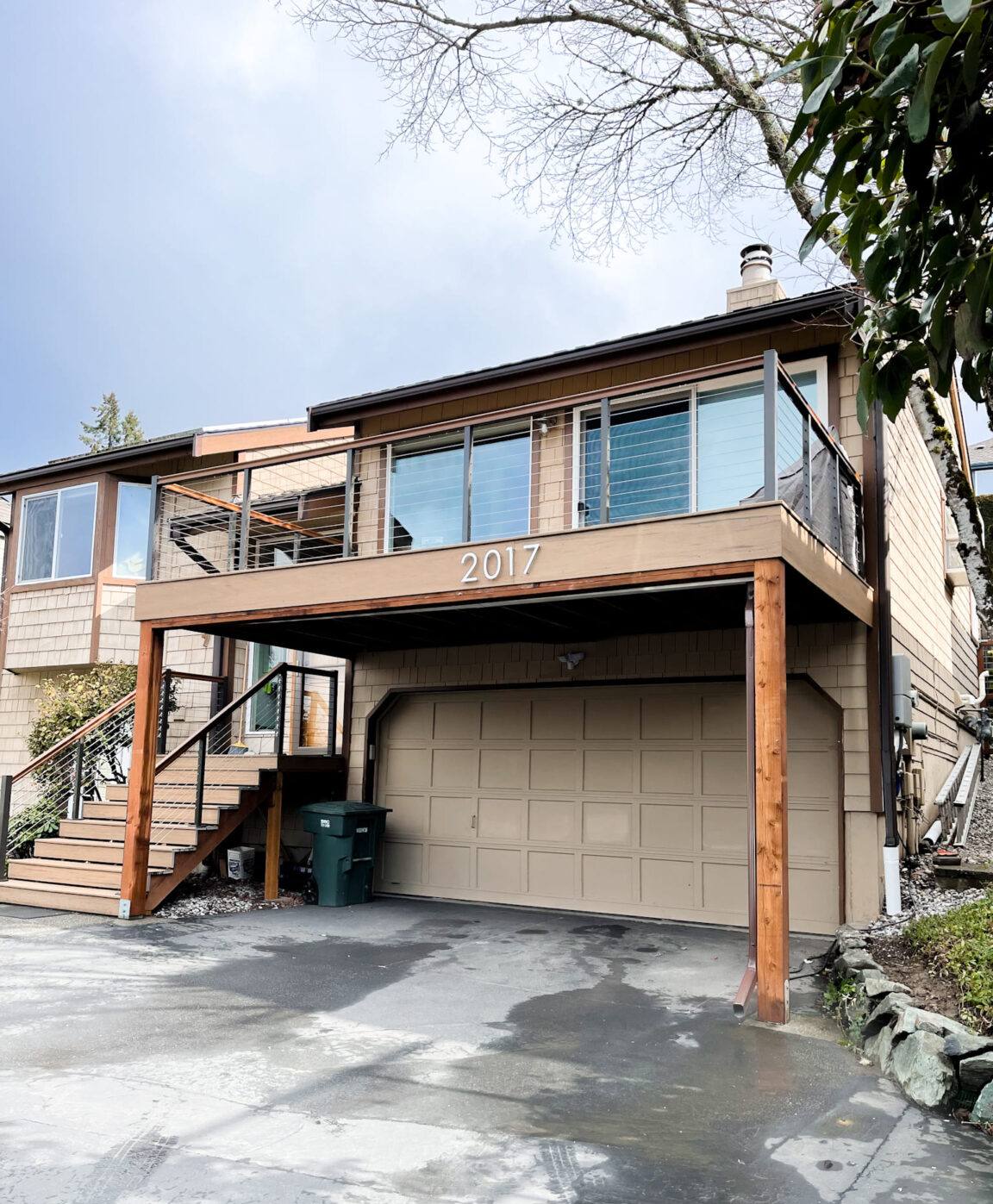
What Seattle's Marine Climate Does to an Outdoor Deck
King County's climate isn't extreme, but it's relentless. Decks here don't usually fail from one hard freeze or one big storm — they fail from years of low-grade moisture exposure that never fully lets up.
Driving Rain and Standing Moisture
Seattle gets long stretches of steady, low-intensity rain rather than short, heavy downpours. That means horizontal surfaces — deck boards, rail caps, stair treads — stay wet for hours or days at a time instead of drying quickly between storms. Any spot where water can pool, or where a board doesn't shed water cleanly, becomes a slow-motion rot problem.
Moss Is a Structural Issue, Not Just a Cosmetic One
Fremont's shade and moisture combine to grow moss on almost any untreated horizontal wood surface, often within a single wet season. Moss isn't just unattractive — it holds water directly against the board surface, keeps wood from drying out between rain events, and turns a deck's walking surface slippery. Left alone through a few moss seasons, it accelerates surface decay well beyond what plain rain exposure would cause on its own.
Marine Air and Fastener Corrosion
Air moving up the Ship Canal from Puget Sound carries a mild salt content that inland Seattle neighborhoods don't deal with as much. It's not the same exposure as a beachfront property, but it's enough to matter over the life of a deck — plain steel fasteners, cheap hangers, and unrated hardware corrode faster here than their spec sheet suggests, especially where they're in constant contact with wet wood.
Choosing Decking Material for a Fremont Property
There's no single "best" decking material — there's a best material for this climate, this budget, and how much upkeep a homeowner actually wants to do. Here's how the common options actually compare once you factor in Fremont's conditions specifically.
| Material | How It Handles Moisture & Moss | Maintenance Needed | Realistic Lifespan Here |
|---|---|---|---|
| Cedar | Naturally rot-resistant but still needs sealing to shed water and resist moss | Annual cleaning and re-sealing/staining | 15-20 years, less if maintenance is skipped |
| Pressure-Treated Pine | Good rot resistance from chemical treatment; still grows moss without upkeep | Regular cleaning, periodic sealing | 15-20 years |
| Composite (capped) | Doesn't absorb water like wood; moss can still grow on the surface film and needs washing off | Occasional washing, no staining/sealing | 25-30 years |
| PVC/Vinyl Decking | Fully moisture-proof core; best resistance to rot and moisture-driven decay | Lowest — occasional washing only | 25-30+ years |
We're honest with homeowners about the trade-off: wood costs less up front but asks for real annual maintenance to perform in this climate. Composite and PVC cost more initially but remove the sealing/staining cycle almost entirely, which matters a lot in a neighborhood where moss regrows every wet season regardless of how well the last cleaning went.
What Correct Deck Construction Actually Involves
The decking surface is what people see, but most of what determines whether a deck lasts is built before a single board goes down.
Footings and Framing
Footings need to be dug to the depth required by local code and set on solid, undisturbed soil — not just poured into whatever the existing grade allows. Joist spacing should account for wetter, heavier wood over time, and framing lumber should be rated for ground contact or exterior exposure, not just general construction-grade stock.
Ledger Board Flashing
Where a deck attaches to the house, the ledger board connection is the single most common failure point we see on older decks in wet climates. Without proper flashing that directs water away from the house band joist, moisture works its way behind the ledger and rots the framing from the inside — often invisible until the deck starts to feel spongy near the house.
Ventilation Underneath
A deck built low to the ground or against a slope, common on Fremont's tighter, sloped lots, needs enough airflow underneath to let moisture evaporate rather than sit trapped against the framing. Skipping this is one of the fastest ways to shorten a deck's structural life in this climate.
Fasteners and Hardware
Given the marine air moving through the area, we use stainless steel or high-grade coated fasteners and structural hardware rather than standard galvanized options wherever corrosion resistance matters most — hidden fastening systems, joist hangers, and ledger bolts in particular.
Permits and Code Requirements in Seattle
Most custom deck projects in Seattle require a permit, particularly if the deck is attached to the house, elevated more than a modest height above grade, or involves new footings. Guardrails are required above a certain height and have to meet specific spacing and height requirements. Setback from property lines matters too, especially on Fremont's smaller urban lots where side and rear yards are tighter than in newer suburban developments.
We handle the permit submission as part of the project rather than leaving homeowners to navigate Seattle's process alone, and we build to the structural requirements the permit is actually checking for — not just the visual result.
Our Process for a Fremont Deck Project
- Site visit and assessment — we look at grade, drainage, existing structure (if replacing a deck), sun/shade exposure, and how the space will actually be used.
- Design and material consult — layout, decking material, railing style, and stairs, weighed against budget and maintenance preference.
- Permit submission — where required, handled as part of the project rather than an afterthought.
- Demolition — removal of the old structure when this is a replacement, with a check on what condition the ledger and framing were actually in.
- Footings and framing — dug to proper depth, set square, built to current structural standards.
- Decking, railings, and stairs — installed with corrosion-resistant fastening and attention to drainage and airflow.
- Final walkthrough — inspection sign-off (where applicable) and a walkthrough with the homeowner before we call it done.
Living With a Deck Through Another Moss Season
Even a well-built deck needs some seasonal attention in this climate. None of it is complicated, but skipping it is how a 25-year composite deck or a well-built wood deck starts looking and performing like something much older.
- Sweep leaves and debris off the surface regularly through fall — trapped organic matter is what feeds moss and algae growth.
- Check any gutters or roof runoff that drains near or onto the deck; misdirected water is one of the most common causes of localized rot.
- Treat visible moss promptly rather than letting it establish across a full season.
- For wood decks, keep to a sealing/staining schedule rather than waiting until boards visibly gray or absorb water.
- Do a yearly check of visible fasteners and hardware for early corrosion, especially near the ledger board and stairs.
- Confirm ledger flashing and the house-to-deck connection stay sealed, particularly after any nearby siding or gutter work.
Why Hire a Crew That Already Works in Fremont
Fremont has its own mix of housing stock and lot conditions — older homes with additions and undersized original decks, newer infill construction on tight lots, and grades that slope toward the canal in a lot of spots. A crew that already works in this neighborhood knows what that means for footing placement, drainage planning, and where older decks in this specific area tend to have hidden ledger or framing problems.
That local familiarity also means knowing Seattle's permitting process and King County code requirements without treating every project like the first one we've ever pulled a permit for. It's the difference between a deck that's built to look right on day one and one that's built to actually hold up through years of Puget Sound rain and moss season.
Get a Straight Answer on Your Fremont Deck Project
Whether you're replacing an aging deck, adding on to your home, or starting from scratch, we're happy to take a look and give you an honest read on materials, scope, and what the job actually involves for your property. Reach out for a free, no-pressure estimate — the form below gets you started.