 Seattle
 Why Board & Batten Fits Ravenna's Character Homes
Ravenna is one of Seattle's older, tree-shaded neighborhoods, with a mix of early-1900s bungalows, Craftsman-style houses, and mid-century infill homes tucked under mature tree canopy near the ravine and Green Lake. Board and batten siding — vertical boards with a narrow strip covering each seam — has always paired well with that architecture. It reads as clean and traditional on a Craftsman porch gable, and just as comfortable on a simpler mid-century facade or a modern addition. Homeowners in this neighborhood often want a siding profile that feels rooted in the house's original character rather than a generic tract-home look, and vertical board and batten does that without trying too hard.
That said, a siding profile is only as good as the material and installation behind it. In a neighborhood with this much shade, moisture, and older wall framing, the choice of product and the quality of the install matter more than the look of the boards.
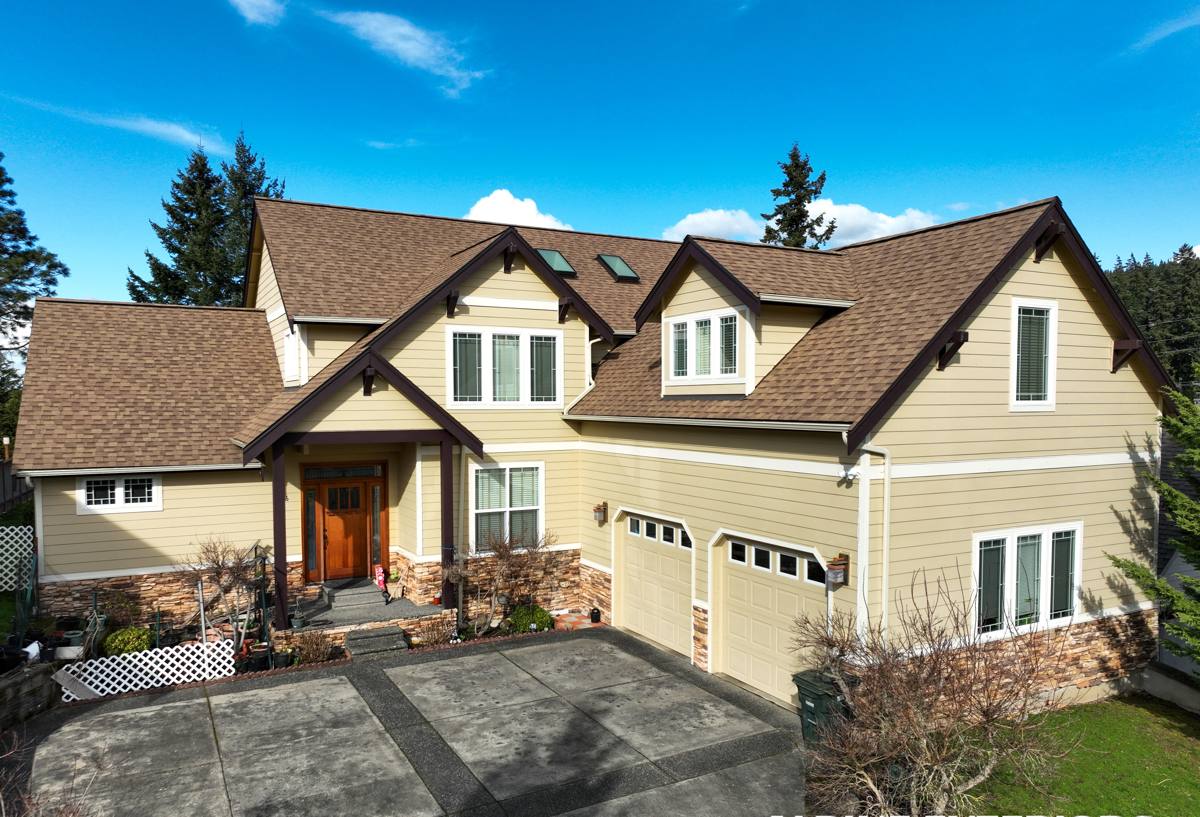
What Seattle's Climate Does to Vertical Siding
Driving Rain and Wind-Driven Moisture
Seattle's rain rarely falls straight down. Wind off the Sound pushes it sideways against west- and south-facing walls for days at a stretch during the wet months. Vertical siding has more seams running the full height of a wall than horizontal lap siding does, and every one of those seams is a potential path for water to find its way behind the cladding if the battens, flashing, and water-resistive barrier underneath aren't detailed correctly.
Moss, Shade, and Tree Canopy
Ravenna's mature trees are part of what makes the neighborhood pleasant to live in, but they also mean a lot of siding never gets a full afternoon of direct sun. Shaded, damp wall sections are exactly where moss, algae, and mildew take hold first, and vertical grooves and batten edges give organic growth more surface area to grip than a flat panel would.
Marine Air and Slow-Drying Seasons
The moisture-laden marine air common throughout the greater Seattle area keeps humidity elevated for long stretches, especially from fall through spring. Siding here doesn't get the quick wet-then-bone-dry cycle that a drier climate offers — it gets wet and stays damp. Materials and coatings that hold up in a dry climate don't always hold up the same way here, which is a big part of why product choice matters as much as installation quality.
The James Hardie Board & Batten System
We install board and batten in James Hardie fiber cement exclusively — specifically their HardiePanel vertical siding system, finished with matching Hardie trim boards to create the batten reveal. Fiber cement doesn't absorb water the way wood-based products do, so it isn't feeding the moss and mildew problem the same way a damp organic surface would. It's also non-combustible, which is a meaningful consideration anywhere homes sit close to dry brush, sheds, or neighboring structures during wildfire smoke season.
James Hardie's ColorPlus factory finish is baked on in a controlled environment rather than field-sprayed, which gives a more consistent, fade-resistant coat than most job-site paint jobs — important in a climate where a wall might stay wet for a week before it gets a chance to dry. Hardie also engineers regional product lines (their HZ10 line is built for wetter, harsher climates), which is the kind of climate-specific engineering that generic or one-size-fits-all siding products don't offer.
What a Correctly Installed Job Actually Involves
Board and batten looks simple from the curb — vertical panels, battens over the seams — but the assembly behind those boards is where the job is won or lost, particularly in a wet climate. A correct installation includes:
- A drainable water-resistive barrier installed over the sheathing, lapped correctly at every seam, window, and penetration
- A rainscreen air gap (typically furring strips) behind the panels so any moisture that does get past the cladding can drain and the wall can dry to the outside
- Properly flashed windows, doors, and any wall penetrations before the siding goes on — not caulk used as a substitute for flashing
- Battens and panel fasteners placed and spaced to manufacturer specification, not just "close enough"
- Correct fastener penetration into framing, not just sheathing, so the panels stay secure through wind events
- Minimal reliance on sealant as a primary water barrier — sealant is a backup, not the plan
Skipping the rainscreen gap is the single most common shortcut we see on vertical siding jobs, and it's the one that causes the most damage down the road, because it traps moisture directly against the wall assembly instead of letting it drain and dry.
Board & Batten vs Other Siding Profiles
| Profile | Look | Moisture Behavior | Typical Maintenance |
|---|---|---|---|
| Board & Batten (vertical) | Traditional, strong vertical lines, reads well on gables and porches | More seams running with gravity; needs a rainscreen gap and careful flashing | Periodic wash-down to control moss in shaded sections |
| Horizontal Lap | Classic, versatile, widest range of homes | Overlapping boards shed water naturally along their length | Similar wash-down needs, fewer seam terminations |
| Shingle/Shake Panel | Textured, cottage or coastal feel | More surface texture holds moisture and debris longer | Higher — texture traps organic growth in shade |
None of these profiles is objectively "better" — the right choice depends on the house's architecture and how much the homeowner wants to keep up with cleaning. Board and batten in a heavily shaded Ravenna lot will need the same moss vigilance as any other profile, but a properly vented, correctly flashed installation keeps that vigilance limited to surface cleaning rather than repair work.
Our Process for Ravenna Projects
Working regularly in this neighborhood means we already understand the common wall conditions on the older homes here — original sheathing that may or may not still be sound, additions tied into original framing at odd transitions, and lots where scaffolding or material staging space is tight. Our process on a board and batten project runs:
- On-site evaluation of the existing siding, sheathing condition, and any moisture or rot found during tear-off
- Removal of the old siding and repair of any damaged sheathing or framing before anything new goes up
- Installation of a drainable water-resistive barrier and rainscreen furring
- Flashing of every window, door, and penetration
- Installation of James Hardie vertical panels and battens to manufacturer fastening spec
- Final inspection of seams, corners, and trim before cleanup and walkthrough
We don't quote a job without seeing the actual wall condition first — on a neighborhood with this much housing stock built in the early-to-mid 1900s, what's behind the existing siding varies a lot from one house to the next, and that affects both scope and cost.
Cost Factors for Ravenna Board & Batten Projects
| Factor | Why It Moves the Price |
|---|---|
| Condition of existing sheathing | Rot or water damage found during tear-off adds repair scope before new siding can go on |
| Home height and access | Two-and-a-half story homes and tight side-yard lots need more scaffolding and staging time |
| Trim and corner detailing | Craftsman-era homes often have more window and gable trim to match than a simple box home |
| Amount of new flashing required | Older homes may have little to no original flashing, which needs to be added correctly during the reside |
| Batten spacing and panel layout | Custom reveal widths to match an existing architectural pattern take more layout time than standard spacing |
Maintenance Checklist for Board & Batten in This Climate
- Rinse shaded, north-facing, or tree-covered sections at least once a year to slow moss and algae buildup
- Keep gutters clean and downspouts directed away from the wall base — clogged gutters are a common source of localized siding staining
- Trim back branches and shrubs holding moisture directly against the siding surface
- Inspect caulking at trim and penetrations annually — it's a backup layer, and worn sealant should be renewed before it fails
- Watch for soft spots, staining, or peeling paint at the base of walls, which can signal a drainage or flashing issue underneath
Why Hiring a Crew That Already Works in Ravenna Matters
A siding job in this neighborhood isn't the same as one in a newer, open subdivision. Lot sizes are often tight, mature trees limit staging and ladder placement, and the housing stock spans enough decades that wall assemblies vary house to house. A crew that already works in Ravenna and the surrounding King County area has already worked through Seattle's permitting expectations, knows what to expect when older sheathing comes off a wall, and isn't guessing at how to sequence a job around mature landscaping. That local familiarity shows up less in the sales pitch and more in how few surprises come up once the tear-off starts.
If you're weighing a board and batten reside in Ravenna, we're happy to take a look at your home in person, walk you through what we find, and put together a straightforward, no-pressure estimate — no obligation either way.