 Seattle
 Ballard's Siding Problem Isn't Like Other Seattle Neighborhoods
Ballard sits right up against Puget Sound, and that location shapes what happens to a home's exterior over time. Salt-laden air blows off the water, rain drives in sideways during winter storms, and heavy tree cover on many blocks keeps north- and west-facing walls damp for weeks at a stretch. Add in the mild, wet Pacific Northwest winters that never quite dry out, and you get a climate that's genuinely harder on exterior materials than most parts of King County. Siding that would hold up fine in a drier inland suburb can fail early here — not because it's a bad product everywhere, but because it wasn't built for this specific combination of salt, moisture, and shade.
We install James Hardie fiber cement siding exclusively, and Ballard is one of the neighborhoods where that decision matters most. This page covers what the local climate actually does to siding, what a correct James Hardie installation looks like on a Ballard home, and why the details of that installation — not just the product — determine how the siding performs over the next few decades.
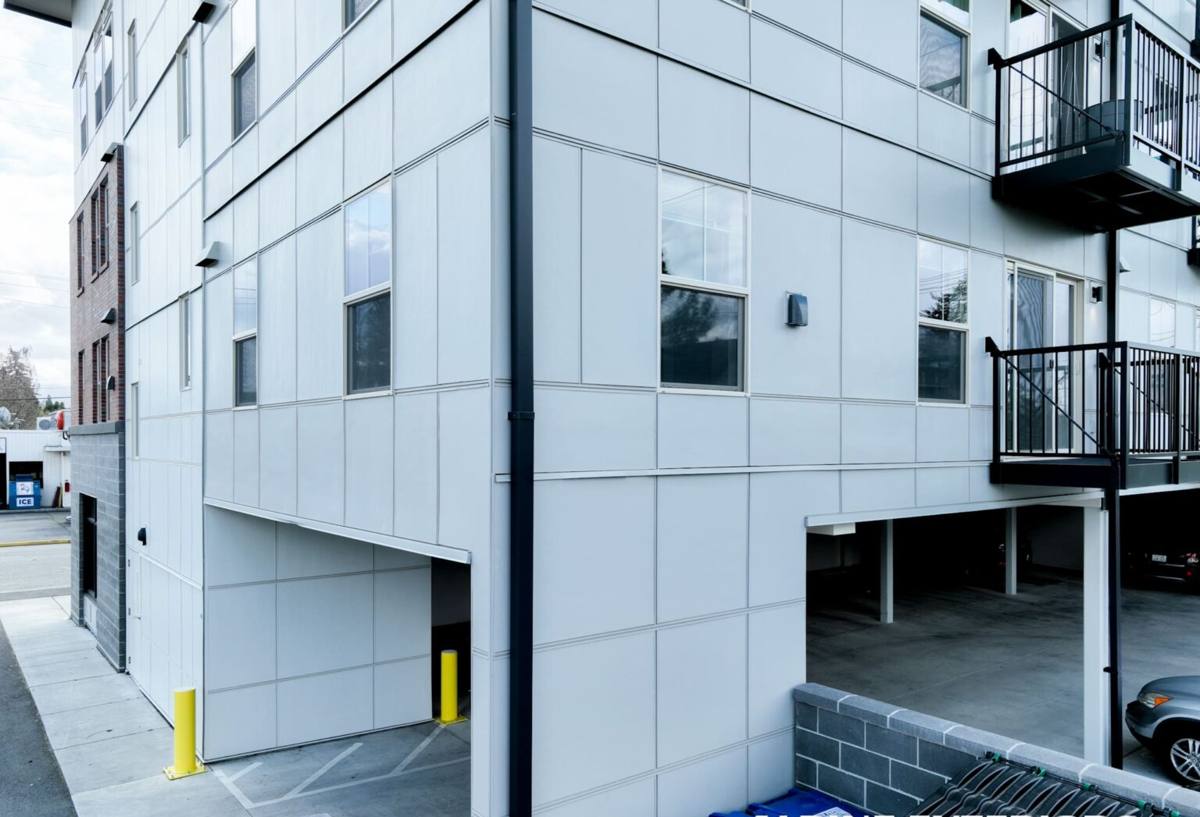
What Salt Air, Rain, and Moss Actually Do to a House
Salt Air
Homes within a mile or two of the water pick up airborne salt that settles on every exterior surface. Over years, that salt accelerates corrosion on anything metal — fasteners, flashing, house wrap staples — and it degrades paint and caulk faster than inland exposure does. A siding system that isn't detailed with corrosion-resistant hardware will show rust streaks and failed seals well before its expected lifespan is up.
Driving Rain
Storms coming off Puget Sound don't just fall straight down — wind pushes rain sideways into walls, especially on west- and southwest-facing elevations. That means water is testing every seam, every butt joint, and every penetration around windows and vents, not just the flat field of the wall. Siding and flashing details that work fine in a calm, dry climate can leak here if they're not built with driving rain in mind.
Moss and Algae
Shade from mature trees plus near-constant winter moisture gives moss, algae, and mildew a long growing season on Ballard homes. These organisms hold moisture against the siding surface, which is a problem for any material that can absorb water or that relies on paint film alone for protection. Siding that stays damp for extended periods is siding that's working harder than it should have to.
Why James Hardie Fits This Climate — and Why We Only Install It
James Hardie fiber cement is engineered from cement, sand, and cellulose fibers, which makes it dimensionally stable and resistant to moisture-driven warping, swelling, and rot in a way that wood-based and wood-alternative products simply aren't. That matters directly in a climate like Ballard's, where siding spends a large part of the year wet or damp. We don't install LP SmartSide, vinyl, Cemplank, Allura, primed spruce, or cedar — not because those products have no legitimate use anywhere, but because we've standardized on the one system we've found holds up best to this specific coastal, moss-prone, rain-heavy environment, and we'd rather do one thing exceptionally well than several things adequately.
HZ5 Engineered for This Region
James Hardie makes climate-specific product lines, and homes in our part of the Pacific Northwest fall under the HZ5 zone — engineered for wetter, harsher climates than the standard product sold in drier regions of the country. HZ5 panels are formulated to resist moisture intrusion and hold their integrity through repeated wet-dry cycling, which is exactly what a Ballard wall assembly goes through every winter.
ColorPlus Factory Finish
Most Hardie products we install use the ColorPlus finishing process — a baked-on, factory-applied finish that resists fading and holds up to UV and moisture exposure far better than a field-applied paint job. In a salt-air environment where paint failure is one of the most common complaints we see on older homes, a factory finish that doesn't rely on a painter's timing, weather window, or coat thickness is a meaningful advantage.
What a Correct Installation Actually Involves
The product is only half the equation. Most siding failures we're called out to inspect — on any brand — trace back to installation shortcuts, not the material itself. On a Ballard home, a handful of details matter more than they would somewhere drier:
- A drainage plane (rain screen or equivalent) behind the siding so any water that gets past the surface can drain and dry instead of sitting against the sheathing
- Stainless steel or hot-dip galvanized fasteners rated for coastal/corrosive exposure, not standard fasteners that will streak and weaken over time
- Correct flashing and kick-out details at every window, door, roofline, and deck ledger — the places driving rain actually finds a way in
- Proper panel gaps and caulking at butt joints, sized and sealed per Hardie's published specifications so the material can expand and contract without cracking
- Ground clearance and grade separation, keeping siding a safe distance from soil and vegetation so it isn't sitting in a permanently damp microclimate
- Fastener placement and nailing patterns that meet Hardie's requirements for our exposure zone, not a generic pattern used everywhere
Skip any one of these and you can end up with a house wrapped in a genuinely excellent product that still fails early — trapped moisture, rusted fasteners, or leaks at a window that was flashed wrong. This is why installation crew experience matters as much as product choice.
Common Problems We See on Older Ballard Siding
Ballard has a mix of housing stock — early-1900s bungalows and craftsman homes alongside newer infill construction — and the older homes in particular tend to show a consistent set of issues when we inspect them:
| What We Find | Underlying Cause | Why It Happened Here |
|---|---|---|
| Rust streaking below fasteners | Standard (non-coastal-rated) fasteners | Salt air accelerates corrosion faster than inland installs |
| Green or black growth on north walls | Persistent shade and moisture, no drainage plane | Tree cover plus long wet season keeps walls damp |
| Peeling or chalking paint | Field-applied paint with no factory-cured finish | UV and salt exposure break down paint film faster |
| Soft or swollen siding at the base | Wood-based product with no drainage gap at grade | Splashback and ground moisture with nowhere to drain |
| Water staining around windows | Missing or incorrect flashing | Wind-driven rain finds any gap in the flashing detail |
None of these are unusual or a sign of a poorly built house — they're the predictable result of a climate that's tougher on exteriors than most of the country, met with a siding system or installation that wasn't matched to it.
Our Process for a Ballard Siding Project
We approach every Ballard job the same structured way, because skipping steps is where problems start:
- Inspection — we look at the existing siding, sheathing, and any signs of moisture intrusion before quoting anything, so the estimate reflects what's actually behind the wall, not just what's visible from the street
- Product and color selection — HZ5 panel or lap profile, ColorPlus color, and trim selection based on the home's style and exposure
- Removal and sheathing check — old siding comes off, and we check the sheathing and house wrap underneath for rot or damage before anything new goes up
- Drainage plane and flashing — rain screen installation and flashing at every penetration, done before a single piece of siding is hung
- Installation — panels and fasteners installed to Hardie's HZ5 specifications, with attention to gaps, nailing patterns, and joint sealing
- Final walkthrough — trim, caulking, and touch-up checked against Hardie's finished-product guidelines before we call the job done
Why a Crew That Already Works Ballard Matters
Siding installation isn't identical everywhere in Seattle. A crew that mostly works drier inland suburbs may not think twice about fastener corrosion resistance or drainage plane detailing, because those details rarely bite them where they usually work. A crew that regularly works neighborhoods along Puget Sound — Ballard included — builds in coastal-rated hardware and driving-rain flashing details as a default, not an afterthought. Local building department familiarity matters too: permit requirements, inspection expectations, and typical lot conditions in King County jurisdictions are things a crew learns by doing the work here repeatedly, not from a manual.
Maintenance in a Salt Air, Moss-Prone Climate
Correctly installed James Hardie siding is low-maintenance, not zero-maintenance. A few habits go a long way in this environment:
| Factor | Why It Matters in Ballard | What to Do |
|---|---|---|
| Moss and algae growth | Long wet season plus tree shade | Gentle rinse periodically; avoid pressure-washing directly into seams |
| Salt residue buildup | Proximity to Puget Sound | Rinse exterior surfaces a few times a year, especially after storms |
| Caulk and sealant joints | UV and moisture cycling degrade sealant over time | Visual check yearly; recaulk joints that look cracked or pulled away |
| Plant growth against siding | Vegetation traps moisture against the wall | Keep shrubs and vines trimmed back from siding surfaces |
Cost Factors for a Ballard James Hardie Project
Every home is different, but these are the variables that most affect the scope and cost of a Hardie siding project in this neighborhood:
| Factor | Impact |
|---|---|
| Existing siding removal and sheathing repair | Older homes with hidden moisture damage add labor before new siding can go up |
| Home size and complexity (dormers, gables, trim detail) | More corners, penetrations, and cuts mean more labor and material |
| Panel profile and ColorPlus color selection | Custom trim profiles and certain colors carry different material costs |
| Access and lot conditions | Narrow lots, setbacks, and limited staging space affect scheduling and equipment use |
| Drainage plane and flashing scope | Full rain screen systems add material and labor but are essential in this climate |
What to Ask Before Anyone Touches Your Siding
- Are you installing HZ5-rated James Hardie product, and can you explain why that matters here?
- What fasteners are you using, and are they rated for coastal/corrosive exposure?
- Will there be a drainage plane or rain screen behind the new siding?
- How will windows, doors, and rooflines be flashed against driving rain?
- Do you follow Hardie's published installation specifications, and will the work qualify for Hardie's warranty?
- Have you worked on homes in this neighborhood or others near Puget Sound before?
If your Ballard home's siding is showing moss staining, rust streaks, peeling paint, or soft spots near the ground, we're glad to take a look. We offer free, no-pressure estimates — walk the exterior with us, ask us anything about the process, and get a straight answer about what your home actually needs.