 Seattle
 Why Wallingford Siding Takes a Beating
Wallingford sits in one of the more established residential pockets of Seattle, with a mix of early-to-mid-century homes on tree-lined streets. That combination — older siding systems, mature tree canopy, and Puget Sound's marine climate — creates a specific set of problems for exterior siding that a generic repair approach often misses.
Salt-laden air moving in off the water accelerates corrosion on fasteners, flashing, and any exposed metal trim. Seattle's driving rain, which comes in sideways during winter storms rather than falling straight down, finds every gap in caulking, every lifted lap, and every poorly flashed window or door opening. And King County's long, damp shoulder seasons give moss, algae, and mildew months at a time to colonize north-facing walls and anything sitting in shade from neighboring trees. None of these forces act alone — they compound. A small gap that would dry out quickly in a drier climate stays wet in Wallingford long enough to start real damage underneath the siding, not just on the surface.
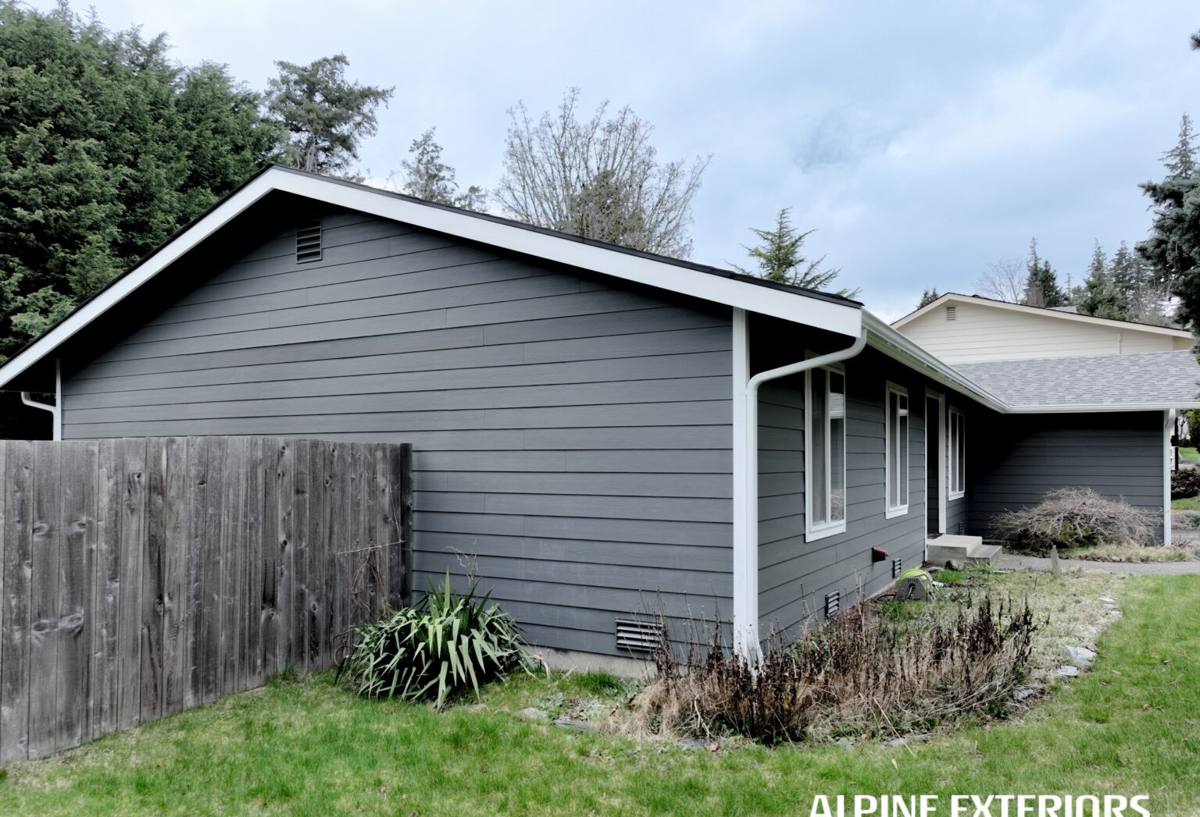
Warning Signs It's Time for a Repair
Most siding repair calls we get in Wallingford start with something small the homeowner noticed and decided to keep an eye on. By the time it's visible, there's usually already moisture involvement underneath. Common signs worth acting on:
- Soft, spongy, or discolored siding boards, especially near the bottom courses or below windows
- Persistent green or black staining that comes back within weeks of cleaning
- Cracked, warped, or separating boards, particularly at butt joints and corners
- Paint that's peeling, bubbling, or failing faster than the rest of the house
- Gaps opening up around trim, window casings, or where siding meets the foundation
- A musty smell near exterior walls inside the home, which often points to moisture already past the siding
Any one of these on its own might be minor. Several together, especially on the same wall, usually means water has been getting behind the siding for a while.
What a Correct Siding Repair Actually Involves
Siding repair gets treated as a cosmetic fix more often than it should be. Done right, it's a diagnostic job first and a materials job second.
Finding the Real Cause, Not Just the Symptom
Replacing a damaged board without figuring out why it failed just buys a few years before the same spot fails again. We pull back siding around any damaged area to check the water-resistive barrier, sheathing, and framing underneath before we close anything up. If the cause is a failed flashing detail, a clogged gutter dumping water onto a wall, or grade sloping toward the foundation, that has to be addressed alongside the siding itself or the repair won't hold.
Matching Materials and Finish
A repair that's structurally sound but visually obvious is still a bad repair. Matching board profile, reveal, and finish matters, especially on painted or factory-finished siding where a slightly different sheen or color stands out immediately, particularly in Seattle's flat, overcast light.
Flashing, Sealing, and Water Management
Every repair is an opportunity to correct water management details that were wrong in the first place — proper head flashing above windows and doors, correct lap orientation, and sealant used only where it belongs, not as a substitute for flashing. In a climate with as much horizontal rain as this one, these details decide whether a repair lasts five years or fifteen.
Repair or Replace? How We Help You Decide
Not every siding problem calls for full replacement, and not every problem should be patched. The honest answer depends on how much of the wall is affected, what's underneath, and how old the existing siding system is. We walk through this with every homeowner before recommending either path.
| Factor | Leans Toward Repair | Leans Toward Replacement |
|---|---|---|
| Extent of damage | Isolated to one or two areas | Spread across multiple walls or elevations |
| Underlying sheathing | Dry, sound wood underneath | Soft, rotted, or water-stained sheathing |
| Age of siding | Newer system, one section failed | Original siding is decades old and near end of service life |
| Material type | Durable material still performing well elsewhere | Original material is one we no longer recommend or install |
| Cause of failure | One-time or localized (impact damage, a single bad flashing detail) | Systemic (widespread moisture intrusion, failed original installation) |
We'd rather tell a homeowner they only need a repair than sell a replacement that isn't necessary yet — and we'll also tell you plainly when a repair is a temporary patch on a system that's genuinely at the end of its life.
Why We Repair With James Hardie Fiber Cement
Our company installs and repairs exclusively with James Hardie fiber cement siding — we don't install vinyl, LP SmartSide, Cemplank, Allura, or unprimed cedar or spruce siding. When a repair calls for new material, whether the home already has Hardie or is transitioning off an older product during the repair, that's what goes on.
The reason comes back to the same climate pressures that cause the damage in the first place. Fiber cement doesn't absorb water and swell the way engineered wood products can when a seam fails. It's non-combustible, which matters given the increasing wildfire smoke and ember exposure the Pacific Northwest has seen in recent summers. And James Hardie's ColorPlus factory finish holds color and resists the fading and chalking that painted wood and some engineered products struggle with under Seattle's long gray winters followed by intense summer UV. Where an older home in Wallingford still has original cedar or a previous owner's vinyl or engineered wood siding, we'll be straightforward about the tradeoffs of patching versus using the repair as a chance to move that section — or eventually the whole house — to a system with a stronger track record in this climate.
Our Wallingford Siding Repair Process
Inspection and Honest Assessment
We start by looking at the whole exterior, not just the spot you called about. Siding problems on one wall often have a sibling issue starting on another, especially on homes with consistent shade or drainage patterns across multiple elevations.
Prep and Protection
Landscaping, walkways, and anything near the work area gets protected before we start removing damaged material. We also check that gutters and drainage near the repair zone are functioning, since a repair done next to a clogged gutter is a repair that's going to fail again.
The Repair Itself
Damaged material comes out, the substrate gets inspected and dried or replaced as needed, water management details get corrected, and new material goes in matched to the surrounding siding as closely as the situation allows.
Cleanup and Walkthrough
We walk the finished repair with you, point out what we found and what we fixed, and flag anything else on the exterior worth watching so there are no surprises later.
Why Hiring a Crew That Already Works in Wallingford Matters
Wallingford's housing stock skews older than a lot of newer Seattle-area development, which means siding repair crews here run into a wider mix of original materials, past repair attempts, and non-standard details than they would in a neighborhood full of newer construction. A crew that's already worked on homes in this neighborhood has a better sense of what tends to be hiding behind the siding on a house of a given age, and isn't guessing at how the local combination of tree cover, rain exposure, and King County permitting requirements affects the work.
There's also a practical logistics side to it — narrower lots, close-set houses, and street parking that a crew unfamiliar with the neighborhood hasn't already worked around.
Before You Hire: A Homeowner's Checklist
- Get a written scope that says exactly what's being repaired and why, not just a price
- Ask whether the quote includes opening the wall to check the sheathing, or is based on a visual estimate only
- Confirm what material will be used and whether it matches your existing siding
- Ask what's being done about the underlying cause, not just the visible damage
- Check that the contractor is licensed and insured to work in Washington State
- Ask how flashing and sealing will be handled at the repair boundary
- Get a clear timeline, including what happens if hidden damage is found once the wall is open
Siding repair done right in Wallingford means treating the cause, not just the symptom, and using materials that can actually hold up to what this climate does to a house year after year. If you're seeing signs of trouble or just want an honest opinion on what your siding needs, we're happy to take a look and put together a free, no-pressure estimate.