 Seattle
 Why Ballard Siding Takes More Punishment Than People Expect
Ballard sits close enough to Puget Sound and the Ship Canal that salt-laden air is a real factor in how siding ages here, not a theoretical one. Add in Seattle's long stretch of driving rain each fall and winter, plus the shaded, damp conditions that let moss and algae take hold on north-facing walls and anything under tree cover, and you've got a climate that's genuinely tough on exterior materials. Homes a few blocks from the water often show siding wear years before an equivalent house on drier, more sheltered ground.
None of this is unusual for King County. It's just the reality of building in a marine climate, and it's why the siding choice and installation details matter more here than they would in a drier region. A product or installation shortcut that would hold up fine in Eastern Washington can fail early in Ballard.
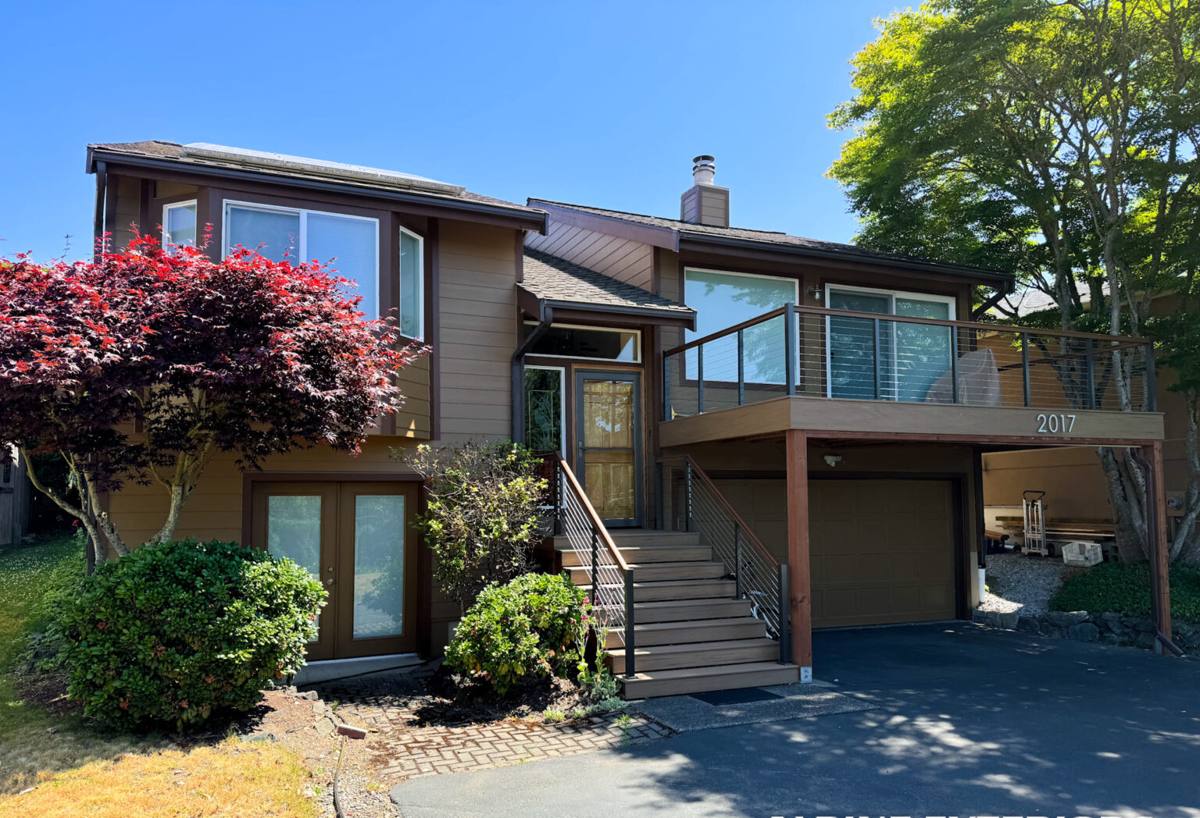
Signs Your Ballard Home Needs Siding Replacement
Most siding problems in this neighborhood show up gradually, and homeowners often notice the cosmetic symptoms before they understand the cause. Common signs worth a closer look include:
- Persistent green or black staining on north- and west-facing walls that pressure washing only temporarily removes
- Paint that's peeling, bubbling, or chalking faster than it should, especially near ground level or under eaves
- Soft or spongy spots when you press on the siding, particularly around window trim and corner boards
- Visible warping, cupping, or gaps at seams where panels have swelled and shrunk with repeated wetting
- Rising energy bills or drafts that suggest the water-resistive barrier behind the siding has failed
Any one of these on its own might just call for a repair. Several at once, or the same problem recurring after repairs, usually means the siding system itself — not just the surface — has reached the end of its useful life.
What a Correct Siding Replacement Actually Involves
Siding replacement done right is a system installation, not just swapping panels. In a climate that gets sustained wind-driven rain, the details behind the siding matter as much as the material itself. A proper job includes:
Tearing Off to Sound Sheathing
We remove the old siding down to the sheathing so we can actually see what's underneath. In older Ballard homes this sometimes reveals rot around windows or at the base of walls that's been hidden for years — better to find it now than to bury it under new siding.
A Correct Water-Resistive Barrier
A new weather-resistive barrier goes on before any siding, lapped and taped so water runs down and out rather than finding a way in. In a region with this much annual rainfall, this layer is arguably more important than the siding material itself.
Flashing at Every Penetration
Windows, doors, vents, and any other wall penetration get proper flashing so water is directed outward at every seam. This is the single most common place cheap installations fail, and it's invisible once the siding goes back on — which is exactly why it has to be done right the first time.
Rainscreen or Proper Drainage Gap
Where conditions call for it, we build in a drainage gap so any moisture that does get behind the siding can dry out and drain rather than sitting against the sheathing. This matters more in shaded, damp micro-climates like the ones common in this part of Seattle.
Why We Only Install James Hardie Fiber Cement
We made a decision as a company to install one siding system: James Hardie fiber cement. We don't install vinyl, LP SmartSide, Cemplank, Allura, primed spruce, or cedar, and we think Ballard homeowners deserve an honest explanation of why, not just a sales pitch.
Vinyl
Vinyl is inexpensive and low-maintenance in mild climates, and we won't pretend otherwise. But it's a petroleum-based product that expands and contracts significantly with temperature swings, and in coastal, wind-exposed spots it can crack, warp, or blow off in a way fiber cement doesn't. It's also not fire-resistant, which matters more every year in the Pacific Northwest.
LP SmartSide, Cemplank, and Allura
LP SmartSide is an engineered wood product — it performs well when installed and maintained precisely to spec, but wood-based siding is inherently more moisture-sensitive than fiber cement, and moisture sensitivity is the last thing you want in a neighborhood that sees this much sustained rain and salt air. Cemplank and Allura are both fiber cement competitors to Hardie, and they're reasonable products in general terms — our decision to standardize on Hardie comes down to its ColorPlus factory finish, its climate-engineered HZ product lines built specifically for regions like ours, and the strength and structure of its transferable warranty, not a claim that competing fiber cement is defective.
Primed Spruce and Cedar
Real wood siding has a genuine appeal, and cedar in particular has a long history in the Northwest. But solid wood requires ongoing painting, caulking, and moisture vigilance that most homeowners underestimate until they're several years in. In a climate with this much annual rain and a moss season that runs long, that maintenance burden is steep, and the failure mode when it's neglected is rot, not just a cosmetic issue.
Why Hardie
James Hardie fiber cement is non-combustible, dimensionally stable across our temperature swings, and doesn't feed mold or moss the way wood-based products can. The ColorPlus factory finish holds color longer than field-applied paint, which matters when a house is going to see decades of Seattle rain. The HZ5 product line is engineered specifically for climates like ours, and the warranty structure is transferable, which protects resale value — a real consideration in a neighborhood where homes turn over.
Our Process for Ballard Siding Replacement Jobs
- On-site assessment — we look at exposure, existing damage, and the condition of the sheathing before quoting anything
- Written scope and product selection — HZ5 panel or lap siding, trim, and ColorPlus color selected together, with the scope spelled out in writing
- Tear-off and sheathing repair — any rot or damage found during removal is addressed before new materials go on, not papered over
- Weather barrier, flashing, and drainage detailing — the parts that determine whether the job lasts
- Hardie installation to manufacturer spec — correct fastening, clearances, and joint treatment, which is what keeps the warranty valid
- Final walkthrough — we go over the finished work with the homeowner before calling the job done
Because we work this neighborhood regularly, we already have a working sense of which streets sit closer to the water, which lots run shaded and damp, and how that should change small details of the install — nothing exotic, just the kind of local familiarity that comes from doing the work here repeatedly rather than showing up once.
Cost Factors for Ballard Siding Replacement
Every home is different, but the same handful of factors drive most of the cost variation we see on jobs in this area:
| Factor | Why It Matters |
|---|---|
| Extent of hidden damage | Rot found at tear-off adds sheathing and framing repair before new siding can go on |
| Home size and wall complexity | More corners, dormers, and trim detail mean more labor and material |
| Siding profile chosen | Lap siding, panel siding, and shingle-style Hardie products carry different material and labor costs |
| Site access | Tight Ballard lots, close-set neighboring homes, and limited staging space can affect labor time |
| Trim and detail work | Window and door trim, corner boards, and fascia detailing add to scope beyond the flat wall area |
We provide a written estimate with the scope broken out so you can see what's driving the number, rather than a single lump-sum figure.
Choosing a Contractor for Ballard Siding Work
Siding replacement is not a job where the cheapest bid and the best outcome are usually the same thing. Before hiring anyone for a project this size, it's worth checking:
- Washington state contractor license and current insurance, verifiable independently rather than just taken on their word
- Manufacturer training or certification specific to the siding product being installed
- A written scope of work that names the weather barrier, flashing approach, and fastening method — not just "install siding"
- Experience with homes in coastal or shaded, damp conditions similar to Ballard, not just general siding experience
- A warranty that covers workmanship separately from the manufacturer's material warranty
A crew that already works this neighborhood regularly has usually already worked through the small judgment calls — flashing details near the water, drainage in shaded yards — that a contractor coming from a drier or more inland area may not have encountered as often.
Living With Hardie Siding After Installation
One of the practical advantages of fiber cement in this climate is how little upkeep it demands compared to wood or the maintenance concerns some homeowners have with vinyl in coastal wind exposure. A rinse to keep moss and grime from building up, an eye on caulking at trim joints every year or two, and prompt attention to any impact damage is about the extent of it. There's no repainting cycle to plan around the way there is with cedar, since the ColorPlus finish is baked on at the factory rather than applied on site.
If you're seeing early wear on your Ballard home's siding, or you're planning ahead rather than reacting to damage, we're happy to take a look and walk you through what we'd recommend. There's no cost and no pressure for an estimate — just a straight assessment of what your home needs.